Introduction to Rambutan (Binjai)
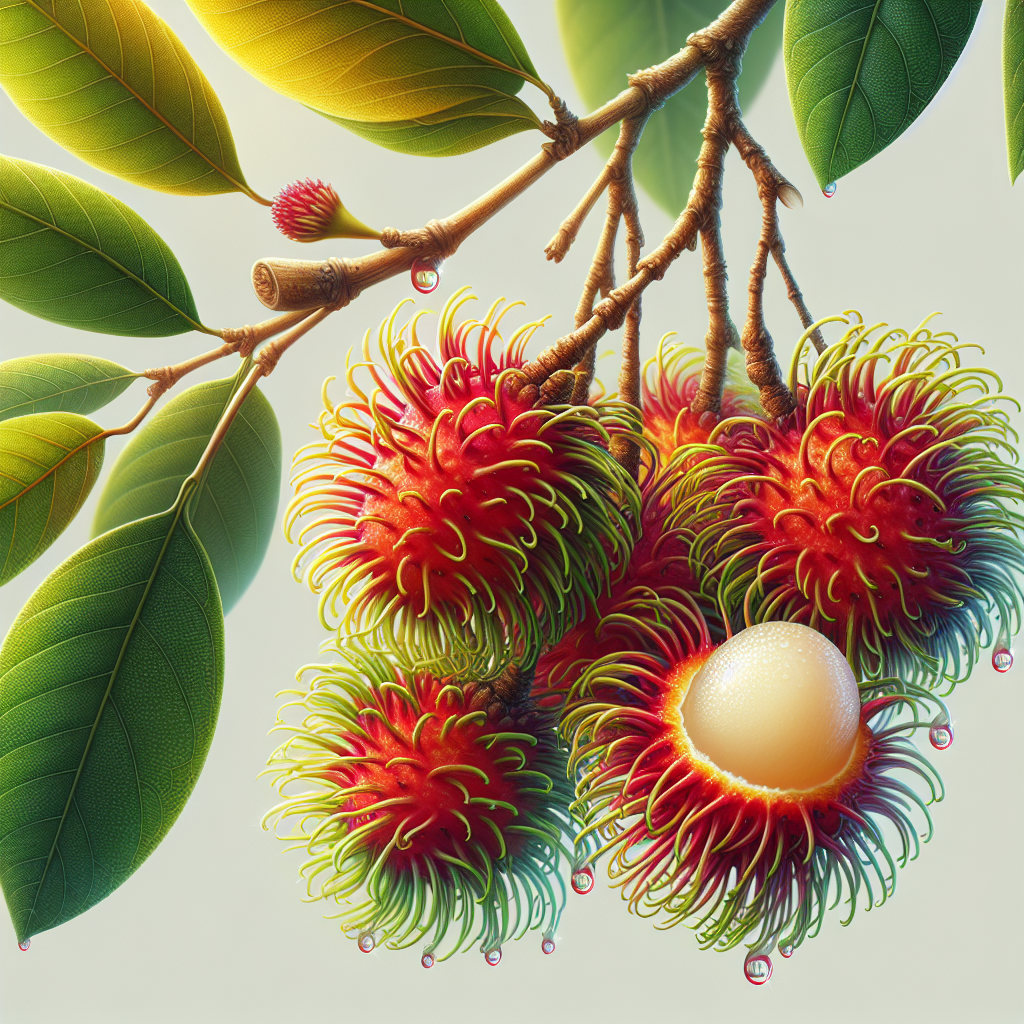
Rambutan Binjai stands out among rambutan varieties for its superior flavor profile, featuring creamy white flesh with a sugary sweetness that rivals top mango cultivars. Originating from Indonesia, particularly the Binjai region in Sumatra, this clone of Nephelium lappaceum has gained international acclaim for its large, oval fruits weighing 30-50 grams each, encased in striking red skin adorned with soft, golden-tipped spines. Unlike wild rambutans, Binjai trees are semi-dwarf, reaching 8-12 meters, making them suitable for high-density planting on small farms.
Farmers cultivating Rambutan Binjai benefit from its early fruiting—often within 3-4 years from grafting—and heavy cropping potential of 50-100 kg per mature tree annually. The fruit's high brix level (22-28°) ensures premium market value, especially in fresh export markets. For optimal success, focus on mimicking its native humid tropics while implementing robust Soil Health Mastery: 5 Proven Strategies for Small Farms to Build Fertile Ground Without Breaking the Bank. This guide provides professional-grade steps for propagation, care, and harvest to maximize yields.
Botanical Profile of Rambutan (Binjai)
Rambutan Binjai belongs to the Sapindaceae family, closely related to lychee and longan. The tree develops a dense, evergreen canopy with pinnate leaves 20-40 cm long, comprising 10-20 leaflets that are glossy green above and silvery below. Binjai is a monoecious variety, producing both male and female flowers on the same tree, though hermaphroditic flowers ensure reliable pollination.
Fruits form in large, pendulous panicles up to 50 cm long, with 20-50 individual rambutans per cluster. Each fruit has a leathery pericarp with 10-15 curved spines, turning vivid crimson at maturity. Inside, a single seed is surrounded by translucent, gelatinous aril that detaches cleanly from the seed coat—a key trait distinguishing premium cultivars like Binjai. Trees exhibit strong apical dominance but respond well to pruning for shape and productivity. Root systems are shallow and fibrous, extending 3-4 times the canopy radius, necessitating mulching to retain moisture.
Binjai's growth habit is upright and compact compared to wild types, with smooth gray bark that fissures with age. It flowers in response to dry periods followed by rain, typically syncing with regional monsoons. Nutritionally, the aril provides 70-80 calories per 100g, with exceptional levels of vitamin C (up to 70 mg/100g), polyphenols, and flavonoids, positioning it as a superfruit in health markets.
Soil, pH, and Climate Requirements for Rambutan (Binjai)
Rambutan Binjai demands well-drained, fertile loamy soils rich in organic matter, with pH ranging from 4.5-6.5—slightly acidic mirroring Sumatran volcanic soils. Avoid heavy clays prone to waterlogging, which invite Phytophthora root rot. Incorporate 20-30% compost or aged manure during site preparation, aiming for 2-3% soil organic matter. Test for micronutrients; Binjai responds dramatically to boron and zinc applications at 10-20 g/tree annually.
Climatically, thrive in USDA zones 10b-11, requiring average temperatures of 24-30°C (75-86°F) year-round, with no frost tolerance below 5°C (41°F). Rainfall should total 2000-3000 mm annually, evenly distributed, or supplement with drip irrigation during dry spells (<100 mm/month). High humidity (70-90%) is non-negotiable for fruit set; low humidity causes flower drop. Elevations up to 600m suit Binjai, but protect young trees with shade cloth (50% shade) for the first 2 years. Windbreaks of banana or coconut palms prevent spine damage to fruits.
Soil preparation involves deep tilling (60 cm) and raised beds (1m wide) in flood-prone areas. Maintain moisture without saturation; mulch with 10-15 cm of rice hulls or cocoa shells to suppress weeds and regulate temperature.
Step-by-Step Planting & Propagation
Propagation of Rambutan Binjai is best via grafting onto seedling rootstocks for vigor and disease resistance—seedlings alone take 8-10 years to fruit.
- Rootstock Preparation: Sow fresh seeds in 50% sand:50% compost pots; germinate in 20-30 days at 28°C. Select vigorous 1-year-old seedlings (30-50 cm tall).
- Scion Collection: Harvest semi-mature Binjai scions (pencil-thick) from certified mother trees in the dormant phase.
- Grafting: Use cleft or veneer grafting in the rainy season. Align cambium layers precisely; secure with grafting tape. Success rate: 80-90%.
- Aftercare: Place grafted plants in shaded nursery (50% shade) for 4-6 weeks until bud break. Harden off gradually.
Field Planting:
- Site: 8x8m spacing (156 trees/ha); dig 60x60x60 cm pits, fill with topsoil + 20 kg compost + 500g rock phosphate.
- Timing: Start of wet season.
- Planting: Set graft union 10 cm above soil; stake immediately.
- Initial Watering: 20-30L/tree weekly until established. Air-layering works for quick replacements, yielding fruits in 2 years.
Care & Maintenance regimes for Rambutan (Binjai)
Irrigation: Drip irrigate to deliver 40-60L/tree/week in dry periods; deficit irrigation (50% ETc) during flowering boosts quality.
Fertilization: Year 1: 100g NPK 15-15-15 + 50g urea/tree, split 4x. Mature: 1-2 kg NPK 12-12-17 + 500g KCl/tree/year, plus foliar micronutrients. Apply post-harvest and pre-flower.
Pruning: Annually remove deadwood, watersprouts, and inward branches post-harvest. Maintain open center for light penetration; tip-prune terminals to induce flowering.
Weeding/Mulching: Maintain weed-free basin (2m radius); renew mulch annually.
Training: Single trunk to 2-3m, then 4-6 scaffold branches. Monitor for nutrient deficiencies: yellowing leaves indicate nitrogen lack; interveinal chlorosis signals iron.
Pests, Diseases & Organic Management
Key Pests:
- Mealybugs: Cluster on twigs; spray neem oil (2%) or introduce Cryptolaemus montrouzieri.
- Fruit flies: Bait with protein hydrolysate + malathion (organic-approved).
- Aphids: Hose off or use insecticidal soap.
- Branch borers: Remove infested wood.
Major Diseases:
- Anthracnose: Copper fungicide during wet season.
- Phytophthora palmivora: Improve drainage; phosphonate drenches.
- Powdery mildew: Sulfur sprays.
Organic IPM: Deploy yellow sticky traps, release parasitoids, and prune for airflow. Refer to Why 90% of Small Farms Fail at Pest Management - And 8 Organic Fixes That Actually Work for advanced tactics. Scout weekly; intervene early.
Harvesting, Curing & Optimal Storage
Harvest when 80% red with open spines (130-150 days post-anthesis). Clip clusters with secateurs, avoiding spine damage. Yield peaks years 7-15.
Post-Harvest:
- Sort: Grade by size/color; discard damaged.
- Clean: Gentle water rinse + 100 ppm chlorine dip.
- Pack: In ventilated CFB boxes (5 kg); pre-cool to 13°C. Storage: 12-15°C, 90-95% RH for 2-3 weeks; ethylene-sensitive, avoid mixing with apples. Market fresh or process into rTDT (rambutan dried with syrup) for extended shelf life.
Companion Planting for Rambutan (Binjai)
Enhance biodiversity and soil health with understory companions:
- Nitrogen Fixers: Pigeon pea or gliricidia for shade tolerance and fertility.
- Pest Repellents: Marigold, thyme, or nasturtium deter nematodes and aphids.
- Cover Crops: Clover suppresses weeds.
- Intercrops: Young papaya or guava in early years. Avoid legumes competing for water. See Why Companion Planting Feels Like Guesswork for Small Farms - And How AI Makes It Foolproof. Rotate to break pest cycles.