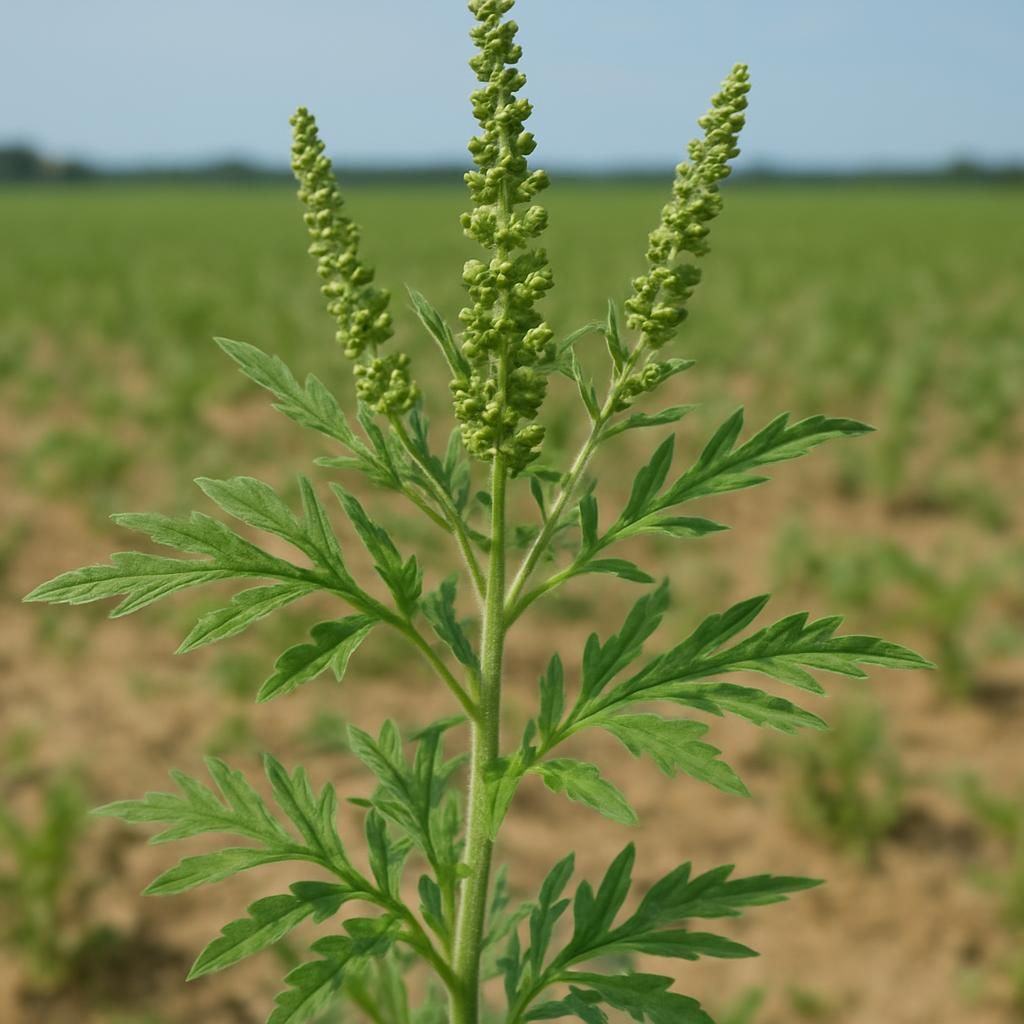
Introduction to ragweed
Ragweed (Ambrosia artemisiifolia) is one of the most problematic annual broadleaf weeds in temperate agricultural regions worldwide. It germinates early, grows rapidly, and produces dense stands that shade out young crop seedlings while depleting soil moisture and nutrients. In addition to direct yield losses, ragweed pollen is a major human allergen, creating secondary concerns for farm workers and nearby communities.
Identifying Symptoms & Damage
Ragweed seedlings emerge with opposite, deeply lobed cotyledons and develop into plants 30–150 cm tall with alternate, fern-like leaves. Key diagnostic traits include rough, hairy stems and inconspicuous greenish flower spikes that appear from mid-summer onward. Heavy infestations cause stunted crop growth, reduced tillering in cereals, and lower fruit set in vegetables due to resource competition. Pollen shed can also trigger respiratory issues among field crews.
Lifecycle and Progression of ragweed
Ragweed completes its life cycle in a single growing season. Seeds overwinter in the soil seedbank and require light and fluctuating temperatures for germination. The table below outlines the primary stages.
| Stage | Timing | Key Characteristics |
|---|---|---|
| Germination | Early spring (soil 10–15 °C) | Cotyledons emerge; first true leaves deeply lobed |
| Vegetative growth | Late spring–early summer | Rapid stem elongation; alternate leaves form |
| Flowering | Mid-summer–early autumn | Male flower spikes release wind-borne pollen |
| Seed set | Late summer–autumn | Female flowers produce achenes; 3,000–5,000 seeds per plant |
| Senescence & seed dispersal | Autumn–winter | Plants die after frost; seeds enter soil seedbank |
Environmental Triggers & Risk Factors
Ragweed thrives in disturbed, nutrient-rich soils with pH 6.0–7.5 and full sun exposure. Minimum temperatures above 8 °C and adequate spring rainfall accelerate germination, while compacted or tilled soils favor seedling establishment. Fields with a history of cereal or soybean rotations and poor weed control in previous seasons show elevated seedbanks. Climate change is extending the growing season and increasing pollen production in many regions.
Organic Control & Treatment Plans
An integrated organic approach combines cultural, mechanical, and targeted biological tactics. Begin with stale seedbed preparation and shallow cultivation to reduce the seedbank. Hand-pulling or hoeing before flowering prevents seed set. Mulching with 10–15 cm of organic material suppresses germination. The following table summarizes proven organic options and their recommended frequencies.
| Treatment Option | Application Method | Frequency | Notes |
|---|---|---|---|
| Pre-plant stale seedbed | Shallow tillage or flaming | 2–3 times before planting | Kill successive flushes of seedlings |
| Mulching | 10–15 cm straw or wood chips | Once at planting | Maintains suppression for 8–10 weeks |
| Hand weeding / hoeing | Remove plants before flowering | Weekly during peak emergence | Focus on field edges and headlands |
| Mowing / cutting | Cut at 5–10 cm height | Every 10–14 days | Prevents pollen and seed production |
| Cover cropping | Fast-establishing rye or clover | Annual rotation | Competes with seedlings and improves soil |
Preventing ragweed in the Future
Long-term prevention relies on reducing the soil seedbank and preventing new introductions. Implement a 3–4 year crop rotation that includes competitive cover crops such as Clover. Sanitize equipment between fields and purchase certified weed-free seed. Maintain buffer strips along field margins to limit wind-blown seed movement. Regular soil testing and fertility management promote vigorous crop stands that naturally suppress weed emergence.
Crops Most Affected by ragweed
Ragweed competes most aggressively with wide-row, slow-establishing crops. Severely affected species include Corn, Soybeans, Wheat, Potato, Tomato, Cucumber, Lettuce, Cabbage, Onion, Garlic, Sunflower, and Cotton. Early-season competition in these crops can reduce yields by 20–50 % if left unmanaged.