Introduction to Radish (Watermelon - Mantanghong)
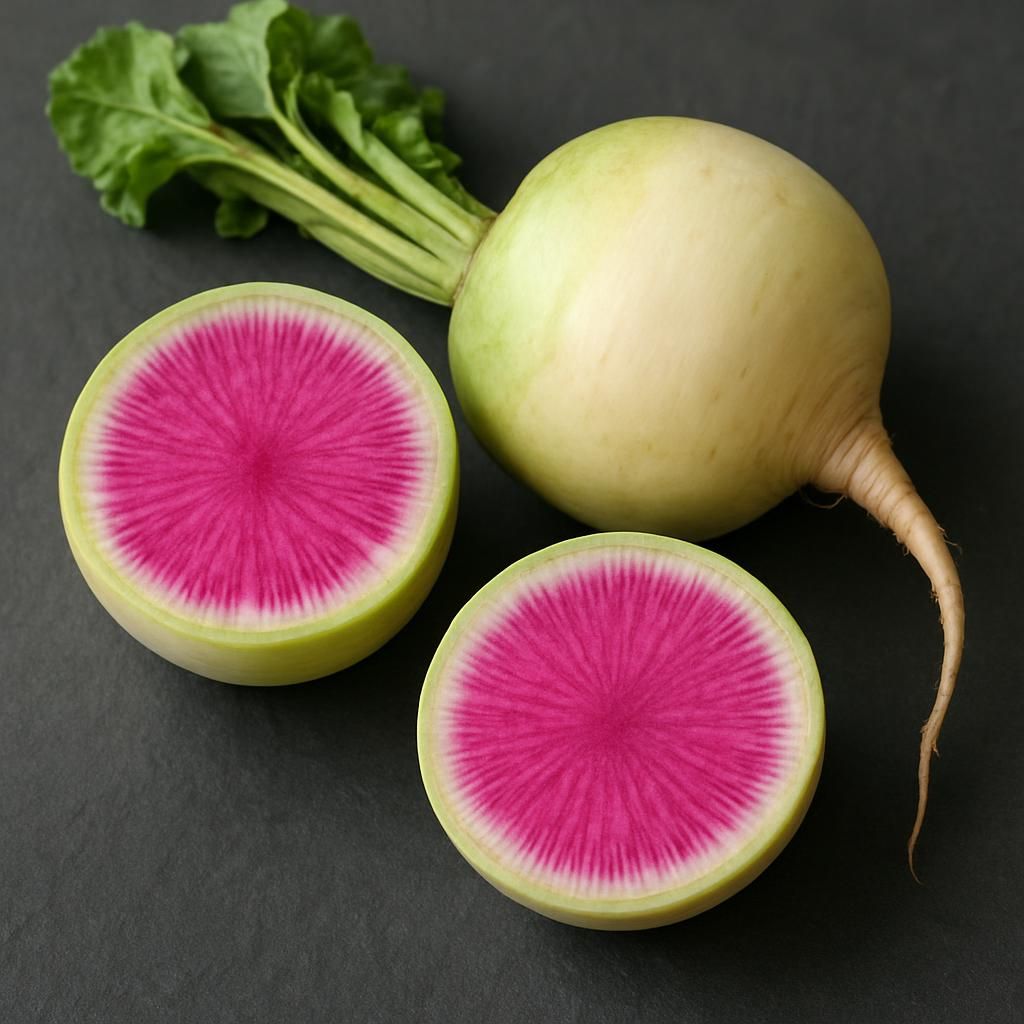
Watermelon radish Mantanghong (Raphanus sativus var. longipinnatus 'Mantanghong') delivers a dramatic magenta center framed by pale green skin, making it a favorite for fresh eating, pickling, and gourmet plating. Originating from northern China, this variety combines the rapid maturation of traditional radishes with the larger root size of daikon types. Gardeners value its reliable performance in spring and fall plantings, while chefs prize its sweet, mildly peppery crunch that holds texture after cooking.
Botanical Profile of Radish (Watermelon - Mantanghong)
Mantanghong belongs to the Brassicaceae family and produces elongated roots 6–10 inches long with smooth, thin skin. The distinctive magenta pigmentation develops in the interior flesh as the root matures, while the outer skin remains pale green. Leaves form a rosette of deeply lobed, dark green foliage that can reach 18 inches in height. The plant produces typical four-petaled white flowers if allowed to bolt, followed by silique seed pods.
Soil, pH, and Climate Requirements for Radish (Watermelon - Mantanghong)
| Parameter | Ideal Range | Notes |
|---|---|---|
| Soil Type | Loamy, well-drained | Avoid heavy clay; add compost for structure |
| pH | 6.0–7.0 | Slightly acidic to neutral; test before planting |
| Temperature | 50–65 °F (10–18 °C) | Cool-season crop; tolerates light frost |
| Spacing | 2–3 inches between plants | Rows 12–18 inches apart |
| Sun Exposure | Full sun to partial shade | 6+ hours direct light optimal |
| Soil Organic Matter | 3–5% | Incorporate aged compost or well-rotted manure |
Step-by-Step Planting & Propagation
- Prepare beds by loosening soil to 12 inches and removing stones to prevent root forking.
- Sow seeds directly ½ inch deep, spacing 1 inch apart initially, then thin to 2–3 inches once seedlings reach 2 inches tall.
- Plant every 7–10 days for continuous harvest through the cool season.
- Maintain even moisture during germination (5–7 days) to ensure uniform stands.
- Protect young plants with floating row cover if flea beetles are active in your area.
Care & Maintenance regimes for Radish (Watermelon - Mantanghong)
| Stage | Watering Schedule | Fertilizer Application | Pruning / Thinning |
|---|---|---|---|
| Germination | Keep soil consistently moist | None; pre-plant compost sufficient | Thin to 2–3 inches at 2-inch height |
| Vegetative | 1 inch per week; avoid water stress | Side-dress with balanced organic fertilizer (5-5-5) at 3 weeks | Remove any yellowing outer leaves |
| Root Bulking | Reduce frequency slightly | Light potassium-rich feed if leaves pale | No pruning needed |
| Pre-Harvest | Maintain steady moisture | Cease nitrogen applications | Clear weeds by hand |
Pests, Diseases & Organic Management
Common threats include flea beetles, aphids, and cutworms. Use floating row covers, beneficial insect releases, and neem oil sprays for control. Clubroot and Alternaria leaf spot can occur in poorly drained soils; practice 3–4 year crop rotations and improve drainage. Maintain soil pH above 6.2 to reduce clubroot pressure.
Harvesting, Curing & Optimal Storage
Harvest when roots reach 2–3 inches in diameter, typically 55–65 days after sowing. Gently loosen soil with a fork and pull roots to avoid breakage. Trim tops to ½ inch and wash only before use. Store unwashed roots in perforated plastic bags at 32–40 °F (0–4 °C) with 95% humidity for up to 3 months. For longer storage, consider pickling or fermenting slices.
Companion Planting for Radish (Watermelon - Mantanghong)
Pair Mantanghong with lettuce, spinach, and peas to maximize space and deter pests. Avoid planting near potato or mustard family crops to reduce shared disease pressure. Interplant with nasturtium to attract beneficial insects and provide natural pest control.
For deeper soil health insights, see The Forgotten Art of Fall Soil Revival: 8 Organic Strategies for Small Farm Resilience. Additional botanical details are available on the Radish wiki page.