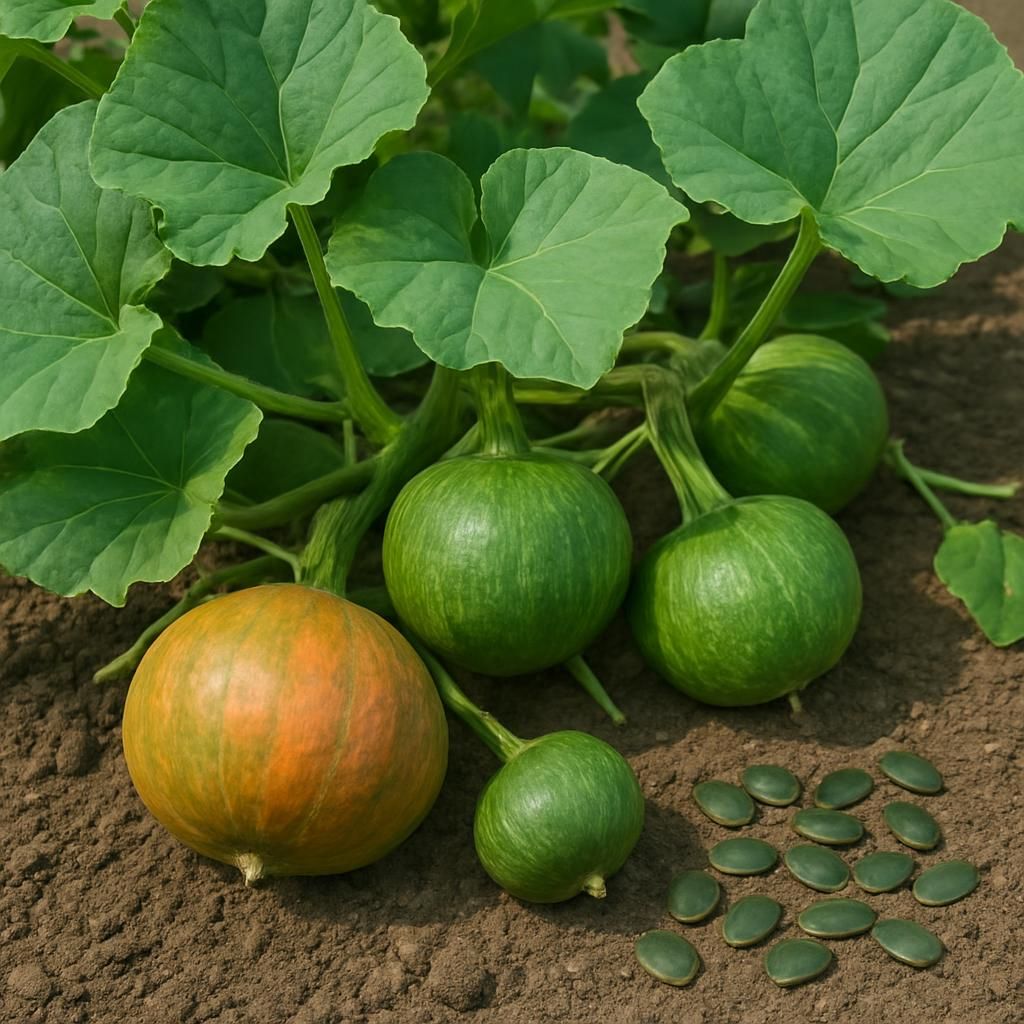
Introduction to Pumpkin Seed (Kakai)
Pumpkin Seed (Kakai), also known as Styrian or naked-seed pumpkin, is a specialized variety of Pumpkin cultivated primarily for its hull-less seeds. These seeds are rich in protein, healthy fats, and minerals, making them a staple for direct consumption, oil extraction, and culinary use. Unlike standard pumpkins, Kakai produces thin-coated seeds that require minimal processing.
Farmers and home gardeners value Kakai for its dual-purpose nature: the fruit can be used for livestock feed or compost while the seeds command premium market prices. The crop thrives in temperate climates with a long growing season and requires careful attention to soil fertility and spacing.
Successful cultivation hinges on understanding its specific botanical traits and environmental needs. This guide provides professional-grade, actionable advice for maximizing yield and seed quality.
Botanical Profile of Pumpkin Seed (Kakai)
Kakai belongs to the Cucurbitaceae family. It is an annual vining plant with large, palmate leaves and vigorous growth reaching 3–5 meters in length. The plant produces monoecious flowers, with male flowers appearing first followed by female flowers that develop into round to oblong fruits weighing 4–8 kg.
The defining trait is the hull-less seed, resulting from a genetic mutation that eliminates the tough outer lignified layer. Seeds are dark green, flat, and contain approximately 30–40% oil and 30% protein. Each fruit typically yields 200–400 grams of cleaned seeds.
The root system is shallow and fibrous, making the crop sensitive to drought and waterlogging. Pollination is primarily by bees, so maintaining pollinator habitat is essential for fruit set.
Soil, pH, and Climate Requirements for Pumpkin Seed (Kakai)
Kakai performs best in well-drained, fertile loam soils rich in organic matter. Heavy clay or sandy soils should be amended with compost or well-rotted manure to improve structure and nutrient retention.
| Parameter | Ideal Range | Notes |
|---|---|---|
| Soil Type | Loam to sandy loam | Avoid compacted or waterlogged soils |
| Soil pH | 6.0 – 7.0 | Slightly acidic to neutral; test annually |
| Temperature (Day) | 21–30 °C | Optimal growth; avoid prolonged >35 °C |
| Temperature (Night) | 15–20 °C | Cooler nights promote fruit quality |
| Frost Tolerance | None | Plant after last frost; protect seedlings |
| Growing Season | 100–120 frost-free days | Requires long, warm season for seed fill |
| Rainfall / Irrigation | 500–700 mm evenly distributed | Consistent moisture critical during flowering and fruit development |
Choose south-facing sites with full sun exposure (minimum 8 hours daily). Windbreaks can reduce stress in exposed locations.
Step-by-Step Planting & Propagation
- Site Preparation: Clear weeds and incorporate 5–8 cm of compost or aged manure. Perform a soil test and correct deficiencies, especially nitrogen, phosphorus, and potassium.
- Seed Selection: Use certified disease-free Kakai seed. Soak seeds in warm water for 12–24 hours to improve germination.
- Sowing Time: Direct sow when soil temperature reaches 18 °C (usually 2–3 weeks after last frost). In cooler climates, start seedlings indoors 3–4 weeks before transplanting.
- Spacing: Plant in hills 1.8–2.4 m apart with 3–4 seeds per hill, later thinning to 2 strongest plants. Rows should be spaced 2.5–3 m apart to allow vine spread.
- Depth: Sow seeds 2–3 cm deep. Keep soil moist but not waterlogged until germination (7–10 days).
- Transplanting: Harden off indoor seedlings for 7 days. Transplant on cloudy days or late afternoon to reduce shock.
Care & Maintenance regimes for Pumpkin Seed (Kakai)
Consistent care ensures strong vines, abundant fruit set, and high-quality seed production.
| Growth Stage | Watering Schedule | Fertilizer Application | Pruning / Training |
|---|---|---|---|
| Establishment (0–4 wks) | Light daily watering to keep soil moist | Low-nitrogen starter fertilizer (5-10-10) | Remove weak seedlings; train vines outward |
| Vegetative (4–8 wks) | 25–40 mm per week; deep infrequent soak | Side-dress with compost tea or 10-5-10 | Pinch growing tips after 1.5 m to encourage branching |
| Flowering & Fruit Set | Maintain even moisture; avoid overhead | Apply potassium-rich fertilizer (0-10-20) | Remove excess male flowers if needed; support heavy fruits |
| Fruit Development | 40–50 mm per week during peak heat | Light nitrogen boost if leaves pale | Prune secondary laterals; mulch to suppress weeds |
| Pre-Harvest (last 3 wks) | Reduce watering slightly to concentrate sugars | Cease nitrogen; maintain potassium | Stop pruning; allow full ripening |
Mulch with straw or plastic to retain moisture, suppress weeds, and keep fruits clean. Monitor soil moisture with tensiometers or finger test.
Pests, Diseases & Organic Management
Kakai is susceptible to several common cucurbit issues. Early detection and integrated management are critical.
Common pests include Aphids, Cucumber Beetles, Squash Bugs, and Spider Mites. Use floating row covers during early growth, introduce beneficial insects such as lady beetles, and apply insecticidal soap or neem oil when thresholds are reached.
Diseases of concern are Powdery Mildew, Downy Mildew, Anthracnose, and Bacterial Wilt. Practice crop rotation (minimum 3 years), improve airflow through proper spacing, and apply preventive copper or sulfur sprays. Remove and destroy infected plant debris at season end.
Harvesting, Curing & Optimal Storage
Harvest when fruits reach full color and the rind is hard enough to resist thumbnail pressure (usually 100–120 days after sowing). Cut stems with 5–8 cm attached and handle carefully to avoid bruising.
Cure fruits for 10–14 days at 25–30 °C with good ventilation to harden skins and improve seed quality. After curing, cut open fruits and scoop seeds. Rinse thoroughly to remove pulp and dry on screens at 30–35 °C until moisture content reaches 8–10%.
Store clean, dry seeds in airtight containers or vacuum-sealed bags at 10–15 °C and <60% relative humidity. Properly stored seeds remain viable for 4–6 years and retain culinary quality for up to 12 months.
Companion Planting for Pumpkin Seed (Kakai)
Kakai benefits from strategic companions that improve pollination, deter pests, or enhance soil fertility. Plant Nasturtium and Marigold to repel cucumber beetles and aphids. Tall Corn or Sunflower can provide light shade and wind protection while attracting pollinators.
Legumes such as Bush Beans fix nitrogen and improve soil structure. Avoid planting near potatoes or other heavy feeders that compete for nutrients. Incorporate aromatic herbs like Thyme to mask pumpkin scents from pests.
For more on building resilient systems, see Summer Companion Planting: 10 Organic Pairings to Boost Small Farm Resilience.