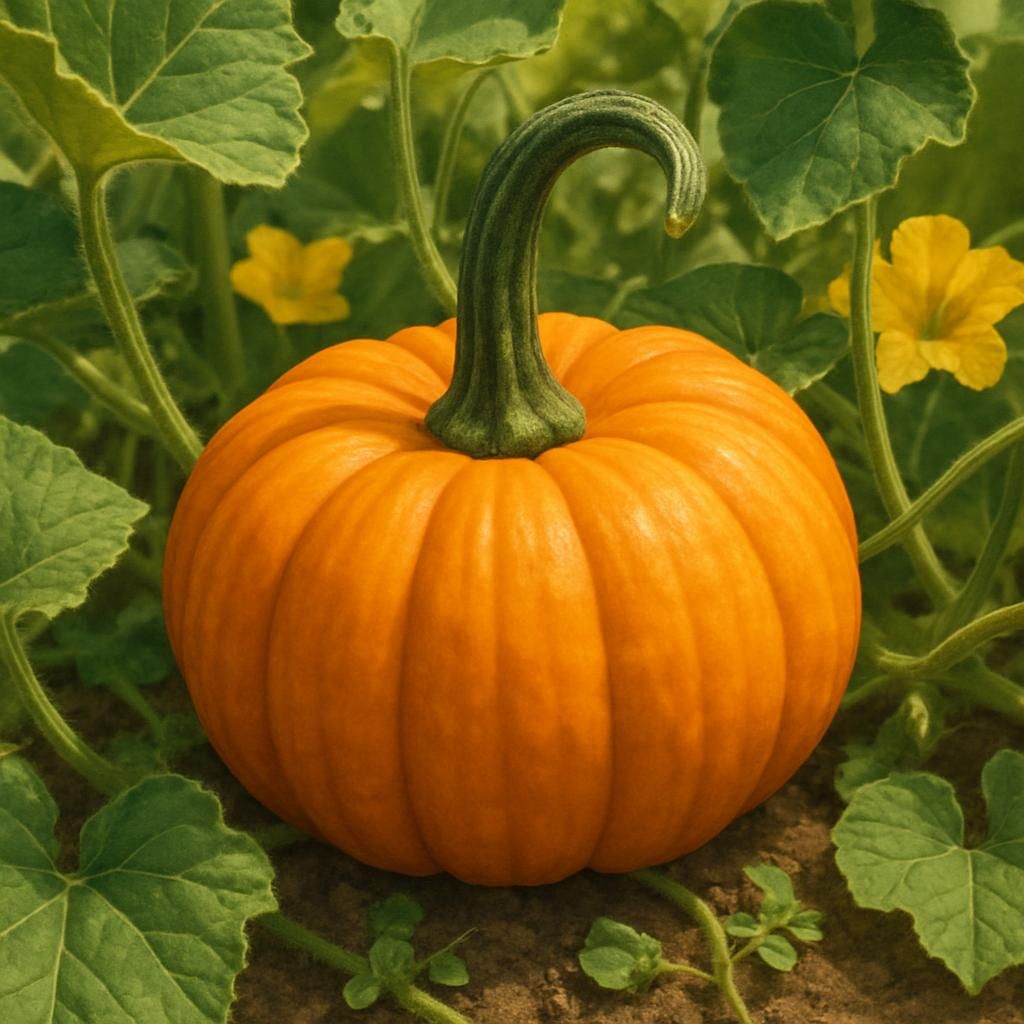
Introduction to Pumpkin (Jack Be Little)
Pumpkin (Jack Be Little) is a charming miniature pumpkin variety belonging to the species Pumpkin. It is prized for its small size, round shape, and bright orange color, making it perfect for decorative purposes during the fall and festive seasons. Despite its size, it packs a punch in terms of flavor and can be used in culinary applications, such as roasting or baking. Ideal for both experienced gardeners and novices, this variety requires attention to detail with growing conditions and care regimes to yield the best results.
Botanical Profile of Pumpkin (Jack Be Little)
Pumpkin (Jack Be Little) falls under the Cucurbitaceae family, sharing its lineage with other popular crops like Cantaloupe and Cucumber. It produces vibrant orange, ribbed pumpkins that typically grow to 3-4 inches in diameter, weighing approximately 0.5 to 1 pound each. These pumpkins thrive as annual plants, with sprawling vines that can extend up to 10-15 feet. A typical growing season from seed to harvest spans about 95 days.
Soil, pH, and Climate Requirements for Pumpkin (Jack Be Little)
Pumpkins thrive in well-drained soil rich in organic matter. They benefit from full sun exposure to produce sweet and richly colored fruits. The following table details the ideal conditions for growing Pumpkin (Jack Be Little):
| Condition | Ideal Requirement |
|---|---|
| Soil Type | Loamy, well-drained |
| Soil pH | 6.0 - 6.8 |
| Temperature | 70°F - 90°F (21°C - 32°C) |
| Sunlight | Full sun, at least 6-8 hours/day |
| Watering | Consistent, about 1-2 inches/week |
Step-by-Step Planting & Propagation
- Seed Selection and Preparation: Choose high-quality seeds from a reputable source. Soak the seeds in water for 24 hours before planting to encourage quicker germination.
- Soil Preparation: Test the soil pH and adjust as needed. Mix organic compost into the soil to improve fertility and drainage.
- Planting: Sow seeds directly into the soil after the last frost date. Plant them 1 inch deep and 3-4 feet apart in hills, which promote good drainage and warmer soil.
- Watering and Fertilizing: Maintain consistent moisture but avoid waterlogging. Begin fertilizing when plants have 3-4 leaves, using a nitrogen-rich fertilizer.
- Support and Space Management: Use trellises or allow sufficient ground space to accommodate sprawling vines.
Care & Maintenance regimes for Pumpkin (Jack Be Little)
Proper care is crucial to achieve a successful harvest of Pumpkin (Jack Be Little).
| Schedule | Watering | Fertilizing | Pruning |
|---|---|---|---|
| Early Growth | Once per week, 1 inch/week | Apply balanced fertilizer every 4 weeks | Remove weak seedlings |
| Mid Growth | Increase to 1.5 inches/week | Fertilize with phosphorus-rich formula | Prune excess vines |
| Pre-Harvest | Reduce to 1 inch/week | Stop fertilizing two weeks before harvest | Light pruning if necessary |
Pests, Diseases & Organic Management
Common pests include Aphids, Spider Mites, and Squash Bugs. Employ organic methods like neem oil sprays and introducing beneficial insects to manage these pests. Key diseases affecting pumpkins are Powdery Mildew and Bacterial Wilt. Practicing crop rotation and applying copper-based fungicides can minimize disease spread.
For more detailed insights into organic pest management, refer to our Crop Diseases Under the Microscope: 9 Organic Fixes for Small Farm Resilience.
Harvesting, Curing & Optimal Storage
Mini pumpkins are ready for harvest about 95 days after planting when they achieve a vivid orange hue and the rind is hard. Cut the stem with pruning shears, leaving 2-3 inches of stem attached to the fruit for better storage life. Cure pumpkins in sunlight for 10-14 days to harden the skin. Store in a cool, dry, and well-ventilated area to extend shelf life.
Companion Planting for Pumpkin (Jack Be Little)
Companion planting encourages healthy growth by enhancing pest control and providing mutual benefits. Ideal companions include Marigold for pest deterrence and Nasturtium for enhanced pollination. Avoid planting near Potato and Tomato as they can attract vine borers and other pests detrimental to pumpkins.
To learn more about effective companion planting strategies, check our article Spring Companion Planting: 8 Organic Pairings to Maximize Small Farm Yields.