Introduction to Potato (Magic Molly)
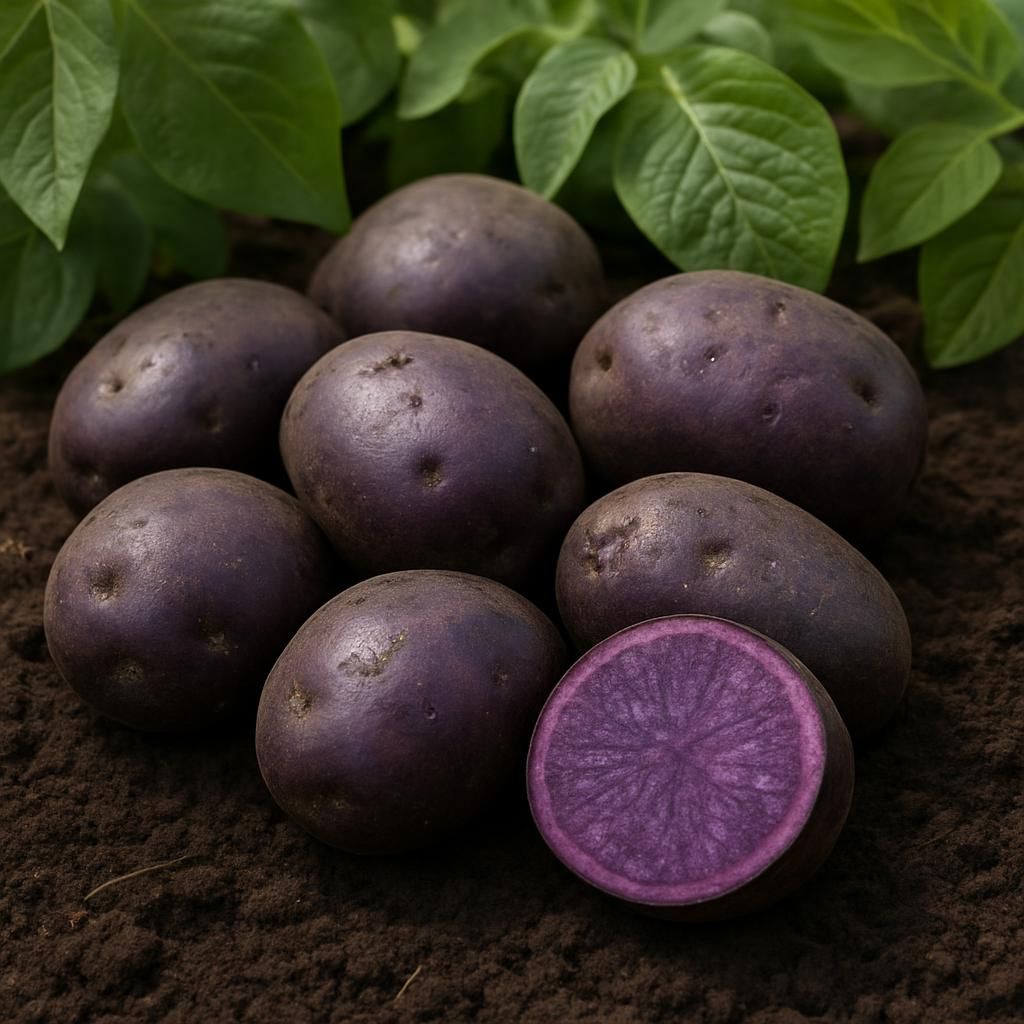
Magic Molly is a dark-purple-skinned and purple-fleshed potato cultivar developed for both home gardeners and small-scale commercial growers seeking a high-value, nutrient-dense tuber. Its striking color comes from high concentrations of anthocyanins, which also provide superior antioxidant benefits compared with standard white or yellow varieties. The variety offers a firm, waxy texture that holds shape well during boiling, roasting, or steaming, making it popular in gourmet and health-focused markets.
Yields are moderate to high when grown under optimal conditions, typically producing 8–12 pounds per 10-foot row. The plants exhibit moderate vigor with semi-upright habit and dark green foliage that contrasts beautifully with the purple stems. Because the variety is less common than Russet Burbank Potato or Yukon Gold Potato, it commands premium pricing at farmers’ markets and specialty outlets.
Botanical Profile of Potato (Magic Molly)
Magic Molly belongs to the nightshade family (Solanaceae) and follows the typical life cycle of Solanum tuberosum. The plant produces compound leaves with 3–5 pairs of leaflets and forms underground stolons that swell into tubers. Tubers are oval to oblong, 3–5 inches long, with smooth, deep-purple skin and vivid purple flesh that retains color after cooking. Flowers are lavender to violet with yellow centers; seed balls are rarely produced and are not used for propagation.
The variety shows moderate resistance to common scab and good tolerance to cool, moist spring conditions. It matures in 90–110 days from planting, classifying it as a mid-to-late season potato. Like all potatoes, it is vegetatively propagated from seed tubers rather than true seed.
Soil, pH, and Climate Requirements for Potato (Magic Molly)
Magic Molly performs best in well-drained, fertile loamy soils with high organic matter. Avoid heavy clay or waterlogged sites that promote Rhizoctonia and Pythium issues. Raised beds or hilled rows improve drainage and ease of harvest.
| Parameter | Ideal Range | Notes |
|---|---|---|
| Soil Type | Sandy loam to loam | High organic matter improves structure |
| Soil pH | 5.8 – 6.5 | Below 5.5 increases scab risk |
| Soil Temperature | 45–70 °F (7–21 °C) | Plant when soil reaches 45 °F minimum |
| Air Temperature | 60–75 °F (15–24 °C) day | Night temps above 50 °F favor tuber set |
| Spacing (in-row) | 10–12 inches | Rows 30–36 inches apart |
| Planting Depth | 4–6 inches | Deeper in light soils |
| Organic Matter | 3–5 % | Incorporate well-rotted compost |
Step-by-Step Planting & Propagation
- Source certified disease-free seed tubers of Magic Molly in late winter. Cut larger tubers into pieces with at least two eyes; allow cut surfaces to suberize 24–48 hours.
- Prepare the bed by incorporating 2–3 inches of compost and a balanced organic fertilizer (approximately 2 lbs N per 1,000 sq ft) two weeks before planting.
- Plant seed pieces 4–6 inches deep, 10–12 inches apart in rows 30–36 inches wide when soil temperature is consistently above 45 °F.
- As shoots emerge, begin hilling soil around stems every 2–3 weeks until hills are 8–10 inches high to protect developing tubers from light and encourage additional stolon formation.
- Maintain even moisture (1 inch per week) during tuber initiation (4–6 weeks after emergence) to prevent hollow heart and growth cracks.
Care & Maintenance regimes for Potato (Magic Molly)
Consistent moisture and balanced nutrition are critical for high-quality tubers. Over-fertilization with nitrogen late in the season promotes foliage at the expense of tuber bulking.
| Growth Stage | Water Schedule | Fertilizer (Organic) | Pruning / Hilling |
|---|---|---|---|
| Pre-emergence | Keep soil moist, not wet | Incorporate 2 lbs N/1,000 sq ft | None |
| Vegetative (4–6 wks) | 1 inch/week, deep watering | Side-dress 1 lb N at 4 weeks | Hill soil 4–6 inches high |
| Tuber Initiation | Maintain 1–1.5 inches/week | No additional N; add K if needed | Second hilling to 8–10 inches |
| Tuber Bulking | Reduce to 0.75 inch/week | Foliar kelp or compost tea optional | Maintain hill integrity |
| Pre-harvest | Withhold water 10–14 days prior | None | Remove dead vines if present |
Pests, Diseases & Organic Management
Major insect threats include Colorado potato beetle, aphids, and wireworms. Hand-pick adult beetles and larvae or apply spinosad or neem-based sprays at egg hatch. Floating row covers during early growth exclude beetles and reduce virus transmission by aphids.
Common diseases are early blight, late blight, Rhizoctonia, and common scab. Practice 3–4 year crop rotation away from other solanaceous crops and use certified seed. Copper-based fungicides or Bacillus subtilis products provide organic control of foliar blights when applied preventively. Improve soil biology with compost and cover crops to suppress soil-borne pathogens.
Harvesting, Curing & Optimal Storage
Harvest when vines begin to yellow and skins set firmly, typically 90–110 days after planting. Use a garden fork to lift tubers gently, avoiding mechanical damage. Cure harvested potatoes in a dark, well-ventilated area at 55–60 °F and 85–90 % humidity for 10–14 days to heal minor wounds.
Store cured tubers at 38–42 °F and 90–95 % relative humidity in complete darkness. Under these conditions, Magic Molly maintains quality for 4–6 months. Avoid refrigeration below 38 °F to prevent sugar accumulation and subsequent browning during cooking.
Companion Planting for Potato (Magic Molly)
Plant Magic Molly with Nasturtium to repel aphids and Colorado potato beetle. Marigold and Thyme deter nematodes and improve biodiversity. Avoid planting near Tomato or Eggplant to reduce shared disease pressure. Clover or Hairy vetch used as living mulch supplies nitrogen and suppresses weeds while protecting soil structure.