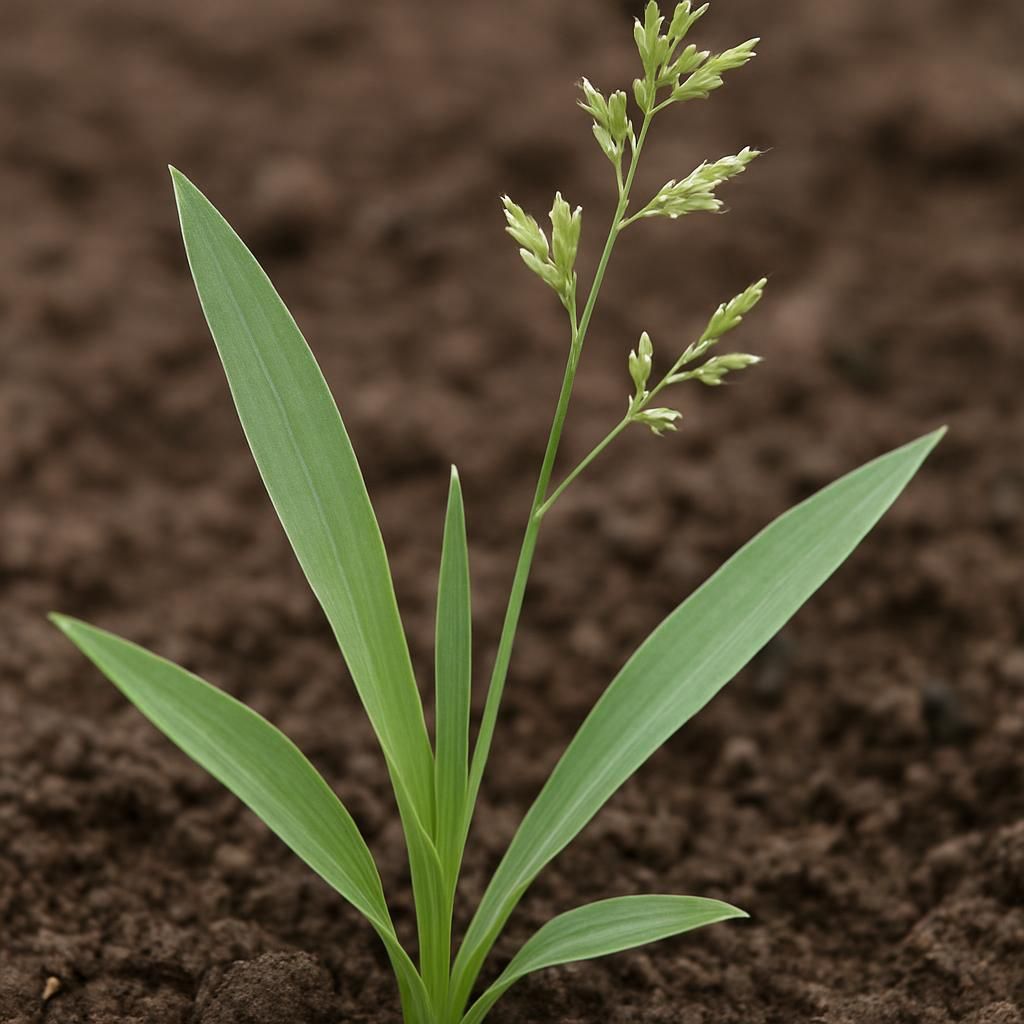
Introduction to Poa annua
Poa annua is one of the most widespread and persistent annual grass weeds in temperate agriculture and turf management. This cool-season species germinates rapidly under favorable moisture and temperature conditions, quickly forming dense mats that outcompete desirable crops and turf grasses. Its prolific seed production and ability to adapt to disturbed soils make it a significant challenge for farmers, golf course superintendents, and landscapers worldwide.
Annual bluegrass thrives in compacted, poorly drained, or frequently irrigated soils where it can establish before perennial species. In agricultural settings it reduces stand density of Wheat, Barley, and cool-season forage crops while lowering overall forage quality. The weed’s shallow root system allows quick uptake of surface-applied fertilizers, further intensifying competition during critical crop growth stages.
Identifying Symptoms & Damage
Visible symptoms of Poa annua infestation include light-green to yellowish patches that contrast with darker perennial turf or crop stands. The weed produces characteristic boat-shaped leaf tips and a prominent mid-vein that helps distinguish it from other bluegrasses. In advanced stages, dense clumps create uneven surfaces in turf and reduce harvest efficiency in grain and forage crops.
Damage manifests as reduced photosynthetic capacity in neighboring plants due to shading and resource depletion. In cereal crops such as Oats and Rye, Poa annua can lower grain protein content and test weight. Pasture productivity declines when the weed displaces higher-quality forage species, leading to decreased livestock weight gains.
Lifecycle and Progression of Poa annua
Poa annua completes its life cycle within a single growing season, germinating in fall or early spring depending on climate. Seedlings develop rapidly under cool, moist conditions and reach reproductive maturity within 6–8 weeks. Each plant can produce thousands of seeds that remain viable in the soil seedbank for several years.
| Lifecycle Stage | Timing | Key Characteristics | Management Window |
|---|---|---|---|
| Germination | Fall to early spring (soil temps 7–18 °C) | Rapid emergence in disturbed or compacted soils | Pre-emergent herbicides or cultivation |
| Vegetative Growth | 2–6 weeks post-germination | Light-green leaves, shallow fibrous roots | Mowing, grazing, or selective post-emergent herbicides |
| Flowering & Seed Set | 6–10 weeks | Panicles emerge, self-pollination occurs | Early removal before seed maturity |
| Seed Dispersal | Late spring to summer | Up to 2,000 seeds per plant; seedbank replenishment | Sanitation, equipment cleaning |
| Dormancy & Overwintering | Summer to following fall | Seeds persist in soil; some plants behave as short-lived perennials in mild climates | Long-term cultural suppression |
Environmental Triggers & Risk Factors
Poa annua establishment is favored by cool temperatures (10–20 °C), frequent irrigation or rainfall, and compacted or low-oxygen soils. High nitrogen fertility applied in cool months stimulates rapid weed growth while perennial grasses remain semi-dormant. Disturbed seedbeds from tillage or traffic create ideal microsites for germination.
| Environmental Factor | Optimal Range for Poa annua | Risk Level |
|---|---|---|
| Soil Temperature | 7–18 °C | High |
| Soil pH | 5.5–7.0 | Moderate |
| Soil Compaction | Bulk density >1.4 g/cm³ | High |
| Irrigation Frequency | Daily light watering | High |
| Nitrogen Application | >50 kg N/ha in cool season | High |
Shade from low-mown turf or dense crop canopies can suppress the weed, yet excessive thatch accumulation often protects seedlings. Fields with poor drainage or history of winter annual weeds show elevated risk.
Organic Control & Treatment Plans
Integrated organic management begins with cultural practices that reduce weed pressure before chemical intervention. Improving soil structure through aeration, maintaining adequate but not excessive irrigation, and using competitive crop varieties are foundational steps. Hand removal or shallow cultivation before seed set prevents seedbank replenishment.
| Treatment Option | Application Frequency | Rate/Details | Notes |
|---|---|---|---|
| Corn gluten meal (pre-emergent) | Early fall & early spring | 20–40 lbs per 1,000 ft² | Suppresses germination; provides N |
| Mowing at 2–3 inches | Weekly during active growth | Remove clippings to limit seed return | Reduces flowering |
| Hand weeding or hoeing | As seedlings appear | Target plants before panicle emergence | Most effective in small areas |
| Flame weeding | Pre-plant or between rows | 1–2 passes at 2–3 leaf stage | Avoid crop damage |
| Over-seeding with perennial ryegrass | Fall renovation | 5–8 lbs per 1,000 ft² | Increases competition |
| Mulching with 3–4 inches organic material | At planting or renovation | Maintains moisture and blocks light | Use in high-value beds |
Preventing Poa annua in the Future
Long-term prevention relies on maintaining dense, healthy stands of desirable species through proper fertilization timing, irrigation scheduling, and soil aeration. Avoid late-fall nitrogen applications that favor the weed. Implement sanitation protocols by cleaning equipment between fields to limit seed transport.
Crop rotation with competitive warm-season species such as Corn or Sorghum disrupts the weed’s cool-season life cycle. Regular soil testing and targeted liming to maintain pH above 6.0 reduce suitability for Poa annua. Establishing thick turf or cover crops during vulnerable periods minimizes open soil where the weed can germinate.
Crops Most Affected by Poa annua
Poa annua most severely impacts cool-season cereals including Wheat, Barley, and Oats. In vegetable production it competes with Lettuce, Spinach, and Onion during early growth stages. Pasture and forage systems suffer reduced quality when the weed displaces Ryegrass and clover mixtures. Golf course putting greens and sports fields experience playability issues and increased maintenance costs.
High-value horticultural crops such as Strawberry and Blueberry are also vulnerable during establishment years when canopy closure has not yet occurred. In all cases, early detection and integrated management remain the most cost-effective approach.