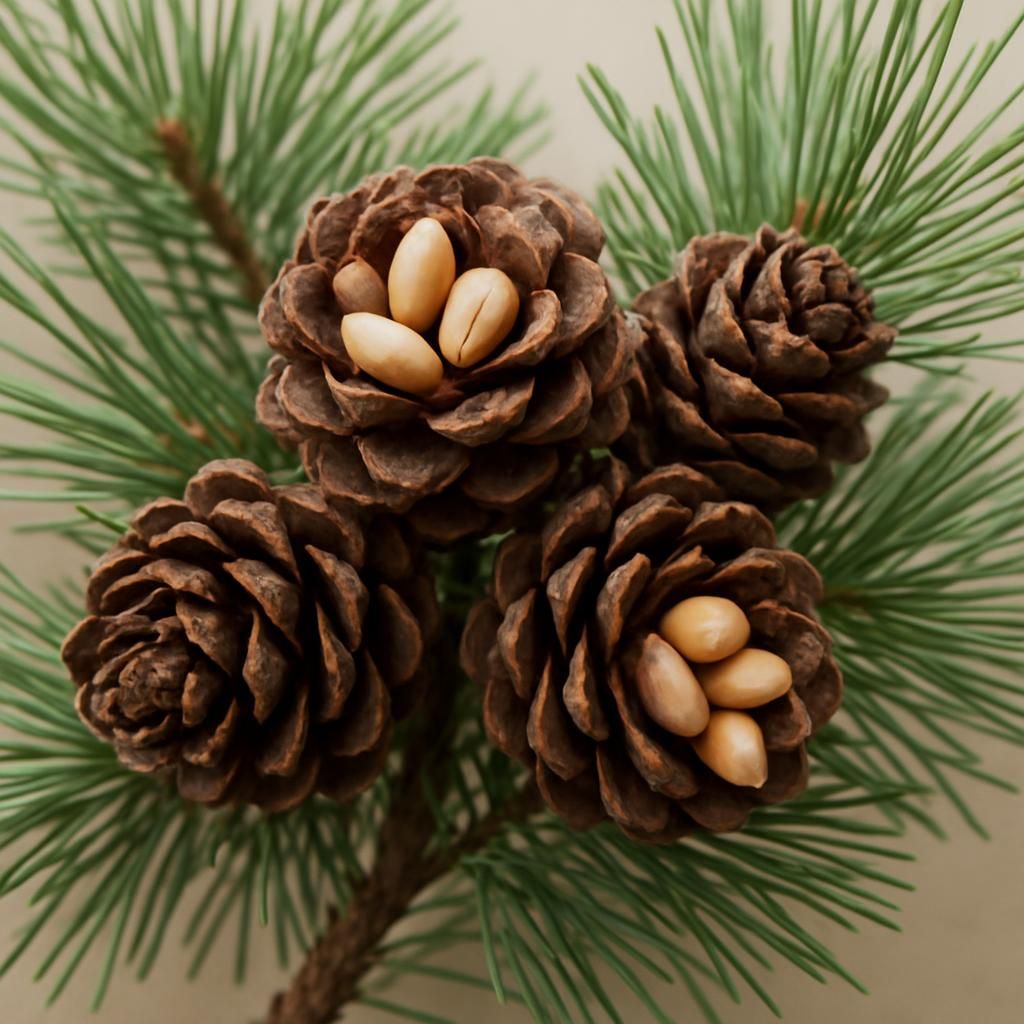
Introduction to Pine Nut (Pinus sibirica - Siberian)
Pinus sibirica, commonly called the Siberian pine or Siberian cedar, is a slow-growing evergreen conifer native to the cold continental climates of Siberia and northern Mongolia. It produces large, nutrient-dense seeds known commercially as pine nuts, which are highly valued for culinary, medicinal, and cosmetic uses. The tree can live 300–800 years, reaching 30–40 meters in height with a broad, conical crown. Its deep taproot and extensive lateral roots make it exceptionally drought-tolerant once established. Siberian pine is increasingly planted outside its native range for both timber and edible nut production because of its cold hardiness and resistance to many common conifer pests.
Commercial interest has grown steadily as global demand for pine nuts outstrips supply from traditional Pinus koraiensis and Pinus pinea orchards. Siberian pine nuts are larger and milder than many Mediterranean varieties, commanding premium prices in health-food markets. The species is also valued for reforestation projects in boreal and subalpine zones because of its ability to thrive on marginal, acidic soils. Growers seeking long-term, low-input perennial crops find Pinus sibirica attractive despite the 15–25 year wait until first commercial harvest.
Successful cultivation requires patience, site selection, and an understanding of the tree’s unique reproductive biology. Female cones take two full growing seasons to mature, and seed set is heavily influenced by summer temperatures during the second year. This guide provides professional-grade, evidence-based recommendations drawn from Russian forestry research, North American trial orchards, and modern organic practices.
Botanical Profile of Pine Nut (Pinus sibirica - Siberian)
Pinus sibirica belongs to the Pinaceae family and is closely related to Pinus cembra. Needles occur in fascicles of five, are 6–13 cm long, and persist for 3–7 years. The bark is gray-brown and becomes deeply fissured with age. Male strobili appear in spring on lower branches, releasing copious pollen. Female cones develop on the upper crown and require 24–26 months from pollination to seed maturity. Each mature cone contains 80–150 large, wingless seeds weighing approximately 0.25 g each. The tree exhibits strong apical dominance and forms a straight, cylindrical bole when grown at moderate densities.
Reproduction is primarily sexual, although grafting is used for clonal propagation of superior nut-yielding selections. The species is monoecious but strongly outcrossing; isolated trees often produce low seed set. Siberian pine demonstrates mast-seeding behavior, with heavy crops occurring every 3–5 years. Kernel oil content ranges from 55–65 % and is rich in pinolenic acid, a polyunsaturated fatty acid linked to appetite regulation. The high lipid content makes the nuts susceptible to oxidative rancidity if not stored properly.
Soil, pH, and Climate Requirements for Pine Nut (Pinus sibirica - Siberian)
Siberian pine performs best on well-drained, light-textured soils with moderate fertility. It tolerates nutrient-poor sites but responds positively to organic matter incorporation during establishment. The species is calcifuge and prefers acidic to slightly acidic conditions. Cold hardiness extends to USDA zone 2 (−45 °C), but late-spring frosts can damage emerging pollen cones. Annual precipitation of 400–800 mm is adequate provided summer rainfall or irrigation supports cone development.
| Parameter | Ideal Range | Notes |
|---|---|---|
| Soil Texture | Sandy loam to loam | Avoid heavy clays and waterlogged sites |
| Soil pH | 5.0–6.5 | Liming rarely required |
| Organic Matter | 3–6 % | Incorporate well-rotted compost at planting |
| Drainage | Excellent | Raised beds or mounds on marginal sites |
| Minimum Winter Temp | −45 °C | Fully hardy once established |
| Growing Season Temp | 15–25 °C average | Optimal cone fill occurs above 18 °C |
| Annual Precipitation | 400–800 mm | Supplemental irrigation improves yields |
| Elevation | 200–2,000 m | Performs well in cool highland climates |
Step-by-Step Planting & Propagation
Site preparation begins two seasons before planting. Clear competing vegetation and rip or subsoil to 60 cm depth to encourage deep rooting. Conduct soil tests and amend with aged manure or compost to reach target organic-matter levels. Plant bare-root or container-grown seedlings in early spring while soils are still cool. Space trees 6–8 m apart in rows 8–10 m wide for nut orchards; closer spacing (4 × 4 m) is acceptable for timber-plus-nut systems.
Seed propagation requires cold stratification at 2–5 °C for 90–120 days. Sow stratified seeds 2 cm deep in well-drained media; germination occurs in 4–6 weeks at 15–20 °C. Seedlings grow slowly the first two years and benefit from partial shade. Grafting onto Pinus sibirica or Pinus cembra rootstock using side-veneer or whip-and-tongue methods in late winter yields 70–85 % success when scions are dormant. Micropropagation protocols exist but remain experimental for commercial use.
Transplant seedlings with intact root plugs to minimize transplant shock. Water thoroughly after planting and apply 5–8 cm of organic mulch, keeping it 10 cm away from the stem. Install tree guards against rodent damage. In year two, begin formative pruning to establish a single leader.
Care & Maintenance regimes for Pine Nut (Pinus sibirica - Siberian)
Young trees require consistent moisture during the first three summers. Once established, the deep root system accesses subsoil moisture, reducing irrigation frequency. Fertilization should be conservative; excess nitrogen promotes vegetative growth at the expense of cone production. Organic mulches and periodic compost applications maintain soil biology and nutrient cycling.
| Year/Stage | Watering Schedule | Fertilizer (Organic) | Pruning Schedule |
|---|---|---|---|
| Years 1–3 | 20–30 L/week during dry spells | 5 kg compost + 50 g rock phosphate/tree | Remove lower branches; establish leader |
| Years 4–10 | Deep soak every 3–4 weeks if rainfall <25 mm | 10 kg compost + 100 g sulfate of potash | Thin competing leaders; remove dead wood |
| Mature (10+) | Supplemental only in extreme drought | 15–20 kg compost every 3 years | Sanitation prune every 5–7 years |
Monitor needle color and length as indicators of nutrient status. Pale, short needles suggest nitrogen or magnesium deficiency. Apply foliar seaweed extract in early summer if symptoms appear. Avoid cultivation under the canopy to protect shallow feeder roots.
Pests, Diseases & Organic Management
Siberian pine is relatively pest-resistant compared with Pinus radiata or Pinus strobus. The most common issues are Aphids, Pine needle scale, and occasional Pine shoot moth infestations. Cone and seed insects such as the pine cone weevil can reduce yields in mast years. Fungal diseases include needle cast (Lophodermium) and occasional Armillaria root disease on poorly drained sites.
Organic management emphasizes cultural practices: maintain tree vigor through proper spacing and mulch, remove and destroy infested cones, and encourage predatory insects with flowering understory plants. Sticky trunk bands and pheromone traps provide monitoring data for cone pests. Bacillus thuringiensis sprays timed to larval hatch control shoot moths without harming beneficials. Copper-based fungicides applied at bud break suppress needle cast when disease pressure is high.
Harvesting, Curing & Optimal Storage
Cones are harvested when scales begin to reflex and seeds rattle inside, typically late August to early September in temperate zones. Use long-handled picking poles fitted with collection baskets to minimize branch damage. Drop cones onto tarps and transport promptly to a shaded curing area. Air-dry cones at 20–25 °C with good airflow for 2–3 weeks until scales open fully.
Extract seeds by gentle mechanical shaking or tumbling. Remove wings and debris with air-screen cleaners. Dry kernels to 6–8 % moisture content for long-term storage. Vacuum-pack or store in oxygen-barrier bags at −18 °C to preserve flavor and prevent rancidity for up to 24 months. At 4 °C, shelf life is approximately 12 months.
Companion Planting for Pine Nut (Pinus sibirica - Siberian)
Understory legumes such as Clover and Hairy vetch fix nitrogen and improve soil structure without competing heavily for moisture. Aromatic herbs including Thyme and Rosemary deter browsing mammals and attract pollinators. Shallow-rooted Strawberry or Blueberry plantings utilize surface soil layers while the pine accesses deeper horizons. Avoid planting heavy feeders such as Corn or Potato within the drip line.
Diverse flowering strips of Yarrow, Marigold, and Nasturtium enhance biological control of aphids and mites. In boreal orchards, interplanting with Sea Buckthorn (if not listed, add to new_internal_links) provides additional wind protection and wildlife habitat. Maintain a 2–3 m weed-free strip along tree rows to reduce rodent habitat while preserving beneficial insect corridors between rows.