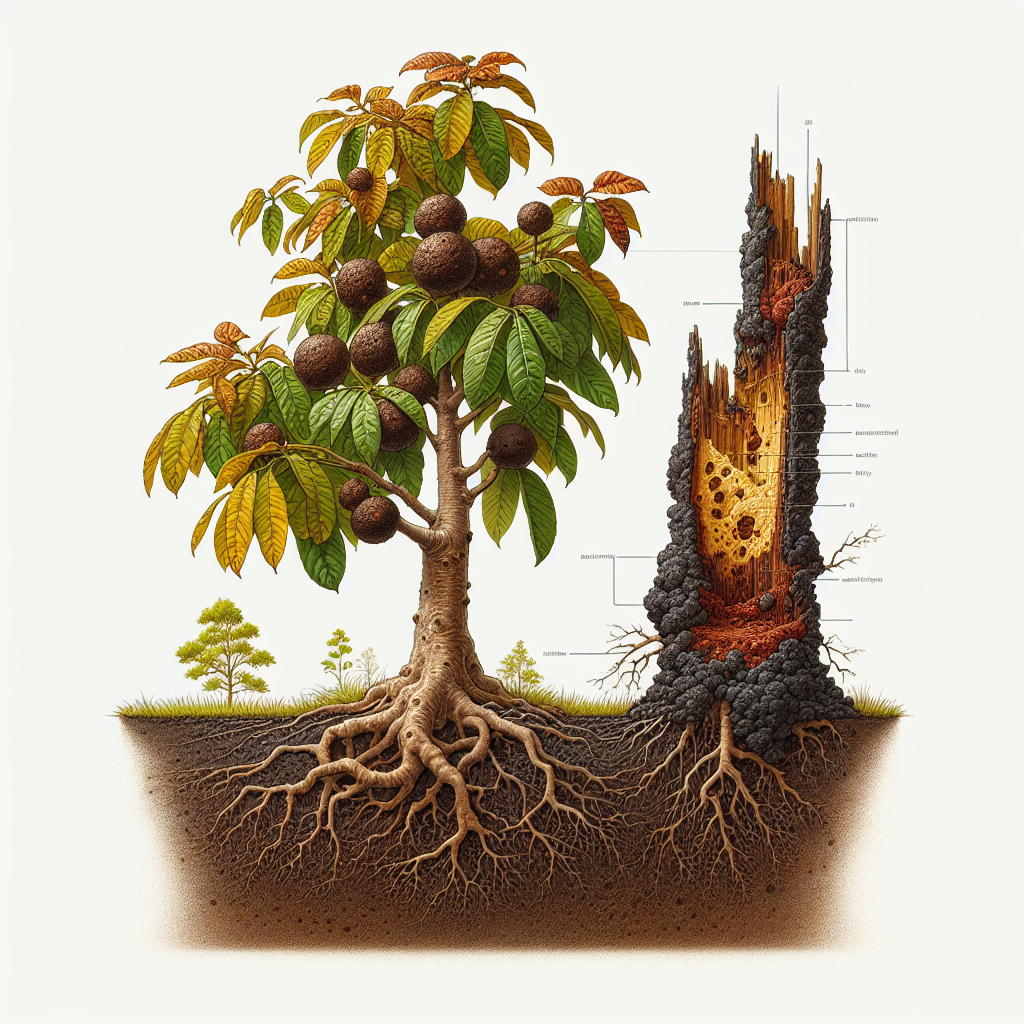
Introduction to Phytophthora crown/root rots
Phytophthora crown/root rots represent one of the most destructive soilborne diseases in modern agriculture, caused by various species of the oomycete genus Phytophthora. These pathogens, often mistaken for fungi but biologically distinct, attack the crown (where stem meets roots) and root systems of plants, leading to severe girdling, tissue decay, and eventual plant collapse. First identified in the early 20th century, Phytophthora diseases have since become global concerns, exacerbated by intensive farming, poor drainage, and climate-driven heavy rainfall events.
The primary culprits include Phytophthora cinnamomi, notorious for devastating avocado orchards worldwide, P. cryptogea in ornamentals and vegetables, and P. nicotianae in citrus and tomatoes. Unlike true fungi, Phytophthora species produce swimming zoospores that require free water to spread, making them perfectly adapted to waterlogged soils. Annual global losses from these rots exceed billions in crop value, particularly in perennial crops like fruit trees and nursery stock. This guide provides professional-grade diagnostic criteria, lifecycle insights, organic management strategies, and prevention tactics tailored for farmers, horticulturists, and agronomists seeking sustainable control.
Understanding Phytophthora is crucial because symptoms mimic drought stress or nutrient deficiencies, leading to misdiagnosis. For instance, in Hass Avocado groves, sudden wilt can wipe out 30-50% of trees in a single season if unchecked. Early intervention through soil testing and cultural adjustments can salvage fields, while integrated approaches combining biology and engineering offer long-term resilience. As climate change intensifies wet-dry cycles, proactive management becomes non-negotiable for profitable farming.
Identifying Symptoms & Damage
Accurate diagnosis of Phytophthora crown/root rots hinges on recognizing a progression of above- and below-ground symptoms. Initial signs often appear during warm, wet periods: leaves yellow, wilt, and droop as if drought-stricken, despite adequate moisture. Foliage may scorch at margins, progressing to full canopy collapse. Stunting and sparse growth precede sudden death, with affected plants failing to recover even after watering.
Examine the crown and roots for hallmark damage. Cut into the lower stem 2-6 inches above soil line; healthy tissue is firm and white. Infected crowns show dark brown to black lesions that girdle the stem, often with reddish-brown discoloration extending into roots. Roots appear water-soaked, blackened, and sparse—rotted tips slough off easily, lacking feeder roots. Advanced rot produces a foul odor and may ooze reddish gum (gummosis) in species like P. cinnamomi.
Secondary symptoms include stunted shoots, leaf drop, and dieback from branch tips. In fruit trees like mango, fruit may fail to set or drop prematurely. Differentiate from other rots like Fusarium (dry, pinkish rot) or Pythium (primarily fine roots). Lab confirmation via agar plating or PCR testing of symptomatic tissue is essential—symptoms alone aren't definitive. Field scouts should probe soil moisture and check for standing water, as 70% of outbreaks link to compaction or flooding.
Economic damage is profound: in California avocado production, Phytophthora costs $40 million yearly. Nursery crops suffer 20-50% losses, triggering quarantines. Prompt removal of infected plants prevents spread, as zoospores splash up to 1 meter via rain or irrigation.
Lifecycle and Progression of Phytophthora crown/root rots
Phytophthora's lifecycle exploits soil moisture, cycling rapidly under favorable conditions. Survival structures include thick-walled oospores (resting spores) persisting years in soil or plant debris, and chlamydospores for short-term survival. Hyphae colonize roots upon contact, producing sporangia on infected tissue.
Warmth (77-86°F optimal for most species) and saturation trigger sporangia to release biflagellate zoospores, which swim chemotactically to roots. Encystment and germination occur within hours, penetrating via wounds or natural openings. Inside, mycelium ramifies, killing cortex and vascular tissues. Progression accelerates in oxygen-poor, waterlogged soils; roots decay in days, crowns in weeks.
Asexual reproduction dominates, but sexual oospores form in dual-matings, enhancing genetic diversity. Airborne sporangia spread via wind or tools, while water moves zoospores extensively. Disease advances from field edges inward, favoring low-lying areas. In perennials, chronic infections girdle slowly; annuals succumb rapidly. Temperature drops below 50°F halt activity, resuming in spring. Knowing this informs timing: monitor post-rain, test soil pre-planting.
Environmental Triggers & Risk Factors
Phytophthora thrives where water persists around roots—key triggers include poor drainage, over-irrigation, and heavy clay soils. Optimal infection occurs at 68-86°F with soil saturation >20% volume. Compaction reduces aeration, favoring anaerobes. Acidic soils (pH <6) exacerbate P. cinnamomi, while high phosphorus stresses roots.
Risk factors: planting in infested fields (soil assays detect 1-10 propagules/g), using unsterilized pots/nursery stock, and overhead watering splashing inoculum. Flooded fields post-storm amplify spread. Susceptible varieties like young citrus trees or stressed plants (drought, nematodes) fall first. Crop rotation fails as oospores endure decades. Climate shifts with erratic rains heighten vulnerability—see Soil Health Mastery: 5 Proven Strategies for Small Farms to Build Fertile Ground Without Breaking the Bank for drainage tips.
Organic Control & Treatment Plans
Organic management emphasizes exclusion, cultural tweaks, and biocontrol—no cure exists post-infection, so focus on suppression. Remove and destroy infected plants immediately, avoiding composting. Solarize soil (clear plastic, 4-6 weeks summer sun) kills 90% propagules in top 6 inches.
Boost biology: apply Trichoderma harzianum or Bacillus subtilis drenches (1-2 gal/acre weekly) to outcompete Phytophthora. Mycorrhizal fungi enhance root vigor. Amend with compost (5-10 tons/acre) for drainage and microbes—avoid fresh manure. Organic phosphites (mono/potassium, 2-4 qt/acre foliar/soil) induce resistance, applied pre-rain.
Treatment plan: 1) Scout weekly, test soil (Phytophthora root rot). 2) Improve drainage—raised beds, tile drains. 3) Drench with phosphites + biofungicides at symptom onset. 4) Mulch 4-6 inches (hardwood, not green waste) to moderate moisture. 5) Rotate to non-hosts 3-5 years. In nurseries, steam soil to 160°F. Success rates: 60-80% in early stages with vigilance.
Preventing Phytophthora crown/root rots in the Future
Prevention trumps control—start clean. Use certified disease-free stock, test nursery soil quarterly. Site selection: elevate plantings 12-18 inches, slope >2%. Install drip irrigation, avoiding crowns; schedule based on tensiometers (<20 kPa).
Resistant rootstocks: Duke 7 for avocado, VR-507 for citrus. Biofumigants like mustard cover crops release isothiocyanates suppressing oospores. Annual lime to pH 6.5-7. Disinfest tools (10% bleach). Quarantine new plants 6 months. Monitor with bait tests (apples floated in soil slurry). Long-term: diversify varieties, integrate cover crops like clover for soil structure. Economic ROI: prevention saves 5-10x treatment costs.
Crops Most Affected by Phytophthora crown/root rots
Perennials suffer most: avocado (P. cinnamomi devastates 80% susceptible groves), citrus (orange, lemon), mango, apple, stone fruits. Vegetables: tomato, potato, peppers, cucurbits. Ornamentals, nursery stock, and raspberries/blueberries in wet regions. Tropicals like banana, pineapple face chronic losses. Annuals show acute wilt; trees decline over years. Regional hotspots: Florida tomatoes, California avocados, Australian macadamias.