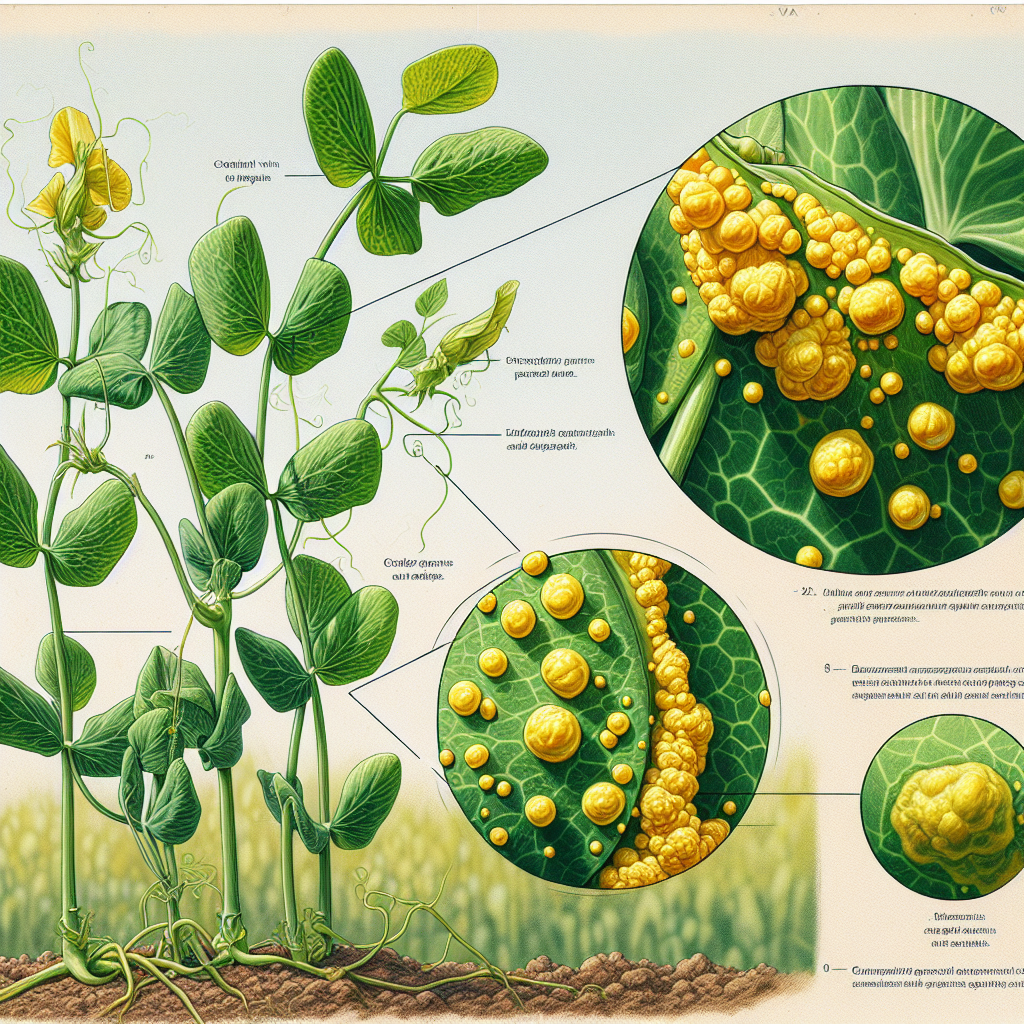
Introduction to Pea enation mosaic
Pea enation mosaic is a devastating viral disease that strikes pea crops (Pisum sativum), leading to stunted growth, deformed leaves, and drastic reductions in pod and seed production. Caused by the Peas (crop) enation mosaic virus complex—specifically PEMV-1 (genus Enamovirus) and PEMV-2 (genus Luteovirus)—this disease is persistently transmitted by several aphid species, notably the pea aphid (Aphids (pest)). First identified in the early 20th century, it remains a major threat to pea production worldwide, particularly in temperate regions where peas are a staple legume crop.
The disease's name derives from 'enation,' referring to the blister-like outgrowths on the undersides of leaves, a hallmark symptom. Infected plants rarely recover, and yields can drop by 50-100% depending on infection timing and severity. While no curative treatments exist for viral infections, proactive integrated pest management (IPM) strategies focusing on vector control are essential. This guide provides professional-grade diagnostic, management, and prevention advice for farmers, agronomists, and home gardeners growing peas. For more on pea cultivation challenges, check this Spring Pest Patrol: Organic AI Strategies to Shield Your Crops from Common Invaders.
Understanding pea enation mosaic is critical for sustainable legume farming, as it not only affects peas but can spread to related crops like lentils and chickpeas under high aphid pressure. Early detection and vector suppression can safeguard harvests and maintain soil health through healthy legume rotations.
Identifying Symptoms & Damage
Diagnosing pea enation mosaic requires keen observation of foliar symptoms, as the disease manifests progressively on pea plants. Initial signs appear 7-14 days after aphid transmission, starting on the youngest leaves. Key symptoms include:
Leaf Distortion and Enations: Leaves develop a crinkled, puckered appearance with prominent vein clearing. Pale green to yellow mottling spreads along veins, and blister-like enations (outgrowths of leaf tissue) form on the underside of leaflets, giving a 'bubble' or 'bubblegum' look.
Stunting and Plant Vigor Loss: Infected plants are noticeably shorter, with brittle stems and reduced branching. Apex dominance is disrupted, leading to a bushy, rosetted growth habit.
Pod and Seed Impact: Pods are small, twisted, and fail to fill, resulting in shriveled, low-weight seeds. Severe infections cause pod abortion, slashing yields by up to 90% if plants are hit early.
Secondary Signs: Plants may show interveinal chlorosis (yellowing between veins) and necrosis in advanced stages. Unlike fungal diseases like powdery mildew, there's no white coating; symptoms are strictly viral.
Damage assessment: Early-season infections (pre-flowering) cause the most harm, reducing biomass by 40-60% and seed yield by 70-100%. Late infections mainly affect pod quality. Differentiate from mosaic viruses by the characteristic enations—standard mosaics lack these outgrowths. Use ELISA or PCR testing for confirmation in commercial settings. Visual scouting weekly from emergence is vital; rogue infected plants immediately to limit spread.
Lifecycle and Progression of Pea enation mosaic
Pea enation mosaic lacks a true 'lifecycle' as a virus but progresses through plant infection cycles driven by aphid vectors. PEMV-1 and PEMV-2 must co-infect for full symptom expression; either alone causes milder disease.
Transmission: Aphids (Acyrthosiphon pisum, Myzus persicae) acquire the virus while feeding on infected plants. Persistent transmission means aphids retain the virus lifelong, passing it to 80-100% of probed plants. No seed or mechanical transmission occurs.
Incubation: Symptoms emerge 7-21 days post-inoculation, starting at the growing tip and moving basipetally.
Progression Stages:
- Early (1-2 weeks): Vein clearing and mild mottling on trifoliate leaves.
- Mid (2-4 weeks): Enations, leaf rolling, and stunting intensify.
- Late (4+ weeks): Necrosis, pod deformation, plant death.
Overwintering: Viruses persist in volunteer peas, weed hosts (e.g., clover, alfalfa), and aphid populations. Spring aphid flights initiate epidemics.
The disease spreads rapidly in dense plantings with high aphid influx, peaking mid-season. Systemic infection means no localized containment; entire plants become sources for secondary spread.
Environmental Triggers & Risk Factors
Pea enation mosaic thrives under conditions favoring aphid proliferation and plant stress:
Temperature: Optimal at 15-25°C (59-77°F); aphids multiply fastest here. Cool springs (10-20°C) delay but prolong epidemics.
Weed Hosts and Volunteers: Presence of clover or overwintered peas acts as reservoirs.
Planting Density: Crowded fields (>20 plants/m²) increase aphid landing and transmission efficiency.
Nitrogen Excess: High N fertilizers promote lush growth attractive to aphids.
Regional Risks: Prevalent in North America (Pacific Northwest, Midwest), Europe, and Australia. Risk spikes after mild winters with surviving aphids.
Risk factors include late planting (overlapping with aphid peaks), susceptible varieties like 'Alaska,' and nearby soybeans fields harboring vectors. Monitor aphid thresholds: 5-10/plant triggers action.
Organic Control & Treatment Plans
No direct viral cures exist, so management targets aphids and plant health. Organic IPM plans:
Cultural Controls (Foundation):
- Plant resistant varieties: 'Arvika,' 'Banner,' 'Delta' show tolerance.
- Early planting to avoid peak aphid flights.
- Rogue infected plants weekly; destroy by burning.
- Reflective mulches (aluminum) repel alates.
Biological Controls:
- Release ladybugs, lacewings, parasitoids (Aphidius spp.).
- Encourage native predators via flowering borders (nasturtium, yarrow).
Organic Insecticides:
- Insecticidal soaps or neem oil at first aphid sighting (weekly sprays).
- Pyrethrins for knockdown, rotated to prevent resistance.
- Threshold: Treat at 10 aphids/plant.
Monitoring: Yellow sticky traps for alates; beat-sheet sampling.
Integrated plan: Scout twice weekly, apply controls at low thresholds, interplant with aphid-repellent herbs like thyme. Expect 70-90% control with diligence.
Preventing Pea enation mosaic in the Future
Long-term prevention builds resilient systems:
Varietal Selection: Prioritize PEMV-resistant cultivars; rotate with non-hosts like wheat or corn.
Sanitation: Eliminate volunteers, weeds; deep plow residues.
Barriers: Row covers until flowering; windbreaks reduce aphid drift.
Crop Rotation: 2-3 years away from legumes.
Field History: Avoid high-risk sites; use certified virus-free seed.
Scouting Networks: Regional alerts via extension services.
Combine with soil health practices like cover cropping to boost plant vigor against stress. Annual planning prevents recurrence.
Crops Most Affected by Pea enation mosaic
Primarily peas (garden, field, snap varieties like sugar snap peas, snow peas). Secondary: lentils, chickpeas, faba beans. Rare spillover to beans. Economic impact highest in dry pea production regions.