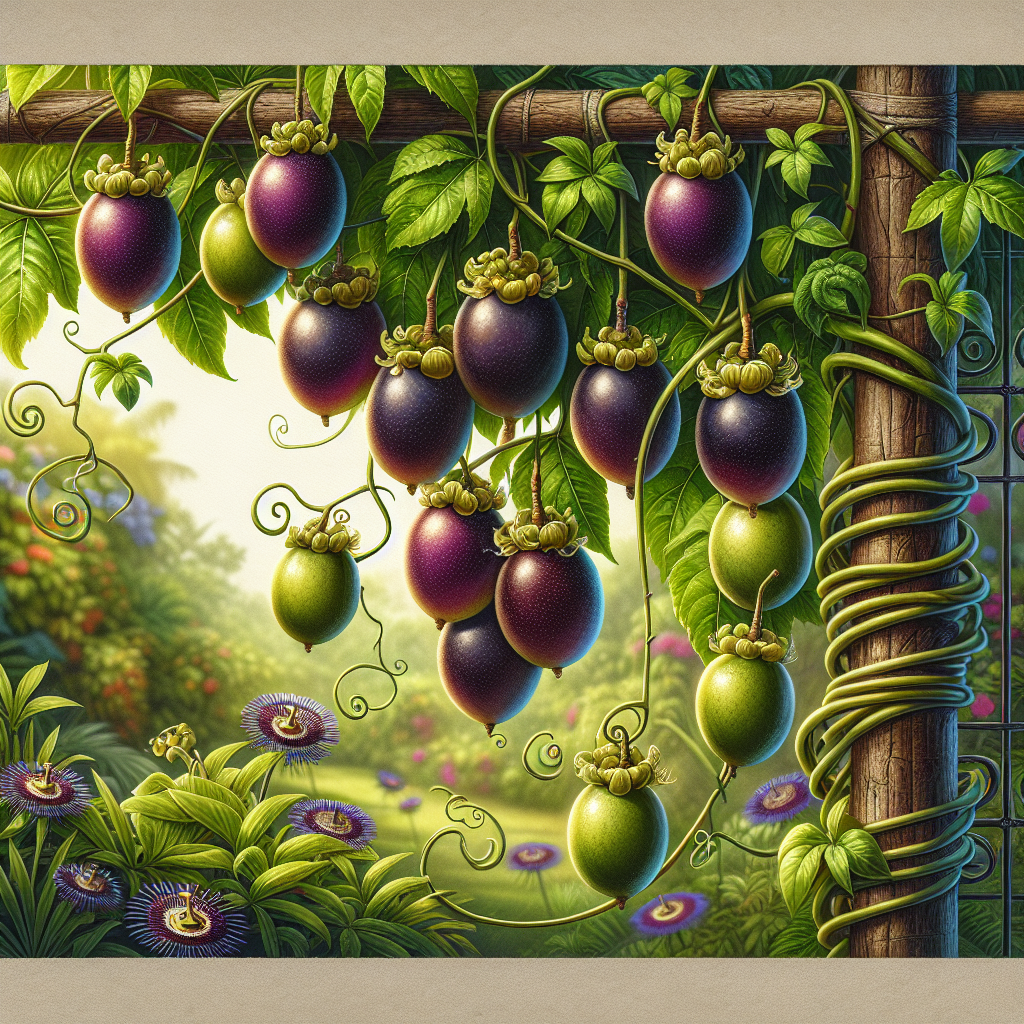
Introduction to Passion Fruit (Frederick)
Passion Fruit (Frederick), known scientifically as Passiflora edulis f. edulis 'Frederick', stands out as one of the premier purple passion fruit varieties for commercial and home growers alike. Developed through selective breeding in Australia, this cultivar is celebrated for its robust vigor, superior fruit quality, and remarkable tolerance to common passion fruit diseases like Fusarium wilt and woodiness virus. The fruits are large, oval-shaped, with deep purple skins encasing juicy, seed-filled golden pulp bursting with sweet-tart flavor—perfect for fresh eating, juicing, or culinary uses.
What sets 'Frederick' apart is its productivity: mature vines can yield 50-60 kg of fruit per plant per season, with harvests spanning 8-10 months in ideal conditions. This variety is self-fertile but benefits immensely from cross-pollination with other purple types, leading to even higher yields. For small farms and orchards in USDA zones 9-11 or equivalent subtropical regions, 'Frederick' offers a reliable path to profitability, with fruits fetching premium prices in markets due to their size (up to 100g each) and shelf life. Dragon Fruit (crop) growers often pair it successfully for diverse tropical income streams.
Successful cultivation hinges on providing strong trellis support, as vines can extend 10-15 meters. With proper care, 'Frederick' passion fruit delivers consistent returns, making it a cornerstone for tropical fruit enterprises. This guide dives deep into every aspect, from soil prep to post-harvest handling, empowering you to maximize yields organically.
Botanical Profile of Passion Fruit (Frederick)
Passion Fruit (Frederick) belongs to the Passifloraceae family, a perennial evergreen climber native to southern Brazil but perfected through Australian breeding programs. The 'Frederick' selection emphasizes hybrid vigor from P. edulis and P. edulis f. flavicarpa crosses, resulting in plants that reach 6-10 meters in height with lush, three-lobed green leaves (10-15 cm long) and striking white-green flowers featuring a ring of purple coronal filaments. Blooming year-round in warm climates, each 5-7 cm flower opens for just 24-48 hours, attracting bees for pollination.
Fruits mature in 70-80 days post-bloom, weighing 80-120g with tough, glossy purple rind protecting 60-70g of aromatic pulp surrounding black, edible seeds. Nutritionally, each fruit packs vitamin C (30mg/100g), antioxidants, and fiber, contributing to its superfood status. Roots are shallow but extensive, spreading 3-4m laterally, while stems are woody at the base with tendrils for climbing.
'Frederick' exhibits semi-evergreen habits in frost-free areas, dying back in marginal zones but regrowing vigorously. Its genetic resistance to collar rot and root rots stems from F1 hybrid traits, outpacing standard purple varieties in longevity (15+ years productive). Growth rate is rapid—1-2m in the first season—demanding annual pruning to maintain shape and fruiting wood.
Soil, pH, and Climate Requirements for Passion Fruit (Frederick)
'Frederick' passion fruit demands well-drained, fertile loam or sandy loam soils rich in organic matter, with pH 6.0-7.5 for optimal nutrient uptake. Avoid heavy clays prone to waterlogging, which invite root rot. Incorporate 20-30% compost or aged manure pre-planting, aiming for 2-3% organic content to support microbial life and moisture retention without sogginess.
Ideal climate mirrors its subtropical origins: temperatures 20-30°C (68-86°F) daytime, no lower than 10°C (50°F) nights. Frost tolerance is low—protect below 5°C with covers or microclimates. Annual rainfall of 1200-2000mm suits it best, supplemented by drip irrigation during dry spells (weekly 25-40L per vine). Full sun (6-8+ hours) is non-negotiable; partial shade reduces yields by 30-50%.
Humidity above 60% aids pollination and fruit swell, but ensure airflow to curb fungal issues. In cooler zones, use high tunnels or greenhouses. Mulch heavily (10-15cm organic) to regulate soil temps (ideal 22-28°C) and suppress weeds. Test soil annually; amend with dolomite lime for pH below 6.0 or gypsum for sodic soils. For heatwave resilience, see Why Summer Heatwaves Are Silently Killing Small Farm Yields - And 7 Organic Strategies to Fight Back.
Step-by-Step Planting & Propagation
Propagation
'Frederick' is typically propagated via seed for rootstock or semi-hardwood cuttings for clones, preserving hybrid traits. Seeds germinate in 2-4 weeks at 25-30°C in moist seed trays (80% success). For cuttings: select 15-20cm stems with 2-3 nodes in summer, dip in 3000ppm IBA, plant in perlite:vermiculite (1:1) under mist—roots in 4-6 weeks (90% strike rate).
Grafting onto hardy P. caerulea rootstocks boosts cold tolerance. Air-layering mature vines yields instant fruiters.
Planting
Plant in early spring post-frost. Space vines 4-5m apart along sturdy T-bar trellises (2.5m high, 3m wide bays) or overhead arbors for max light penetration. Dig 50x50x50cm holes, backfill with 50% compost-soil mix + 200g superphosphate + 100g dolomite.
- Soak roots 1 hour pre-plant.
- Position graft union 10cm above soil.
- Water deeply (20L), mulch immediately.
- Train leading shoot vertically to wire #1.
Establish with weekly fertigation (NPK 10-5-20) for 3 months. Expect first flowers at 12-18 months.
Care & Maintenance regimes for Passion Fruit (Frederick)
Water consistently: 30-50L/week per vine, deeper less often to encourage deep roots. Drip systems prevent wet foliage. Fertilize monthly during growth: 100g complete NPK (12-6-12) + micronutrients (Zn, Mn, B critical). Reduce N post-fruit-set to avoid vegetative excess.
Prune annually post-harvest: remove 30-50% old canes, thin laterals to 4-6 per node, tipping shoots at 1.5m. This spurs fruiting wood and airflow. Train to single/double wire for even canopy.
Pollination boost: introduce bumblebees or hand-pollinate mornings. Weed meticulously; mulch conserves moisture. Monitor for nutrient deficiencies—yellow leaves signal iron chlorosis (chelate foliar spray).
Winter chill: defoliate lightly if needed; protect roots with 15cm mulch. Yields peak years 3-7, then renovate by cutting to 1m stumps.
Pests, Diseases & Organic Management
Common pests: Aphids cluster on tips—blast with water or neem oil (2ml/L weekly). Mealybugs on stems: alcohol swabs + ladybugs. Spider mites in dry heat: predatory mites + sulfur spray. Fruit flies pierce rind—bag fruits or use protein baits.
Diseases: 'Frederick's resistance shines against Fusarium, but watch Phytophthora in wet soils—improve drainage + phosphite drenches. Powdery mildew: potassium bicarbonate sprays. Brown spot (Alternaria)—copper fungicide preventatively.
Organic IPM: companion plant marigold for nematodes; release predatory wasps. Scout weekly; prune infected parts. For advanced tactics, check Why 90% of Small Farms Fail at Pest Management - And 8 Organic Fixes That Actually Work. Rotate crops; solarize soil pre-plant.
Harvesting, Curing & Optimal Storage
Harvest when fruits drop naturally or purple fully (70-80 days bloom-to-harvest). Yield: 100-150 fruits/vine/season initially, scaling up. Pick daily during peak; handle gently to avoid rind cracks.
Cure: room temp (20-25°C) 3-5 days for flavor peak; rind wrinkles signal ripeness. Store at 8-10°C, 85-90% RH up to 4 weeks (no chill injury). Refrigerate pulp post-extraction (0°C, 3 months).
Post-harvest: grade by size/color; hot water dip (48°C, 20min) kills fungi. Market fresh or process into juice/puree (yields 40-50% recoverable pulp).
Companion Planting for Passion Fruit (Frederick)
Boost yields with strategic companions: Nitrogen-fixers like peas or clover under vines enrich soil. Nasturtium traps aphids; thyme repels nematodes. Avoid potato (blight risk) or water-hungry corn.
Trellis over strawberry beds for shade protection. Marigold borders deter root-knot nematodes. Learn more in Why Companion Planting Feels Like Guesswork for Small Farms - And How AI Makes It Foolproof—wait, no external promo, but principles apply: diversity suppresses pests 20-40%.