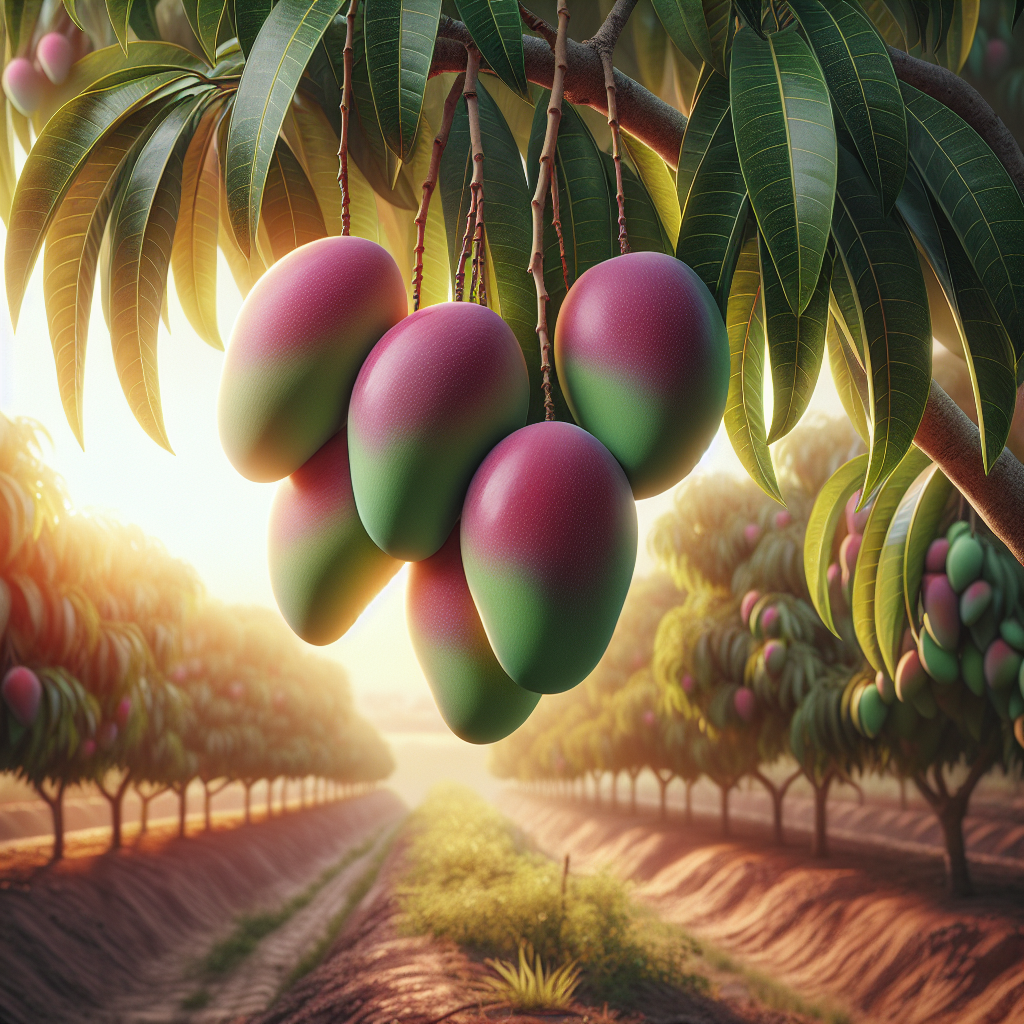
Introduction to Palmer Mango
A well-regarded late-season cultivar, Palmer is grown for its handsome fruit, extended harvest window, and good shipping and handling qualities compared with softer, more delicate mangoes. The fruit is typically large, elongated, and often develops a striking maroon to purple-red blush over green to yellow background skin, making it attractive in fresh markets.
Palmer is believed to have originated in Florida and has become established in subtropical and tropical production zones where late-maturing mangoes command a premium. For growers comparing cultivar behavior across orchards, general mango physiology is helpful context; see the broader mango overview. What sets Palmer apart is its tendency toward vigorous vegetative growth, a relatively manageable disease profile in drier climates, and fruit that can remain marketable after harvest if picked at the right maturity stage.
Flavor is usually mild to sweet with less overt resinous character than some traditional cultivars. In excellent growing conditions, the flesh is nearly fiberless to low-fiber, with a smooth texture and good slicing quality. Palmer is not usually the first mango to ripen in the season, but that is precisely its commercial advantage: it often fills a supply gap after early and midseason varieties are finished.
For home growers, Palmer is a strong candidate when there is room for a medium to large tree and a need for dependable production. For commercial orchards, it suits warm regions with low frost risk, strong sunlight, and well-drained soils. Its management is not difficult in principle, but quality fruit production depends on controlling tree size, reducing excess nitrogen, and maintaining stable soil moisture during flowering, fruit set, and fruit enlargement.
Botanical Profile of Palmer Mango
This cultivar belongs to the Anacardiaceae family, the same family as cashew and pistachio. Like other mangoes, it is an evergreen tree with a dense canopy, leathery lanceolate leaves, and terminal panicles carrying hundreds to thousands of small flowers. Most flowers are male, while a smaller proportion are hermaphroditic and capable of setting fruit.
Palmer is generally considered a vigorous grower. Unpruned trees can become tall and broad, often exceeding 6-8 m in home settings and more in favorable tropical conditions. Young flushes often emerge bronze to reddish before hardening to deep green. This trait is normal and not a nutrient deficiency.
Fruit shape is one of Palmer's identifying features: elongated, oblong, and sometimes slightly curved, with a pronounced beak less dramatic than in some Southeast Asian mangoes. Average fruit size often ranges from 450 to 900 g, though well-thinned or lightly cropped trees can produce larger specimens. Skin color can be misleading for harvest timing because blush development depends on sun exposure, canopy position, and temperature. A richly colored fruit is not automatically mature.
The tree's flowering response is influenced by cool dry conditions in subtropical zones or by seasonal moisture stress in tropical areas. As with many mango cultivars, alternate bearing can occur if trees are allowed to overcrop one season and then produce excessive vegetative growth the next. Palmer tends to benefit strongly from postharvest pruning and measured nutrition to stabilize annual yield.
Bloom architecture matters in disease management. Dense, humid panicles are more vulnerable to Anthracnose and Powdery Mildew. Palmer is often regarded as somewhat more forgiving than highly disease-sensitive cultivars, but it is not immune. Fruit finish, especially in rainy flowering periods, can still be compromised.
Soil, pH, and Climate Requirements for Palmer Mango
Palmer performs best in deep, well-drained sandy loam, loam, or gravelly loam with rapid internal drainage. The single most important soil rule is this: do not plant it where water stands after rain. Even 24-48 hours of saturation around the root zone can stress feeder roots, reduce oxygen diffusion, and predispose the tree to root decline and poor nutrient uptake.
An ideal soil pH is about 5.5 to 7.0. The tree can tolerate slightly more alkaline conditions, but micronutrient lock-up becomes more common above pH 7.5, especially iron, zinc, and manganese deficiencies. In high-pH calcareous soils, new leaves may emerge pale with green veins, signaling chlorosis. In that case, foliar micronutrient sprays and organic matter improvement are often more effective than simply adding more granular fertilizer.
For climate, Palmer is best suited to frost-free tropical to warm subtropical regions. Optimal temperature for active growth is roughly 24-32°C. Flowering induction in subtropical zones often benefits from a cooler dry period, but actual frost below about 0°C can damage leaves, flowers, and young wood. Young trees are far more cold-sensitive than established trees.
Rainfall distribution matters as much as total rainfall. High rainfall during flowering can wash pollen, suppress pollinator activity, and increase Anthracnose pressure. Ideally, the tree experiences a relatively dry flowering period followed by moderate moisture during fruit development. Excess rain near maturity can dilute flavor slightly and promote fruit splitting in sensitive conditions.
Wind exposure should be managed. While mature mango trees tolerate breezes, strong persistent winds can shred leaves, scar fruit, and break young scaffold branches. Windbreaks placed at a distance that does not overly shade the orchard are helpful. Avoid low pockets where cold air settles and avoid compacted clay basins unless trees are planted on large mounds at least 45-60 cm high.
Container culture is possible only for a limited period unless aggressive size control is used. Palmer's vigor makes it a less natural long-term container cultivar than compact mango types. If grown in a container, use a very coarse, free-draining medium with mineral structure, not peat-heavy potting mix that stays wet too long.
Step-by-Step Planting & Propagation
Commercially and horticulturally, Palmer should be propagated by grafting, not by seed, if the goal is true-to-type fruit. Seedling mangoes are variable and often take much longer to bear. Veneer grafting, cleft grafting, or side grafting onto vigorous disease-free rootstocks is standard practice.
Select a planting site with full sun for at least 8 hours daily. Light drives carbohydrate production, and mangoes grown in partial shade become overly vegetative, flower poorly, and produce lower color development on fruit.
Test drainage before planting. Dig a hole 45-60 cm deep, fill it with water, and observe drainage. If water remains after 24 hours, improve the site dramatically or relocate. Mango roots need oxygen-rich soil.
Prepare a broad planting area rather than a narrow amended hole. Loosen soil 1-1.5 m across if possible. Avoid creating a soft pit in heavy soil that acts like a sump.
Plant at the same depth as in the nursery container or slightly higher. The upper root flare should remain visible. In wetter climates, position the root ball 5-10 cm above surrounding grade and mulch outward, not against the trunk.
Space trees according to management system. For home orchards, 6-8 m between trees is common. High-density systems can go tighter, but only if annual pruning is disciplined and light penetration is maintained.
Water in thoroughly after planting to settle soil around roots, then transition quickly to a measured irrigation schedule. Constantly wet soil after establishment is a frequent mistake.
Stake only if necessary. Over-staking weakens trunk development. If a tree is top-heavy from nursery growth, use soft ties and remove support once the trunk stiffens.
Mulch with 5-10 cm of coarse organic material such as wood chips, keeping a 15-20 cm trunk-free ring. Mulch moderates soil temperature, reduces evaporation, and gradually improves biological activity.
Young grafted Palmer trees often begin fruiting within 2-4 years, though it is wise to remove most fruit in the first bearing year so the scaffold structure strengthens. Early overcropping can bend limbs, reduce canopy development, and delay long-term productivity.
If you are building a diversified orchard floor, legumes and insectary plants can help; practical orchard floor design principles are discussed in this soil health article.
Care & Maintenance regimes for Palmer Mango
Water management should change by tree age and season. Newly planted trees need frequent but not constant moisture. For the first 2-4 weeks, water deeply 2-3 times weekly in sandy soil or 1-2 times weekly in loam, enough to moisten the root ball and adjacent soil to roughly 20-30 cm depth. After establishment, reduce frequency and increase interval so roots explore outward.
A good target is moist but aerated soil, never swampy soil. At 10-15 cm depth, the soil should feel slightly cool and lightly moist, not sticky and airless. Overwatered Palmer trees often show yellowing leaves, poor flush hardening, weak growth, sour-smelling soil, and eventually tip dieback from root stress. Underwatered trees show leaf folding, dull gray-green foliage, marginal scorch, fruit drop, and reduced fruit size.
For bearing trees, irrigation is especially important from fruit set through fruit enlargement. Severe moisture swings during this window can cause fruit drop or uneven sizing. However, many growers intentionally reduce irrigation somewhat before floral induction in climates where controlled dry-down encourages bloom. The key is mild stress, not severe dehydration.
Nutrition should be based on leaf analysis and soil testing, but general guidance is as follows. Young trees need light, frequent feeding with a balanced fertilizer emphasizing nitrogen for framework development, plus magnesium and micronutrients where deficient. Mature trees require less nitrogen than many growers assume. Excess nitrogen produces long, lush shoots at the expense of flowering and increases susceptibility to some diseases and storm damage.
A practical annual program for mature trees often includes split applications: one after harvest to support recovery and flushing, one before or at early rainy season if needed, and micronutrient foliar sprays timed around flush cycles. Potassium becomes especially important for fruit filling, flavor, and peel quality. Calcium supports cell wall strength, though its uptake depends on healthy transpiration and roots rather than simply adding more product.
Pruning is indispensable with Palmer because of its vigor. Shape the young tree to 3-4 well-spaced scaffold limbs beginning 60-100 cm above ground. Tip-prune vigorous shoots after each flush to encourage branching. On mature trees, prune immediately after harvest, not late in the season, so regrowth has time to mature before flowering induction. Remove vertical water shoots, crowded interior branches, dead wood, and branches hanging too low for air circulation.
Aim for a canopy that admits dappled light into the interior. Dense shaded interiors produce fewer productive terminals and hold humidity that favors disease. In high-density systems, annual height topping and side hedging may be necessary. Clean cuts are preferable to tearing, and tools should be sanitized between diseased trees.
Flower and fruit management can improve consistency. Very heavy initial fruit set often results in many undersized fruits and branch strain. Natural drop will thin some fruit, but in small trees hand-thinning may help. Support heavily laden branches where breakage risk is high.
Weed control is best done with mulch and shallow manual removal rather than deep cultivation, since mango feeder roots can occupy the upper soil profile. Keep turf at least 1-1.5 m away from young trees because grass competes aggressively for water and nitrogen.
Pests, Diseases & Organic Management
The major disease risks are Anthracnose, Powdery Mildew, Bacterial Black Spot in some regions, and various Postharvest Rots. Anthracnose is most severe in humid, rainy weather and can affect flowers, young fruit, leaves, and harvested fruit. Early signs include blackening of panicles, Blossom Blight, and tiny dark lesions on fruit that enlarge after picking.
Powdery Mildew is more common where nights are cool and humid but rainfall is limited. It appears as a whitish dusty growth on flowers and young tissues, often causing flower abortion and poor fruit set. Unlike Anthracnose, mildew does not require free water on the plant surface.
Organic prevention depends first on canopy architecture and sanitation. Prune for airflow, avoid overhead irrigation during bloom, remove diseased panicles and mummified fruit, and keep dropped fruit out of the orchard. Copper-based sprays are commonly used in organic systems for Anthracnose suppression, especially from panicle emergence through fruit set, but timing must match weather risk and local regulations. Sulfur can help with Powdery Mildew but should not be applied in very hot conditions or too near oil sprays.
Key insect pests vary by region and may include Mango Hoppers, Mealybugs, Scales, Thrips, Fruit Flies, and Seed Weevils where present. Sap-feeding pests often cluster on panicles and tender flushes, reducing vigor and contaminating surfaces with honeydew that leads to Sooty Mold.
Organic tactics include ant control to reduce protection of Mealybugs and Scales, horticultural oils applied during non-sensitive periods, sticky barriers on trunks where crawling pests are important, and baited fruit fly traps. Beneficial insect habitat can improve biological control. Ground-layer companions such as Thai Basil, Clover, and Yarrow can support pollinators and predatory insects when kept outside the immediate trunk zone and managed so they do not trap excess humidity.
Physiological disorders also matter. Internal Breakdown, Jelly Seed, and Spongy Tissues can occur in mangoes under certain nutrient and heat patterns. These problems are reduced by balanced potassium and calcium nutrition, avoiding extreme water stress, harvesting at proper maturity, and not allowing fruit to overheat in direct sun after picking.
Harvesting, Curing & Optimal Storage
Palmer is a late-season cultivar, and harvest timing should be based on maturity indicators rather than external color alone. Mature fruit generally show fuller shoulders near the stem end, a more developed beak, and a slight lightening of the background green. Lenticels may become more apparent, and the stem exudate tends to run less watery than in immature fruit.
For fresh market harvest, clip fruit with a short stem rather than pulling. This reduces sap burn, which can stain and damage the skin. Many professional growers de-sap fruit by placing them stem-down on racks for 20-30 minutes immediately after harvest. Latex sap is caustic and can cause black blemishes where it contacts the peel.
Handle gently. Even though Palmer ships better than some soft cultivars, bruising still shortens shelf life and increases decay. Harvest during the cooler part of the day, keep fruit shaded, and remove field heat quickly. Fruit intended for local direct sales can be picked slightly more advanced in maturity for better flavor; fruit intended for transport should be physiologically mature but still firm.
Curing in mango handling usually means allowing fruit to stabilize and ripen evenly after harvest rather than a dry cure as used for onions or sweet potatoes. Keep harvested fruit at about 20-24°C for ripening, with good air movement and no direct sun. Avoid sealing unripe fruit in airtight containers, which encourages condensation and rot.
For storage, mature-green Palmer fruit may hold for around 2-3 weeks under carefully managed cool conditions, typically around 12-13°C with high relative humidity near 85-90%. Temperatures much below about 10-12°C can induce chilling injury, causing uneven ripening, grayish flesh, poor aroma, and skin pitting. Once fruit softens and develops aroma, it should be marketed or consumed promptly.
A properly ripened Palmer should yield slightly to gentle thumb pressure near the shoulder and give off a sweet fruity scent at the stem end. Flesh color deepens, texture becomes buttery, and sweetness rises. Refrigeration of fully ripe fruit can extend usability by a few days, but cold storage is best used after ripening has begun, not before physiological maturity.
Companion Planting for Palmer Mango
Companion planting around mango should serve orchard function, not crowd the root zone. The best companions suppress weeds, protect soil, attract beneficial insects, and in some cases contribute biologically fixed nitrogen. They should remain low-growing or be cut back regularly so airflow around the trunk and lower canopy stays open.
Clover is one of the best groundcovers beneath or between rows where moisture is not excessive. It helps protect soil from erosion, feeds pollinators when blooming, and contributes nitrogen over time. Keep it several centimeters short near the trunk and avoid dense, wet mats against bark.
Thai Basil works well on orchard edges and sunny alleys as an aromatic insectary plant. Its flowers attract pollinators and beneficial insects, and it can be harvested as an additional crop. It should not be planted so densely that it interferes with irrigation checks or trunk inspections.
Yarrow is valuable as a perennial insectary, drawing hoverflies, parasitic wasps, and predatory insects. Its deep rooting can also improve soil structure in diversified systems. Place it where it can receive light without becoming entangled in irrigation emitters.
In larger mixed orchards, low, non-competitive legumes and flowering herbs are preferable to heavy feeders. Avoid planting aggressive vines, tall shade-casting crops, or thirsty species immediately beneath the canopy. Also avoid companions that require frequent cultivation, since repeated root disturbance near mango trees can reduce feeder-root efficiency.
The most successful companion strategy for Palmer is a managed living understory with mulch around the trunk, consistent monitoring for humidity buildup, and seasonal mowing or chop-and-drop management. When done correctly, companions improve biodiversity and soil resilience without sacrificing fruit quality or increasing disease pressure.