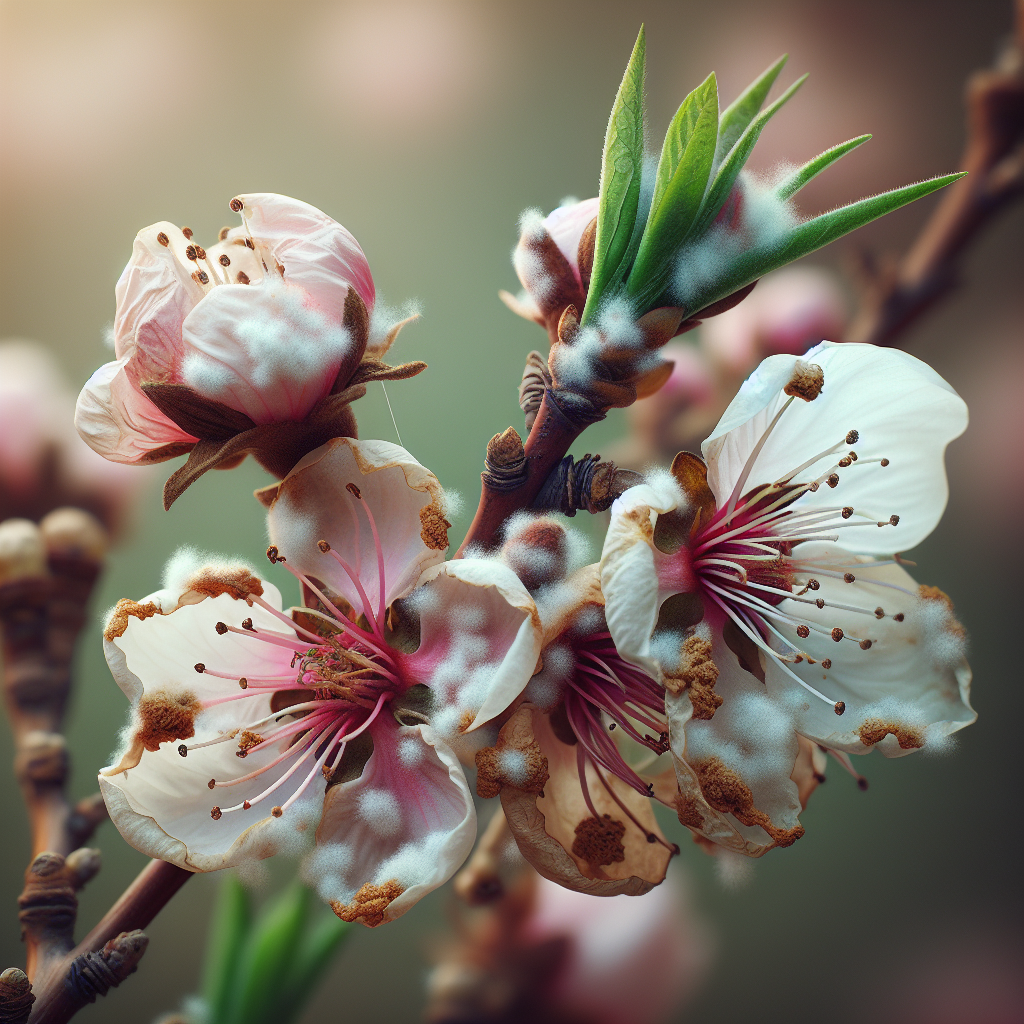
Introduction to Blossom Blight
Blossom blight, primarily caused by the fungal pathogens Monilinia laxa and Monilinia fructicola, represents one of the most destructive diseases affecting flowering crops worldwide, particularly stone fruits during their critical bloom period. This disease strikes when conditions are perfect for spore germination—cool temperatures combined with prolonged moisture—turning vibrant blossoms into shriveled, brown remnants within days. Farmers and gardeners often face up to 80-100% blossom loss in severe outbreaks, directly translating to zero fruit set and catastrophic yield reductions.
Understanding blossom blight is essential for commercial orchards and small-scale growers alike. The pathogen overwinters in infected twigs, mummies, and cankers, releasing billions of ascospores and conidia in spring to infect open flowers. Unlike brown-rot-blossom-blight, which is a specific manifestation, blossom blight encompasses a broader symptom complex but shares the same aggressive fungal culprits. Early detection and intervention are key, as the disease can progress to shoot blight, fruit rot, and tree decline if unchecked. This guide provides definitive diagnostic criteria, lifecycle insights, organic management strategies, and prevention tactics tailored for sustainable agriculture. By integrating these practices, growers can safeguard their harvests and maintain profitability. For more on optimizing farm disease management, check out this insightful blog post on spring pest patrol.
Identifying Symptoms & Damage
Recognizing blossom blight early is crucial for limiting spread. Initial symptoms appear 2-5 days after infection on flower petals, which turn translucent, then rapidly brown and water-soaked. Infected blossoms wilt, shrivel, and develop a cottony white fungal growth (sporodochia) under humid conditions, often accompanied by a grayish-brown discoloration spreading to sepals, peduncles, and young fruitlets.
As the disease advances, blighted blossoms remain attached to the tree, dangling like necrotic flags, distinguishing it from natural petal drop. Twigs show girdling cankers with sunken, discolored bark, oozing gum in some cases. In severe infections, branches die back, exhibiting a shepherd's crook appearance. Differentiate from Botrytis (gray mold), which produces abundant gray fuzz without twig involvement, or frost damage, which lacks fungal sporulation.
Damage quantification is stark: a single wet bloom period can destroy 50-90% of flowers on peach trees, halting fruit development entirely. On cherry and plum, small green fruitlets mummify, serving as future inoculum sources. Economic impacts include not just lost yield but also reduced tree vigor, requiring costly pruning and replanting. Scout orchards weekly during bloom, using a 10x hand lens to spot microscopic spores on petals. Moisture meters and weather stations aid in predicting outbreaks, ensuring timely action.
Lifecycle and Progression of Blossom Blight
The lifecycle of blossom blight is tightly synced with host phenology and weather. Monilinia spp. overwinter as mummified fruit, twig cankers, or stromata in bark. In spring, as temperatures rise above 10°C (50°F), apothecia (fruiting bodies) emerge from mummies on the ground, discharging ascospores up to 100 meters via wind and rain splash.
Conidia form on blighted blossoms during wet periods (dew >12 hours at 15-20°C/59-68°F), spreading short distances by insects or wind. Primary inoculum initiates epidemics; secondary cycles amplify damage every 2-3 days under ideal conditions. Infection requires free water on flowers for 6-12 hours, with optimal germination at 18-22°C (64-72°F). Inside the host, mycelium ramifies through petals to vascular tissues, causing rapid necrosis.
Progression varies by crop: on [apricot](/wiki/apricot—not listed, so avoid or generalize), full bloom is most vulnerable; on almonds, it coincides with nut set. Late infections lead to twig blight, perpetuating the cycle. Understanding this polycyclic nature—up to 10 cycles per season—underscores the need for pre-bloom sanitation. Models like those from UC IPM predict infection risk based on temperature and wetness duration, enabling precise interventions.
Environmental Triggers & Risk Factors
Blossom blight epidemics hinge on specific environmental cues: prolonged leaf wetness (8+ hours) during bloom at 12-25°C (54-77°F), with relative humidity >90%. Cool, rainy springs in temperate regions (e.g., Pacific Northwest, Europe) are hotspots, while irrigation-induced wetness exacerbates issues in arid zones. Poor air circulation in dense canopies traps moisture, amplifying spore germination.
Risk factors include susceptible varieties like 'Bing' cherry, excessive nitrogen fertilization promoting lush growth, and delayed dormancy break from mild winters. Overcrowded orchards, inadequate pruning, and groundcover harboring mummies heighten inoculum loads. Climate change extends wet periods, increasing outbreak frequency—studies show 20-30% more risk in altered regimes.
Secondary stressors like aphids wounding flowers or powdery-mildew weakening tissues compound vulnerability. Soil pH extremes (>7.5 or <6.0) stress trees, reducing defenses. Assess site microclimates: valleys with frost pockets face compounded frost-blossom blight events.
Organic Control & Treatment Plans
Organic management emphasizes integrated cultural, biological, and minimal fungicide approaches. Sanitation first: Remove and destroy all mummies, blighted shoots, and cankers pre-bloom (by 50% green tip stage), reducing inoculum by 70-90%. Flail chop debris and apply mulch to bury residues.
Biological controls: Apply Bacillus subtilis (Serenade) or Trichoderma spp. at pink bud stage, repeating every 7-10 days through petal fall. These antagonize Monilinia via competition and antibiosis, achieving 50-70% suppression. Introduce predatory insects to disrupt spore dispersal.
Organic fungicides: Copper hydroxide or sulfur at green tip, followed by potassium bicarbonate during bloom (3-5 applications, 5-7 day intervals). Neem oil disrupts spore germination. Timing is critical—use rainfast formulations post-wet periods. For active infections, prune blighted twigs 15-20 cm below symptoms, sterilizing tools with 10% bleach.
Step-by-step treatment plan:
- Pre-bloom: Prune and sanitize.
- Bloom: Apply biofungicide at 20% bloom, repeat at full bloom and petal fall.
- Post-bloom: Monitor shoots; spot-treat with copper.
- Season-long: Maintain 40-50 cm between trees for airflow.
Resistant rootstocks (e.g., Gisela for cherry) and varieties like 'Lapins' [cherry](/wiki/bing-cherry—no, use /wiki/cherry) bolster defenses. Rotate treatments to prevent resistance.
Preventing Blossom Blight in the Future
Prevention is the cornerstone of long-term control. Select resistant cultivars: 'Sweetheart' cherry or 'Redhaven' peach show tolerance. Site orchards on well-drained slopes with southern exposure for rapid drying. Prune annually for open canopies—aim for 30-40% light penetration.
Implement drip irrigation to minimize overhead wetting; time applications for midday evaporation. Mulch with compost to suppress apothecia. Monitor with traps for ascospore release and weather-based decision aids like NEWA or AgWX. Cover crops like clover improve soil health without hosting inoculum.
Foster biodiversity: Interplant with thyme or marigold for natural fungistasis. Annual soil tests ensure balanced nutrition—avoid excess N. Quarantine new plantings and scout rigorously. Long-term, these IPM strategies cut incidence by 85%, ensuring sustainable yields.
Crops Most Affected by Blossom Blight
Blossom blight devastates stone fruits primarily: peach, cherry, plum, apricot, nectarine, and almond. Peach suffers most, with 100% bloom loss possible. [Sweet cherry](/wiki/bing-cherry—no, /wiki/cherry) varieties like Bing are highly susceptible during extended blooms.
Other victims include apple (sporadic), pear, Japanese plum, and ornamental Prunus. In warmer climates, it hits [quince](/wiki/quince—not listed) and loquat. Avoid confusion with anthracnose on cucurbits. Globally, it costs millions annually in lost production, underscoring varietal selection importance.