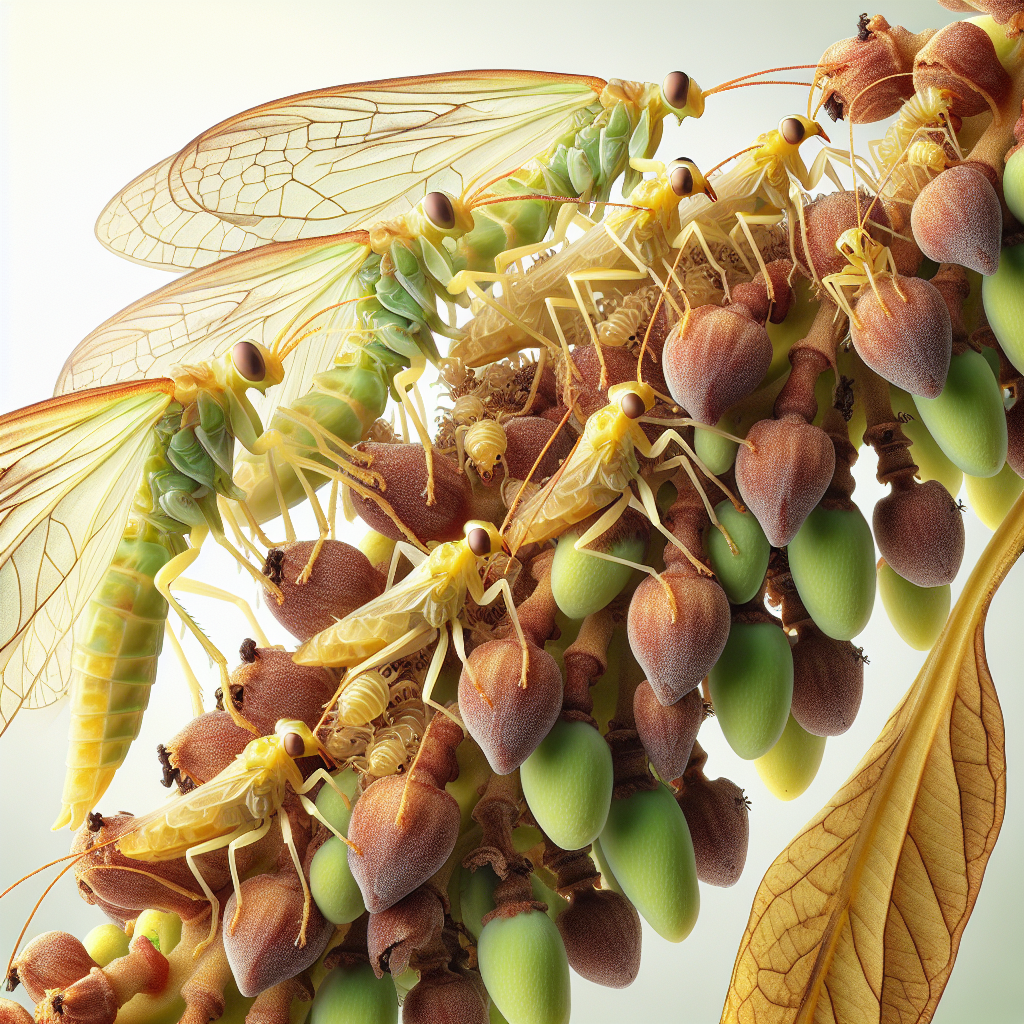
Introduction to Mango hoppers
Mango hoppers (Idioscopus spp.) represent one of the most destructive pests in mango orchards worldwide, particularly in tropical and subtropical regions like India, Southeast Asia, Australia, and parts of Africa. These small, wedge-shaped insects from the leafhopper family (Cicadellidae) are notorious for targeting tender panicles during the flowering stage, sucking sap and injecting toxins that cause massive flower and fruitlet drop. A single unmanaged infestation can slash yields by 30-80%, turning promising harvests into economic disasters for growers.
Unlike many pests that attack mature fruit, mango hoppers strike at the crop's reproductive phase, making early detection and intervention critical. Adult hoppers measure 3-4 mm long, with a yellowish-green to brown body and prominent white or yellow markings on the wings. Nymphs are smaller, pale, and crawl actively on panicles. Their rapid reproduction—females lay 100-200 eggs—allows populations to explode in weeks, especially during flush periods. For comprehensive mango cultivation insights, see our detailed guide on Mango (crop).
Understanding mango hoppers is essential for sustainable production. These pests not only reduce yield but also excrete honeydew, fostering sooty mold that further degrades fruit quality. In severe cases, hopper damage compounds with diseases like anthracnose (disease), amplifying losses. This guide provides professional-grade diagnostics, lifecycle insights, organic management, and prevention strategies to protect your mango crop effectively.
Identifying Symptoms & Damage
Spotting mango hopper damage early is key to minimizing losses. The primary signs appear on inflorescences: panicles turn brown, shrivel, and drop prematurely. Look for clusters of tiny, greenish-yellow adults and nymphs congregating on flowers, actively hopping when disturbed—a hallmark behavior.
Sap-feeding creates characteristic symptoms: tender shoots and panicles yellow, then blacken from the tips. Heavy infestations cause 'panicle blast,' where entire inflorescences dry up, leading to 70-100% flower drop. Fruit set plummets, with button-sized fruitlets aborting. Inspect lower panicles first, as hoppers migrate upward.
Secondary damage includes honeydew droplets coating leaves and fruit, promoting sooty mold—a black fungal growth that reduces photosynthesis and market value. Differentiate from diseases: hopper damage shows insect presence and rapid wilting, unlike fungal spots. Use a 10x hand lens to confirm nymphs' red eyes and white frothy excreta. Threshold: 10-15 hoppers per panicle warrants action. Similar pests like leafhoppers (pest) or thrips (pest) may co-occur, but hoppers are panicle-specific.
Yield impact varies by variety and timing. Early-season attacks on 'Alphonso' or 'Kesar' types devastate production, while late flushes affect 'Tommy Atkins'. Economic threshold models recommend scouting 20 panicles per tree weekly from bud break.
Lifecycle and Progression of Mango hoppers
Mango hoppers complete 8-12 generations annually, syncing with host flushing cycles. Eggs (0.5 mm, cigar-shaped) are laid in panicle rachises, hatching in 4-6 days into nymphs. These 5-instar nymphs develop in 10-15 days, feeding voraciously on floral sap.
Adults emerge pale green, maturing to yellowish with black spots, living 20-30 days. Peak activity aligns with flowering: first generation in September-October (off-season flush), escalating to March-May (main crop). Each female lays 150-200 eggs, yielding 50-100 offspring per cycle.
Overwintering occurs as eggs or adults in dry leaves or bark cracks. Warm, humid conditions (25-35°C, 70-90% RH) accelerate development; drought stresses trees, boosting hopper preference for tender growth. Monitor with sticky traps: yellow boards capture 20-50 hoppers/day signals buildup. Lifecycle knowledge enables precise IPM timing, targeting nymphs when vulnerable.
Environmental Triggers & Risk Factors
Mango hoppers flourish in hot, humid tropics (25-35°C, >70% RH), with populations surging post-monsoon. Excessive nitrogen fertilizers promote lush flushes, ideal for egg-laying. Poor sanitation—unpruned debris harbors overwinterers—increases risk.
Alternate hosts like guava (crop), [sapodilla], and grasses serve as reservoirs. Wind disperses adults; dense orchards (>100 trees/ha) foster spread. Rain suppresses nymphs but adults thrive in intermittent showers. Climate change extends seasons, intensifying outbreaks.
Risk factors: young orchards (<5 years), water-stressed trees, and monocultures. Varieties like 'Totapuri' resist better than 'Dashehari'. Check Spring Pest Patrol: Organic AI Strategies to Shield Your Crops from Common Invaders for predictive tools. Soil moisture >60% field capacity heightens vulnerability.
Organic Control & Treatment Plans
Organic management emphasizes IPM: cultural, biological, and targeted botanicals. Cultural: Prune to remove debris pre-bloom; destroy infested panicles. Time irrigation to avoid flush during peak hopper periods. Intercrop with marigold (crop) to repel hoppers.
Biological: Conserve predators like spiders, lacewings, and mirid bugs (Anthocoris spp.), which devour 50-70% nymphs. Release Chrysoperla carnea (1,000/acre) at bud swell. Neem-based biopesticides disrupt feeding.
Organic Sprays: Apply neem oil (0.5-1%) or azadirachtin (300 ppm) at 80% bud burst, repeating 10-12 days later. Target nymphs <5th instar for 85-95% control. Soap sprays (2% potassium salts) suffocate soft bodies; apply evenings to spare predators. Beauveria bassiana (10^9 spores/ml) infects 60-80% adults.
Monitoring & Thresholds: Yellow sticky traps (10/tree) + panicle scouting. Spray if >10 hoppers/panicle. Rotate modes to prevent resistance. For small farms, hand-collect clusters into soapy water. Success rates: 70-90% yield protection with 2-3 applications. Avoid broad-spectrum; integrate with aphids (pest) controls.
Treatment Plan: Week 1 (bud break): Neem + predators. Week 2: Monitor, reapply if needed. Post-bloom: Sanitation. Yields recover 40-60%.
Preventing Mango hoppers in the Future
Prevention hinges on long-term IPM. Plant resistant varieties like 'Neelam' or 'Totapuri'. Maintain orchard hygiene: deep prune post-harvest, mulch to suppress weeds/alternate hosts. Balanced nutrition—avoid excess N—reduces flush susceptibility.
Barrier crops (sesame, mustard) around orchards cut migration 40%. Reflective mulches deter adults. Pheromone traps disrupt mating. Annual pre-bloom cleanup eliminates 70% overwinterers.
Scout proactively from leaf flush. Use weather-based models: spray preemptively if >25°C + 80% RH forecast. Biodynamic calendars align pruning with lunar phases for resilience. Long-term: diversify with banana (crop) or papaya (crop) to break monoculture. Success: <5% damage in managed groves.
Crops Most Affected by Mango hoppers
Mango hoppers primarily target mango (crop) varieties like Alphonso, Kesar, Dashehari, Banganapalli, and Totapuri, causing up to 80% panicle loss. Secondary hosts include guava, sapodilla, jamun, and custard apple, with minor damage on cashew and fig. Polyphagous species attack 20+ plants, but economic impact centers on commercial mango.
In India (world's top producer), hoppers devastate 1.5M ha annually. Southeast Asia sees similar losses on export cultivars. No major impact on non-Anacardiaceae like citrus or banana.