Introduction to onion maggots
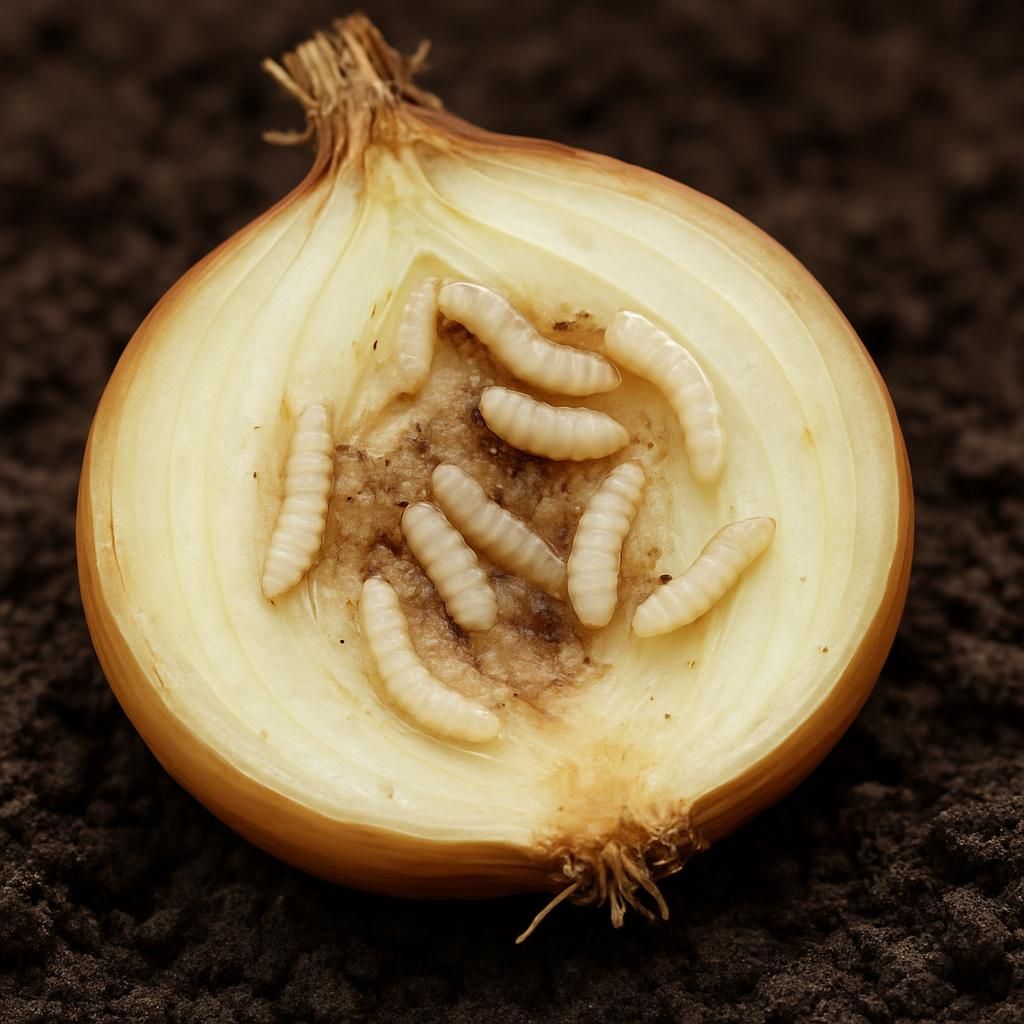
Onion maggots, the larvae of the onion fly Delia antiqua, represent one of the most destructive early-season pests of Onion and related Allium crops worldwide. These small, white, legless maggots feed exclusively on underground plant parts, rapidly destroying seedlings and reducing bulb quality. Their presence often goes unnoticed until wilting or stand thinning appears, making early diagnosis critical for commercial and home growers alike.
The pest thrives in cool, moist spring conditions typical of temperate onion-growing regions. Because onion maggots complete multiple generations per season and overwinter as pupae in the soil, populations can build rapidly if left unmanaged. Integrated strategies that combine sanitation, row covers, beneficial insects, and carefully timed organic treatments provide the most reliable suppression.
Identifying Symptoms & Damage
Early symptoms include yellowing and wilting of young onion leaves, often accompanied by stunted growth. Upon closer inspection, the base of affected plants shows tunneling, softening, or complete destruction of the bulb or roots. Maggots themselves are creamy-white, cylindrical, and approximately 1 cm long at maturity.
Secondary bacterial and fungal rots frequently follow maggot feeding, producing a foul odor and accelerating plant collapse. In severe infestations, entire rows may fail to establish. Distinguishing onion maggot damage from Seedcorn Maggot or wireworm injury requires examining the maggots and noting the characteristic entry holes at the neck of the bulb.
Lifecycle and Progression of onion maggots (MUST INCLUDE A MARKDOWN TABLE OF LIFECYCLE STAGES)
The onion fly undergoes complete metamorphosis with four distinct life stages. Cool spring soils trigger adult emergence from overwintering pupae, and females lay eggs at the base of host plants. Larvae hatch within days and immediately begin feeding on roots and bulbs before pupating in the soil.
| Stage | Duration | Key Characteristics | Management Window |
|---|---|---|---|
| Egg | 3–8 days | Tiny white eggs laid in soil cracks near stems | Row covers and sanitation before hatch |
| Larva | 2–3 weeks | White, legless maggots feeding inside bulbs | Biological agents and organic drenches |
| Pupa | 2–4 weeks | Brown, oval puparia 5–10 cm deep in soil | Cultivation to expose pupae |
| Adult | 2–4 weeks | Gray fly resembling small housefly | Traps and perimeter sprays |
Multiple overlapping generations occur in most regions, with the first generation causing the greatest economic damage to seedlings.
Environmental Triggers & Risk Factors
Onion maggots favor soil temperatures between 10–20 °C and high soil moisture. Fields with a history of Allium production, undecomposed organic matter, and poor drainage experience the highest pressure. Late planting, use of fresh manure, and absence of crop rotation further elevate risk.
| Factor | Optimal Range / Condition | Impact on Infestation |
|---|---|---|
| Soil Temperature | 10–20 °C | Accelerates egg hatch and larval feeding |
| Soil Moisture | Field capacity to slight saturation | Favors egg survival and movement |
| Previous Crop | Onion, garlic, leek | Increases overwintering pupal density |
| Organic Matter | Fresh manure or undecomposed compost | Attracts ovipositing females |
| Planting Date | Early spring | Coincides with peak adult flight |
Organic Control & Treatment Plans (MUST INCLUDE A MARKDOWN TABLE OF TREATMENT OPTIONS AND FREQUENCIES)
Organic management emphasizes prevention and early intervention. Floating row covers installed at planting exclude adults and remain effective for 4–6 weeks. Beneficial nematodes (Steinernema feltiae) applied as a soil drench target larvae with minimal non-target effects. Spinosad-based baits and perimeter sprays provide supplemental adult control when trap counts exceed thresholds.
| Treatment Option | Active Ingredient / Agent | Application Frequency | Notes |
|---|---|---|---|
| Floating Row Covers | Physical barrier | Install at planting; remove at bulbing | Must seal edges to prevent adult entry |
| Beneficial Nematodes | Steinernema feltiae | 2 applications 7–10 days apart | Apply in evening to moist soil |
| Spinosad Bait | Spinosad | Weekly during adult flight | Place near field edges |
| Garlic-Chili Spray | Homemade repellent | Every 5–7 days after emergence | Limited residual; reapply after rain |
| Crop Rotation | 3–4 year rotation with non-hosts | Annual planning | Break pest cycle effectively |
| Sanitation | Remove cull onions and debris | Post-harvest and pre-plant | Reduces overwintering sites |
Preventing onion maggots in the Future
Long-term prevention centers on breaking the pest life cycle through rotation, sanitation, and habitat management. Avoid planting Onion or Garlic in the same field more than once every three years. Prompt removal of volunteer plants and cull bulbs eliminates overwintering sites. Incorporating Clover or other green manures improves soil health while supporting natural enemies.
Timely planting after soil has warmed slightly and using transplants rather than direct-seeded onions can reduce the vulnerable seedling window. Maintaining optimal plant spacing improves airflow and speeds soil drying, making conditions less favorable for egg survival.
Crops Most Affected by onion maggots
While Onion is the primary host, onion maggots readily attack Garlic, Shallots, Leek (not listed but relevant), and occasionally Carrot and Radish when Allium hosts are scarce. Cabbage and Broccoli experience minimal direct damage but may suffer when planted adjacent to heavily infested onion fields.
Potato and Tomato are rarely affected. Monitoring surrounding vegetation and maintaining buffer zones between Allium plantings and other susceptible crops further limits spread.