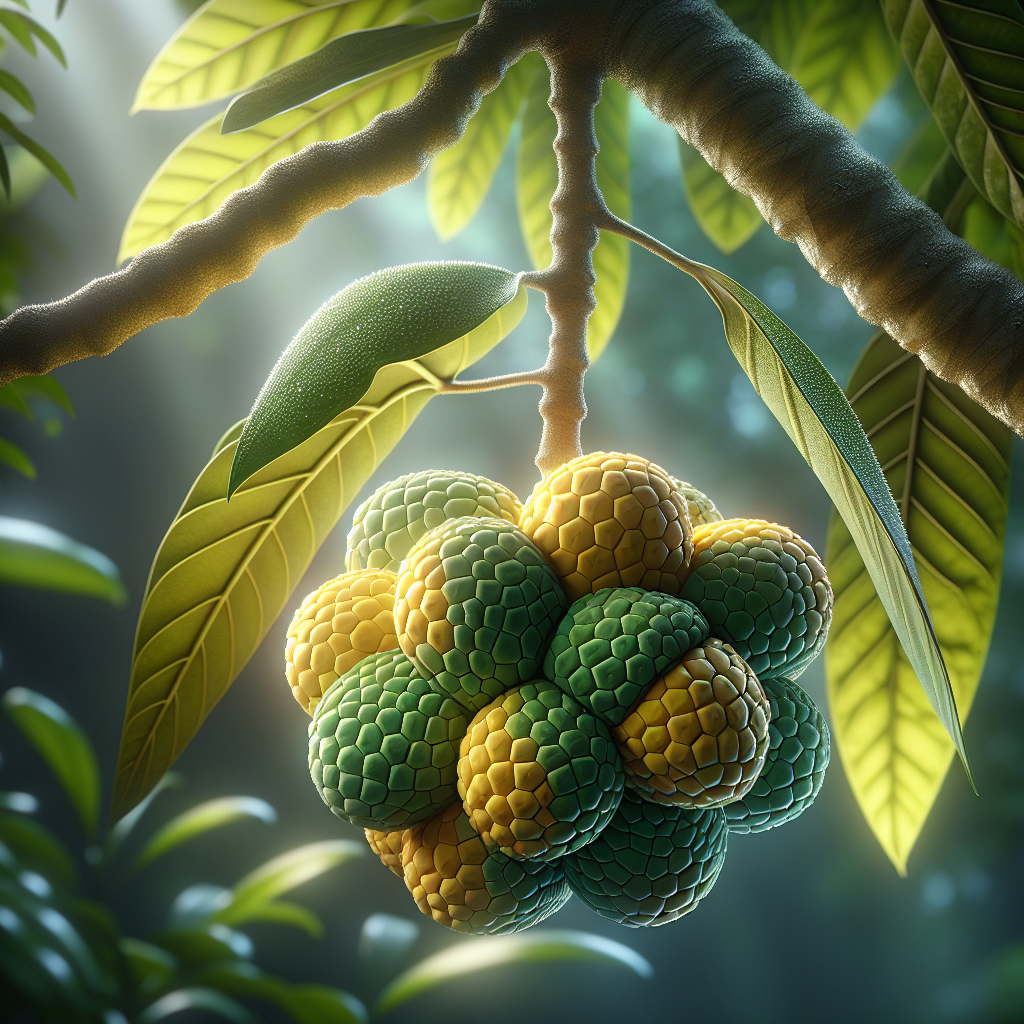
Introduction to Monkey Bread (Artocarpus rigidus)
Monkey Bread (Artocarpus rigidus), a lesser-known gem in the Moraceae family, thrives in the steamy lowlands of Borneo and parts of Southeast Asia. Unlike its more famous relative, the breadfruit (which isn't listed but analogous), this tree produces large, cylindrical fruits up to 30 cm long, packed with starchy flesh that's boiled, roasted, or fermented into nutritious staples. Indigenous communities have long prized it for its drought tolerance once established and ability to yield in poor soils, making it a prime candidate for sustainable tropical farming.
Growing Artocarpus rigidus demands patience—trees take 5-7 years to fruit—but rewards with 50-100 kg per mature specimen annually. Its rigid leaves and buttressed trunk provide timber value, while the latex yields natural rubber alternatives. This guide equips smallholders with professional techniques for propagation, care, and pest management, optimized for humid climates (25-32°C, 2000+ mm rainfall). Expect robust growth in agroforestry interplanted with crops like banana or cassava. For more on tropical companion strategies, see Why Companion Planting Feels Like Guesswork for Small Farms - And How AI Makes It Foolproof.
Botanical Profile of Monkey Bread (Artocarpus rigidus)
Artocarpus rigidus is an evergreen dioecious tree reaching 20-30 meters, with a straight bole up to 60 cm diameter and prominent buttresses. Leaves are alternate, leathery, obovate, 15-40 cm long, dark green above and rusty below, with entire or toothed margins—rigid texture deters herbivores. Male flowers form catkins (3-5 cm), females develop into syncarps: compound fruits with hexagonal tubercles enclosing creamy-white, seedless arils rich in carbohydrates (70%), protein (4%), and vitamins A/C.
Roots are extensive, shallow feeders aiding soil stabilization; bark is gray-brown, fissured. Phenology: flowering year-round in tropics, peaking in dry seasons; fruits mature 4-5 months later. Pollinated by flies/beetles, dispersed by gravity/rodents. Chromosomal count 2n=56. Closely related to jackfruit (Artocarpus heterophyllus), it hybridizes rarely. Wood density 650 kg/m³ suits construction. Nutritional profile: 100g fruit yields 120 kcal, low fat (0.5g), high fiber (3g)—superior to many staples for food security.
Soil, pH, and Climate Requirements for Monkey Bread (Artocarpus rigidus)
Thrives in fertile, well-drained loams (sandy clay ideal), tolerating clays or volcanics but dislikes waterlogging—root rot ensues. Optimal pH 5.5-7.0; acid-tolerant to 4.5, alkaline limits micronutrients. High organic matter (5-8%) boosts yields; amend with compost for startups. Avoid saline (>2 dS/m) or compacted sites.
Climate: Tropical lowland, 0-800m elevation. Temperatures 24-32°C daytime, >18°C nights—no frost. Rainfall 1500-4000 mm evenly distributed; brief dry spells (<3 months) trigger flowering. Humidity 70-90%; full sun (6+ hours) essential, partial shade for juveniles. Windbreaks needed in exposed areas. Drought-resistant post-establishment (deep roots access 2m soil moisture), but irrigate seedlings. Suited to monsoon zones; pair with mango for microclimate synergy. Read Soil Health Mastery: 5 Proven Strategies for Small Farms to Build Fertile Ground Without Breaking the Bank for prep tips.
Step-by-Step Planting & Propagation
Propagation: Primarily seeds (viable 2-4 weeks); soak 24h, sow 2cm deep in 1:1:1 sand-compost-perlite. Germination 70-90% in 10-20 days at 28°C. Rooted cuttings (semi-hardwood, 10-15cm) via IBA 2000 ppm strike 50% in mist. Grafting (veneer/cleft) onto rootstock matches scion for dwarfing—success 80%. Air-layering for elites.
Site Prep: Clear weeds, dig 50x50x50cm pits, fill with topsoil+10kg compost+200g rock phosphate. Space 10-12m (100-120 trees/ha).
Planting: Rainy season onset. Plant 2-3 seedlings/pit at same depth as nursery; stake if windy. Mulch 10cm organic (coconut husk/gliricidia). Initial fertilizer: 100g NPK 15-15-15/tree.
Early Care: Irrigate weekly first year (50L/tree); prune coir roots. Survive rate >85% with shade cloth 50% first 6 months.
Care & Maintenance regimes for Monkey Bread (Artocarpus rigidus)
Watering: Deep soak biweekly dry spells; mature trees self-sufficient. Drip irrigation optimal (20L/day peak).
Fertilization: Year 1-3: 500g NPK 16-8-16 + 100g urea/tree annually, split 3x. Mature: 2kg complete + 500g K2SO4 + micronutrients (Zn/B). Foliar Ca/Mg quarterly.
Pruning: Remove dead/crossing branches post-harvest; train central leader. Desuckering males if space-limited.
Weeding/Mulching: Slash mulch radius 3m; interplant legumes year 1-2.
Monitoring: Annual girth/height; thin canopy for light penetration. Pollination boost: retain 10% males.
Pests, Diseases & Organic Management
Pests: Aphids cluster shoots—neem oil 2% weekly. Fruit borers (larvae tunnel)—Bacillus thuringiensis (Bt) sprays. Mealybugs on trunks—soap sprays + predatory beetles. Rodents gnaw fruits—traps/repellents. Birds deterred by netting.
Diseases: Phytophthora root rot in wet soils—improve drainage, fosetyl-Al drench. Powdery mildew—sulfur dust. Leaf spots (Alternaria)—copper oxychloride. Cultural: sanitation, resistant stock.
Organic IPM: Beneficials (ladybugs, parasitoids); trap crops. See Why 90% of Small Farms Fail at Pest Management - And 8 Organic Fixes That Actually Work. Early detection halves losses.
Harvesting, Curing & Optimal Storage
Harvest when fruits yellow/drop (4-5 months post-bloom); pole-pick or ladder. Yield peaks 10-15 years: 70kg/tree. Handle gently—bruises rot fast.
Curing: Shade-dry 2-3 days; process: boil 20min (remove skin/cores), ferment (lactic, 3 days) for 'tempoyak'-like preserve.
Storage: Fresh: 7-10 days 13°C/90% RH. Processed: ferment seal 1 month fridge; dried chips 6 months cool/dry. Market as flour/paste—high value.
Companion Planting for Monkey Bread (Artocarpus rigidus)
Intercrop understory: Ginger, turmeric, legumes (pigeon pea). Shade-tolerant: pineapple, taro. Nitrogen-fixers (clover) boost soil. Avoid grasses (compete). Agroforestry with coconut enhances microclimate. Benefits: erosion control, biodiversity, yields +30%. Check Fall Companion Planting Guide: Boost Yields and Soil Health for Small Farms and Gardens.