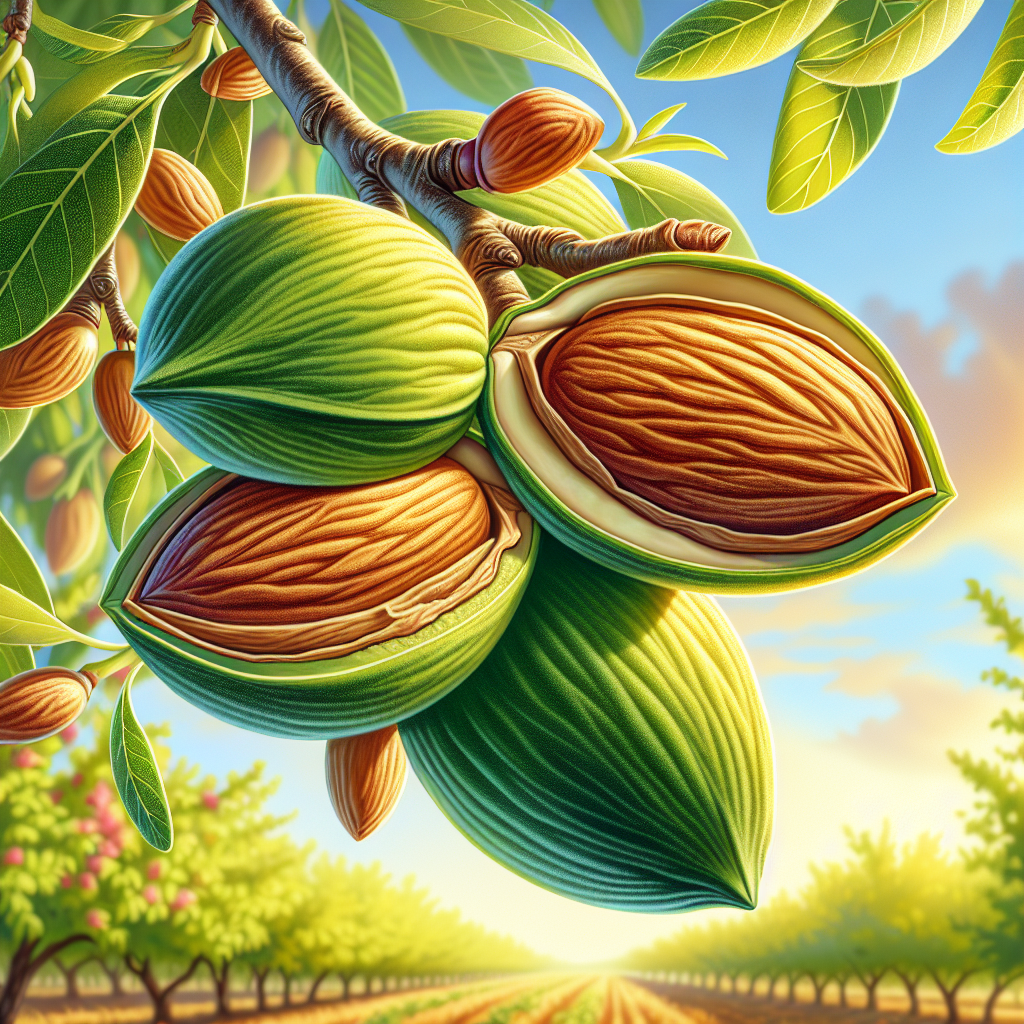
Introduction to Mission Almond
The Mission Almond (Prunus dulcis 'Mission') stands as one of the oldest cultivated almond varieties in California, tracing its roots to the Spanish missions established in the 18th century. Renowned for producing large, plump kernels with a rich, buttery flavor, this heirloom cultivar remains a favorite among growers seeking high-quality nuts with excellent shelling characteristics. Unlike modern hybrids, Mission Almond trees offer moderate vigor, good productivity, and resistance to certain environmental stresses, making them suitable for both commercial orchards and backyard plantings.
What sets Mission Almond apart is its balanced harvest window and adaptability to a range of soils, provided drainage is optimal. Yields can reach 2-3 tons per acre under proper management, with nuts featuring a high oil content ideal for roasting, baking, and confections. This guide provides professional-grade advice for maximizing yields, from site selection to post-harvest handling. For broader context on almond cultivation, see the general Almond (crop) page.
Growers appreciate Mission Almond's self-fruitful tendencies, though cross-pollination with varieties like Nonpareil Almond (crop) boosts production significantly. With proper care, trees begin bearing in 3-5 years, reaching peak productivity by year 10. This deep-dive equips you with step-by-step strategies to cultivate thriving Mission Almond orchards.
Botanical Profile of Mission Almond
Mission Almond belongs to the Rosaceae family, genus Prunus, and is classified as a deciduous tree growing 15-25 feet tall with a spreading canopy. Leaves are lanceolate, 3-5 inches long, turning yellow in fall. The tree produces striking pink-white blossoms in early spring, attracting pollinators before leaf-out.
Fruits are drupes with a hard, thick shell enclosing the edible seed (kernel). Mission kernels are large (1.2-1.5 grams each), broad, and oval-shaped, with a light tan skin and high blanchability. The variety is late-blooming, reducing frost risk, and has a harvest maturity around mid-September in California's Central Valley.
Root systems are deep and extensive, with lateral spread up to twice the canopy width, aiding drought tolerance. Trees exhibit moderate alternate bearing but respond well to cultural practices like thinning. Compared to softer-shelled varieties, Mission offers superior kernel quality for premium markets. For companion insights, check our Why Companion Planting Feels Like Guesswork for Small Farms - And How AI Makes It Foolproof.
Chromosome count is 2n=32, and it's propagated primarily by budding onto rootstocks like peach-almond hybrids for nematode resistance. Wood is hardy to USDA zones 7-9, with chilling requirements of 400-500 hours.
Soil, pH, and Climate Requirements for Mission Almond
Mission Almond thrives in deep, well-drained loamy sands or sandy loams with pH 6.0-7.5. Avoid heavy clays prone to waterlogging, which cause Phytophthora root rot. Soil tests should reveal 1-2% organic matter; amend with compost if below 1%. Texture ideal: 50-70% sand, 20-30% silt, 10-20% clay.
Optimal climate features hot, dry summers (85-100°F days) and cool winters (below 45°F for chill). Annual rainfall 12-18 inches suffices, but supplemental irrigation is essential during kernel fill (May-August). Frost pockets doom early blooms; select sites with air drainage. Humidity above 60% during bloom invites botrytis.
Elevations up to 2,500 feet work, but windbreaks are crucial above 1,000 feet. Microclimates mimicking Sacramento Valley—winter lows 25°F, summer highs 95°F—yield best. Test soil salinity; ECe <2.0 dS/m. Pre-plant fumigation controls root-knot nematodes. Integrate cover crops like clover for nitrogen fixation.
Step-by-Step Planting & Propagation
Site Preparation (Fall prior): Deep rip to 4 feet, incorporate 20 tons/acre gypsum if sodic. Fumigate if nematodes present. Grade for uniform drainage.
Rootstock Selection: Use Nemaguard or peach-almond hybrid for standard sites; Viking for replants.
Planting (Dormant season, Dec-Feb): Space 20-24 ft x 20-24 ft (75-100 trees/acre). Dig holes 2x root ball width. Plant bud union 4-6 inches above soil. Stake immediately.
Propagation: T-bud in late summer onto 1-year rootstock. Root cuttings possible but low success. Micropropagation for virus-free stock.
Initial Irrigation: 20-30 gallons/tree week 1, taper to field rates. Mulch basins 4 ft diameter, 4 inches deep.
Train to open vase or central leader. Prune at planting to 3-4 scaffolds. Monitor for aphids early.
Care & Maintenance regimes for Mission Almond
Irrigation: Micro-sprinklers or drip; 35-45 inches/season. Peak ET 0.25 inches/day July. Tension blocks guide scheduling.
Fertilization: Pre-bloom: 40-60 lbs N/acre. Post-harvest: 80-100 lbs N. Boron 2-3 lbs/acre split. Leaf analysis targets 2.0-2.5% N, 150-250 ppm B.
Pruning: Annual dormant: remove watersprouts, thin canopy. Summer hedge to 12-14 ft. Non-bearing: head back scaffolds.
Thinning: Mechanical shake if >40% doubles. Chemicals like BA for crop load management.
Pest Monitoring: Weekly scouts for navel orangeworm. Hull split sprays timed to 95% split.
Weed control: pre-emergent + cultivation. Cover crop mow mid-winter. Regulate crop load to 40-50% bearing area for size.
Pests, Diseases & Organic Management
Key Pests:
- Navel orangeworm: Mating disruption + 10% hull split sprays. Organic: spinosad.
- Aphids: Beneficials + soap sprays.
- Scale insects: Dormant oil.
- Spider mites: Sulfur, predatory mites.
Diseases:
- Alternaria late blight: Iprodione at hull split.
- Shot hole: Copper pre-bloom.
- Phytophthora root rot: Phosphites, improve drainage.
Organic: Neem oil, Bt for worms, kaolin clay hull protection. Sanitize mummies <2/100. Biofumigants for nematodes.
Harvesting, Curing & Optimal Storage
Harvest at 95% hull split (mid-Sept). Shake trees mechanically, sweep nuts, elevate windrows. Dry to 6% moisture on trailers (3-7 days sun).
Hull/huller: adjust for Mission's thick shell. Kernel yield 45-55%. Size grade: 90% L/XL.
Storage: 32-38°F, 50-60% RH, <6% O2 for 12 months. Monitor CO2 buildup. Pasteurization 166°F/55 min.
Companion Planting for Mission Almond
Enhance orchard health with understory plants. Clover fixes N, suppresses weeds. Yarrow attracts beneficials. Nasturtium traps aphids. Avoid potato (nematode vector). Legumes like vetch boost soil N 100 lbs/acre. Mustard for biofumigation. Read our Fall Companion Planting Guide: Boost Yields and Soil Health for Small Farms and Gardens for more.