Definitive Diagnostic and Management Guide for Cane Blight
Introduction to cane blight
Cane blight, caused by the fungus Leptosphaeria coniothyrium (formerly known as Coniothyrium fuckelii), is a widespread disease impacting cane-bearing crops such as raspberries, blackberries, and other Rubus species. This pathogen targets the vascular tissues of canes, leading to girdling cankers that disrupt water and nutrient flow, ultimately causing wilting, dieback, and reduced fruit production. First identified in the early 20th century, cane blight has become a persistent challenge for berry growers worldwide, particularly in temperate regions with high humidity.
Understanding cane blight is crucial for commercial and home growers alike. The disease often mimics other cane disorders like cane dieback or anthracnose, making accurate diagnosis essential. In severe cases, entire cane clusters can be lost, resulting in 20-50% yield reductions. Early intervention through proper pruning and sanitation is key to management. This guide provides professional-grade advice on identification, lifecycle, triggers, organic controls, prevention, and affected crops, drawing from decades of agricultural research. For small farms struggling with disease identification, tools like AI-powered diagnostics can prevent costly missteps—check out Why Misidentifying Plants Costs Small Farms Thousands - And How AI Camera Diagnosis Fixes It Fast.
The economic impact is significant: in raspberry production alone, untreated cane blight can slash harvests by up to 40%, affecting market supply and farm profitability. Symptoms typically appear post-injury, such as after mechanical pruning or frost damage. Spores spread via rain splash, wind, and contaminated tools, emphasizing the need for vigilant monitoring. By integrating cultural, biological, and organic chemical strategies, growers can maintain healthy stands and sustain long-term productivity. This comprehensive resource equips you with actionable steps to combat cane blight effectively.
Identifying Symptoms & Damage
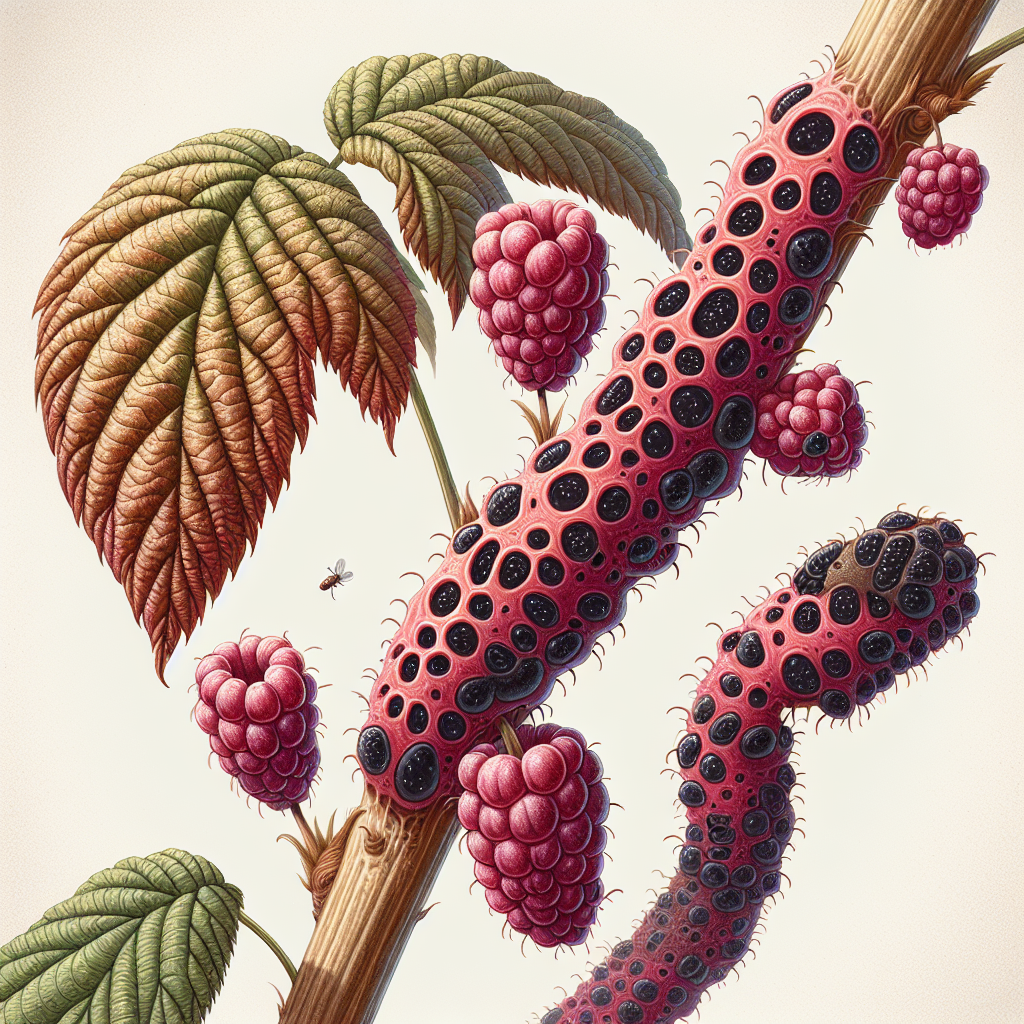
Diagnosing cane blight requires keen observation of distinct symptoms on affected canes. Initial signs emerge as small, sunken, purplish-brown lesions at wounds or nodes, often 1-2 cm in diameter. These lesions expand into elongated cankers with dark, sunken borders and lighter brown centers, frequently girdling the cane entirely. A key diagnostic feature is the presence of tiny, black fungal fruiting bodies (pycnidia) within the cankers, appearing as black dots under magnification—these release spores during wet weather.
Affected canes exhibit wilting and browning of lateral shoots above the canker, with leaves turning yellow then necrotic. In advanced stages, entire canes die back from the tip, showing a shepherd's crook deformity. Fruiting spurs on primocanes (first-year canes) fail to produce buds, leading to sparse or absent fruit clusters. Damage is most evident in spring and summer, coinciding with active growth.
Differentiate cane blight from similar issues: unlike Botrytis which produces gray fuzz, cane blight lacks mycelium. Phomopsis cane and leaf spot shows more uniform tan lesions without pycnidia. Mechanical damage may mimic early cankers but lacks fungal structures. For confirmation, submit samples to a local extension service for culturing or PCR testing. Yield impacts include blighted buds (up to 70% loss) and weakened floricanes (second-year fruiting canes), reducing berry size and quality. In blackberries, thornless varieties like Triple Crown are particularly susceptible due to thinner bark.
Scout weekly during wet periods, focusing on pruning wounds and basal nodes. Early detection prevents spread to healthy tissue. Document symptoms with photos for tracking progression across seasons.
Lifecycle and Progression of cane blight
The lifecycle of Leptosphaeria coniothyrium is typical of ascomycete fungi, with both asexual and sexual stages. Primary inoculum overwinters in cankers on dead canes, roots, and debris as stromata containing pycnidia. In spring, rain activates pycnidia to exude pinkish spore masses (conidia), splashing up to 1-2 meters to infect fresh wounds.
Conidia germinate in 6-12 hours under moist conditions (above 10°C), penetrating bark cracks or pruning stubs. Hyphae colonize vascular cambium, causing girdling within 2-4 weeks. Summer infections produce new pycnidia, perpetuating secondary spread. Sexual ascospores form in pseudothecia during fall, maturing overwinter for wind-dispersed inoculum the following spring.
Progression accelerates in warm, wet weather: lesions expand 1-5 mm/day at 20-25°C. Full girdling leads to dieback within 4-6 weeks. Multiple infection cycles occur per season, with peak activity May-July in temperate zones. Dormant cankers remain viable for 2-3 years, serving as reservoirs. Understanding this cycle informs timing for pruning (dry periods) and fungicide applications (pre-rain).
Environmental Triggers & Risk Factors
Cane blight thrives in cool, moist environments: optimal infection at 15-25°C with leaf wetness >8 hours. High humidity (>80%) and frequent rains (>10 mm/week) drive epidemics. Poor air circulation in dense plantings exacerbates splash dispersal.
Key risk factors include mechanical injury from pruning, wind, or frost cracks, providing entry points. Overcrowded rows (>1m spacing) retain humidity. Susceptible varieties like Heritage raspberry or Chester blackberry heighten vulnerability. Acidic soils (pH <5.5) stress plants, reducing resistance. Excessive nitrogen promotes succulent growth, ideal for fungal invasion. Winter injury or cane borers create predisposing wounds. In regions with >1000 chill hours, prolonged wet springs amplify outbreaks.
Organic Control & Treatment Plans
Organic management emphasizes cultural practices over chemicals. Pruning: Remove and destroy infected canes at ground level during dry weather (late summer/fall). Sterilize tools with 10% bleach between cuts. Thin canes to 6-8 per foot for airflow.
Biologicals: Apply Trichoderma or Bacillus subtilis biopesticides to wounds post-pruning. Compost teas with composted manure suppress soil inoculum.
Organic Fungicides: Copper hydroxide (e.g., Bordeaux mix) at 1-2% applied pre-bloom and post-rain (up to 4 apps/season). Sulfur-based products for mild cases. Neem oil deters spore germination.
Treatment Plan:
- Scout and prune infected material (Week 1).
- Apply copper to wounds (Day 3).
- Mulch with 5cm wood chips to suppress splash.
- Monitor 2 weeks; reapply if wet.
- Foliar Streptomyces for prevention.
Integrated plans reduce incidence by 70-90%. Avoid overhead irrigation.
Preventing cane blight in the Future
Prevention hinges on resilience-building practices. Select resistant varieties like Illini Hardy raspberry. Maintain 1.5-2m row spacing, trellis for ventilation. Prune in dry conditions, seal wounds with organic latex paint. Improve soil with lime to pH 6.0-6.5, balanced fertility. Cover crops like clover reduce erosion. Rotate crops 4-5 years if possible. Sanitize equipment annually. Monitor weather for wet forecasts, preemptively prune. Annual fall cleanup removes 90% inoculum. For small farms, AI weather tools predict risks—see Why 80% of Small Farms Battle Weather Disasters - And How Hyper-Local AI Forecasts Can Save Your Harvest. Long-term, these yield 20-30% healthier canes.
Crops Most Affected by cane blight
Cane blight primarily strikes Rubus species: red raspberry (e.g., Heritage, Meeker), black raspberry, blackberry (Chester, Triple Crown), loganberry, boysenberry. Roses and currants also suffer. Blackberries show higher susceptibility due to flatter canes. In commercial settings, floricane-fruiting types lose most yield. Minor hosts include grape and elderberry. Global distribution spans North America, Europe, Australia.