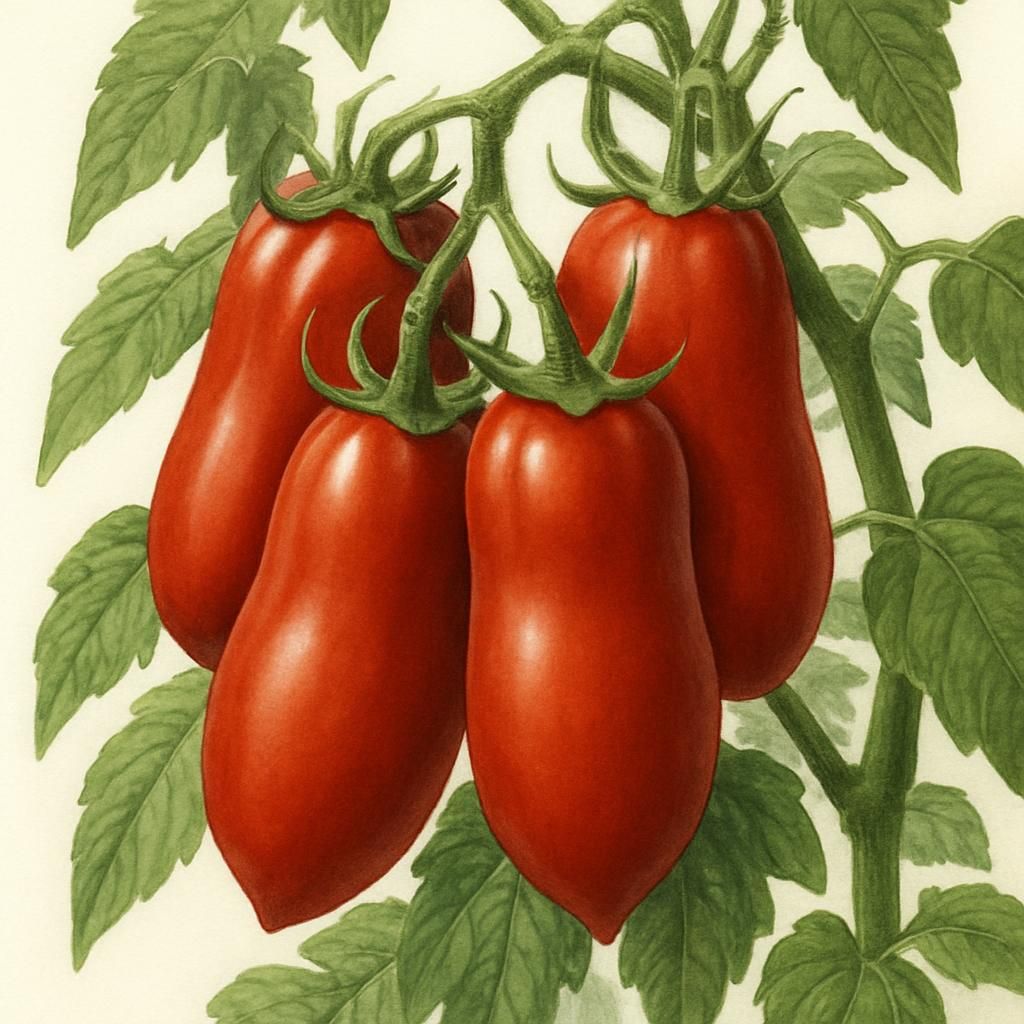
Introduction to Marzano Fire Tomato
Marzano Fire Tomato is a modern determinate cultivar bred specifically for superior fruit quality, disease resistance, and reliable yields in a range of climates. Developed from traditional San Marzano lines, it retains the classic elongated shape and dense flesh while delivering earlier maturity and stronger resistance to common tomato pathogens. Commercial growers value its concentrated fruit set that facilitates mechanical or single-pass harvesting, while home gardeners appreciate its compact growth habit and rich, balanced flavor suitable for sauces, canning, and fresh eating.
The variety matures in approximately 70-75 days from transplant, producing heavy clusters of 4-6 ounce fruits with thick walls and low seed count. Its skin is firm yet thin enough for easy peeling after brief blanching, and the deep red color signals high lycopene content. Because it sets fruit reliably even under moderate heat stress, Marzano Fire has become a staple in regions where traditional indeterminate San Marzano types struggle.
Botanical Profile of Marzano Fire Tomato
Marzano Fire belongs to the nightshade family (Solanaceae) and exhibits the classic indeterminate-to-determinate growth transition typical of many modern hybrids. Plants reach 3.5-4.5 feet in height with sturdy main stems and moderate branching. Leaves are compound, dark green, and slightly rugose, providing good photosynthetic capacity without excessive shading of fruit clusters.
Flowers are perfect and self-pollinating, appearing in simple inflorescences of 6-10 blooms. Fruit development follows the typical tomato pattern: rapid cell division for the first 10-14 days after pollination, followed by cell expansion and ripening phases. The elongated, slightly pointed shape results from genetic selection for higher pericarp thickness and reduced locule number compared with round beefsteak types.
Soil, pH, and Climate Requirements for Marzano Fire Tomato
Successful cultivation begins with well-drained, fertile soil that maintains consistent moisture without waterlogging. A slightly acidic to neutral pH range supports optimal nutrient uptake, particularly calcium and magnesium, which are critical for preventing blossom end rot.
| Parameter | Ideal Range | Notes |
|---|---|---|
| Soil Type | Sandy loam to loam | Excellent drainage essential |
| Soil pH | 6.2 - 6.8 | Adjust with lime if below 6.0 |
| Soil Temperature | 60-85°F (15.5-29.4°C) | Minimum 55°F for transplanting |
| Air Temperature (Day) | 70-85°F (21-29°C) | Optimal fruit set; avoid >90°F |
| Air Temperature (Night) | 55-65°F (13-18°C) | Cooler nights improve flavor |
| Spacing | 18-24 in (45-60 cm) | Rows 4-5 ft (1.2-1.5 m) apart |
| Sunlight | Full sun, 8+ hours | Essential for high brix and color |
Marzano Fire performs well in USDA zones 5-10 when started indoors or protected during early spring. In cooler climates, use black plastic mulch or row covers to raise soil temperature. In hot-summer regions, afternoon shade cloth (30%) can reduce heat-induced flower drop.
Step-by-Step Planting & Propagation
- Start seeds indoors 6-8 weeks before the last expected frost. Sow ¼ inch deep in sterile seed-starting mix at 75-80°F.
- Provide 14-16 hours of supplemental light daily; thin to one seedling per cell when true leaves appear.
- Harden off transplants 7-10 days before planting by gradually increasing outdoor exposure.
- Transplant after soil reaches 60°F and all danger of frost has passed. Set plants 18-24 inches apart in rows 4-5 feet apart.
- Install stakes, cages, or trellis systems at planting to support heavy fruit loads.
- Water immediately after transplanting and apply a balanced starter fertilizer high in phosphorus.
Care & Maintenance regimes for Marzano Fire Tomato
Consistent irrigation, balanced nutrition, and timely pruning are essential for maximizing yield and fruit quality. Over-fertilization, especially with nitrogen, leads to excessive foliage at the expense of fruit.
| Growth Stage | Water Schedule | Fertilizer Schedule | Pruning Schedule |
|---|---|---|---|
| Transplant to Flowering | 1-1.5 inches per week; keep soil evenly moist | Side-dress with 10-10-10 at 2 weeks post-transplant | Remove suckers below first flower cluster |
| Flowering to Fruit Set | Increase to 2 inches/week during heat | Apply calcium nitrate every 10-14 days | Continue sucker removal; thin interior leaves |
| Fruit Ripening | Reduce slightly to concentrate sugars | Switch to low-nitrogen, high-potassium formula | Minimal pruning; maintain airflow |
Mulch with 2-3 inches of organic material to conserve moisture and suppress weeds. Monitor soil moisture at 4-6 inch depth; avoid overhead watering to reduce foliar disease pressure.
Pests, Diseases & Organic Management
Common tomato pests include aphids, whiteflies, hornworms, and spider mites. Scout weekly and use insecticidal soap or neem oil for early infestations. Bacillus thuringiensis (Bt) effectively controls hornworms without harming beneficial insects.
Major diseases include early blight, late blight, fusarium wilt, and verticillium wilt. Choose certified disease-free transplants and rotate crops on a 3-4 year cycle. Copper-based fungicides and biological controls such as Bacillus subtilis provide organic suppression when applied preventively.
Harvesting, Curing & Optimal Storage
Harvest when fruits reach full color and slight softening at the blossom end. For sauce production, allow fruits to ripen fully on the vine for maximum sugar and flavor. Pick in the cool morning hours to reduce field heat.
Cure briefly at 65-70°F with 85-90% humidity for 24-48 hours if needed. Store ripe tomatoes at 55-60°F away from direct sunlight. For longer storage, process into sauce or freeze whole fruits. Avoid refrigeration below 50°F, which causes flavor loss and mealy texture.
Companion Planting for Marzano Fire Tomato
Marzano Fire benefits from strategic pairings that improve pollination, deter pests, and enhance soil health. Basil planted nearby repels aphids and improves tomato flavor. Marigold roots release compounds toxic to root-knot nematodes. Nasturtium acts as a trap crop for aphids while adding edible flowers.
Avoid planting near fennel or walnut trees, which can inhibit tomato growth through allelopathy. Rotate with nitrogen-fixing legumes such as peas or beans in subsequent seasons to restore soil fertility.