Introduction to Marshmallow Root
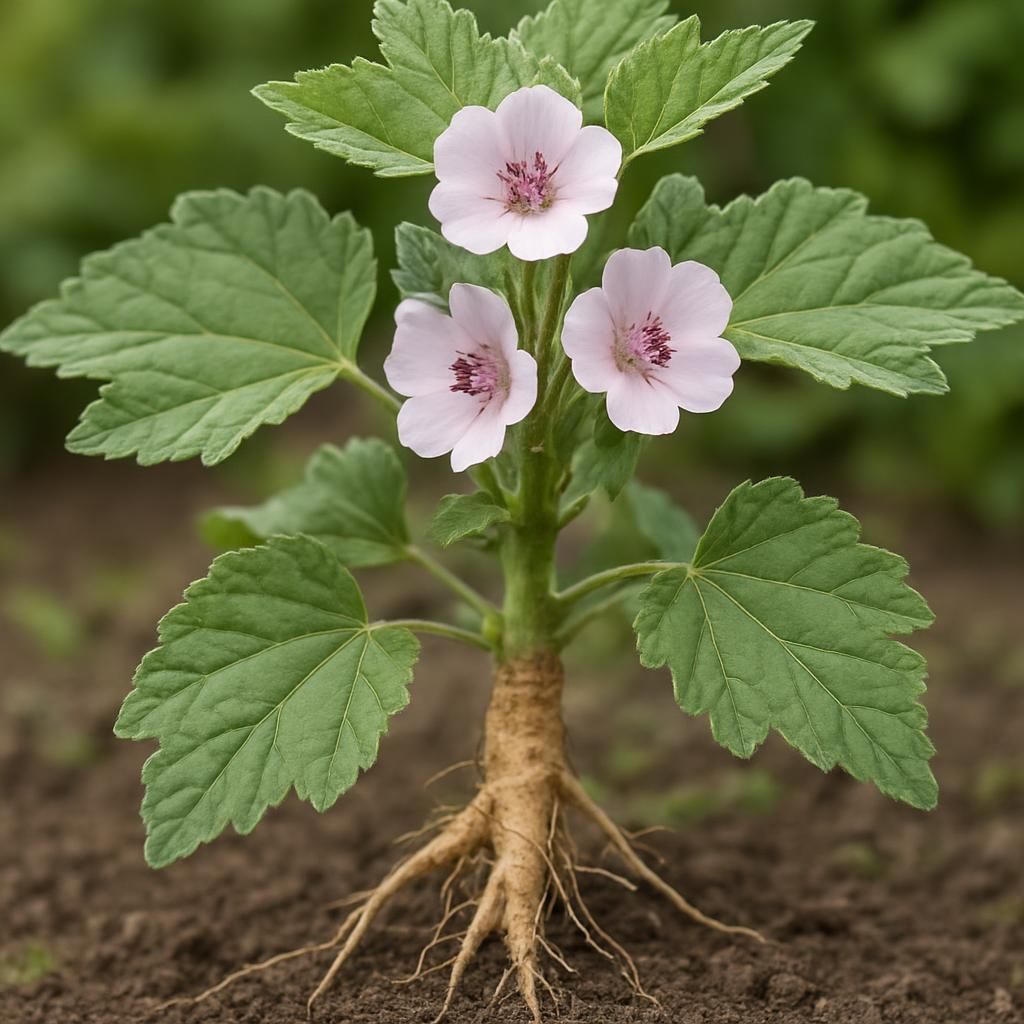
Marshmallow Root (Althaea officinalis) is a tall, upright perennial herb in the Malvaceae family, native to Europe, Western Asia, and North Africa. Historically cultivated for its roots, which contain high levels of mucilage, the plant has been used for centuries in traditional medicine to soothe respiratory, digestive, and skin conditions. Today, commercial and home growers cultivate it primarily for the thick, fibrous taproots harvested in the second or third year. The plant reaches 1.2–2 meters in height, producing pale pink or white flowers and deeply lobed leaves that resemble those of Hibiscus in appearance. Its root system can extend 60–90 cm deep, making proper soil preparation essential for commercial yields.
Botanical Profile of Marshmallow Root
Althaea officinalis is a hardy herbaceous perennial that forms a basal rosette in its first year before sending up flowering stalks. The stems are covered in fine, soft hairs and support alternate, palmately lobed leaves that are 5–10 cm wide. Flowers appear in axillary clusters from mid-summer through early autumn, each with five pale petals surrounding a central column of stamens. The fruit is a schizocarp that splits into numerous small mericarps containing kidney-shaped seeds. The most economically important part is the taproot, which becomes woody and mucilage-rich after the second growing season. The plant prefers full sun to partial shade and tolerates a wide range of temperate climates.
Soil, pH, and Climate Requirements for Marshmallow Root
Marshmallow Root performs best in deep, well-drained yet consistently moist loamy soils rich in organic matter. Heavy clay soils should be amended with compost and coarse sand to improve drainage and prevent root rot. The ideal pH range is slightly acidic to neutral.
| Parameter | Ideal Range | Notes |
|---|---|---|
| Soil Type | Deep loam or sandy loam | Avoid compacted or waterlogged soils |
| Soil pH | 6.0 – 7.5 | Optimal nutrient uptake at 6.5 |
| Organic Matter | 3–6% | Incorporate well-rotted compost |
| Drainage | Good to excellent | Raised beds recommended in heavy soils |
| Temperature Range | 15–25°C daytime | Tolerates -20°C dormant; frost hardy |
| Annual Rainfall | 600–1200 mm | Supplemental irrigation needed in dry periods |
| Sun Exposure | Full sun to partial shade | Minimum 6 hours direct sunlight |
Step-by-Step Planting & Propagation
Marshmallow Root is most reliably propagated from seed, although root division of established plants can also be used. Begin by stratifying seeds for 4–6 weeks at 4°C to improve germination. Sow indoors 6–8 weeks before the last frost in seed trays filled with a light, sterile mix. Maintain soil temperature at 18–22°C and keep the medium evenly moist. Transplant seedlings outdoors after hardening off when soil has warmed to at least 15°C. Space plants 45–60 cm apart in rows 75–90 cm wide to allow for root expansion. Direct seeding is possible in spring once soil reaches 15°C; sow 1 cm deep and thin to final spacing after emergence. Root cuttings taken in late autumn or early spring from two-year-old plants can also be planted directly into prepared beds.
Care & Maintenance regimes for Marshmallow Root
Consistent moisture is critical during the first two growing seasons while roots develop. Mulch heavily with straw or leaf mold to conserve moisture and suppress weeds. Fertilization should be moderate; excessive nitrogen promotes leafy growth at the expense of root quality.
| Growth Stage | Watering Schedule | Fertilizer Application | Pruning/Maintenance |
|---|---|---|---|
| Establishment (Yr 1) | Keep soil moist; 25–40 mm/week | Light compost tea monthly | Remove flower stalks to direct energy to roots |
| Vegetative (Yr 2) | 20–30 mm/week; reduce if rainfall adequate | Balanced organic NPK (5-5-5) at 50 g/m² in spring | Cut back dead foliage in late autumn |
| Mature (Yr 3+) | 15–25 mm/week during active growth | Top-dress with aged manure every 2 years | Divide overcrowded clumps every 3–4 years |
Regular weeding is essential in the first season; hand-pull or shallow cultivate to avoid damaging shallow feeder roots. Monitor for signs of nutrient deficiency, particularly magnesium and potassium, which can affect root development.
Pests, Diseases & Organic Management
Marshmallow Root is relatively resistant to most pests but can be affected by Aphids, Spider Mites, and Slugs. Aphid colonies on new growth can be controlled with insecticidal soap or neem oil. Spider mite infestations are more common in hot, dry conditions; increase humidity and apply predatory mites if populations rise. Slugs and snails may damage young seedlings; use iron phosphate baits or beer traps. The most serious disease is Root Rot caused by Pythium or Phytophthora species in poorly drained soils. Prevent by ensuring excellent drainage and avoiding overwatering. Leaf spot diseases such as Cercospora can occur in humid climates; remove infected foliage and improve air circulation. Crop rotation with non-host plants every 3–4 years reduces soil-borne pathogen buildup.
Harvesting, Curing & Optimal Storage
Roots are typically harvested in the autumn of the second or third year when mucilage content peaks. Dig carefully with a garden fork to avoid breaking the long taproots. Wash gently under running water to remove soil, then cut into 5–10 cm sections. Dry in a well-ventilated area at 35–40°C until brittle, which usually takes 7–14 days. Store dried roots in airtight glass jars away from light and moisture. Properly cured roots retain potency for up to two years. For fresh use, store washed roots in the refrigerator for up to one week.
Companion Planting for Marshmallow Root
Marshmallow Root benefits from companions that improve soil structure, deter pests, or provide light shade. Clover and Yarrow help fix nitrogen and attract beneficial insects. Nasturtium acts as a trap crop for aphids. Avoid planting near heavy feeders such as Corn or Tomato that compete for nutrients. Thyme planted nearby can help repel slugs. Interplanting with shallow-rooted herbs like Parsley maximizes bed space without root competition. Rotate marsh mallow with legumes and alliums to maintain soil health and break pest cycles.