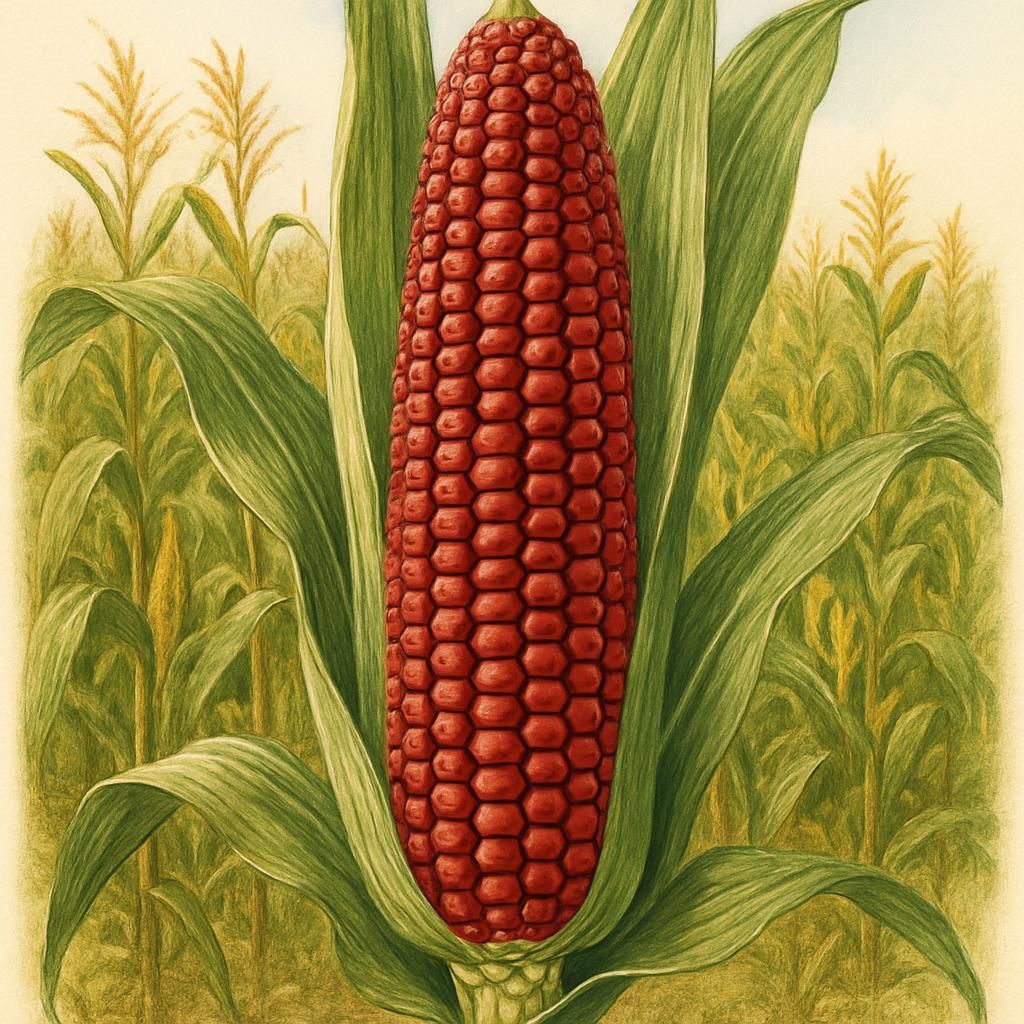
Introduction to Maize (Floriani Red Flint)
Floriani Red Flint Maize is a striking variety of corn known for its vibrant red kernels. Originating from the florally diverse climates of the Italian Alps, this heirloom corn is prized for its rich flavor and nutritional value. Often used in traditional Italian cooking for dishes like polenta, this variety of Corn is a favorite among gardeners and chefs who cherish its unique taste and colorful presentation.
Botanical Profile of Maize (Floriani Red Flint)
As a type of Flint Corn (Indian Corn), Floriani Red Flint Maize shares the robust characteristics of the species Zea mays var. indurata. Each stalk can grow between six to ten feet tall, supporting multiple ears filled with hard, starchy kernels. The plants are monoecious, bearing both male (tassels) and female (ears) flowers on the same plant, requiring wind for pollination.
Soil, pH, and Climate Requirements for Maize (Floriani Red Flint)
Floriani Red Flint thrives in conditions that suit most corn varieties, demanding fertile, well-drained soil, a consistent supply of moisture during flowering, and a long, warm growing season.
| Parameter | Ideal Conditions |
|---|---|
| Soil Type | Loamy, Well-drained |
| pH Level | 6.0 - 6.8 |
| Temperature Range | 70°F - 90°F |
| Rainfall | Moderate to High |
Step-by-Step Planting & Propagation
- Site Selection: Choose a sunny location with well-draining soil.
- Soil Preparation: Till the soil at least 6-8 inches deep and work in compost or well-rotted manure to improve fertility.
- Planting: Sow seeds 1-2 inches deep, spaced 12 inches apart in rows spaced 30-36 inches apart.
- Germination: Seeds typically germinate in 7-14 days.
- Thinning: Once seedlings are established, thin them out to the healthiest plants per station to prevent competition for nutrients.
Care & Maintenance regimes for Maize (Floriani Red Flint)
Proper care ensures a healthy and productive corn crop. Regular monitoring for water, nutrient needs, and potential pest issues will promote vigorous growth.
| Care Aspect | Schedule |
|---|---|
| Watering | Deep watering once a week during dry spells |
| Fertilizing | Apply a balanced fertilizer at planting and mid-season |
| Weeding | Regularly to reduce competition |
| Pest & Disease Monitoring | Weekly checks, especially during peak season |
Pests, Diseases & Organic Management
Floriani Red Flint Maize, like other maize varieties, is susceptible to several pests and diseases. Corn Earworm and European Corn Borer are among the primary insect threats, along with diseases like Common Rust and Smut.
Organic Management Strategies
- Companion Planting: Use plants like Thyme and Nasturtium to deter pests.
- Neem Oil: An effective organic pesticide against various insects.
- Beneficial Insects: Introduce predatory species to manage pest populations.
Harvesting, Curing & Optimal Storage
Floriani Red Flint is ready for harvest when kernels are hard and dented. Ears should be picked when still tight and dried on the stalk for a few weeks if possible.
- Harvesting: Check that the silks are brown and the kernels are firm.
- Curing: Hang ears in a well-ventilated area for additional drying if needed.
- Storage: Once dried, store in a cool, dry place. Shelled kernels can be milled for flour or stored whole in airtight containers.
Companion Planting for Maize (Floriani Red Flint)
Companion planting can enhance growth and ward off pests. Consider planting with beans, which fix nitrogen in the soil, or Squash which shades the soil and deters weeds. Avoid planting too close to Tomato crops as they can impede corn's growth.
For more detailed strategies on companion planting, read our blog on Summer Companion Planting: 10 Organic Pairings to Boost Small Farm Resilience.
Further Learning
For understanding advanced topics like crop rotation and its benefits on soil health, refer to related entries on Corn (crop).
By accommodating its specific cultivation requirements, Maize (Floriani Red Flint) can be an exotic and rewarding addition to gardens, offering a glimpse into traditional farming methods and flavors.