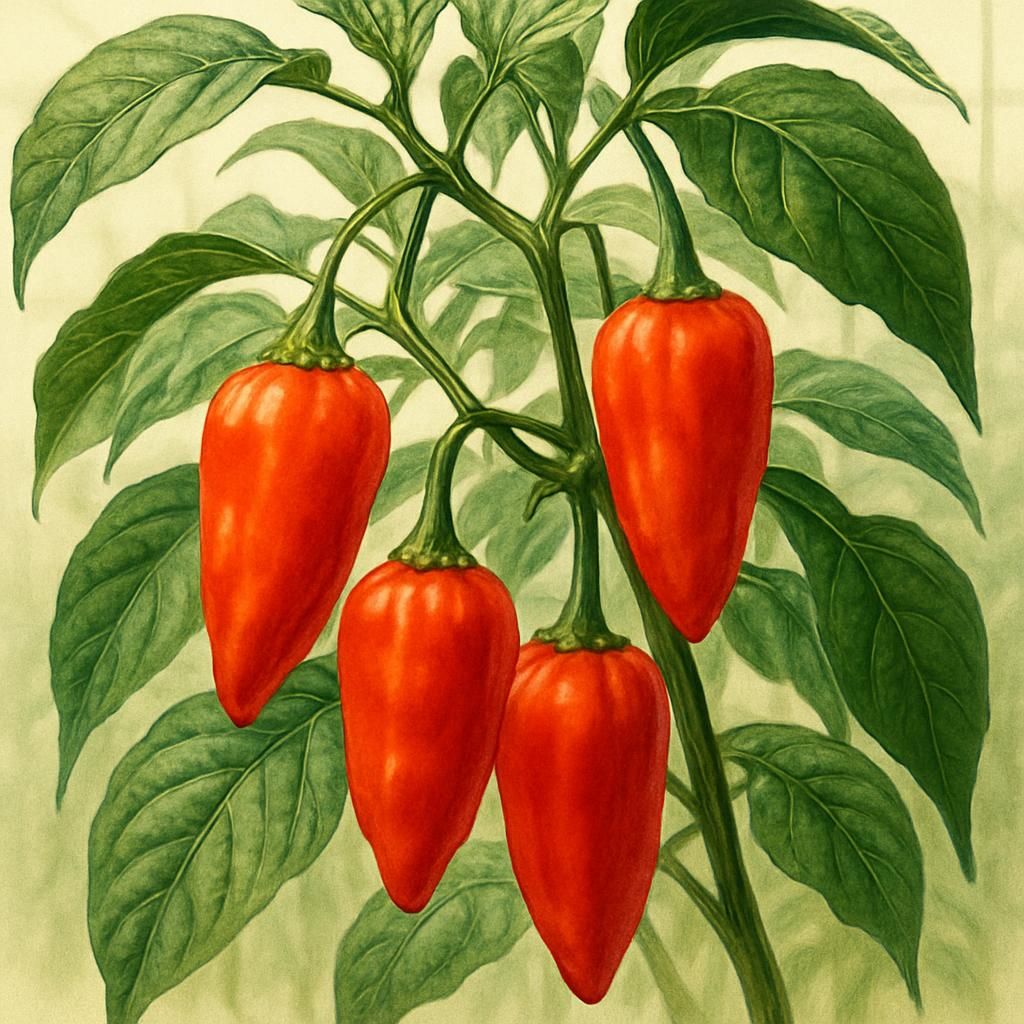
Introduction to Locoto Pepper
Locoto Pepper (Capsicum baccatum var. pendulum) is a South American chile known for its distinctive fruity aroma, moderate-to-high heat, and exceptional productivity. Grown widely across Bolivia, Peru, and parts of Brazil, the variety has gained global attention among specialty pepper growers seeking flavor-forward heat without the extreme pungency of Ghost Pepper. Its thick-walled pods retain crisp texture when fresh and develop rich, complex notes when dried or fermented.
Commercial producers value Locoto for its disease resistance profile and adaptability to both open-field and protected cultivation. The plants exhibit strong branching, prolific flowering, and reliable fruit set even under fluctuating temperatures. With proper management, growers can expect 3–5 kg of marketable fruit per plant over a 120–150 day cycle.
Botanical Profile of Locoto Pepper
Locoto Pepper belongs to the Solanaceae family and is botanically distinct from C. annuum and C. chinense species. Plants reach 80–120 cm in height with a semi-erect habit and dense foliage that provides natural fruit protection. Leaves are lanceolate, dark green, and slightly pubescent. Flowers are small, white with yellow anthers, and typically self-pollinating, although bees improve fruit uniformity.
Fruit morphology is highly variable within the species; typical Locoto pods measure 4–7 cm long, 2–3 cm wide, and display a pronounced pendant habit. Mature color ranges from golden yellow to bright orange-red. The pericarp is notably thick (3–5 mm), contributing to superior shelf life and reduced susceptibility to cracking. Scoville heat units generally fall between 30,000–60,000 SHU, placing Locoto in the medium-hot category.
Soil, pH, and Climate Requirements for Locoto Pepper
Locoto Pepper performs best in well-drained sandy loam to loam soils with high organic matter. The crop is moderately sensitive to salinity and waterlogging. Ideal growing conditions are summarized below:
| Parameter | Ideal Range | Notes |
|---|---|---|
| Soil Type | Sandy loam to loam | High organic matter improves structure |
| Soil pH | 6.0 – 6.8 | Below 5.8 increases blossom-end rot risk |
| Temperature (Day) | 22 – 30 °C | Optimal fruit set occurs at 24–28 °C |
| Temperature (Night) | 15 – 20 °C | Below 12 °C reduces pollination |
| Frost Tolerance | None | Protect below 10 °C |
| Annual Rainfall | 600 – 1200 mm | Supplemental irrigation required in dry periods |
| Relative Humidity | 60 – 75 % | Higher humidity favors fungal diseases |
| Altitude | 0 – 2200 m | Performs well from sea level to mid-elevation |
Step-by-Step Planting & Propagation
- Seed Selection & Treatment: Source certified disease-free seed. Soak in 1 % potassium nitrate for 24 hours to break dormancy and improve germination uniformity.
- Sowing: Start seeds indoors 8–10 weeks before last frost. Sow 0.5 cm deep in sterile seed-starting mix at 26–28 °C. Maintain 80–85 % humidity under domes until radicle emergence (7–10 days).
- Seedling Hardening: Reduce temperature to 20 °C and increase airflow 10–14 days before transplant to acclimate plants.
- Transplanting: Set seedlings outdoors when soil temperature reaches 18 °C and night air remains above 15 °C. Space plants 50 cm within rows and 80–100 cm between rows for adequate airflow.
- Mulching: Apply 5–7 cm of organic mulch immediately after transplanting to suppress weeds and stabilize soil moisture.
Care & Maintenance regimes for Locoto Pepper
Consistent irrigation, balanced nutrition, and strategic pruning are essential for maximizing fruit size and quality. The following table outlines recommended schedules:
| Growth Stage | Irrigation Frequency | Fertilizer Program (NPK) | Pruning Action |
|---|---|---|---|
| Transplant–Flowering | 2–3 times/week (20–25 mm) | 10-20-20 at 200 kg/ha, split into 3 applications | Remove basal suckers below first branch |
| Flowering–Fruit Set | Daily drip (3–4 L/plant) | 15-10-20 at 150 kg/ha plus Ca foliar sprays | Selective leaf thinning for light penetration |
| Fruit Ripening | Reduce to 15–20 mm/week | 10-5-25 potassium emphasis; stop N 3 weeks before final harvest | Remove diseased or damaged fruit only |
Side-dress with well-rotted compost or worm castings at 4–6 week intervals. Maintain soil EC below 2.5 mS/cm to avoid salt stress.
Pests, Diseases & Organic Management
Locoto Pepper is susceptible to several common Solanaceous pests and pathogens. Early scouting and integrated organic tactics are critical.
Major pests include Aphids, Thrips, Spider Mites, and Pepper Weevil. Deploy yellow sticky traps at 1 per 10 m² and introduce predatory mites (Phytoseiulus persimilis) at first detection. Neem oil (0.5 %) and insecticidal soaps provide effective knockdown while preserving beneficial insects.
Diseases of concern are Bacterial Spot, Phytophthora Blight, Powdery Mildew, and Fusarium Wilt. Use drip irrigation to keep foliage dry, rotate with non-host crops for minimum three years, and apply copper hydroxide or Bacillus subtilis formulations at 7–10 day intervals during high-risk periods. Remove and destroy infected plant material immediately.
Harvesting, Curing & Optimal Storage
Harvest Locoto Peppers at full color change for maximum flavor and heat. Pick every 4–5 days during peak production to encourage continuous fruiting. Use clean, sharp shears to avoid stem tearing. For fresh market, cool fruit to 7–10 °C within two hours of harvest and maintain 90–95 % relative humidity.
For drying, spread pods in single layers on racks at 35–40 °C with good airflow until moisture content reaches 10–12 %. Store dried Locoto in airtight containers away from light. Vacuum-sealed frozen whole pods retain quality for up to 12 months. Monitor for moisture migration to prevent mold development.
Companion Planting for Locoto Pepper
Strategic companions improve pollination, deter pests, and optimize space. Recommended pairings include Thai Basil, Marigold, Nasturtium, and Onion. Basil repels thrips and aphids while attracting pollinators; marigolds suppress nematodes and provide visual pest distraction. Avoid planting near Fennel or other Apiaceae that may harbor shared pests. Interplant with Cherry Tomato for vertical space efficiency and shared trellising infrastructure.
For further reading on integrated farm resilience, see The Hidden Power of Mulching: 8 Organic Strategies to Transform Small Farm Soil.