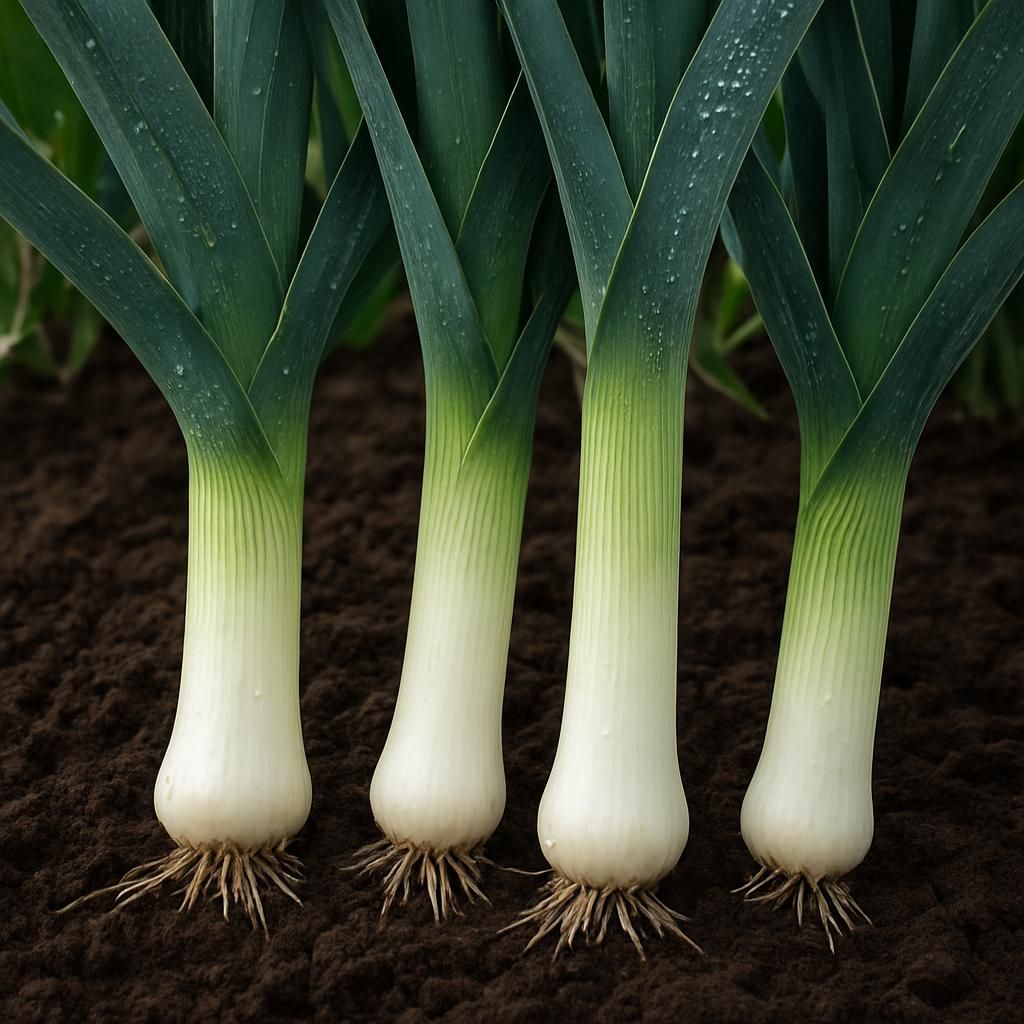
Introduction to Leek (Blue Solaise)
Leek (Blue Solaise) is a classic French heirloom variety that has earned a reputation among commercial growers and dedicated home gardeners for its exceptional cold hardiness and striking appearance. With its deep blue-green foliage and robust stems, this cultivar stands out in both the garden and on market tables. The variety is known for its ability to overwinter successfully in cold climates, making it a staple for winter and early spring harvests when other crops are scarce.
Blue Solaise leeks develop long, thick white shanks with minimal bulbing, delivering a sweet, mild onion flavor that becomes even more refined after exposure to frost. Their exceptional uniformity and disease resistance make them ideal for professional-scale production as well as smaller intensive beds. The plants reach maturity in approximately 120–150 days, providing reliable yields under a wide range of temperate conditions.
Because of their versatility and storage potential, Blue Solaise leeks are a high-value crop for diversified vegetable operations. They can be harvested young as baby leeks or allowed to mature fully for braising, soups, and roasting. Their striking blue-green color also makes them visually appealing at farmers’ markets.
Botanical Profile of Leek (Blue Solaise)
Leek (Blue Solaise) belongs to the Amaryllidaceae family and is botanically classified as Allium ampeloprasum var. porrum 'Blue Solaise'. Unlike bulb onions, leeks do not form a distinct bulb but instead produce an elongated pseudostem composed of tightly overlapping leaf bases. The cultivar exhibits a vigorous growth habit with broad, flat, glaucous leaves that develop a pronounced blue-green hue, especially under cool temperatures.
The root system is fibrous and shallow, making consistent moisture and weed control essential during establishment. Blue Solaise is biennial by nature but is almost always grown as an annual for its edible stems. The plant produces a tall flower stalk in its second year if left unharvested, bearing umbels of small white to pale purple flowers that attract pollinators.
This variety is particularly noted for its cold tolerance, surviving temperatures as low as –20 °C (–4 °F) when properly hardened. The blue coloration of the foliage is due to a waxy cuticle that helps reduce transpiration and protect against frost damage.
Soil, pH, and Climate Requirements for Leek (Blue Solaise)
Leek (Blue Solaise) performs best in deep, fertile, well-drained soils with high organic matter content. The crop is moderately heavy-feeding and responds well to consistent nitrogen availability throughout the growing season.
| Parameter | Ideal Range | Notes |
|---|---|---|
| Soil Type | Loamy to sandy loam | Avoid heavy clay; improve drainage with compost |
| Soil pH | 6.0 – 7.0 | Slightly acidic to neutral; test annually |
| Temperature Range | 7 – 24 °C (45 – 75 °F) | Cool-season crop; tolerates light frost |
| Day Length | Long-day preferred | Longer days promote thicker stems |
| Frost Tolerance | High (to –20 °C / –4 °F) | Hardens off for overwintering |
| Spacing | 15 cm between plants, 30–45 cm rows | Allows for blanching and good air flow |
| Soil Organic Matter | 4–6 % | Incorporate well-rotted manure or compost |
Consistent soil moisture is critical, especially during the first six weeks after transplanting. Blue Solaise thrives in full sun but will tolerate partial shade in warmer climates. Raised beds or ridges are recommended in areas with poor drainage to prevent root rot.
Step-by-Step Planting & Propagation
Seed Starting: Begin seeds indoors 8–10 weeks before the last expected spring frost. Sow in cell trays or open flats at a depth of 6 mm (¼ inch). Maintain soil temperature of 18–21 °C (65–70 °F) for rapid germination (7–10 days).
Hardening Off: Gradually acclimate seedlings outdoors over 7–10 days, increasing exposure to sun and wind. Protect from hard frosts during this period.
Transplanting: When seedlings reach pencil thickness (about 15–20 cm tall), transplant into prepared beds. Plant deeply so that only the top 5–8 cm of leaves remain above soil level to encourage long blanched stems.
Direct Sowing Option: In mild climates, direct sow in early spring or late summer for fall and overwinter crops. Thin seedlings to final spacing once they reach 10 cm tall.
Blanching Technique: To produce longer white shanks, gradually hill soil or use collars (cardboard tubes, black plastic pipe) around the stems as they grow. This excludes light and promotes tender, mild-flavored tissue.
Care & Maintenance regimes for Leek (Blue Solaise)
Blue Solaise requires steady attention to water, fertility, and weed management to achieve maximum shaft length and quality. Mulching with straw or shredded leaves helps conserve moisture and suppress weeds while moderating soil temperature.
| Growth Stage | Watering Schedule | Fertilizer Application | Pruning / Hilling Schedule |
|---|---|---|---|
| Seedling (0–4 wks) | Keep evenly moist; 2–3 cm/week | Light fish emulsion or seaweed weekly | None |
| Vegetative (4–10 wks) | 2.5–4 cm/week; avoid water stress | Side-dress with 10-5-10 or compost tea every 3 weeks | Begin light hilling at 4–6 weeks |
| Shaft Development (10–16 wks) | Consistent 3–5 cm/week; drip irrigation ideal | High-nitrogen organic fertilizer every 4 weeks | Hill soil or apply collars every 2–3 weeks |
| Overwintering | Reduce to 1–2 cm/week once established | Minimal; top-dress with compost in early spring | Additional hilling before first hard freeze |
Regular cultivation between rows improves aeration and breaks soil crusts. Remove any yellowing outer leaves to reduce disease pressure and improve airflow. Monitor for nutrient deficiencies, particularly nitrogen, which manifests as pale foliage and stunted growth.
Pests, Diseases & Organic Management
Leek (Blue Solaise) is relatively resistant to many common allium pests but can still be affected by onion thrips, leek moth, and cutworms. Fungal issues such as rust and downy mildew may appear in humid conditions.
Organic control strategies include:
- Installing floating row covers during early growth to exclude leek moth and thrips.
- Releasing beneficial insects such as lacewings and predatory mites.
- Applying neem oil or insecticidal soap for soft-bodied insects.
- Practicing crop rotation with non-allium crops for at least three years.
- Removing and destroying infected foliage to limit rust spread.
- Maintaining good soil health to reduce susceptibility to root rot.
Companion planting with carrot and celery can help deter pests through olfactory masking.
Harvesting, Curing & Optimal Storage
Blue Solaise leeks are ready for harvest when the shaft reaches 2–4 cm in diameter, typically 120–150 days from transplant. For baby leeks, harvest at 1 cm diameter. Use a digging fork to loosen soil and lift plants carefully to avoid damaging the base.
After harvest, trim roots and outer damaged leaves. Leeks can be stored in the field under mulch through winter in zones 5 and warmer. For longer storage, wash, trim to 20–25 cm, and refrigerate in perforated plastic bags at 0–2 °C (32–36 °F) with 95 % humidity for up to 2–3 months. They can also be blanched and frozen for extended preservation.
Companion Planting for Leek (Blue Solaise)
Leek (Blue Solaise) benefits from strategic companions that improve pest deterrence, soil health, and space utilization. Recommended pairings include carrot, celery, lettuce, and strawberry. These combinations help mask the scent of leeks from onion flies and thrips while making efficient use of bed space.
Avoid planting near beans and peas, as alliums can inhibit their growth through allelopathy. Interplanting with aromatic herbs such as rosemary and thyme further reduces insect pressure. For more detailed seasonal strategies, see Summer Companion Planting: 10 Organic Pairings to Boost Small Farm Resilience.