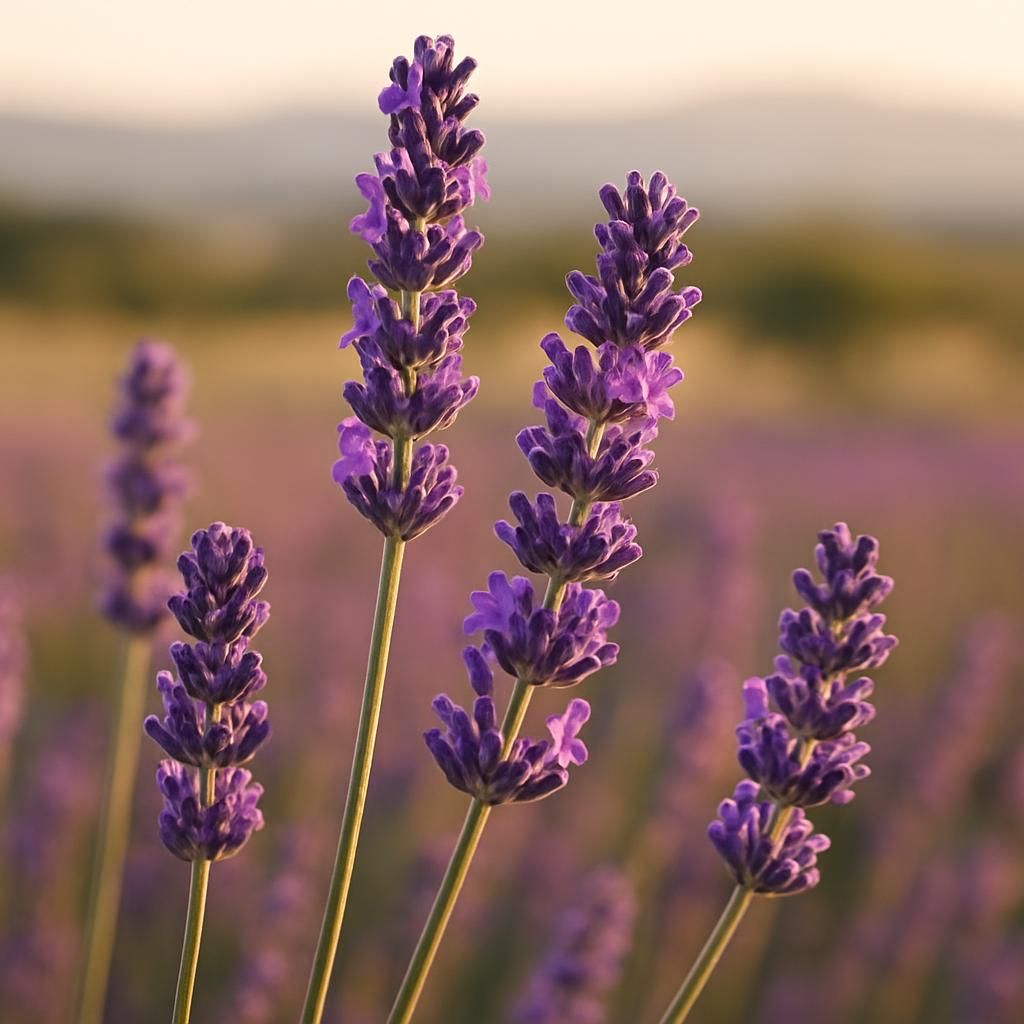
Introduction to Lavender Flower
Lavender Flower (Lavandula angustifolia) is one of the most economically valuable aromatic herbs in modern agriculture. Its essential oil commands premium prices in perfumery, aromatherapy, and natural medicine markets. Commercial growers appreciate its low water requirements and ability to thrive on marginal land, while home gardeners value its long-lived nature and pollinator support. This comprehensive guide provides professional-grade, actionable advice for maximizing both yield and oil quality across different production scales.
Botanical Profile of Lavender Flower
Lavandula angustifolia belongs to the Lamiaceae family and is native to the Mediterranean region. The plant forms a compact, woody-based shrub reaching 30–60 cm in height with linear, silver-gray leaves that are highly pubescent. Purple to violet flower spikes emerge from June through August, each bearing 6–10 whorls of tiny tubular flowers rich in linalool and linalyl acetate. The deep taproot system enables exceptional drought tolerance once established. Cultivars such as 'Munstead', 'Hidcote', and 'English' are favored for both oil production and ornamental landscaping.
Soil, pH, and Climate Requirements for Lavender Flower (MUST INCLUDE A MARKDOWN TABLE OF IDEAL CONDITIONS)
Lavender demands exceptionally well-drained soils to prevent root rot. Sandy loam or gravelly soils with high permeability are ideal. Heavy clay soils must be amended with grit or raised beds. The plant performs best in Mediterranean-type climates with hot, dry summers and cool winters. Excessive humidity increases disease pressure.
| Parameter | Ideal Range | Notes |
|---|---|---|
| Soil Type | Sandy loam, gravelly | Avoid heavy clay without amendment |
| Soil pH | 6.5 – 8.0 | Slightly alkaline preferred |
| Temperature Range | 15–30 °C daytime | Hardy to −15 °C once established |
| Annual Rainfall | 300–600 mm | Supplemental irrigation only during establishment |
| Sun Exposure | Full sun (≥8 hours) | Critical for oil concentration |
| Elevation | 0–1500 m | Higher elevations often improve oil quality |
Step-by-Step Planting & Propagation
Propagation is most successful via semi-ripe cuttings taken in early summer. Select healthy, non-flowering shoots 8–10 cm long, remove lower leaves, and dip in rooting hormone before inserting into a sterile perlite-sand mix. Maintain high humidity under mist until roots form in 4–6 weeks. Transplant rooted cuttings into 10 cm pots and grow on until a strong root ball develops. Field planting occurs in spring after last frost or in autumn in mild climates. Space plants 30–45 cm apart in rows 60–90 cm wide. Dig planting holes twice the width of the root ball and amend with coarse sand if drainage is marginal. Water thoroughly after planting and apply a 5 cm gravel mulch to suppress weeds and retain soil warmth.
Care & Maintenance regimes for Lavender Flower (MUST INCLUDE A MARKDOWN TABLE OF WATER, FERTILIZER, AND PRUNING SCHEDULES)
Established lavender requires minimal intervention. Over-fertilization reduces oil quality and promotes soft growth susceptible to winter kill. Pruning immediately after flowering maintains plant shape and encourages bushiness. Remove spent flower spikes and cut back one-third of the current season’s growth, avoiding cuts into old wood.
| Season | Watering Schedule | Fertilizer Application | Pruning Action |
|---|---|---|---|
| Spring | Deep soak every 10–14 days if dry | Light compost tea (1:10) at bud break | Remove winter-damaged stems |
| Summer | Minimal; only during prolonged drought | None recommended | Deadhead spent blooms; light shaping |
| Autumn | Reduce frequency as growth slows | None | Main annual prune: cut back ⅓ of new growth |
| Winter | None required in dormant state | None | None; protect with breathable cover in cold zones |
Pests, Diseases & Organic Management
The most common issues are Root rot caused by Phytophthora and Spider mites during hot, dry periods. Good drainage and airflow are the primary defenses. For mites, release predatory mites (Phytoseiulus persimilis) or apply neem oil at 0.5 % concentration. Fungal leaf spots are managed by removing infected foliage and ensuring 30 cm spacing between plants. Avoid overhead irrigation. Lavender’s natural repellency reduces most insect pressure, but occasional Aphids may appear on new growth; these are controlled with insecticidal soap.
Harvesting, Curing & Optimal Storage
Harvest when 50–75 % of flowers on a spike are open for highest oil content. Cut stems in the morning after dew has dried, bundle in groups of 20–30, and hang upside down in a dark, well-ventilated area at 20–25 °C. Drying typically takes 10–14 days. Once stems snap cleanly, strip flowers from stems and store in airtight glass or food-grade containers away from light and heat. Properly cured lavender retains aroma and color for up to two years. For distillation, process fresh material within 24 hours of harvest.
Companion Planting for Lavender Flower
Lavender pairs exceptionally well with Mediterranean herbs and vegetables that share its preference for lean, well-drained soils. Recommended companions include Rosemary, Thyme, and Oregano for mutual pest deterrence. In vegetable gardens, lavender planted at row ends repels Cabbage loopers and Carrot rust fly. It also attracts beneficial insects such as lacewings and parasitic wasps that control aphids on neighboring Tomato and Pepper crops. Avoid planting near moisture-loving species such as Mint or Basil that may compete for water and create humidity pockets.
For further reading on aromatic herb economics, see The Economics of Basil: A Brutal Breakdown.