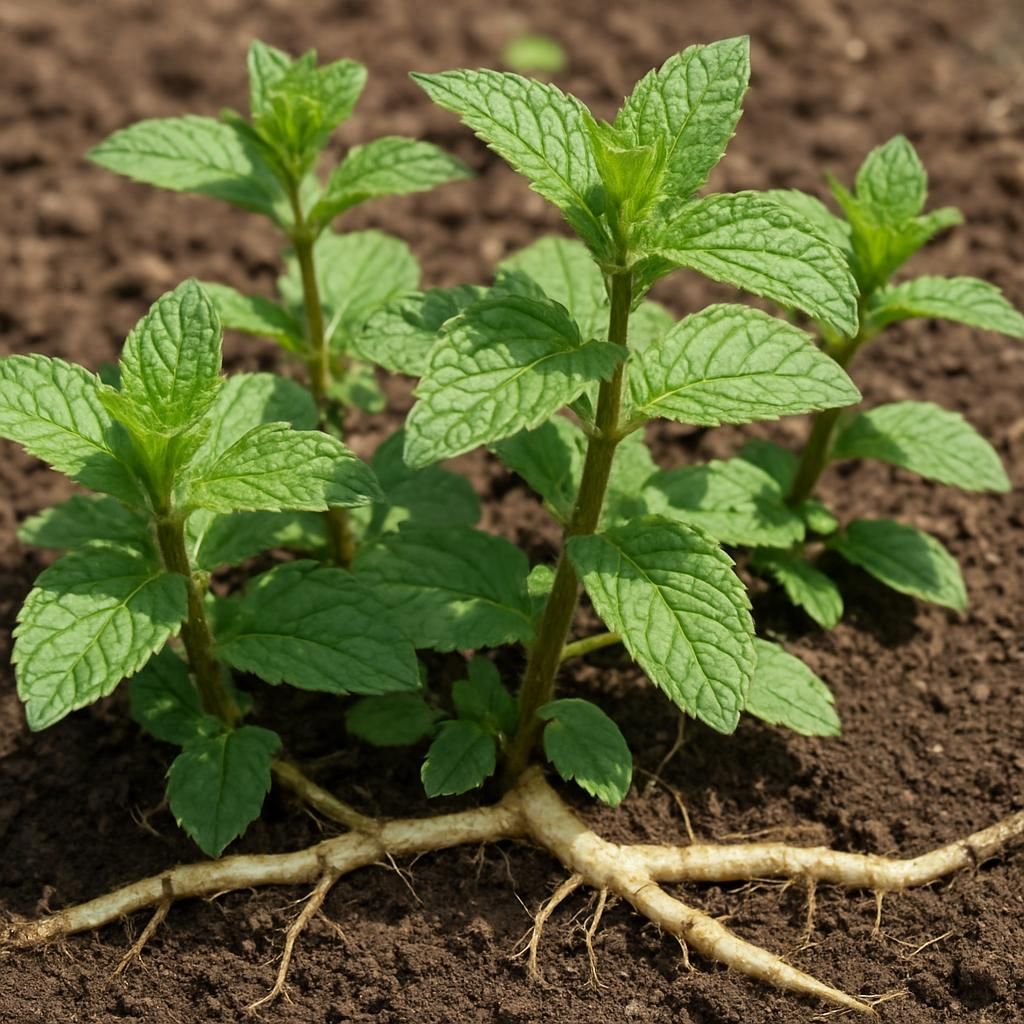
Introduction to Mint
Mint (Mentha spp.) is a fast-spreading herbaceous perennial prized for its aromatic leaves but notorious among growers as an aggressive weed. Once established, its extensive rhizome network enables rapid colonization of beds, borders, and container plantings. In agricultural settings, uncontrolled mint can reduce yields of neighboring Tomato and Lettuce crops by competing for water, nutrients, and light. This guide provides professional-grade diagnostic and management strategies for containing and eradicating mint infestations.
Identifying Symptoms & Damage
Mint produces square stems, opposite leaves with serrated margins, and a strong menthol scent when crushed. The most obvious symptom is the sudden appearance of dense, low-growing patches that spread outward in circular or irregular patterns. Rhizomes grow horizontally 5–15 cm below the soil surface, sending up new shoots every 10–20 cm. Visible damage includes crowding out seedlings, reduced air circulation around host plants, and occasional allelopathic suppression of nearby root growth. In severe cases, mint mats can cause lodging of adjacent low-growing crops such as Strawberry.
Lifecycle and Progression of Mint
Mint reproduces almost exclusively through vegetative means via rhizomes and stolons; seed production is minimal in most cultivated varieties. The plant remains evergreen in mild climates and enters dormancy only where winter temperatures drop below –15 °C.
| Lifecycle Stage | Timing | Description | Key Identification Features |
|---|---|---|---|
| Emergence | Early spring (soil 7–10 °C) | New shoots arise from overwintering rhizomes | Square stems, opposite leaves, mint odor |
| Vegetative Spread | Late spring through summer | Rhizomes extend 30–60 cm laterally; new shoots form at nodes | Dense mat formation, rapid height increase to 30–60 cm |
| Flowering | Mid to late summer | Terminal spikes of small purple or white flowers appear | Attracts pollinators; viable seed rarely produced |
| Senescence & Rhizome Storage | Autumn | Above-ground growth dies back; carbohydrates stored in rhizomes | Underground buds remain viable at 5–15 cm depth |
| Winter Dormancy | Winter | Plant survives as dormant rhizomes | No visible shoots; rhizomes remain turgid |
Environmental Triggers & Risk Factors
Mint thrives in moist, fertile soils with pH 6.0–7.5 and full sun to partial shade. Over-irrigation, poor drainage, and frequent soil disturbance favor rhizome fragmentation and spread. High organic-matter beds and container mixes lacking physical barriers are especially vulnerable. Mild winters without prolonged freezes allow year-round growth. Proximity to irrigation lines or drip emitters creates ideal micro-sites for establishment.
Organic Control & Treatment Plans
Successful mint control integrates multiple tactics applied on a consistent schedule. Begin with physical removal of all visible foliage and rhizomes, followed by barrier installation and repeated monitoring.
| Treatment Option | Frequency | Application Details | Expected Efficacy |
|---|---|---|---|
| Hand pulling / rhizome excavation | Weekly for 4–6 weeks, then monthly | Remove entire root system to 15 cm depth; dispose off-site | High when performed thoroughly |
| Smothering with 15–20 cm organic mulch | Reapply every 8–10 weeks | Use cardboard or newspaper base layer plus wood chips | Moderate; prevents light penetration |
| Solarization (clear plastic, 4–6 weeks) | Once per season, summer | Moisten soil, cover with UV-stabilized plastic, seal edges | High in hot climates (>30 °C soil) |
| Vinegar (20–30 % acetic acid) spot treatment | Every 7–10 days on regrowth | Apply on sunny day to foliage only; avoid drift | Moderate on young shoots |
| Corn gluten meal pre-emergent | Early spring and fall | Broadcast 10–15 kg/100 m²; water in lightly | Low–moderate; inhibits germination |
| Dense cover cropping (e.g., Buckwheat) | Rotate every 8–10 weeks | Mow and incorporate before seed set | Moderate; competes for resources |
Preventing Mint in the Future
Install 30–45 cm deep root barriers around new beds and containers. Always plant mint in isolated pots rather than in-ground. Inspect purchased nursery stock for hidden rhizomes. Maintain a 1 m buffer zone between mint plantings and high-value crops. Practice strict sanitation: clean tools and boots after working in infested areas. Use drip irrigation targeted at crop roots to avoid creating moist corridors for mint spread.
Crops Most Affected by Mint
Mint most aggressively invades high-value leafy greens and herbs including Lettuce, Spinach, Basil, and Cilantro. It also competes with Strawberry, Tomato, and young tree seedlings in orchards. Root crops such as Carrot and Radish suffer reduced stand establishment when mint rhizomes fragment during tillage.