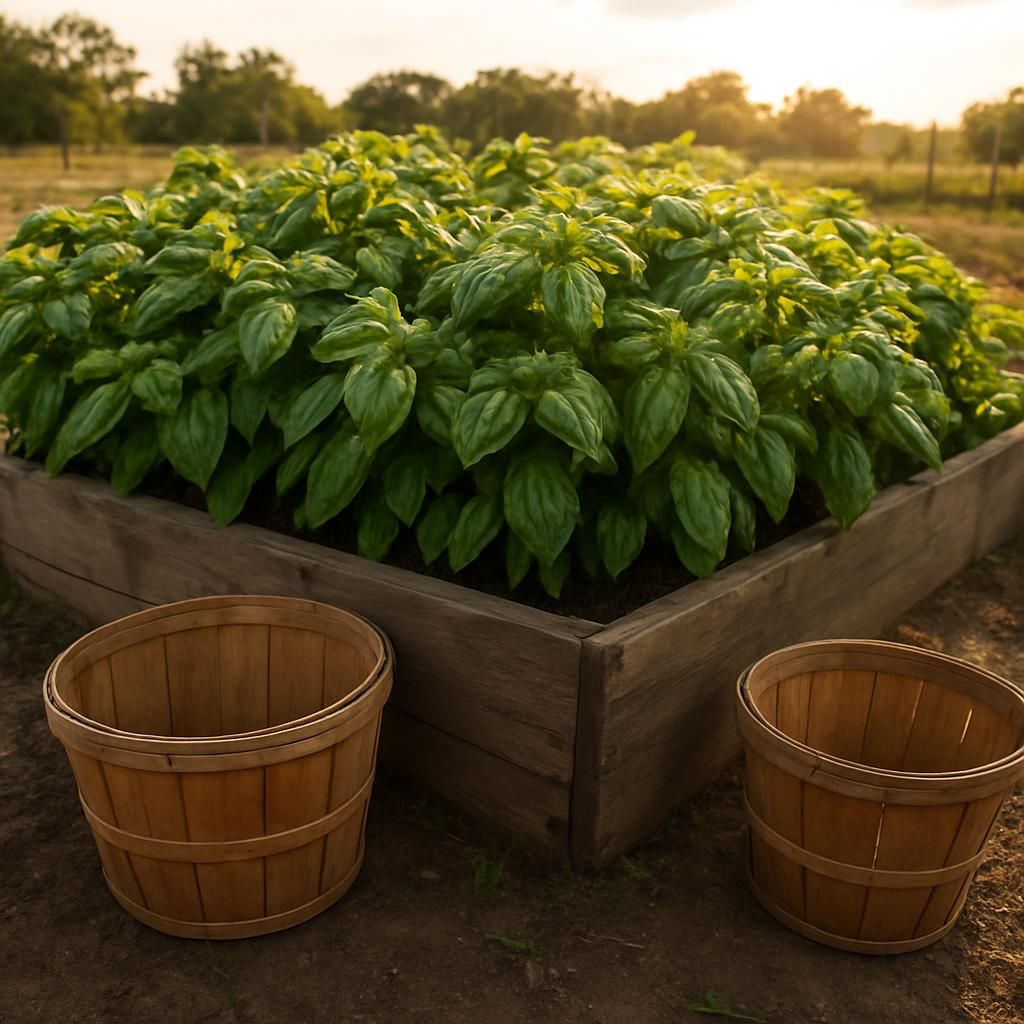
The Real Numbers Behind a Single Basil Bed
Most small growers treat basil as an afterthought crop that fills space between tomatoes. That mindset hides the actual cash flow. A 100-square-foot bed planted at standard density produces roughly 40 pounds of marketable leaves over a 10-week harvest window in temperate zones. At local farmers-market prices of $4 per pound, gross revenue lands near $160. Subtract seed, organic fertilizer, labor for successive cuttings, and packaging, and net return often shrinks to $70-$90. The gap between gross and net is where most operations quietly lose money.
Input Costs That Sneak Up on You
| Input | Typical Cost per 100 sq ft | Notes |
|---|---|---|
| Organic seed | $6-$9 | Multiple succession plantings required |
| Compost tea & fish emulsion | $12-$15 | Applied every 10-14 days during growth |
| Harvest labor (self) | $25-$35 | 4-5 cuts over the cycle |
| Packaging & labels | $8-$10 | Bunches or clamshells for market |
These figures assume you already own basic tools. If you factor in time spent at market or delivery fuel, the margin narrows further. Many growers discover their hourly return falls below minimum wage once every task is logged.
Where Basil Actually Makes Sense
Basil shines when it serves a dual role: fresh bunches plus value-added pesto or dried seasoning. Turning 10 pounds of leaves into 12 jars of pesto at $8 each can double revenue from the same square footage. The extra step requires only a food processor, jars, and consistent labeling, yet few small operations run the numbers before committing space.
Success also depends on timing. Early spring plantings under row cover reach market three weeks ahead of field-grown product. That price premium of $1-$2 per pound offsets the cost of the cover and hoops within one season. Later plantings risk heat stress that reduces leaf quality and market price.
Labor Scheduling That Protects Profit
Basil demands frequent attention: succession sowing every three weeks, daily monitoring for downy mildew, and harvest before flowering. Without a written calendar, tasks slip and quality drops. Setting fixed days for sowing, fertilizing, and cutting keeps labor predictable and prevents the common mistake of letting plants bolt.
Weather Timing and Risk Management
Sudden temperature swings or prolonged humidity can trigger disease faster than most growers expect. Checking a hyper-local forecast each morning lets you adjust irrigation and harvest windows before problems compound. Skipping this step is one of the fastest ways to lose an entire cutting to fungal pressure.
Companion Planting Choices That Reduce Inputs
Interplanting basil with tomatoes or peppers can lower pest pressure without extra sprays. The aromatic oils appear to mask host-plant scents for some insects. However, the benefit only appears when spacing allows airflow; overcrowding cancels the advantage and invites disease. Track which pairings actually reduce observed damage rather than relying on tradition alone.
Tracking True Profitability
The only reliable way to know whether basil belongs in your rotation is to record every expense and every sale for at least two full cycles. Separate the fresh bunch sales from pesto revenue. Note which successions performed best and which weeks produced the highest market price. After two seasons the pattern usually shows whether expanding the bed or replacing it with a higher-margin crop makes more sense.
Basil remains one of the few crops that can generate weekly cash flow on very small acreage. The difference between modest profit and hidden loss comes down to disciplined record-keeping and deliberate timing rather than hoping the plants will perform on their own.