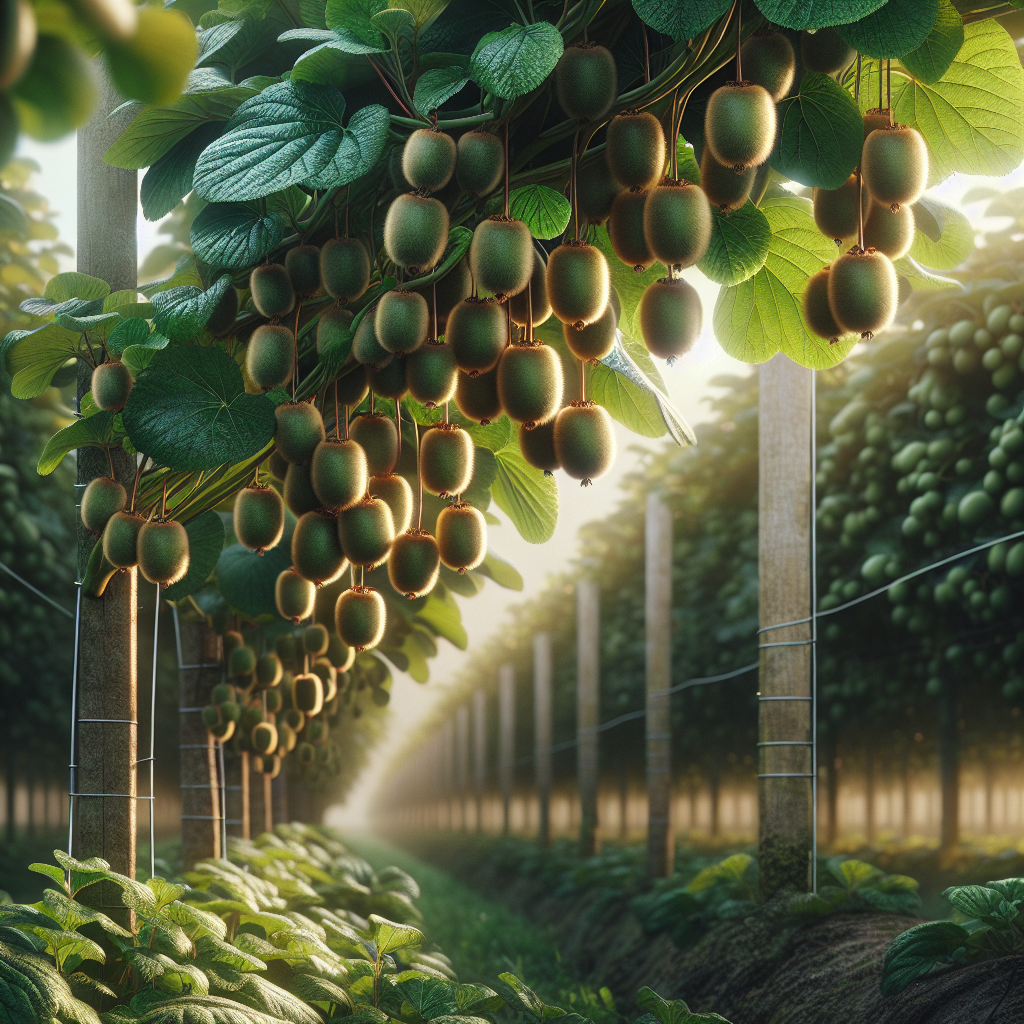
Introduction to Kiwi (Hardy)
Hardy kiwi is one of the most rewarding yet underappreciated fruiting vines for temperate growers. Botanically distinct from the larger fuzzy kiwifruit commonly sold in grocery stores, hardy kiwi produces smaller, smooth-skinned fruit that can be eaten whole without peeling. The flavor is often sweeter and more aromatic than standard kiwifruit, with notes that can range from tropical to berry-like depending on cultivar and ripeness.
This crop is native to East Asia and has been cultivated in parts of China, Korea, Japan, and the Russian Far East. It became especially valuable to colder-climate growers because of its superior winter hardiness compared with commercial fuzzy kiwi. In favorable conditions, mature vines can become extremely vigorous, sending shoots several meters in a season and yielding substantial crops for decades.
Hardy kiwi is best treated as a long-term orchard vine rather than a casual backyard plant. It rewards growers who are willing to invest in a serious support system, deliberate pruning, and pollination planning. When managed well, it can outperform many berry crops in longevity and total yield per plant. For general background on related kiwifruit culture, see Kiwi.
Botanical Profile of Kiwi (Hardy)
Hardy kiwi belongs to the genus Actinidia, with Actinidia arguta being the principal species referred to as hardy kiwi. Other cold-tolerant species and hybrids are also grown, but A. arguta is the standard reference point. It is a deciduous, twining woody vine rather than a self-supporting shrub or tree, and mature trunks can become surprisingly thick and rope-like over time.
Leaves are usually medium to dark green, broadly oval, and thinner than those of many drought-adapted fruit species. This leaf structure partly explains why the plant responds quickly to heat stress, wind scorch, and water imbalance. New shoots are tender and can be damaged by late spring frosts even though dormant wood is highly cold hardy.
Most hardy kiwi plants are dioecious, meaning male and female flowers are borne on separate plants. A male vine is required to pollinate female vines unless the grower chooses one of the limited self-fertile cultivars. Even self-fertile types usually crop more heavily with a compatible male nearby. Flowers are small, white to cream, lightly fragrant, and borne on current season growth arising from one-year-old wood.
Fruit are generally marble- to grape-sized, with smooth green to green-purple skin depending on cultivar. Unlike fuzzy kiwi, the skin is thin and tender. The flesh is usually emerald green, though some selections show red or purple blush internally. Soluble solids can rise quickly late in ripening, so harvest timing strongly affects eating quality.
Important cultivar groups include highly productive green-fruited selections such as 'Ananasnaya' and more ornamental or specialty types with red-blushed flesh. 'Issai' is often marketed for small gardens because it is partially self-fertile and somewhat less vigorous, but it is generally less cold hardy and less consistently productive than top dioecious cultivars. In commercial-style plantings, growers often prefer robust female cultivars paired with a proven male pollinizer.
Soil, pH, and Climate Requirements for Kiwi (Hardy)
Hardy kiwi performs best in deep, fertile, well-drained loam with high organic matter and good moisture-holding capacity. The ideal soil is neither droughty nor waterlogged. A root zone that stays evenly moist but well aerated is the goal. If you squeeze a handful of soil from the root zone, it should hold together lightly but crumble when pressed, not smear into a sticky mass or fall apart as dust.
The preferred pH range is slightly acidic, typically about 5.5 to 6.8, with the sweet spot near 6.0 to 6.5. At higher pH, especially above 7.2, vines can develop micronutrient deficiencies such as iron chlorosis, showing pale yellow leaves with greener veins. In alkaline soils, heavy compost use alone may not correct the issue; sulfur amendments, acid-forming fertility programs, and foliar micronutrient correction may be required.
Drainage is non-negotiable. Hardy kiwi roots are sensitive to oxygen deprivation. Standing water for even a day or two in warm soil can begin to damage feeder roots, and chronic saturation invites root rot. If your site has a perched water table, plant on broad raised berms 20-40 cm high and at least 1 m wide. Avoid low frost pockets and poorly drained clay basins.
Climatically, hardy kiwi is best suited to cool-temperate to cold-temperate regions with adequate winter chilling and a frost-free growing season long enough to mature the crop. Dormant vines can tolerate severe winter cold, often to around -25°C to -30°C depending on cultivar, wood maturity, and acclimation. However, spring growth is very frost sensitive. Buds swelling or breaking dormancy can be damaged at temperatures just below freezing, and open flowers may be lost around -1°C to -2°C.
A site with full sun is ideal in cool climates. In hotter inland regions, afternoon shade can reduce leaf scorch and fruit sunburn, especially where summer highs regularly exceed 32°C. High winds are harmful because they tear tender shoots, reduce pollinator activity, and increase transpiration stress. Windbreaks or sheltered rows are strongly beneficial.
Hardy kiwi also benefits from moderate atmospheric humidity. In arid climates, vines may survive but often require more precise irrigation and mulching to maintain leaf function and fruit sizing. Consistent soil moisture matters more than heavy but infrequent soaking.
For broader soil-building strategies that help perennial fruit crops thrive, see soil health tips.
Step-by-Step Planting & Propagation
Start by choosing a site with strong sun exposure, wind protection, excellent drainage, and room for a permanent trellis. This is not a plant to tuck into a temporary fence line. A mature vine can occupy several square meters and exert substantial weight when loaded with foliage and fruit.
Install the trellis before planting. A T-bar, pergola, or high-cordon system works well. End posts should be deeply set and heavily braced because mature vines become very heavy. Commercial systems often use stout posts with high-tensile wire at around 1.8-2.1 m high. For backyard use, a pergola allows fruit to hang down for easier picking, but pruning access must still be practical.
Plant dormant bare-root vines in early spring as soon as soil is workable, or plant container-grown vines after severe frost risk has passed. Space vines about 3-5 m apart within the row, depending on vigor and training system. Rows should generally be 4-6 m apart to allow light penetration and access.
For dioecious plantings, use roughly one male for every 6-8 female vines, though exact ratios vary by layout and pollinator distribution. Place male vines so bees can easily move pollen across the block. One male at the row end is less effective than strategically distributed pollinizers.
To plant, dig a hole wide enough to spread roots naturally without bending them sharply. Keep the crown at the same depth it was growing previously. Backfill with native soil rather than a sharply contrasting pocket of rich compost, which can create a bathtub effect in heavy soils. Water thoroughly to settle the root zone and remove air pockets.
Apply 5-10 cm of coarse organic mulch, such as leaf mold, wood chips, or aged bark, but keep mulch 8-10 cm away from the trunk to prevent crown rot and rodent damage. The mulch zone should ideally extend at least 60-90 cm from the base in all directions.
For propagation, hardwood cuttings and softwood cuttings are both possible, though success rates depend on cultivar, hormone use, humidity control, and timing. Hardwood cuttings taken during dormancy are convenient but slower to root. Softwood cuttings taken from semi-mature current growth root more readily under mist with bottom heat. Grafting is less common for small-scale production but may be used in nursery systems. Seed propagation is not recommended for production because offspring are variable and sex cannot be known until flowering.
In the first year, select one strong shoot and tie it vertically to a training stake or wire. Remove competing shoots so energy goes into forming a straight trunk. Once the vine reaches the fruiting wire, pinch or head it to encourage two lateral cordons, one in each direction.
Care & Maintenance regimes for Kiwi (Hardy)
Water management is one of the main differences between average and exceptional hardy kiwi production. The root zone should remain consistently moist to a depth of roughly 20-30 cm during active growth, especially from bloom through fruit enlargement. As a practical field test, soil at 10-15 cm deep should feel cool and slightly damp, not muddy and not dry enough to powder apart.
Young vines typically need deep irrigation 1-3 times weekly depending on soil type and weather. Sandy soils may require more frequent, lower-volume irrigation. Mature vines in hot summer weather can use substantial water, often equivalent to 25-40 mm per week or more under high evapotranspiration. Drip irrigation is preferred because it maintains steady moisture without wetting foliage.
Signs of underwatering include limp shoot tips during the heat of day that do not recover by evening, marginal leaf scorch, reduced fruit sizing, premature fruit drop, and poor return bloom. Signs of overwatering include persistently yellow leaves, soft weak growth, algae or sour odor near emitters, and soil that remains saturated more than 24 hours after irrigation.
Fertility should emphasize balanced vegetative growth, not excessive nitrogen. Hardy kiwi is naturally vigorous, and overfeeding nitrogen leads to rampant shoots, delayed wood ripening, reduced winter hardiness, and more pruning labor. In early spring, apply a moderate dose of composted manure or a balanced organic fertilizer based on soil test results. Young vines may need only light feeding, while mature bearing vines often benefit from split applications: one at bud swell and one just after fruit set.
Nitrogen deficiency appears as pale green older leaves and weak shoot extension. Potassium deficiency can reduce fruit quality and winter resilience. Boron and zinc deficiencies may appear in high-pH soils and affect flowering and fruit set. Annual leaf tissue analysis in midsummer is worthwhile in commercial or high-performance plantings.
Pruning is absolutely central to productivity. Hardy kiwi fruits on current season shoots arising from one-year-old wood. That means unmanaged vines quickly become a dense mass of old, unproductive wood with poor light penetration. Winter pruning should remove overcrowded laterals, retain well-spaced one-year fruiting canes, and renew fruiting wood continually. Summer pruning should shorten excessively long vegetative runners and improve light and air movement.
A common system is to maintain permanent trunk and cordons, then renew lateral fruiting arms annually or every few years. Fruiting laterals are often spaced 15-30 cm apart along the cordon. After harvest or during dormancy, canes that fruited are shortened back to replacement shoots where possible. The aim is a repeating cycle of renewal rather than permanent accumulation of tangled framework.
Pollination deserves active management. Flowering typically occurs in late spring to early summer. Male and female bloom periods must overlap. Bees are the primary pollinators, so avoid insecticide use during bloom and encourage pollinator presence. Poor fruit set often traces back to incompatible bloom timing, cold wet weather during flowering, or insufficient male flowers.
Because vines leaf out early, spring frost protection may be necessary in frost-prone sites. Options include row-scale wind machines, overhead frost irrigation in commercial settings, or temporary fabric covers on smaller structures. Even if the vine survives, losing primary buds can eliminate the season's crop.
Pests, Diseases & Organic Management
Hardy kiwi is relatively resilient compared with some fruit crops, but it is not trouble-free. The greatest problems often arise from site stress, poor airflow, or overvigorous unmanaged canopies rather than from a single devastating pest.
Root rots caused by Phytophthora and other water-mold pathogens are serious in wet soils. Prevention is far more effective than treatment. Plant only in well-drained soil, avoid burying crowns, and never irrigate on a fixed schedule without checking soil moisture.
leaf spots and fruit rots can develop in humid conditions, especially where dense canopies remain wet for long periods. Sanitation, pruning for airflow, and drip irrigation are core organic controls. Remove diseased prunings and dropped fruit from the planting area.
bacterial diseases can occasionally affect Actinidia species, especially in wet, injury-prone conditions. Avoid unnecessary wounding, sanitize pruning tools when disease is suspected, and prune during dry weather when possible. Excess nitrogen that drives soft succulent growth can increase vulnerability.
Common arthropod pests may include spider mites, leafrollers, scale insects, Japanese beetles in some regions, and occasionally thrips. Mites are more common in dusty, hot conditions and often show as stippled leaves or bronzing. Encourage predatory insects, reduce dust, and use horticultural oils or insecticidal soap when monitoring shows an actual problem.
Birds may peck ripening fruit, and deer can browse shoots heavily. Netting and fencing are often necessary where pressure is high. Rodents may damage trunks under mulch in winter, so keep mulch pulled back from the crown and consider trunk guards for young vines.
Organic management works best when built around prevention: good drainage, moderate fertility, canopy openness, mulch management, sanitation, and regular scouting. A vine that is overly shaded, overwatered, and underpruned will almost always become a pest and disease magnet.
Harvesting, Curing & Optimal Storage
Hardy kiwi should not be judged by skin color alone. Fruit often remains green externally even as internal maturity advances. The best harvest indicator is a combination of seed maturity, soluble solids, firmness, and ease of detachment. Mature seeds darken from pale to black or very dark brown. Fruit should be physiologically mature before picking, even if still firm.
In many regions, harvest occurs from late summer through autumn depending on cultivar and climate. Fruit intended for storage is usually picked firm but mature, before full vine-softening. If harvested too early, flavor will be flat and fruit may fail to ripen properly. If harvested too late, shelf life drops sharply and fruit bruises easily.
Use careful hand harvesting. Clip or gently twist fruit from the stem without tearing spurs or damaging nearby buds for next year. Handle shallowly in padded containers because the thin skin marks easily.
Hardy kiwi does not require curing in the same way as onions or winter squash, but a short postharvest conditioning period at cool room temperature can help even out ripening for immediate fresh use. For storage, move fruit quickly to cold conditions around 0-1°C with high relative humidity of 90-95%. Under ideal conditions, firm mature fruit may store for several weeks to a few months depending on cultivar and preharvest health.
Ethylene management matters. Like many climacteric fruits, hardy kiwi ripens in response to ethylene. To accelerate ripening for market or home use, place fruit in a ventilated bag or container with a ripe apple or banana for a few days. To delay ripening, keep fruit cold and separate from ethylene-producing produce.
Fully ripe fruit should yield slightly to gentle pressure, much like a ripe plum, while still feeling smooth and intact. Refrigerated ripe fruit should be consumed quickly, usually within about a week for best texture.
Companion Planting for Kiwi (Hardy)
Because hardy kiwi is a permanent vine crop with shallow, moisture-sensitive feeder roots, the best companions are low-competition plants that improve pollination, soil cover, and beneficial insect activity without tangling into the canopy. Avoid aggressive climbers, tall shading plants, and thirsty species that compete directly in the root zone.
Clover is one of the best understory companions. It functions as a living mulch, moderates soil temperature, supports pollinators when managed properly, and can contribute biologically fixed nitrogen. Keep it mowed low near young vines so it does not outcompete establishing roots.
Thyme works well along row edges or sunny borders where soil drains well. Its low habit attracts beneficial insects, suppresses some weeds, and does not create dense shade around trunks.
Yarrow is especially useful near kiwi blocks because its flowers attract hoverflies, parasitic wasps, and predatory insects. It should be kept at the perimeter or in managed strips rather than allowed to crowd the vine base.
Nasturtium can serve as a trap and distraction plant for some chewing pests while also drawing pollinators. Use it in outer beds or trellis margins, not directly around the trunk where excessive moisture retention can be undesirable.
The best companion planting strategy is functional zoning: mulch and moisture control closest to the trunk, low-growing living covers in the mid-zone, and pollinator-support species along the row edge. That arrangement protects kiwi roots while strengthening the biological resilience of the whole planting.