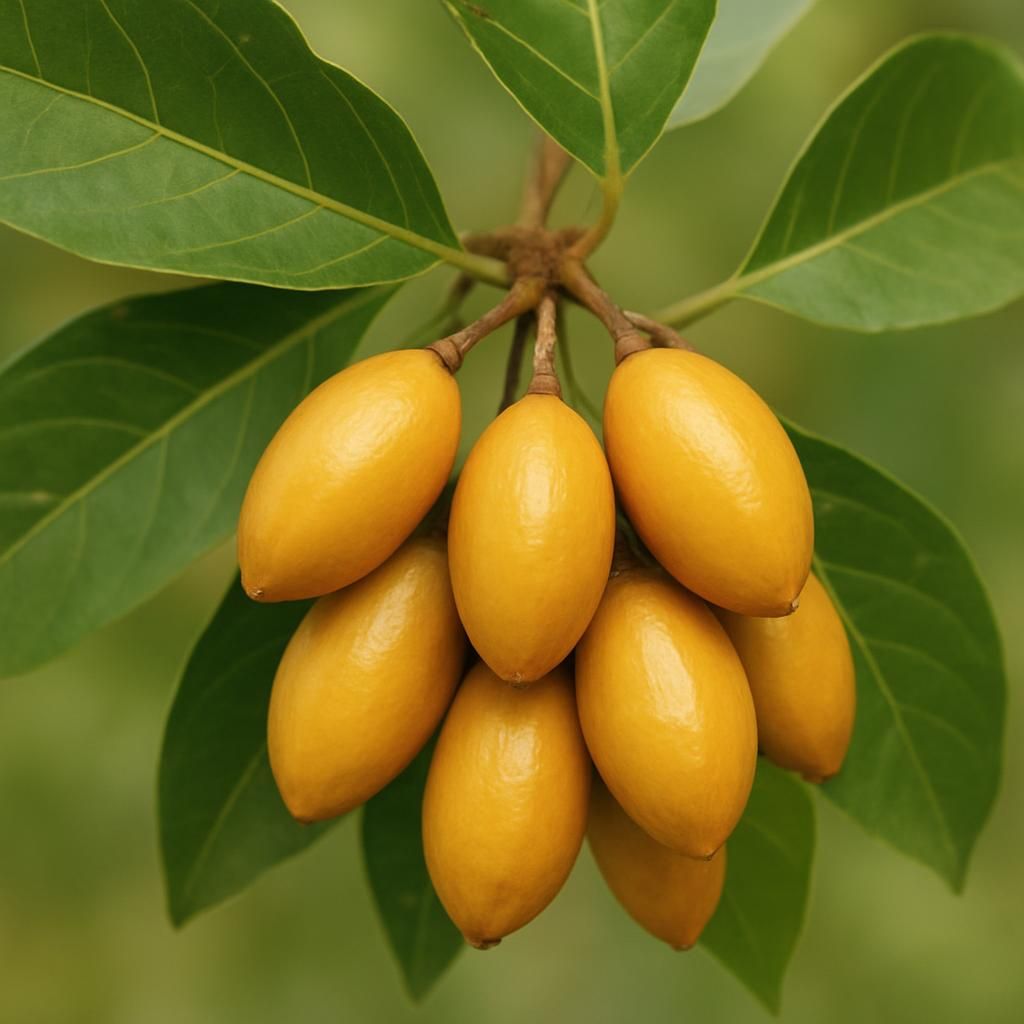
Introduction to Java Almond (Canarium indicum)
Java Almond, scientifically known as Canarium indicum, is a majestic evergreen tree that has sustained Pacific Island communities for centuries. Reaching heights of 30–45 meters with a broad, spreading crown, it produces large drupes whose kernels are prized for their mild, buttery flavor and high oil content. Beyond nutrition, the species plays a critical role in agroforestry systems, providing shade, timber, and soil stabilization while supporting biodiversity.
Commercial interest is rising as global demand for sustainable, high-value tree nuts grows. Unlike many temperate nut crops, Java Almond thrives in humid tropical lowlands and offers farmers long-term income once established. This guide delivers actionable, research-backed advice for establishing productive orchards whether you manage a smallholder plot or a larger commercial enterprise.
Botanical Profile of Java Almond (Canarium indicum)
The species belongs to the Burseraceae family and is closely related to other resin-producing genera. Mature trees develop a straight, cylindrical bole with smooth to slightly fissured gray-brown bark. Leaves are pinnately compound, 20–40 cm long, with 4–8 pairs of elliptic leaflets. Small, creamy-white, fragrant flowers appear in axillary panicles during the dry season, followed by oblong drupes 4–7 cm long. Each fruit contains a single hard-shelled seed rich in monounsaturated fats and vitamin E.
Growth is moderately fast in the first five years, after which canopy expansion accelerates. Trees are long-lived, often exceeding 80–100 years under favorable conditions. Pollination is primarily entomophilous, with bees and other insects playing key roles. Seed dispersal in natural forests occurs via fruit bats and birds.
Soil, pH, and Climate Requirements for Java Almond (Canarium indicum)
Successful cultivation begins with matching site conditions to the tree’s ecological preferences. Java Almond performs best on deep, well-drained loamy soils but tolerates a range of textures provided drainage is excellent. Heavy clay or waterlogged sites must be avoided to prevent root diseases.
| Parameter | Ideal Range | Notes |
|---|---|---|
| Soil Type | Deep sandy loam to clay loam | Avoid compacted or saline soils |
| Soil pH | 5.5 – 7.0 | Slightly acidic to neutral; lime if below 5.0 |
| Annual Rainfall | 1,500 – 3,500 mm | Evenly distributed; supplemental irrigation in dry spells |
| Temperature Range | 22 – 32 °C (day); min 15 °C | Sensitive to frost; young trees need protection |
| Altitude | 0 – 600 m a.s.l. | Growth slows above 800 m |
| Relative Humidity | 70 – 90 % | High humidity supports flowering and fruit set |
Site selection should also consider wind exposure. Strong prevailing winds can damage young branches and reduce fruit set; windbreaks of fast-growing species such as Gliricidia are recommended.
Step-by-Step Planting & Propagation
Propagation is almost exclusively by seed because vegetative methods remain unreliable at scale. Fresh seeds germinate within 3–6 weeks when sown in well-drained media at 28–30 °C. Pre-soaking in warm water for 24 hours improves uniformity.
- Collect fully ripe fruits from superior mother trees and remove the fleshy mesocarp immediately.
- Air-dry seeds in shade for 2–3 days; avoid direct sun to prevent desiccation.
- Sow in 15 cm deep nursery beds or polybags filled with a 2:1:1 mix of topsoil, coarse sand, and compost.
- Maintain consistent moisture and 50 % shade until the first true leaves appear.
- Transplant seedlings at 30–40 cm height into field pits measuring 60 × 60 × 60 cm during the onset of rains.
- Recommended spacing is 10 m × 10 m for pure stands or 8 m × 12 m when intercropped.
Grafting experiments using side-veneer or cleft methods on one-year-old rootstocks show promise but require further refinement for commercial adoption.
Care & Maintenance regimes for Java Almond (Canarium indicum)
Young trees require regular attention during the first three years to establish a strong framework. Mulching with 10–15 cm of organic material conserves moisture and suppresses weeds. Irrigation is critical in the first dry season; apply 20–30 L per tree twice weekly until roots reach deeper moisture.
| Growth Stage | Watering Frequency | Fertilizer Program | Pruning Schedule |
|---|---|---|---|
| Year 1–2 | 2× weekly, 20–30 L/tree | 200 g NPK 15-15-15 every 3 months; add 5 kg compost | Formative pruning at 6 and 18 months |
| Year 3–5 | Weekly during dry spells | 500 g NPK 12-12-17 + 100 g kieserite twice yearly | Remove lower branches to 1.5 m height |
| Mature (Year 6+) | Supplemental only in prolonged drought | 1–2 kg NPK 12-12-17 split into 2 applications; micronutrients every 2 years | Light annual thinning after harvest |
Canopy management focuses on creating a strong central leader with well-spaced primary branches. Remove dead or crossing wood annually. Inter-row cover crops such as Pigeon pea improve soil nitrogen and reduce erosion.
Pests, Diseases & Organic Management
Java Almond is relatively resilient but can be affected by several insects and pathogens. Common pests include leaf-feeding caterpillars, scale insects, and fruit flies. Regular monitoring and timely intervention prevent economic loss.
Major diseases include Phytophthora root rot in poorly drained soils and anthracnose on fruit during prolonged wet periods. Cultural practices such as improving drainage, avoiding overhead irrigation, and removing fallen debris are the first line of defense.
Organic control options:
- Introduce predatory insects and parasitoids for caterpillar and scale management.
- Apply neem oil or horticultural oils at 0.5 % concentration during early infestation.
- Use copper-based fungicides only when disease pressure is high and always follow label rates.
- Maintain biodiversity through companion planting with Marigold and Nasturtium to repel aphids and whiteflies.
Harvesting, Curing & Optimal Storage
Fruits mature 5–7 months after flowering and are harvested when the epicarp turns from green to dark purple-black. Hand harvesting with long poles fitted with collection bags minimizes damage. Fallen fruit should be collected daily to prevent mold.
Post-harvest processing involves:
- Removing the fleshy outer layer within 24 hours.
- Sun-drying seeds for 4–6 days until moisture content reaches 8–10 %.
- Cracking the hard endocarp with mechanical or manual crackers.
- Sorting kernels and storing in cool (15–18 °C), dry conditions with <60 % RH.
Properly cured kernels retain quality for 12–18 months when vacuum-packed or stored in airtight containers with oxygen absorbers. For longer storage, freezing at –18 °C is recommended.
Companion Planting for Java Almond (Canarium indicum)
Java Almond integrates well into multi-strata agroforestry systems. Compatible companions include nitrogen-fixing trees such as Gliricidia and Pigeon pea that improve soil fertility while providing temporary shade. Understory crops like Ginger and Turmeric thrive in the filtered light beneath mature canopies.
Avoid planting shallow-rooted annuals directly under the drip line during the first three years to reduce competition. Leguminous cover crops such as Clover or Hairy vetch between rows suppress weeds and add organic matter. In Pacific Island contexts, intercropping with Coconut or Cacao has proven economically viable and ecologically sound.
Strategic companion planting also aids pest management. Flowering species like Marigold attract beneficial insects that prey on aphids and thrips, reducing the need for chemical interventions.