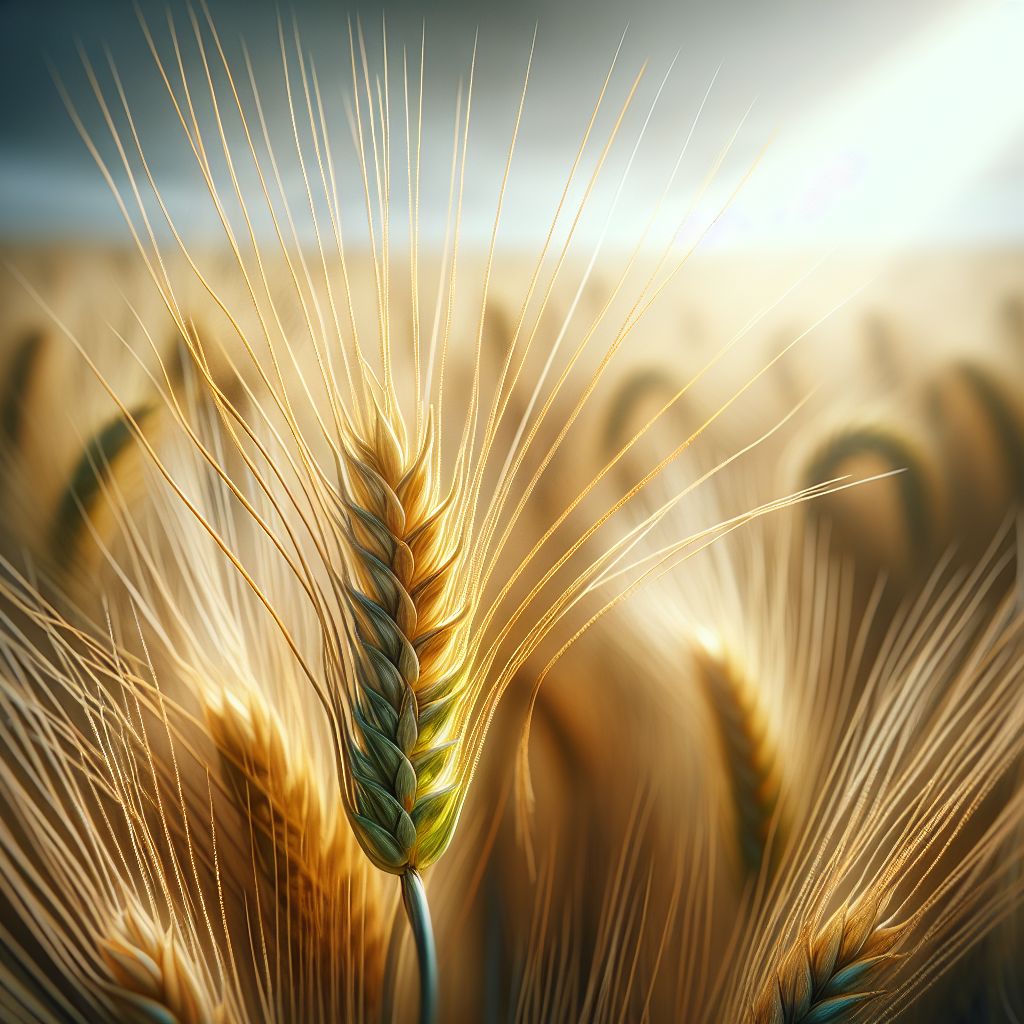
Introduction to Hulless Barley
An ancient cereal with renewed modern relevance, this crop differs from conventional covered barley because the lemma and palea separate readily from the kernel during threshing. That single trait greatly improves its usefulness as a human food grain, since there is little or no tightly adhering hull to remove after harvest. Historically, naked or hulless types were cultivated across the Tibetan Plateau, the Himalayas, parts of Ethiopia, and northern Europe where short seasons, cool nights, and marginal soils favored a tough, dependable grain.
For growers, its main advantages are efficient grain processing, good adaptation to cool-season production, and versatility. The grain can be rolled, pearled lightly, milled into flour, cooked whole, or incorporated into livestock rations. Nutritionally, it is often richer in beta-glucans and suitable for whole-grain markets. Compared with covered barley, however, it can be slightly more vulnerable to mechanical damage at harvest because the kernels lack the protective hull. That means agronomy is not just about producing a crop, but producing clean, plump, uncracked grain with strong test weight.
Hulless barley can be grown as a spring or winter type depending on cultivar and region. In low-rainfall temperate zones it is often favored over other cereals because it matures early, escapes late heat, and performs reasonably well under moderate drought. Growers familiar with Wheat will notice many similarities in seedbed preparation, nitrogen response, and disease scouting, but barley generally establishes faster and often tolerates slightly poorer soils.
Botanical Profile of Hulless Barley
This species is an annual grass in the Poaceae family. Plants produce upright culms, flat linear leaves, and a terminal spike inflorescence. The root system is fibrous and relatively efficient in cool soils, which helps explain rapid early establishment. Tillering can be substantial under favorable moisture and fertility, and final yield depends heavily on the number of productive tillers, kernels per spike, and kernel weight.
The defining botanical distinction is the nud gene expression associated with free-threshing kernels. In ordinary barley, the hull adheres firmly to the caryopsis. In hulless forms, the floral bracts detach at threshing, leaving a bare grain. This trait is commercially important but agronomically significant too: the exposed grain can weather more poorly in prolonged rain near maturity and can be more susceptible to abrasion during combining.
Spikes may be two-row or six-row depending on genotype. Two-row hulless types often produce larger, more uniform kernels preferred for food uses, while six-row types may offer higher yield potential under certain conditions. Plant height varies from roughly 60 to 120 cm depending on cultivar, environment, and nitrogen availability. Excess nitrogen or dense stands can promote lodging, especially in fertile soils with irrigation.
Growth stages follow the familiar cereal sequence: germination, seedling establishment, tillering, stem elongation, booting, heading, anthesis, grain fill, and physiological maturity. Anthesis in barley usually occurs while the head is partly or fully emerged, and grain fill is highly sensitive to heat and moisture stress. Temperatures above about 30°C during grain fill can reduce kernel plumpness and lower test weight.
Soil, pH, and Climate Requirements for Hulless Barley
The crop performs best in well-drained loam, silt loam, or clay loam with moderate water-holding capacity and good structure. Sandy soils can work if fertility and moisture are carefully managed, but yields tend to be less stable. Heavy, compacted soils are risky because they restrict rooting, slow early growth, and predispose the stand to uneven emergence and waterlogging injury.
Ideal soil pH is about 6.0 to 7.5, though barley can tolerate slightly more alkaline soils than many cereals. Below pH 5.8, aluminum or manganese toxicity may begin to limit root development, and phosphorus availability often declines. If soil pH is low, liming should be done well before planting so the amendment can react in the root zone. Hulless barley is less forgiving of salinity than often assumed; while barley is moderately salt tolerant compared with some cereals, salinity still reduces stand vigor and kernel fill. Electrical conductivity above roughly 8 dS/m can begin causing significant yield reduction, with sensitive cultivars affected earlier.
Climate-wise, it is primarily a cool-season grain suited to temperate, highland, semi-arid, and continental environments. Optimal average temperatures during vegetative growth are around 12 to 20°C. Germination can begin in soils as cool as 2 to 4°C, though emergence is faster and more uniform between 8 and 15°C. Winter types require vernalization and are planted in autumn where winters are cold but not excessively severe; spring types are planted as early as the soil can be worked.
Rainfall of 300 to 500 mm over the season can produce acceptable grain in dryland systems if distribution is favorable. The most critical moisture windows are emergence, tillering, stem elongation, heading, and early grain fill. Drought at establishment reduces stand density; drought from boot to milk stage can sharply lower grain number and kernel weight. In contrast, continuously saturated soil for more than 48 to 72 hours in the seedling phase often leads to oxygen stress, yellowing, stunting, and root disease.
Professionally managed soil moisture should be kept near field capacity through establishment without sealing the soil surface. In practical terms, the top 5 to 7 cm should remain moist enough that a squeezed handful from the seed zone forms a weak ball but does not ooze water. If the surface stays glossy, sticky, and smells anaerobic, or seedlings develop pale leaves and poor root branching, conditions are too wet. During stem elongation and heading, avoid allowing soil moisture to fall below roughly 50% of available water in the top 30 to 60 cm. Severe moisture depletion at this stage causes leaf rolling, bluish-gray cast, shortened stems, reduced spike emergence, and ultimately poor grain set.
For broader fertility strategy, crop rotation, and residue considerations, see soil health strategies.
Step-by-Step Planting & Propagation
This crop is propagated by seed, not vegetative means. Start with certified, high-germination seed that is well cleaned and ideally tested for seedborne diseases. Because the grain is naked, handle gently during transport and loading to minimize cracked kernels, which reduce emergence and invite pathogens.
Choose the right season and type. Select a spring cultivar for early spring planting in cold-winter zones, or a winter cultivar for autumn sowing where winter survival is reliable. Match maturity length to local heat and frost windows.
Prepare a firm, level seedbed. Conventional tillage should produce a fine but not powdery surface, with enough firmness that a boot heel sinks no deeper than about 1.5 to 2.5 cm. In no-till systems, ensure residue distribution is even and seed-soil contact will be good.
Test and amend soil before planting. Target moderate phosphorus and potassium levels. Nitrogen rates depend on yield goal, previous crop, and soil organic matter. After legumes such as Peas or Chickpeas, nitrogen requirements are often lower.
Calibrate seeding rate precisely. Typical grain production rates range from 250 to 400 viable seeds per square meter. In weight terms, that may be roughly 70 to 140 kg/ha depending on thousand-kernel weight and germination percentage. Use the higher end for late planting, poor seedbeds, or low-tillering cultivars.
Plant at the proper depth. Sow 2.5 to 4 cm deep in most soils. On lighter or drier soils, depth can extend to about 5 cm if necessary to reach moisture. Planting deeper than 5 cm often delays emergence, weakens seedlings, and reduces stand uniformity.
Set row spacing according to management goals. Narrow rows of 15 to 20 cm generally maximize grain yield by closing canopy quickly and suppressing weeds. Wider rows can work in low-rainfall systems if residue conservation is prioritized.
Roll or firm lightly if needed. In loose seedbeds, a roller can improve seed-soil contact, but avoid crust-prone soils immediately before heavy rain.
Monitor emergence. A good stand should emerge evenly within 7 to 14 days depending on temperature. Scout for skips, seedling blight, bird damage, and crusting. If crusting occurs, a very light harrow pass may help before seedlings are too elongated.
For home-scale plots, broadcast seeding is possible but much less precise. If broadcasting, increase seeding rate by 10 to 20% and rake or harrow lightly to cover seed uniformly.
Care & Maintenance regimes for Hulless Barley
Once established, management should focus on preserving tiller health, balancing fertility, and protecting grain fill. Nitrogen is the nutrient most likely to improve yield and the one most likely to cause problems when mismanaged. A total seasonal supply of roughly 50 to 120 kg N/ha is common depending on yield target and residual soil nitrogen. Under low-input dryland conditions, lower rates are often adequate. In fertile irrigated ground, split applications are better than a heavy preplant dose.
Apply enough early nitrogen to support tillering, but avoid lush, dark-green, overly succulent growth before stem elongation. That pattern often predicts lodging and foliar disease. If tissue tests or visual symptoms show deficiency, pale lower leaves and reduced tiller count are common warning signs. If overfertilized, expect tall soft stems, delayed maturity, excessive canopy humidity, and flattened areas after wind or rain.
Phosphorus is especially important for root establishment in cool soils. Potassium supports water regulation and stem strength. Sulfur may be limiting in sandy or low-organic-matter soils; deficiency appears as uniform yellowing of younger leaves, unlike nitrogen deficiency which starts on older tissue. Zinc and manganese deficiencies can appear in high-pH or highly worked soils, though they are less universal.
Irrigation is most beneficial where rainfall is unreliable. If irrigating, use fewer, deeper applications rather than frequent shallow watering. Aim to wet the root zone to 30 to 60 cm, then allow modest drying before the next irrigation. The crop should never sit in standing water. During tillering, mild water stress is tolerable, but from boot stage through soft dough, moisture deficits have outsized impact on yield and quality. As a practical guide, irrigate when 40 to 50% of available soil water has been depleted from the effective root zone. Reduce irrigation sharply as the crop approaches hard dough and stop in time to allow uniform ripening and easier harvest.
Weed control matters most in the first 30 to 45 days after emergence. A vigorous stand can outcompete many annual weeds, but early infestations of wild oats, ryegrass, mustard, pigweed, and volunteer cereals can severely reduce yield and contaminate grain. Organic systems rely on stale seedbeds, competitive seeding rates, timely harrowing, rotation, and clean borders. Avoid growing barley after barley in fields with persistent grass weed pressure.
Lodging prevention is a whole-system task. Select shorter-strawed cultivars where fertility is high, avoid excessive nitrogen, maintain balanced potassium, and do not overirrigate during stem elongation. Dense stands on rich soils are the most vulnerable.
Pests, Diseases & Organic Management
Relative to many broadleaf crops, barley is straightforward, but disease pressure can escalate quickly under cool, humid conditions. The major fungal concerns include Powdery Mildew, Rusts, Net Blotch, Scald, Fusarium Head Blight, and various Root Rots. Seedling diseases such as Smuts and Bunts can be especially damaging if infected seed is planted.
Powdery Mildew shows as white, talc-like growth on leaves and sheaths, especially in dense, lush canopies. Rusts create orange to brown pustules that rub off on fingers and can spread rapidly in mild weather. Net Blotch causes brown streaked lesions with a netted appearance, while Scald forms water-soaked lesions that bleach toward the center. Fusarium Head Blight is less notorious in barley than in some cereals but remains important in wet flowering periods, especially where maize residues are present.
Organic management starts with resistant cultivars, certified seed, and rotation. A three-year break from cereals is ideal in disease-prone fields, especially where residue-borne pathogens are severe. Good airflow from moderate plant density helps reduce canopy humidity. Avoid overhead irrigation during heading and flowering when possible. Destroy volunteer cereals and grassy hosts that bridge pathogens between seasons.
Insect pests vary by region but may include Aphids, Armyworms, Cutworms, Wireworms, Cereal Leaf Beetles, and Grasshoppers. Aphids are important not only for sap feeding but also for virus transmission, including Barley Yellow Dwarf Virus. Scout weekly from seedling stage through heading. Economic thresholds differ by region, but the key principle is early detection before colonies spread into the flag leaf zone.
Organic and low-input responses include encouraging beneficial insects with field margins and insectary strips, using crop rotation, timely planting, and avoiding excessive nitrogen that attracts sap feeders. Clover and Yarrow near but not within dense cereal stands can support pollinators and beneficial parasitoids in diversified systems. For Cutworms, inspect at dusk and use shallow cultivation pre-plant where appropriate. For Aphids, strong predator activity from lady beetles, lacewings, and hoverflies often suppresses outbreaks if broad-spectrum insecticides have not disrupted the system.
Bird damage can occur near maturity, particularly in small plots. Netting, reflective tape, or synchronized planting over a larger area can reduce losses. Rodents may clip seedlings or feed on maturing heads, especially where tall weeds line field edges.
Harvesting, Curing & Optimal Storage
Harvest timing is more quality-sensitive than many growers expect. Because the kernels thresh free, delayed harvest can increase weathering, pre-harvest sprouting risk, and mechanical injury. The ideal harvest window is usually at full maturity when grain moisture is around 12 to 14% for direct combining, though some growers begin slightly higher and use aeration or drying afterward.
Field signs of maturity include golden straw, loss of green color in stems and heads, hard kernels that cannot be dented easily with a thumbnail, and a dry peduncle below the head. Do not wait for complete stem brittleness if rainy weather threatens. In wet climates, swathing may be used, but direct combining is common when stands are even and weather stable.
Combine settings must be gentler than for hulled barley. Use lower cylinder or rotor speeds and adjust concaves to thresh cleanly without cracking kernels. Excessive fan speed can blow out lighter naked grain. Always check behind the combine for losses and inspect the grain tank for split grain, unthreshed heads, and excess chaff.
After harvest, clean grain promptly to remove fines, weed seeds, and cracked kernels, which increase spoilage risk. Safe storage moisture depends on storage duration and temperature. For short-term storage in cool, aerated bins, 12% moisture is generally acceptable. For long-term storage, especially in warm conditions, dry to 11% or even 10% if possible. Grain should be cooled below 15°C for medium storage and ideally below 10°C for long storage to suppress insects and mold.
Use aeration to equalize temperature, especially after warm harvest days. Monitor bins every 1 to 2 weeks initially for hot spots, condensation, crusting, off odors, or insect activity. Because hulless kernels are more exposed, storage fungi can establish faster if moisture drifts upward. If grain is intended for food use, maintain strict cleanliness and segregation by cultivar and protein quality where relevant.
For small-scale growers saving seed, select grain from healthy, disease-free areas of the field, dry carefully, and store in breathable but rodent-proof containers under cool, low-humidity conditions. Re-test germination before planting if seed has been stored through warm seasons.
Companion Planting for Hulless Barley
In broadacre grain production, companion planting is better understood as intercropping, nurse cropping, border planting, or rotational support rather than classic garden-style pairing. The most effective companions are species that improve nitrogen dynamics, suppress erosion, attract beneficial insects, or help occupy ecological niches without overwhelming the barley stand.
Legumes are the strongest strategic partners. Peas and Chickpeas fit well in rotation ahead of barley because they can reduce nitrogen fertilizer needs and break cereal disease cycles. In some systems, Clover is undersown lightly beneath barley as a living understory, especially where the barley is harvested early and the clover will continue as forage or cover after grain harvest. This works best in moderate-fertility fields where the understory will not compete too aggressively for moisture.
Yarrow is not a field-scale intercrop, but it is valuable on margins and insectary strips to support predatory insects and parasitoids. Keep perennial companions on edges rather than in the production rows to preserve combine access and reduce harvest contamination.
Best companion strategy by system:
- Dryland grain: rotate with peas or chickpeas rather than intercrop unless rainfall is reliable.
- Organic mixed farm: undersow clover at low rates if post-harvest cover is desired.
- Small plot or homestead grain: use yarrow on borders and legumes in adjacent beds to support beneficial insects and soil function.
- High-fertility irrigated fields: avoid overly competitive companions that raise canopy humidity and disease risk.
Done well, the goal is not merely to grow another species nearby, but to strengthen the whole cereal system: cleaner fields, steadier nitrogen, lower disease carryover, and more resilient production year after year.