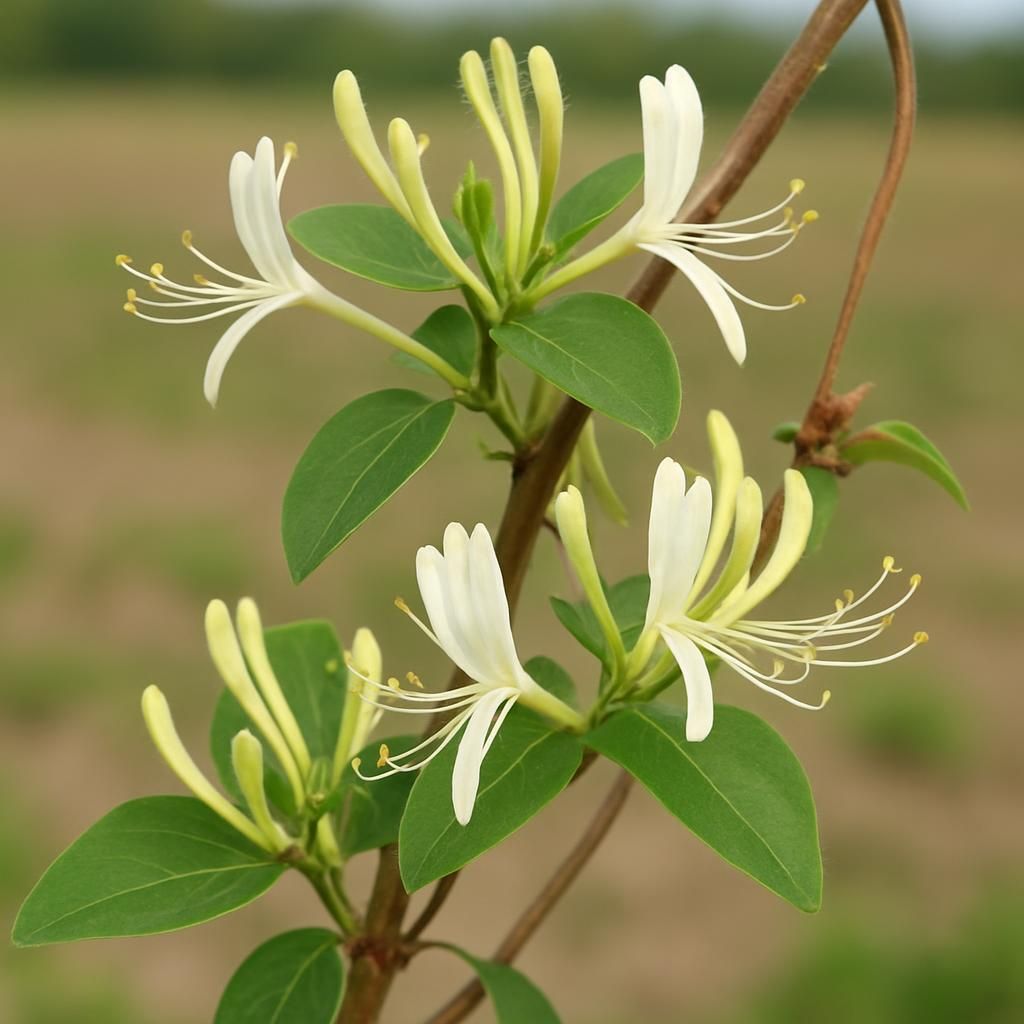
Introduction to honeysuckle
Honeysuckle refers to several species within the genus Lonicera, most notably the invasive Japanese honeysuckle (Lonicera japonica) and the native but sometimes aggressive Lonicera periclymenum. These woody climbers and shrubs spread quickly via twining stems that wrap tightly around supports and through root suckers that allow colonies to expand underground. In agricultural settings, honeysuckle can encroach on field edges, orchard rows, and greenhouse perimeters, competing aggressively for light, water, and nutrients while providing habitat for certain pests and diseases.
Although valued for its fragrant flowers and wildlife benefits in ornamental landscapes, honeysuckle poses significant risks when it escapes cultivation. Its rapid growth rate of up to 1 meter per season allows it to form dense mats that shade out understory crops and reduce airflow, increasing humidity-related disease pressure. Professional growers must recognize honeysuckle early and implement systematic removal to protect high-value plantings such as Tomato, Strawberry, and Blueberry.
Identifying Symptoms & Damage
Honeysuckle infestation is most visible through its characteristic opposite, oval leaves with entire margins and fragrant tubular flowers that range from white to yellow. The twining stems exhibit a distinctive left-handed spiral and can reach diameters of 2–4 cm on mature plants. Damage manifests as physical constriction of host plants, reduced photosynthesis due to shading, and mechanical stress that can break branches or collapse trellises.
Root suckering produces clusters of new shoots 1–3 meters from the parent plant, often emerging through mulch or soil cracks. In crop rows, honeysuckle foliage may appear as dark green, semi-evergreen masses that persist through mild winters, giving the vine a competitive advantage over deciduous crops. Secondary effects include increased populations of aphids and scale insects that use honeysuckle as an alternate host before moving onto Apple and Grapes.
Lifecycle and Progression of honeysuckle
Honeysuckle completes an annual growth cycle that begins with bud break in early spring and continues through seed dispersal in late autumn. Understanding each stage enables growers to time mechanical and chemical interventions for maximum efficacy.
| Stage | Timing | Key Characteristics | Management Window |
|---|---|---|---|
| Bud break & leaf expansion | March–April | Rapid shoot elongation; new leaves emerge opposite | Cut back to ground before flowering |
| Flowering & pollination | May–July | White to yellow tubular blooms attract bees and hummingbirds | Remove flowers to prevent seed set |
| Fruit development | July–September | Small black or red berries form in clusters | Hand-pick or bag fruits before ripening |
| Seed dispersal & root suckering | September–November | Birds and mammals spread seeds; underground rhizomes expand | Dig out roots; apply mulch barrier |
| Dormancy | December–February | Evergreen or semi-evergreen foliage in mild climates | Monitor and cut new shoots during warm spells |
Environmental Triggers & Risk Factors
Honeysuckle thrives in full sun to partial shade with moist, well-drained soils ranging from pH 5.5 to 7.5. Disturbed sites, fence lines, and irrigation ditches provide ideal corridors for spread. Mild winters and extended growing seasons accelerate both vegetative growth and seed production.
High nitrogen fertility from nearby crop fertilization can stimulate excessive shoot growth, while compacted soils favor root suckering over seed germination. Proximity to woodland edges or abandoned lots increases seed pressure from bird dispersal. Growers should map these risk zones and prioritize removal along Corn and Wheat field margins where honeysuckle can quickly colonize headlands.
Organic Control & Treatment Plans
Successful organic management combines mechanical removal, targeted mulching, and approved biological or botanical treatments. Always begin with the least disruptive method and escalate only when necessary.
| Treatment Option | Application Method | Frequency | Notes |
|---|---|---|---|
| Manual cutting & root excavation | Cut stems to 5 cm above soil; dig out entire root crown | Every 4–6 weeks during active growth | Dispose of all plant material off-site |
| Smothering with cardboard & mulch | Layer 4–6 sheets of cardboard topped with 15 cm wood chips | Renew mulch annually in spring | Effective on small patches; maintain 1 m buffer around crops |
| Vinegar-based foliar spray (20% acetic acid) | Spot-spray young foliage on warm, sunny days | Repeat every 7–10 days until regrowth stops | Avoid drift onto desirable plants; use shielded sprayer |
| Goat or sheep grazing | Introduce animals in rotational paddocks | 2–3 grazing periods per season | Monitor for overgrazing of adjacent crops |
| Approved botanical oil (neem or clove) | Dilute per label; apply to cut stumps within 5 minutes | Single application post-cut | Enhances mortality of remaining root fragments |
Preventing honeysuckle in the Future
Prevention centers on maintaining clean field edges and using physical barriers. Install 60 cm deep root barriers along property lines adjacent to known infestations. Establish dense ground covers such as Clover or Nasturtium to outcompete seedlings. Regular scouting every 14 days during the growing season allows early detection before colonies become entrenched.
Implement a strict sanitation protocol: clean equipment after working near infested areas and avoid importing mulch or soil from unknown sources. Educate farm staff on identification so that new incursions are reported immediately. For long-term resilience, consider the principles outlined in The Overlooked Art of Crop Rotation for Small Farm Resilience.
Crops Most Affected by honeysuckle
Honeysuckle most severely impacts high-value perennial and vining crops that share similar support structures and soil conditions. The following crops require the highest vigilance:
- Tomato – vines and indeterminate varieties are easily smothered
- Grapes – honeysuckle climbs trellises and competes for light
- Blueberry – low bushes are shaded and weakened
- Strawberry – ground-level runners are overtaken by suckers
- Raspberry – canes become entangled and difficult to harvest
- Apple – young trees suffer bark constriction from twining stems
- Cucumber – trellised plants are rapidly covered
- Blackberry – thorny canes provide perfect climbing substrate