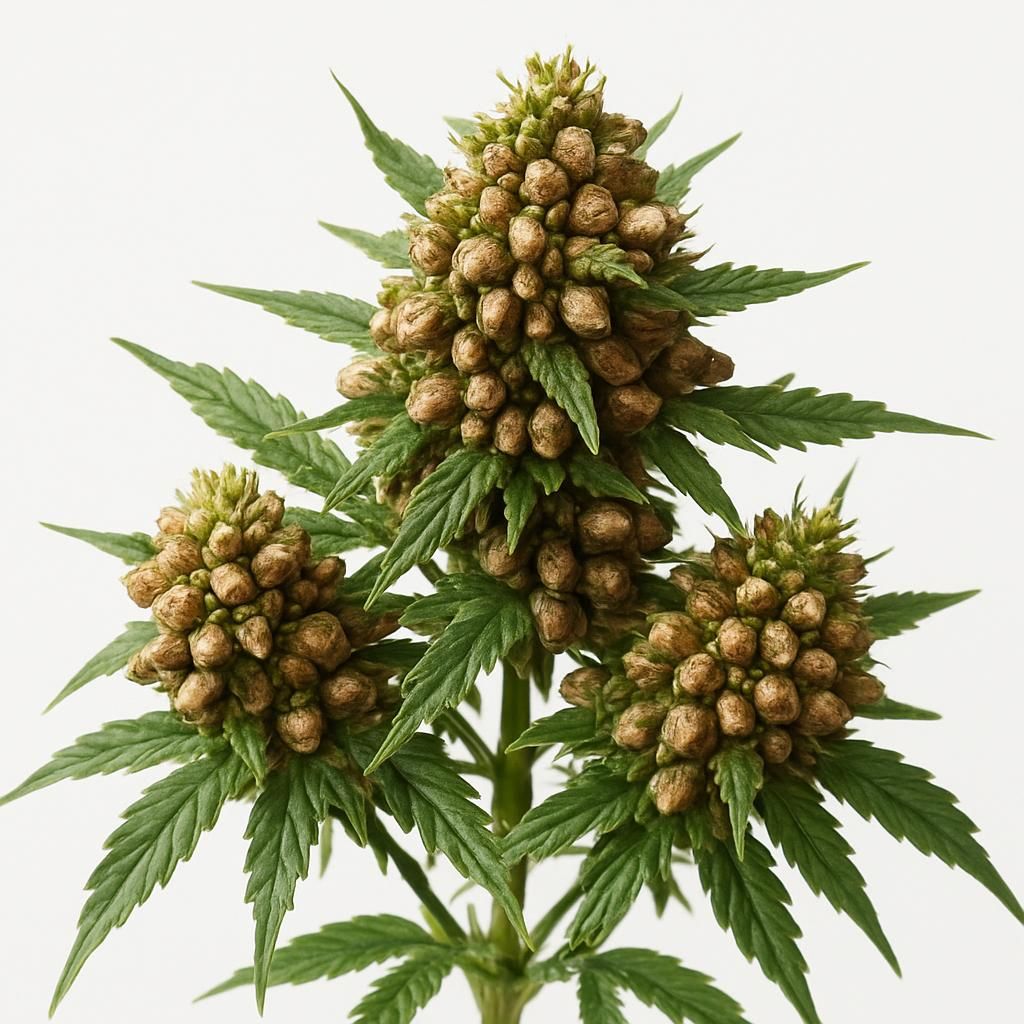
Introduction to Hemp Seed (CanMa)
Hemp Seed (CanMa) is a specialized industrial hemp variety developed for maximum seed yield and superior nutritional quality. Farmers cultivate this crop primarily for its edible hemp hearts, cold-pressed oil, and protein-rich meal, while the remaining stalks can be processed into fiber. As global demand for plant-based proteins and sustainable oils rises, Hemp offers a low-input, high-value rotation option that improves soil structure and suppresses weeds.
This guide delivers professional-grade cultivation advice covering every stage from soil preparation through post-harvest storage. Growers will learn precise spacing, irrigation schedules, and integrated pest management tactics that consistently produce clean, high-germination seed lots.
Botanical Profile of Hemp Seed (CanMa)
Cannabis sativa is a fast-growing, dioecious annual in the Cannabaceae family. Female plants produce the seed-bearing inflorescences, while male plants release pollen. Hemp Seed (CanMa) has been selected for short internodes, high seed set, and uniform maturity, reaching 1.5–2.5 m at flowering.
The plant features palmately compound leaves with 5–9 serrated leaflets and a deep taproot that can penetrate 1–2 m. Seed heads form dense clusters of small, oval achenes that mature from green to mottled brown. Under optimal conditions, seed oil content ranges from 28–35 % with protein levels of 20–25 %.
Soil, pH, and Climate Requirements for Hemp Seed (CanMa)
Hemp Seed (CanMa) performs best on fertile, well-drained loams with good structure. Avoid heavy clays or poorly drained sites that promote root diseases. The crop tolerates a wide pH range but yields peak between 6.0 and 7.5.
Ideal Growing Conditions
| Parameter | Ideal Range | Notes |
|---|---|---|
| Soil Type | Loam to sandy loam | Good drainage essential |
| Soil pH | 6.0 – 7.5 | Below 5.8 may require liming |
| Temperature | 15 – 27 °C daytime | Frost-sensitive below 0 °C |
| Rainfall | 400 – 700 mm season | Supplemental irrigation if <25 mm/week |
| Growing Degree Days | 1,800 – 2,200 GDD | Base 10 °C from emergence to harvest |
| Photoperiod | Long days (>14 h) vegetative | Short days (<12 h) trigger flowering |
Step-by-Step Planting & Propagation
- Site Selection & Preparation – Choose fields with at least three years free of Cannabis volunteers. Perform deep tillage to 25 cm followed by a fine seedbed.
- Soil Testing & Amendment – Target 60–80 kg N, 40–60 kg P₂O₅, and 80–120 kg K₂O per hectare based on soil tests. Incorporate 2–3 t ha⁻¹ well-rotted compost to improve microbial activity.
- Seed Selection & Treatment – Use certified, feminized seed with >85 % germination. Optional seed priming with 0.5 % potassium nitrate for 12 h accelerates emergence.
- Planting Window – Sow when soil temperature reaches 10 °C at 5 cm depth. In temperate zones this is typically mid-April to mid-May.
- Seeding Rate & Depth – Drill 25–30 kg ha⁻¹ at 1–2 cm depth in 30–45 cm rows. Aim for 120–150 plants m⁻² for seed production.
- Irrigation at Planting – Apply 15–20 mm immediately after seeding to ensure even moisture for germination.
Care & Maintenance regimes for Hemp Seed (CanMa)
Hemp Seed (CanMa) is relatively drought-tolerant once established but benefits from consistent moisture during flowering and seed fill. Nitrogen applications should be split to avoid excessive vegetative growth at the expense of seed set.
Water, Fertilizer, and Pruning Schedule
| Growth Stage | Irrigation (mm/week) | Fertilizer Application | Pruning / Training |
|---|---|---|---|
| Emergence – 4 weeks | 15–20 | 30 kg N ha⁻¹ at 3-leaf stage | None |
| Vegetative (4–8 wks) | 20–25 | 40 kg N + 30 kg K₂O at row closure | Scout and rogue male plants |
| Flowering (8–11 wks) | 25–30 | 20 kg N at first flowers | Remove any late males |
| Seed Fill (11–14 wks) | 20–25 | Foliar boron 0.2 % if deficiency noted | None |
| Pre-harvest (last 2 wks) | Withhold 7–10 days | None | None |
Pests, Diseases & Organic Management
Common insect pressures include Aphids, Spider Mites, and Cutworms. Monitor weekly with yellow sticky traps and release beneficial insects such as lady beetles and lacewings at first detection. Fusarium Wilt and Powdery Mildew are the primary diseases; rotate with Corn or Wheat and maintain 3-year breaks between hemp crops.
Organic controls include neem oil (0.5 %) for soft-bodied insects, sulfur dust for powdery mildew, and Bacillus thuringiensis for caterpillars. Maintain field sanitation by removing volunteer hemp and crop debris after harvest.
Harvesting, Curing & Optimal Storage
Harvest when 70–80 % of seeds have turned mottled brown and moisture content drops to 12–15 %. Use a combine with a draper header set at 20–25 cm to minimize shatter loss. Immediately dry seed to 8–10 % moisture using forced air at 32 °C to preserve oil quality.
Store cleaned seed in food-grade containers or bulk bins at 5–10 °C and <60 % relative humidity. Monitor for Storage Beetles monthly and maintain CO₂ levels above 40 % if hermetic storage is used.
Companion Planting for Hemp Seed (CanMa)
Hemp Seed (CanMa) pairs well with nitrogen-fixing legumes such as Clover and Peas that improve soil fertility and reduce weed pressure. Aromatic herbs like Thai Basil and Marigold deter aphids and spider mites. Avoid planting near Tomato or Potato to limit shared disease cycles.
For maximum benefit, sow a 3 m border of flowering buckwheat around the hemp block to attract pollinators and beneficial insects throughout the season.