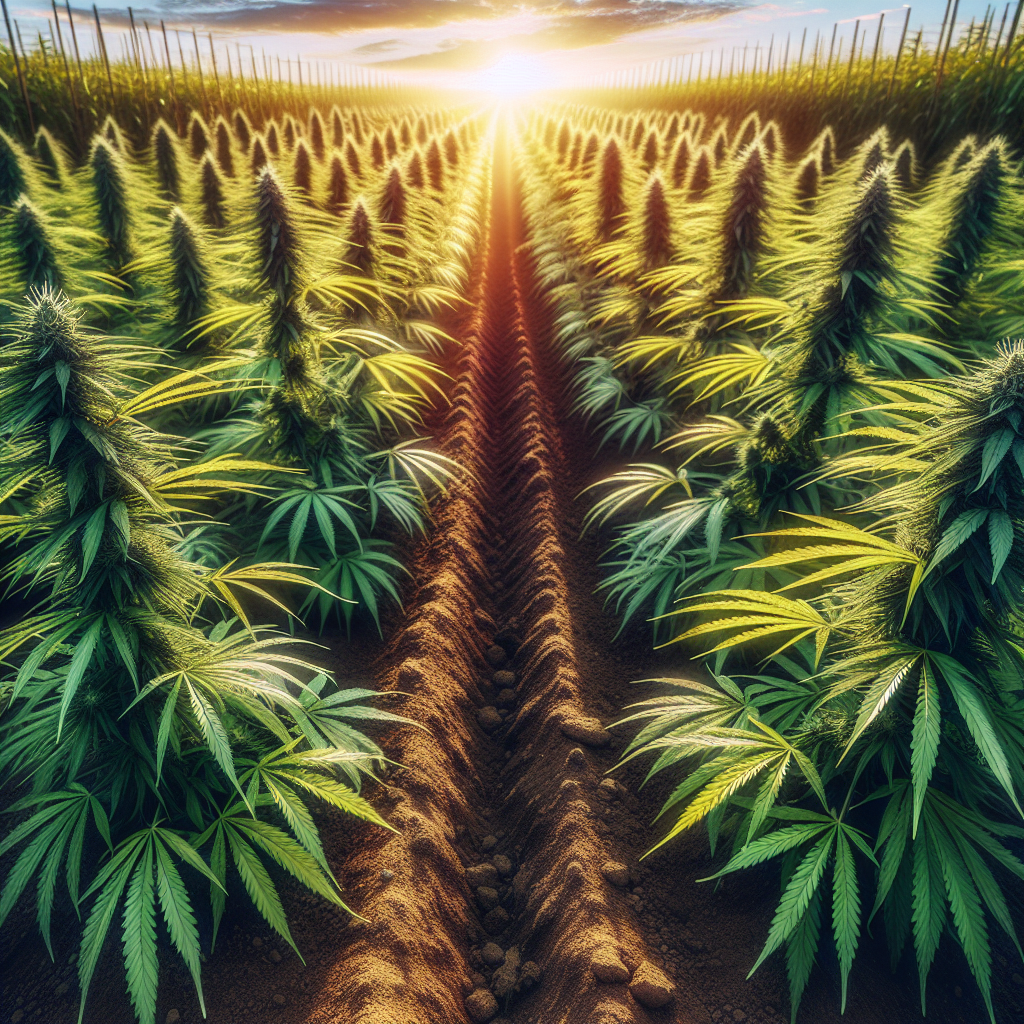
Introduction to Hemp
A highly versatile annual broadleaf crop, hemp has been cultivated for thousands of years for bast fiber, hurds, edible seed, oil, animal bedding, paper, rope, textiles, and increasingly for biocomposites and specialty extracts. Botanically, it belongs to the Cannabaceae family and is most often classified as Cannabis sativa for agricultural production, though cultivated populations show substantial variation in plant height, branching habit, stem hollowness, flowering response, and cannabinoid chemistry.
Modern hemp production is best understood as three distinct systems: fiber hemp, grain hemp, and dual-purpose hemp. Fiber types are typically tall, slender, and planted densely to encourage long internodes and minimal branching. Grain types are shorter, more branched, and planted at lower density to promote flower and seed set. Dual-purpose cultivars attempt to produce acceptable straw and seed together, but often involve compromises in both yield and handling.
Historically, hemp was a major strategic crop in many parts of Europe and Asia for sailcloth, cordage, and coarse fabrics. Its renewed agricultural relevance comes from its adaptability, relatively low pesticide demand in well-managed systems, and usefulness in crop rotation. Like flax, it is often discussed as a bast fiber crop, but hemp is generally more vigorous, taller, and more competitive once established. For growers, the decisive factors are not hype but agronomic fit: legal compliance, cultivar selection, local photoperiod, harvest equipment, end market, and the ability to manage a crop that grows very quickly once conditions are favorable.
Botanical Profile of Hemp
This species is an annual, normally completing its life cycle in 70 to 140 days depending on cultivar, latitude, and production objective. Seedlings emerge with two cotyledons followed by serrated true leaves. Early growth can appear modest for the first 2 to 3 weeks while roots establish, but under warm soils and adequate fertility, stem elongation then accelerates dramatically.
The root system begins with a strong taproot that can penetrate deeply in friable, well-aerated soils, commonly reaching more than 60 cm and sometimes substantially deeper under ideal structure. This root architecture helps hemp exploit subsoil moisture and can improve soil tilth for following crops, especially where compaction is limited. However, hemp is not a miracle compaction breaker if a plow pan or saturated subsoil prevents root descent.
Stems consist of an outer bark rich in bast fibers and an inner woody core called hurd or shiv. Fiber quality depends heavily on stem length, fineness, lignification stage, and retting management after harvest. Leaves are palmately compound, usually with 5 to 11 leaflets on mature plants, though leaflet number is variable and influenced by growth stage and genetics.
Hemp is usually dioecious, meaning male and female flowers occur on separate plants, though monoecious cultivars also exist and are common in some grain and dual-purpose systems. Male plants generally flower earlier, are more slender, and senesce sooner after pollen shed. Female plants are leafier and retain green tissue longer while filling seed. In monoecious lines, male and female flowers are borne on the same plant, which can simplify field uniformity but may reduce some of the advantages seen in specialized dioecious material.
Photoperiod sensitivity is one of the most important botanical traits for management. Many hemp cultivars initiate flowering in response to shortening daylength, and this response varies strongly by origin. A cultivar adapted to northern Europe may flower too early and remain short at lower latitudes, while a southern cultivar may flower too late at northern latitudes and fail to mature before frost. Because of this, cultivar origin and latitude adaptation matter at least as much as fertility or irrigation.
Agronomically, hemp grown for fiber is often harvested before or during early flowering to maximize fiber fineness and reduce lignification. Hemp grown for grain is allowed to flower, pollinate, and mature seed, usually producing more branching and less premium fiber quality. Industrial hemp production generally requires cultivars with very low tetrahydrocannabinol concentration and stable compliance under local regulations, so reputable seed sourcing is essential.
Soil, pH, and Climate Requirements for Hemp
Hemp performs best in deep, well-drained, fertile loam or silt loam soils with high biological activity and good water-holding capacity. It can grow in lighter sandy loams if irrigation and fertility are carefully managed, but coarse sands tend to cause drought stress, uneven stands, and short plants unless organic matter is high. Heavy clays can produce excellent biomass if well structured and drained, but waterlogging, surface crusting, or prolonged saturation during emergence can devastate establishment.
The ideal soil pH is generally 6.0 to 7.5, with 6.3 to 7.0 often giving the most consistent nutrient availability. Below pH 5.8, aluminum and manganese stress may increase and phosphorus availability declines. Above pH 7.8, micronutrient deficiencies, especially iron and manganese, may appear in calcareous soils. Hemp is moderately tolerant of pH fluctuation but rewards correction of extremes before planting.
Soil structure is critical. Seedlings are relatively vulnerable to crusted surfaces, oxygen-poor seedbeds, and compaction. A good hemp field should crumble easily, permit rapid infiltration, and hold enough moisture to sustain emergence without becoming anaerobic. If a squeezed handful of subsoil from 15 to 20 cm depth forms a sticky, shiny mass that stays dense and smears, drainage is likely inadequate. If soil falls apart as dry grains and cannot hold a weak ribbon at all, moisture retention may be too low for reliable dryland production.
Temperature strongly influences success. Hemp seed can germinate in cool soils, often beginning around 8 to 10°C, but uniform emergence is best when soils at planting depth are at least 10 to 12°C and rising. Optimal vegetative growth typically occurs in the 16 to 27°C range. Extended periods above 32°C, especially with low humidity and moisture deficits, can reduce plant height, accelerate flowering in stressed plants, and lower grain fill. Severe frost can kill seedlings, while autumn frost can interrupt seed maturity.
Rainfall or irrigation needs vary by end use and season length, but a full-season crop commonly requires roughly 400 to 700 mm of water. The most sensitive periods are establishment, rapid stem elongation, flowering, and early seed fill. Hemp does not tolerate standing water for long; oxygen deprivation in the root zone quickly causes chlorosis, stunting, and patchy mortality. A useful target for mineral soils is to keep the active root zone around 60 to 80% of field capacity during vegetative growth. If soil in the top 10 cm is powdery and pale by midday and seedlings wilt before noon, moisture is too low. If the soil smells sour, leaves lose luster, lower foliage yellows despite adequate nutrients, and roots are tan or brown instead of white, overwatering or poor drainage is likely.
Full sun is essential. Hemp is not a partial-shade crop. Dense shade reduces stem strength, branching balance, and seed production. Choose open fields with at least 8 hours of direct sunlight, though commercial performance is best under uninterrupted full-day exposure.
Step-by-Step Planting & Propagation
Commercial hemp is almost always established by direct seeding. Transplanting is possible for small-scale specialty production but is generally uneconomical for fiber or grain. Start with certified or legally compliant seed of a cultivar specifically bred for your intended market and latitude. Do not assume any hemp seed will work everywhere; photoperiod mismatch is one of the most common reasons for disappointing yields.
First, prepare a firm, clean, fine seedbed comparable to that used for small grains. Residue can be retained in reduced tillage systems if openers place seed accurately and seed-to-soil contact is excellent, but excessive trash in cool soils may delay emergence. A proper seedbed should allow a boot print no deeper than about 1 to 2 cm. If your heel sinks deeply, the field is too loose and moisture loss around seed will increase.
Second, test soil before planting and correct pH or nutrient deficiencies in advance. Hemp responds well to fertile soil but should not be pushed with excessive nitrogen late in the season, especially in grain systems where lodging becomes a concern.
Third, plant once danger of hard frost is low and soil temperatures at seed depth are consistently above 10°C. In temperate regions, this is often early to mid-spring. Planting too early into cold, wet ground increases seed rot and weak emergence. Planting too late can shorten vegetative growth and reduce fiber length or grain yield.
Fourth, calibrate seeding rate to production type:
- Fiber hemp: often 40 to 70 kg/ha or more, aiming for very dense stands, sometimes 150 to 300 plants per square meter depending on seed size and system.
- Grain hemp: commonly 10 to 25 kg/ha, targeting lower density, often around 30 to 100 plants per square meter.
- Dual-purpose hemp: intermediate rates, often 25 to 45 kg/ha.
Dense planting suppresses branching and weeds, producing straighter stems. Lower density encourages branching and seed-bearing inflorescences.
Fifth, place seed shallowly but consistently, usually 1.5 to 3 cm deep. In heavier, cooler soils, stay nearer 1.5 to 2 cm. In lighter soils with limited surface moisture, 2.5 to 3 cm may be safer. Seed placed deeper than 4 cm often emerges unevenly and loses vigor.
Row spacing depends on equipment and end use. Fiber hemp is often drilled in narrow rows such as 15 to 20 cm. Grain hemp may be planted in 18 to 38 cm rows, with some growers using wider rows where inter-row cultivation is planned. Precision planting can improve uniformity for grain systems, but drilled stands are common.
After planting, monitor emergence daily if conditions are variable. A healthy stand should emerge within about 4 to 10 days under warm conditions, longer in cool soils. Ideal seedlings are upright, evenly spaced, and rapidly producing true leaves. Gaps often signal crusting, seedling disease, poor seed vigor, birds, or depth inconsistency.
For growers interested in broader rotation planning, soil health strategies are especially useful before introducing hemp into fields with low organic matter or poor aggregation.
Care & Maintenance regimes for Hemp
Early weed management is the highest-priority maintenance task. Once hemp reaches roughly 30 to 45 cm and closes canopy, it becomes highly competitive, but it is less dominant during the first 3 to 5 weeks. The goal is to start with a clean field because post-emergence herbicide options are limited or absent in many production systems. Stale seedbeds, shallow pre-plant cultivation, rotation, and uniform dense stands are the main tools.
Nutrient demand is moderate to high, depending on target yield. As a broad guideline, productive fiber or grain hemp often requires about 80 to 150 kg/ha nitrogen, 40 to 90 kg/ha phosphorus pentoxide, and 60 to 150 kg/ha potassium oxide, adjusted to soil test, expected yield, and previous manure or legume credit. Split nitrogen can reduce losses and limit lodging, with a base application before planting and a topdress early in rapid vegetative growth. Excessive late nitrogen delays maturity, weakens stems in grain crops, and may complicate harvest.
Calcium, sulfur, magnesium, boron, zinc, and manganese can all matter depending on soil conditions. Sulfur deficiency may appear as pale young leaves and stunted growth, especially in sandy or low-organic-matter soils. Boron supports reproductive development but should be applied carefully because the range between deficiency and excess can be narrow.
Irrigation should be based on soil moisture and growth stage rather than a fixed calendar. During establishment, keep the top 5 to 8 cm moist but not saturated. After rooting deepens, irrigate more deeply and less frequently, encouraging root exploration to 30 cm or more. In practical terms, many mineral soils benefit from irrigation when 35 to 45% of available water in the top 30 to 45 cm has been depleted. Tensiometers or capacitance sensors are ideal; without them, a hand-sampled loam at 15 cm depth should form a weak ball that breaks with light pressure, not dust instantly and not ooze or smear.
Signs of underwatering include dull bluish-green foliage, reduced leaf expansion, midday wilting that persists into evening, shortened internodes, and early lower-leaf drop. Signs of overwatering include persistent droop despite wet soil, yellowing from the bottom upward, slow growth, edema-like leaf irregularities, and eventual root browning.
Lodging risk rises with excessive nitrogen, over-irrigation, very rich soils, strong winds, and some tall cultivars. Fiber stands are dense enough that mutual support helps, but storms can still flatten crops. Grain stands, especially on fertile ground, are more vulnerable if stems become overly succulent.
In grain hemp, pollination and seed fill are critical. Male flowering should coincide well with female receptivity. Heat or drought stress during flowering can reduce seed set. Birds may become a localized issue as seed matures, particularly in small blocks.
Pests, Diseases & Organic Management
Hemp is often described as relatively pest tolerant, but that does not mean pest free. The crop’s fast growth and aromatic chemistry can reduce pressure compared with some vegetables, yet regional insects and pathogens can still cause serious losses.
Common insect problems include aphids, flea beetles, cutworms, grasshoppers, caterpillars, hemp russet mite where present, and occasional stem-boring or seed-feeding pests depending on geography. Seedlings are most vulnerable to flea beetles and cutworms. Once plants are vigorous, feeding damage is often tolerated better, but outbreaks in reproductive stages can affect seed yield and quality.
Organic management begins with prevention: crop rotation, sanitation, healthy seed, balanced fertility, and avoiding stressed plants. Do not plant hemp repeatedly in the same field. A rotation gap of at least 3 to 4 years helps reduce carryover of soilborne diseases and volunteer plants. Avoid following crops that leave severe compaction or poor weed conditions.
Disease concerns include damping-off during emergence, root rots in wet soils, gray mold (Botrytis), white mold (Sclerotinia), various leaf spots, powdery mildew, and stem cankers. Dense canopies, prolonged leaf wetness, heavy dew, poor airflow, and excessive late nitrogen all increase the risk of foliar and stem disease. In humid regions, selecting moderately open-canopy grain cultivars and avoiding overhead irrigation during late growth can reduce pressure.
damping-off is most likely in cold, wet seedbeds. The practical remedy is not treatment after symptoms appear but prevention through warm planting conditions, shallow uniform depth, high-vigor seed, and good drainage. Root rot should be suspected if patches remain stunted and chlorotic despite adequate fertility; affected roots are dark and reduced rather than bright and fibrous.
For organic suppression, encourage beneficial insects with flowering borders placed far enough away to avoid harboring shared pests. Scout weekly from emergence through flowering, inspecting field edges first. Thresholds vary by region and end use, so local extension data are best, but the principle is universal: act early in the establishment phase, because once the canopy closes, access and spray penetration are limited.
Mechanical and cultural weed control remain foundational. High-density fiber hemp is naturally suppressive, while lower-density grain hemp benefits from stale seedbeds, clean rotations, and in some systems early inter-row cultivation before plants become too tall. Preventing weed seed rain is essential because late-season escapes can complicate grain harvest and contaminate seed lots.
Harvesting, Curing & Optimal Storage
Harvest timing is entirely dictated by end use. For fiber, the premium window is usually from early flowering to full flowering, before stems become overly lignified. Harvesting earlier generally improves fiber fineness and softness but may reduce total biomass. For seed, harvest when the majority of seeds on the main inflorescences are mature and hard, typically with seed moisture often around 18 to 30% at cutting depending on equipment strategy and weather.
Fiber hemp is typically cut with sickle-bar mowers, disc mowers, or specialized equipment designed to handle tough, stringy stems. Conventional machinery can wrap badly if knives are dull or crop volume is excessive. After cutting, stems are often left for field retting, where dew and microbial activity break down pectins that bind fibers to the stem. Retting duration may range from 2 to 6 weeks depending on weather. Properly retted stalks shift from green to gray-tan, fibers separate more easily, and stems break with less resistance. Under-retted material is hard to process; over-retted material loses fiber strength.
Turn windrows as needed for even retting, but avoid excessive handling that shatters stems or causes uneven moisture. Once retting is complete, bale only when stalk moisture is low enough to prevent heating, generally below about 15%, and preferably near 10 to 12% for safe storage depending on bale density and climate.
Grain hemp is commonly harvested with a combine, but header height, reel speed, and rotor settings must be adapted carefully because long fibers can wrap moving parts and immature green material can plug machinery. Many growers harvest slightly high to take mostly seed-bearing tops, leaving much of the stalk standing to be cut separately if desired. Seed should be cleaned promptly because chaff and green material increase heating risk.
Safe postharvest drying is critical. Hemp seed should generally be dried to about 9 to 10% moisture for short- to medium-term storage, and near 8 to 9% for longer storage in cool conditions. Seed held above about 12% moisture, especially if warm, can heat rapidly, lose germination, develop rancidity, and support mold growth. Use ambient or low-temperature air whenever possible to protect oil quality.
For storage, keep seed cool, dark, dry, and protected from rodents. Aerated bins are preferred. Monitor closely during the first 4 to 6 weeks after storage for hotspots and condensation. Fiber bales should be stored under cover on pallets or a dry base with good air movement, never directly on soil. Moisture uptake from the ground can ruin retted fiber quality surprisingly quickly.
Companion Planting for Hemp
In field-scale agriculture, companion planting around hemp is better understood as rotation design, border ecology, and neighboring crop compatibility rather than classic garden-style interplanting. Hemp grows rapidly, casts dense shade, and can outcompete many smaller companion species, so intimate intercropping is usually less practical than thoughtful sequencing or border planting.
The best companions are often plants that either support beneficial insects at field margins or fit rotation needs before and after hemp. Legumes such as clover, peas, or vetch can precede hemp to improve nitrogen supply and soil structure. Deep-rooted cover crops can also help alleviate surface compaction before hemp is planted. After hemp, cereals or other clean-up crops can capitalize on reduced weed pressure. Growers planning diversified farms often compare hemp’s place in rotation with crops such as wheat, since both benefit from well-prepared seedbeds but differ sharply in canopy behavior and harvest handling.
Avoid pairing hemp closely with crops that require repeated late-season spray passes or intensive hand access, because tall stands become difficult to enter without breakage. Also avoid adjacent fields with severe pest or disease reservoirs that can move into hemp during flowering and seed set.
At the margin level, flowering strips of yarrow, dill, buckwheat, phacelia, alyssum, or native composites can support parasitoids, hoverflies, and pollinators without competing directly inside the crop. Keep these strips managed so they do not become weed seed sources. In small farms and gardens, hemp can function as a wind-moderating or privacy screen if spacing is generous, but its height and shade must be accounted for so neighboring vegetables are not suppressed.
The most effective companion strategy for hemp is usually ecological, not ornamental: build a rotation with legumes, cover crops, and break crops; maintain insectary borders; and preserve strong soil structure and drainage. When those pieces are in place, hemp becomes one of the more competitive and agronomically interesting crops in a diversified system.