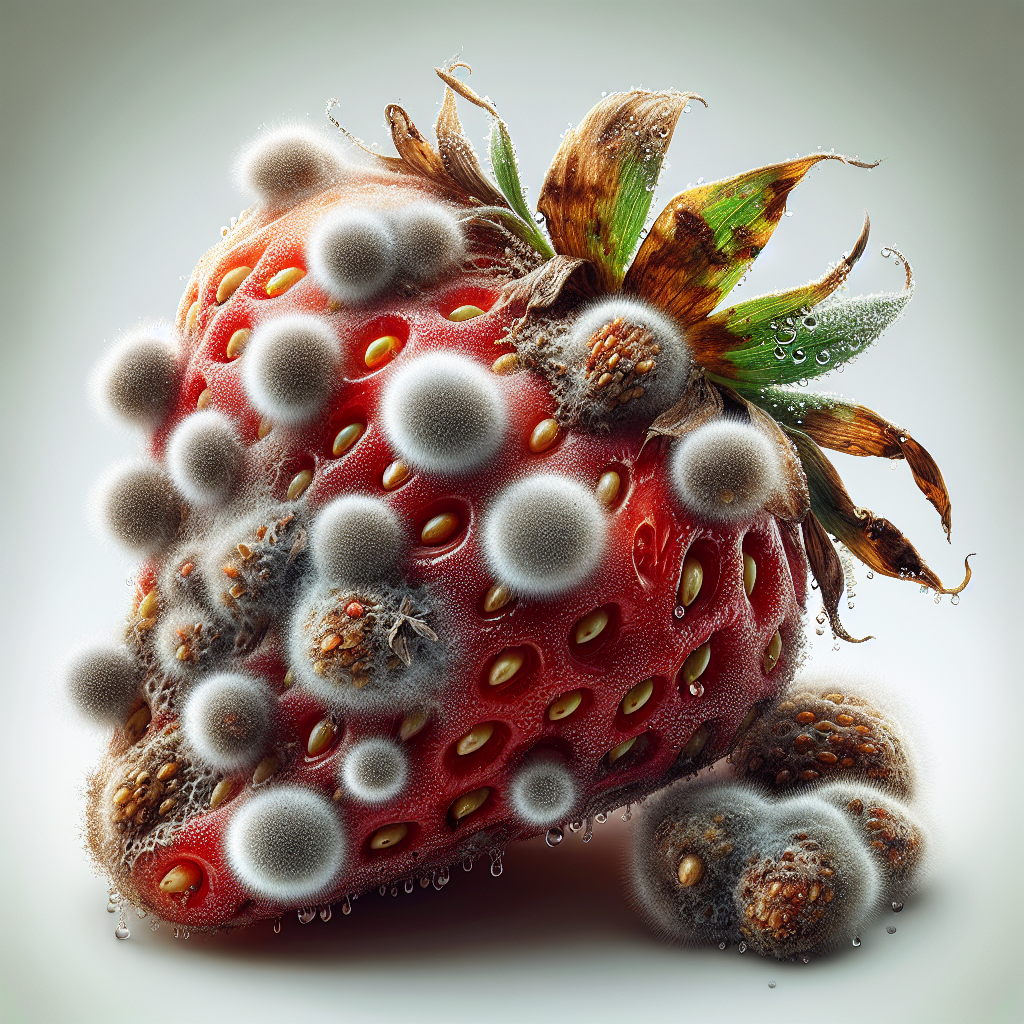
Introduction to gray mold
Gray mold, scientifically known as Botrytis, is one of the most destructive fungal diseases in agriculture, caused by the pathogen Botrytis cinerea. This necrotrophic fungus attacks over 200 plant species, earning its name from the characteristic gray, fuzzy spore masses that blanket infected tissues. Commonly referred to as Botrytis gray mold or Botrytis gray mold, it poses a severe threat to both field and greenhouse crops, particularly during periods of high humidity and moderate temperatures.
The disease manifests as soft, watery rot on leaves, stems, flowers, and fruits, often leading to rapid tissue decay and substantial economic losses. In commercial settings, gray mold can destroy up to 90% of yields in susceptible crops like strawberries and grapes if unchecked. Its ability to produce resilient sclerotia and conidia allows it to persist in soil, plant debris, and even on equipment, making it a persistent challenge for farmers worldwide.
Understanding gray mold is crucial for timely intervention. Unlike many pathogens, B. cinerea doesn't require wounds to infect but exploits senescing tissues, wounds, or stressed plants. This guide equips growers with professional diagnostic tools, lifecycle insights, and organic management plans to minimize damage and sustain productivity. For small farms, integrating these strategies with tools like those in Spring Pest Patrol: Organic AI Strategies to Shield Your Crops from Common Invaders can enhance early detection and response.
Identifying Symptoms & Damage
Accurate identification of gray mold is the first step in effective management. Early symptoms often appear as water-soaked lesions on leaves, stems, or flowers, which quickly turn tan to brown and develop a characteristic gray, velvety fungal growth under humid conditions. On fruits, infection starts as soft, light brown spots that expand rapidly, becoming covered in gray spores, leading to complete rot.
In leafy crops like lettuce or spinach, symptoms include blighted leaves with irregular lesions that coalesce, causing wilting and collapse. Stem infections result in cankers—dark, sunken areas that girdle the plant, halting nutrient flow. Flowers may abort or produce deformed fruits, while mature fruits exhibit mushy decay, often with a musty odor.
Damage extends beyond visible rot: the fungus produces toxins like botrydial, weakening plant defenses and inviting secondary invaders like slugs or aphids. In greenhouses, high spore loads can lead to explosive epidemics. Differentiate gray mold from similar diseases like powdery mildew, which produces white powdery growth without rot, or downy mildew, featuring purplish-gray sporulation on leaf undersides. Use a hand lens to confirm the fluffy gray conidia chains diagnostic of B. cinerea.
Yield impacts are profound: in strawberries, up to 50% fruit loss; in grapes, bunch rot reduces wine quality; tomatoes suffer blossom-end rot mimicry. Economic thresholds vary, but any gray sporulation warrants action. Regular scouting, especially post-rain or in dense canopies, is vital.
Lifecycle and Progression of gray mold
Botrytis cinerea has a complex lifecycle enabling year-round survival and rapid epidemic development. The fungus overwinters as sclerotia—hard, black resting structures—in soil, debris, or on seeds. These germinate in spring under moist conditions, producing mycelium or conidiophores bearing millions of airborne conidia.
Primary infection occurs via conidia landing on plant surfaces, germinating in 4-6 hours at 95-100% humidity and 15-25°C (59-77°F). Hyphae penetrate through stomata, wounds, or natural openings, colonizing tissues. Inside the plant, it forms secondary conidia, repeating the cycle every 3-5 days under optimal conditions.
Progression accelerates in senescent tissues; the fungus kills cells enzymatically, producing gray spore masses. Sclerotia form in decaying matter for next season's inoculum. Sexual spores (ascospores) from apothecia contribute minimally but add variability. In greenhouses, conidia spread via air currents, splashing water, or tools.
Epidemics follow a polycyclic pattern: initial infections from overwintering sclerotia lead to secondary cycles. Disease triangles—susceptible host, virulent pathogen, conducive environment—drive outbreaks. Managing debris reduces inoculum, breaking the cycle.
Environmental Triggers & Risk Factors
Gray mold flourishes in cool (15-20°C/59-68°F), humid (>90% RH) conditions with poor air circulation. Free moisture on surfaces for 8+ hours is ideal for germination. Nighttime humidity spikes in dense canopies exacerbate spread.
Risk factors include overhead irrigation, overcrowding, excessive nitrogen favoring succulent growth, and wounds from caterpillars or mechanical injury. Cool, wet springs or falls heighten field risks; greenhouses trap humidity. Soil with high organic matter harbors sclerotia.
Susceptible varieties, stressed plants (drought, nutrient imbalance), and nearby infected weeds amplify risks. Monitor weather: prolonged leaf wetness >12 hours signals danger. Integrate with Why 80% of Small Farms Battle Weather Disasters - And How Hyper-Local AI Forecasts Can Save Your Harvest for predictive alerts.
Organic Control & Treatment Plans
Organic management emphasizes cultural, biological, and minimal chemical controls. Start with sanitation: remove and destroy infected debris promptly to cut inoculum by 70-90%. Improve airflow via pruning and spacing; use drip irrigation to keep foliage dry.
Biological agents like Trichoderma harzianum or Bacillus subtilis compete with B. cinerea, applied as foliar sprays (e.g., Serenade). Beauveria bassiana targets spores. Apply pre-bloom or at first symptoms, repeating every 7-10 days.
Approved organic fungicides include copper-based (e.g., Bordeaux mix), sulfur, or potassium bicarbonate. For strawberries, potassium bicarbonate at 2-3 lbs/100 gal water reduces sporulation. Neem oil disrupts spore germination.
Treatment plans: Scout weekly; at 5% incidence, apply biofungicide + prune infected parts. Rotate modes of action. In greenhouses, ventilate to <85% RH; use UV lights to kill airborne spores. Companion planting with thyme or marigold repels via volatiles.
Integrated plans yield 80% control: sanitation (40%), environment (30%), bioagents (30%). Monitor efficacy with spore traps.
Preventing gray mold in the Future
Prevention hinges on cultural practices denying the disease triangle. Select resistant varieties like 'Seascape' strawberry or 'Chardonnay' grapes. Time planting to avoid peak humidity; use mulches to suppress splash dispersal.
Enhance plant vigor with balanced fertility—avoid excess N. Promote biodiversity: interplant with suppressives like garlic or onions. Crop rotation (2-3 years away from hosts) starves sclerotia.
Greenhouse protocols: HEPA filters, bottom-watering, 1-2 hour daily ventilation. Soil solarization kills 90% sclerotia. Post-harvest, clean tools with 10% bleach. Forecast models predict outbreaks; act pre-symptomatically.
Long-term: Build soil health with compost teas boosting Trichoderma. Learn from Soil Health Mastery: 5 Proven Strategies for Small Farms to Build Fertile Ground Without Breaking the Bank. Annual planning prevents recurrence.
Crops Most Affected by gray mold
Gray mold devastates high-value, dense-canopy crops. Top victims: strawberries (fruit rot, 30-50% losses), grapes (bunch rot, wine contamination), tomato (blossom blight, fruit rot), lettuce (leaf drop), and soft fruits like raspberry and blueberry.
Vegetables: cucumber, peppers, beans. Ornamentals and herbs also suffer. In greenhouses, strawberry and tomato dominate losses. Field crops like chickpeas face pod rot. Regional hotspots: strawberries in California, grapes in France.
Susceptibility ties to tissue tenderness and microclimate. Protect these via targeted prevention.