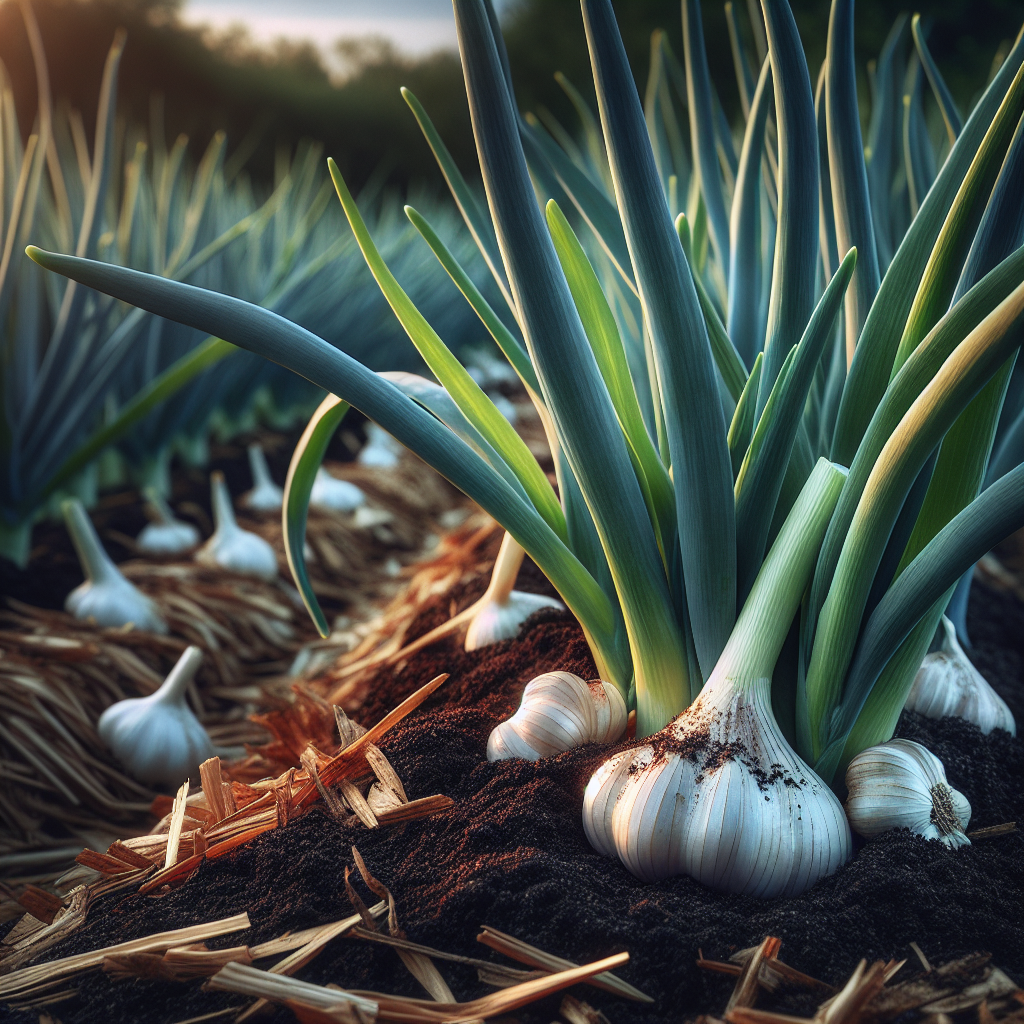
Introduction to Hardneck Garlic (Music)
A porcelain hardneck selection, 'Music' is one of the most respected garlic cultivars for northern growers and serious market gardeners. It is widely believed to have been preserved and shared through farming communities in Canada before gaining popularity in the United States, and it has earned a reputation for reliability under cold winter conditions. Compared with many softneck types, it produces fewer but much larger cloves per bulb, often 4 to 6 substantial cloves wrapped in smooth, bright white bulb skins.
Its culinary value is significant. The flavor is assertive when raw, hot and pungent without being harshly bitter, then deepens into a rich, sweet-savory profile when roasted or sautéed. Because the cloves are large, peeling and processing are efficient, which is why 'Music' is favored by chefs, home preservers, and fresh-market growers.
From a production standpoint, this cultivar is not just about flavor. It is also admired for strong vigor, winter survival, relatively consistent bulb uniformity, and excellent scape production. As a hardneck garlic, it sends up a central flowering stalk called a scape, and removing that stalk at the correct stage often improves bulb sizing. Gardeners who understand timing, moisture, and fertility can regularly produce large, market-quality bulbs.
If you are new to garlic culture, reviewing a broader Garlic guide can help frame the basic lifecycle, but 'Music' rewards more precise management than generic advice suggests. This variety performs best when grown with deliberate attention to vernalization, drainage, spacing, and disease-free seed stock.
Botanical Profile of Hardneck Garlic (Music)
'Hardneck' refers to the rigid flowering stalk that develops from the center of the plant. Botanically, garlic is a sterile, bulb-forming perennial generally grown as an annual. 'Music' belongs to the porcelain group, which is distinguished by tall plants, broad upright leaves, thick necks, and large bulbs with a limited number of oversized cloves.
Key morphological traits include:
- Plant height commonly reaching 60 to 120 cm depending on climate, fertility, and moisture.
- Blue-green to gray-green leaves that are broader than many artichoke or silverskin garlic types.
- A strong central scape that curls once or twice before straightening as the umbel matures.
- White outer bulb wrappers with occasional subtle pink, tan, or purple blush on clove skins.
- Typically 4 to 6 large cloves arranged evenly around the hard stem.
This cultivar requires cold exposure to properly differentiate cloves and form large bulbs. Without adequate winter chilling, plants may remain weak, produce rounds instead of segmented bulbs, or yield undersized heads. That cold response is one of the defining physiological differences between hardneck and many softneck garlics.
Its root system is relatively shallow and fibrous, concentrated mostly in the top 15 to 20 cm of soil. That makes consistent soil structure and moisture essential. Compaction, crusting, or repeated wet-dry stress reduces root efficiency and bulb expansion. Leaves emerge in sequence, and each healthy green leaf typically corresponds to a wrapper layer around the bulb. Maintaining leaf health through spring directly affects bulb protection and storage life.
Like other alliums, 'Music' reproduces vegetatively through cloves rather than true seed in normal farm practice. Bulbils from the scape can also be used, but they take multiple seasons to reach full bulb size. Commercially and for most advanced gardeners, clove propagation remains the standard because it preserves varietal traits and dramatically shortens production time.
Soil, pH, and Climate Requirements for Hardneck Garlic (Music)
This cultivar thrives in fertile, well-drained loam or sandy loam with high organic matter and a crumbly structure that allows root exploration and bulb swelling. Heavy clay is not impossible, but it must be improved. In dense soils, cloves often struggle to root before winter, and wet conditions increase the risk of Fusarium basal rot, bacterial decay, and malformed bulbs.
Ideal soil conditions include:
- pH 6.2 to 6.8, with acceptable performance from about 6.0 to 7.0.
- Organic matter around 4 to 6% for strong moisture retention without waterlogging.
- Good calcium availability for tissue strength and wrapper development.
- Moderate to high phosphorus and potassium, with nitrogen supplied mainly during vegetative growth.
If pH is below 6.0, nutrient uptake becomes less efficient and disease pressure can increase. If soil is too alkaline, micronutrient imbalances may appear, especially reduced availability of manganese, iron, or zinc. A soil test before bed preparation is highly recommended. Avoid fresh manure before planting, especially in cool wet regions, because it can increase disease pressure, create excessive nitrogen release, and encourage lush top growth at the wrong time.
Climate is where 'Music' shines. It is best adapted to temperate and cold-winter regions, generally USDA Zones 3 through 8, with best bulb quality often seen where winters are reliably cold enough to satisfy vernalization. In warm winter climates, bulb formation can be inconsistent unless cloves are pre-chilled, and even then performance may lag behind softneck garlic.
Temperature targets by growth stage are useful:
- Root initiation after planting: best when soil is roughly 7 to 13°C.
- Winter dormancy: plants tolerate freezing when well rooted and mulched.
- Spring leaf growth: strongest in cool conditions around 10 to 21°C.
- Bulb expansion: favored by increasing day length and mild to warm temperatures, roughly 18 to 27°C, provided soil moisture remains even.
Drainage is non-negotiable. Garlic roots need oxygen. If you squeeze soil from the planting zone and water drips freely outside of immediate post-irrigation periods, the site is too wet. Chronic oversaturation leads to yellowing lower leaves, slowed spring vigor, and bulbs with poor wrapper integrity. Raised beds are often the best solution in regions with winter rain or slow-draining subsoil.
Mulch is especially helpful for this cultivar. A 5 to 10 cm layer of clean straw after planting buffers freeze-thaw cycles, reduces heaving, moderates spring weeds, and helps retain even moisture. For deeper strategies on building friable beds and stable fertility, see soil health tips.
Step-by-Step Planting & Propagation
Start with certified disease-free seed garlic or stock from a trusted grower who maintains clean, vigorous bulbs. Do not plant grocery store garlic unless there is no alternative; it may be heat-treated, poorly adapted, or carry nematodes and fungal pathogens.
Select top-quality bulbs. Choose large, healthy bulbs with tight wrappers and no soft spots, discoloration, or mold. In garlic, larger planting stock usually produces larger harvest bulbs, assuming fertility and spacing are adequate.
Prepare the bed 2 to 4 weeks before planting. Work the soil to a fine, open texture to at least 20 cm deep. Incorporate mature compost at modest rates, typically 2 to 5 cm over the bed surface, and balance fertility according to soil test results. Avoid excessive soluble nitrogen at planting.
Plant in autumn. The best timing is usually 4 to 6 weeks before the ground freezes solid. In many temperate climates that means late September through November. The goal is root growth before winter without too much top growth. Ideal cloves will establish roots and perhaps a short shoot, but not a lush canopy.
Break bulbs into cloves just before planting. Separate cloves carefully within 24 to 48 hours of planting. Keep papery skins intact. Use only the largest outer cloves for the main crop. Very small inner cloves can be planted separately for green garlic or left out.
Orient and space correctly. Place each clove upright with the basal plate down and pointed tip up. Plant 5 to 8 cm deep from the clove tip to the soil surface in cold regions, or slightly shallower in milder climates. Space cloves 15 to 20 cm apart in rows 25 to 30 cm apart. For maximum bulb size, avoid crowding. Tight spacing increases total plant count but reduces average bulb diameter.
Mulch after planting. Apply loose straw or weed-free hay to a depth of 5 to 10 cm. In colder sites, a thicker winter mulch may be appropriate, then reduced slightly in spring if soils remain too cool and wet.
Consider bulbil propagation only for long-term stock increase. Bulbils from scapes are valuable for disease reduction and preserving genetics, but they take 2 to 3 years or more to become full-size bulbs. Most growers use them only when expanding clean seed stock.
A practical population guide for home and market scale:
- 1 kg of seed garlic may plant roughly 5 to 10 m of row depending on clove size.
- Larger spacing and larger seed cloves mean fewer plants but superior premium-size bulbs.
Care & Maintenance regimes for Hardneck Garlic (Music)
Spring management determines whether 'Music' becomes average garlic or outstanding garlic. Once winter breaks, gently pull back heavy mulch if soils are staying cold and saturated, but leave enough to suppress weeds and stabilize moisture.
Water management should be precise rather than generic. Garlic needs consistent moisture during root establishment and especially from spring leaf growth through bulb swelling. Aim to keep the top 15 to 20 cm of soil evenly moist, not muddy. As a working field benchmark, soil should feel cool and lightly damp when squeezed, forming a weak ball that breaks apart with light pressure. If it forms a sticky ribbon or remains glossy and slick, it is too wet.
Approximate water demand is often 25 to 40 mm per week from rainfall plus irrigation, increasing in sandy soils or during warm windy weather. The most critical period is from rapid spring growth until about 2 to 3 weeks before harvest. Drought stress at this stage reduces leaf area and bulb size. Overwatering causes shallow rooting, yellowing from oxygen deprivation, and higher incidence of rot.
Signs of underwatering:
- Dull blue-gray foliage losing natural turgor by midday.
- Premature tip burn beyond slight natural leaf senescence.
- Stunted bulb expansion and reduced clove fill.
Signs of overwatering:
- Persistent chlorosis beginning on lower leaves despite adequate fertility.
- Soft neck tissue and a sour smell in the root zone.
- Slowed growth in cool weather and bulbs that feel waterlogged or show early decay.
Fertility should emphasize early vegetative growth, then taper. Garlic responds well to nitrogen in late winter to early spring once active growth resumes. A common professional approach is split nitrogen applications: one at early spring green-up and another 2 to 4 weeks later, with caution not to overapply after bulbing begins. Excess late nitrogen creates lush tops, delayed maturity, split wrappers, and poorer storage.
Phosphorus supports root establishment and should be present before planting rather than added late. Potassium is particularly important for bulb quality, water regulation, and storage strength. Sulfur also contributes to the pungency and characteristic flavor compounds that make garlic distinct.
Weed control is essential because garlic is a weak competitor. Its narrow upright canopy does not shade the ground quickly, and weeds steal nutrients, light, and moisture during the exact period bulb size is set. Keep beds nearly weed-free from emergence through bulb swelling. Use shallow cultivation only, since roots are close to the surface. Mulch plus hand weeding is often safer than aggressive hoeing.
Scape removal is a defining maintenance task for hardneck garlic. When the scape forms one curl and is still tender, cut or snap it off, leaving the leaves intact. Removing it redirects energy toward bulb enlargement. Delay too long and bulb size may suffer. Remove too early and the plant may produce a secondary scape. Scapes are edible and marketable.
Crop rotation matters. Avoid planting garlic or related alliums in the same bed more often than once every 3 to 4 years. This reduces carryover of stem and bulb nematodes, white rot, and basal diseases. Keep records of any patch with suspicious yellowing or rot and exclude alliums from that area for as long as practical.
Pests, Diseases & Organic Management
Although 'Music' is vigorous, it is not immune to pests or disease. Clean seed, drainage, and rotation are your primary defenses.
Important pests include onion thrips, bulb mites, and stem and bulb nematodes. Thrips rasp leaf surfaces, causing silvery stippling, reduced photosynthesis, and lower bulb size. Damage is often worst during hot, dry weather. Maintain good irrigation balance, avoid excessive dust, and encourage beneficial insects with nearby plant diversity. bulb mites are more common where plant tissue is stressed or decaying. Nematodes are particularly serious because they persist in planting material and soil, causing twisted leaves, swollen basal plates, soft bulbs, and storage collapse.
Major diseases include white rot, Fusarium basal rot, Botrytis neck rot, Penicillium decay, and bacterial soft rots. white rot is among the most destructive. It can remain in soil for many years and is often recognized by yellowing, wilt, and fluffy white fungal growth with tiny black sclerotia near the bulb. If confirmed, do not replant alliums in that area for the foreseeable future. Fusarium often appears as basal plate browning and root loss, especially in warm, stressed, or poorly drained soils.
Organic management principles:
- Plant only firm, disease-free cloves from clean stock.
- Rotate away from alliums for 3 to 4 years minimum.
- Use raised beds if drainage is imperfect.
- Sanitize tools, harvest bins, and curing racks.
- Remove and destroy infected plants rather than composting them.
- Avoid overhead irrigation late in the season if humidity is high.
- Cure thoroughly before storage.
Nutritional balance also influences disease pressure. Excess nitrogen, especially late, produces softer tissue more prone to infection. Potassium and calcium support stronger plant structure. Avoid mechanical injury during weeding and harvest because wounds become entry points for storage pathogens.
If pest pressure is recurring, integrate habitat for beneficial insects with companion species such as Carrot nearby, while keeping sufficient spacing for airflow and access. Garlic itself can help confuse some pests in mixed plantings, but do not rely on companion effects alone when sanitation and rotation are required.
Harvesting, Curing & Optimal Storage
Harvest timing is crucial with 'Music'. Pull too early and bulbs are undersized with thin wrappers. Pull too late and wrappers split, cloves separate, and storage life declines.
The standard maturity cue is leaf senescence from the bottom upward. Harvest when about one-third to one-half of the leaves have turned brown, while 4 to 6 green leaves remain. Those remaining green leaves correspond to the wrapper layers still protecting the bulb. In many climates, this occurs in mid to late summer, often several weeks after scape removal.
To check readiness, dig a test bulb rather than pulling one by the stem. Mature bulbs should have well-defined cloves and reasonably tight wrappers. If cloves are still not fully segmented, wait a little longer. If wrappers are already splitting and cloves are pushing outward, harvest immediately.
Use a fork or undercutter to loosen soil beneath the bulbs. Never yank plants from hard ground by the stem; neck breakage and basal damage reduce curing success. Handle gently and keep harvested bulbs out of direct hot sun for long periods, especially in very warm climates.
Curing should last 2 to 4 weeks in a shaded, dry, well-ventilated space. Ideal curing conditions are roughly 21 to 27°C with good air movement and moderate humidity, not a sealed humid shed. Plants can be cured whole with leaves attached or trimmed after initial drying. The goal is to dry neck tissue, outer wrappers, and roots without cooking the bulbs.
A properly cured bulb will have:
- A tight, dry neck.
- Papery outer wrappers.
- Dry, trimmed roots.
- No soft spots or moisture trapped under the wrappers.
After curing, trim roots and cut stems to about 2.5 cm above the bulb if not braiding. Since hardneck garlic has rigid stems, it is usually stored loose rather than braided. Store in mesh bags, slatted crates, or shallow ventilated boxes.
Best storage conditions are cool, dry, and airy. A target of around 0 to 4°C with 60 to 70% relative humidity is excellent for long storage, though many home growers use a consistently cool room with strong airflow. Avoid storing in plastic bags or refrigerators with fluctuating humidity that encourage condensation. Typical storage life for 'Music' is good for a hardneck, often 4 to 6 months, sometimes longer under ideal conditions, though generally shorter than many softneck types.
Set aside the best bulbs for replanting: true-to-type, large, healthy, well-wrapped heads from the most vigorous plants. This simple selection practice gradually improves local adaptation and crop quality.
Companion Planting for Hardneck Garlic (Music)
Garlic fits well into diversified gardens and small farm blocks because its scent and sulfur-rich tissues can help disrupt certain pest patterns, while its vertical growth habit occupies relatively little horizontal space. The best companions are crops that benefit from pest confusion, do not heavily compete for root space during garlic bulbing, and are not themselves close allium relatives.
Strong companion choices include Carrot, Beet, and Lettuce. Carrots and beets occupy different rooting niches and can share bed systems or adjacent rows, especially in intensive gardens. Lettuce matures earlier and can make efficient use of space during garlic's slower cool-season growth. These combinations are especially useful where weed suppression and bed productivity matter.
Garlic is also commonly planted near strawberries, brassicas, and tomatoes because many growers report reduced pest activity around mixed plantings. However, give each crop adequate spacing and airflow. Garlic should not be crowded under dense canopies that trap moisture, especially in humid climates.
Avoid pairing too closely with vigorous legumes if the goal is maximum garlic bulb size, because excess available nitrogen late in the season can reduce storage quality. Also avoid replanting next to onions or other alliums where disease carryover is a concern. In rotational systems, think of companion planting as a secondary tool; drainage, sanitation, spacing, and timing remain the primary drivers of success.
For 'Music' specifically, companion planting works best when it supports three outcomes: lower weed pressure, moderate soil shading without sogginess, and easier beneficial insect activity nearby. Used thoughtfully, these associations improve the overall cropping system without compromising the clean, dry, well-spaced conditions that premium hardneck garlic requires.