Introduction to stem and bulb nematodes
Stem and bulb nematodes (Ditylenchus dipsaci) represent one of the most destructive microscopic pests in agriculture, targeting a wide array of bulbous and stem crops worldwide. These tiny, eel-like worms, measuring just 1-1.5 mm in length, penetrate plant tissues through wounds or natural openings, feeding on cells and releasing toxins that cause abnormal growth. Unlike larger insects, their invisibility to the naked eye makes early detection difficult, often leading to widespread infestations before growers notice the damage.
First identified in the 19th century, these nematodes have become a global concern, particularly in temperate regions where cool, moist soils favor their survival. They can persist in soil for years, surviving adverse conditions as dormant stages. Infestations result in significant yield losses—up to 50-100% in severe cases—for high-value crops like onions and garlic. Understanding their biology is crucial for growers seeking sustainable control, as chemical fumigants are increasingly restricted. This comprehensive guide covers identification, lifecycle, risk factors, organic management, prevention, and affected crops, empowering farmers with professional-grade strategies to protect their harvests.
Identifying Symptoms & Damage
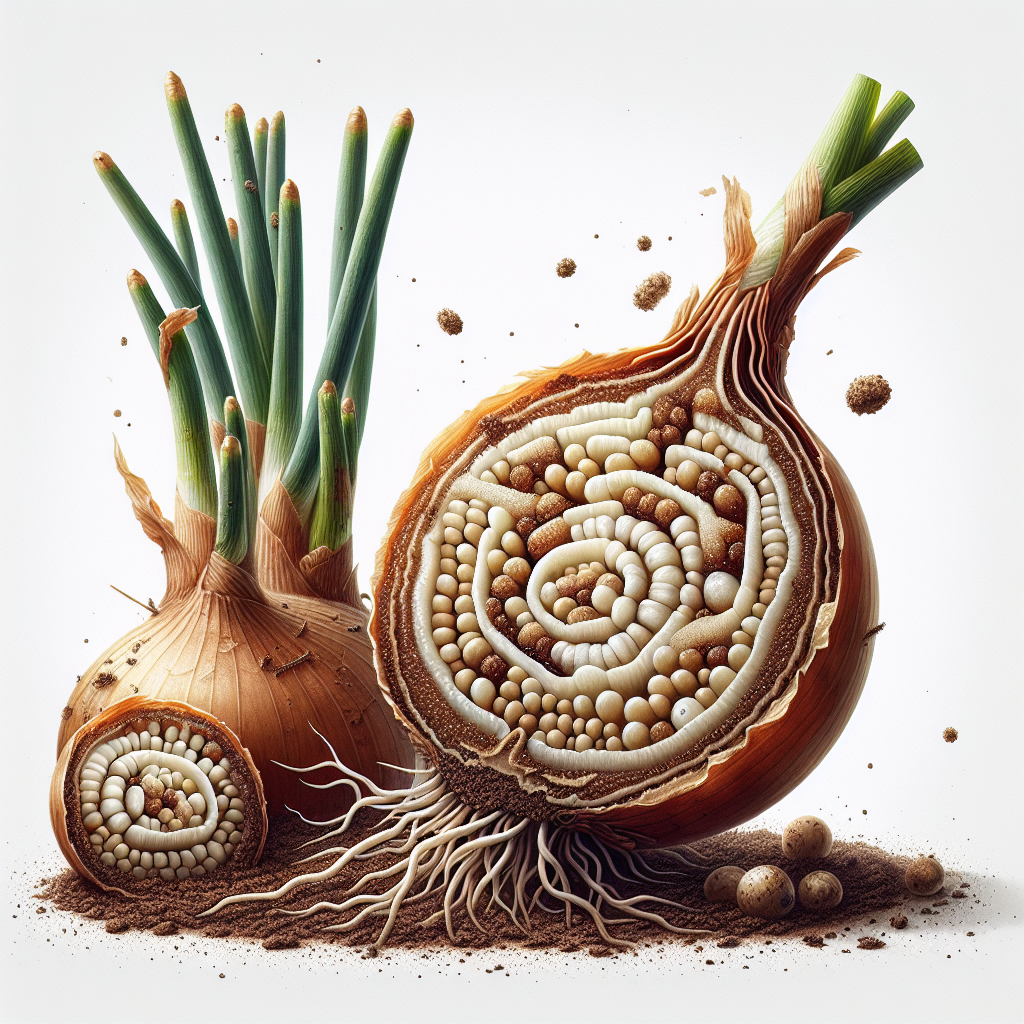
Diagnosing stem and bulb nematode infestations requires keen observation of distinctive symptoms, as the pests themselves are invisible without lab equipment. Early signs appear on foliage: stems swell into spindle-shaped galls, leaves become chlorotic (yellowed), brittle, and twisted, often curling inward. Affected plants exhibit stunted growth, with shortened internodes creating a 'bushy' appearance. In bulbs like onions or garlic, internal tissues turn soft, spongy, and brown, sometimes with cavities filled with nematodes.
Damage progresses rapidly in cool weather. Bulbs may crack open prematurely, showing grayish lesions or 'eelworm blisters.' Roots develop galls and lesions, reducing water uptake and mimicking drought stress. Secondary symptoms include wilting during the day, leaf tip necrosis, and plant collapse. Differentiate from fungal issues like root rot or fusarium wilt by slicing stems—nematode damage reveals watery, granular tissues swarming with tiny worms under magnification.
For confirmation, submit samples to agricultural extension services for extraction via misting or centrifugation. Yield impacts are devastating: marketable bulbs reduced by 70%, with survivors producing weak offsets. In onion fields, 'oatmeal' texture in necks signals heavy infestation. Early scouting in spring, when symptoms first emerge, is key to limiting spread.
Lifecycle and Progression of stem and bulb nematodes
The lifecycle of Ditylenchus dipsaci is adapted for persistence, spanning 19-25 days under optimal conditions (15-20°C, moist soil). Females lay 200-500 eggs inside plant tissue; juveniles hatch and molt four times to adulthood. All stages are vermiform (worm-like), migratory endoparasites that move short distances (up to 50 cm/year in soil) or longer via splashing water, tools, or infested transplants.
Nematodes enter plants during active feeding, reproducing rapidly in stems and bulbs. In summer, they enter anhydrobiosis—a dormant, coiled state—surviving dryness for 2+ years. Upon fall rains, they revive, reinfesting new crops. Multiple generations (3-5) occur per season, with peak populations in cool springs. Progression: eggs (3-5 days) → J1-J4 juveniles (10-15 days) → adults. Overwintering in crop debris or weed hosts amplifies spread.
Understanding this cycle informs timing interventions: hot water treatment targets active stages, while fallow periods starve dormant ones. Compared to root-knot nematodes, stem nematodes favor aboveground tissues, making rotation less effective without sanitation.
Environmental Triggers & Risk Factors
Stem and bulb nematodes thrive in cool (10-25°C), moist soils with pH 5.5-7.0, common in temperate bulb-growing regions like the Pacific Northwest or Europe. High humidity (>70%) and poor drainage exacerbate infestations, as nematodes swim to roots. Risk spikes with consecutive susceptible crops, infested irrigation water, or contaminated equipment.
Weedy fields harboring wild hosts like dandelion or chickweed serve as reservoirs. Acidic, sandy soils retain fewer nematodes than heavy clays, but compaction hinders escape. Climate change may extend ranges northward. Overwatering mimics triggers, confusing symptoms with phytophthora. Acidify soil post-harvest to suppress populations below pH 5.0. Monitor via bioassays planting susceptible garlic trap crops.
Organic Control & Treatment Plans
Organic management integrates cultural, biological, and physical tactics, avoiding synthetic nematicides. Hot water treatment: Dip bulbs/sets at 43-44°C for 1.5-3 hours pre-planting, killing 99% nematodes without damaging sets (test small batches). Solarization: Cover moist soil with clear plastic 4-6 weeks in summer, heating to 45°C+ to desiccate nematodes.
Biologicals: Apply Pasteuria penetrans or Heterorhabditis bacteriophora beneficial nematodes, which parasitize pests. Purpurea mustard green manures release biofumigants upon incorporation. Crop rotation (3-5 years) with non-hosts like grasses or clover starves populations. Sanitation: Rogue infected plants, flame-weed fields, and disinfect tools.
Treatment plan: Year 1: Solarize + mustard cover; Year 2: Resistant varieties + bio-nematodes; Year 3: Fallow or brassicas. Pair with compost teas boosting Trichoderma antagonists. For more on organic strategies, check Spring Pest Patrol: Organic AI Strategies to Shield Your Crops from Common Invaders. Monitor progress with annual soil assays. Success rates: 80-95% reduction in 2 years.
Preventing stem and bulb nematodes in the Future
Prevention hinges on exclusion and soil health. Source certified, nematode-free planting stock—inspect bulbs for galls. Implement 4-year rotations excluding alliums: grains → brassicas → legumes → fallow. Use raised beds with barrier mulches (plastic) to block migration.
Enhance soil biodiversity via cover crops like oilseed radish, which traps and kills nematodes upon decomposition. Avoid overhead irrigation; drip systems minimize splashing. Quarantine new fields, testing via Oostenbrink elutriation. Long-term: Build calcium-rich soils (dolomite lime) to thicken cell walls, deterring penetration. Annual marigold borders (marigold) release alpha-terthienyl nematicide. Integrate with IPM for plant-parasitic nematodes. Vigilance prevents re-infestation, safeguarding yields indefinitely.
Crops Most Affected by stem and bulb nematodes
Stem and bulb nematodes devastate Allium crops: onion, garlic, leeks, shallots. Bulb flowers like narcissus, tulips, and saffron crocus suffer bulb rot. Others: strawberries, alfalfa, oats, beans, potatoes. Hyacinths show 'eelworm disease'; safflower wilts systemically. Resistant cultivars exist for onions (e.g., 'Nebula'), but vigilance is essential across susceptible strawberry and potato fields.