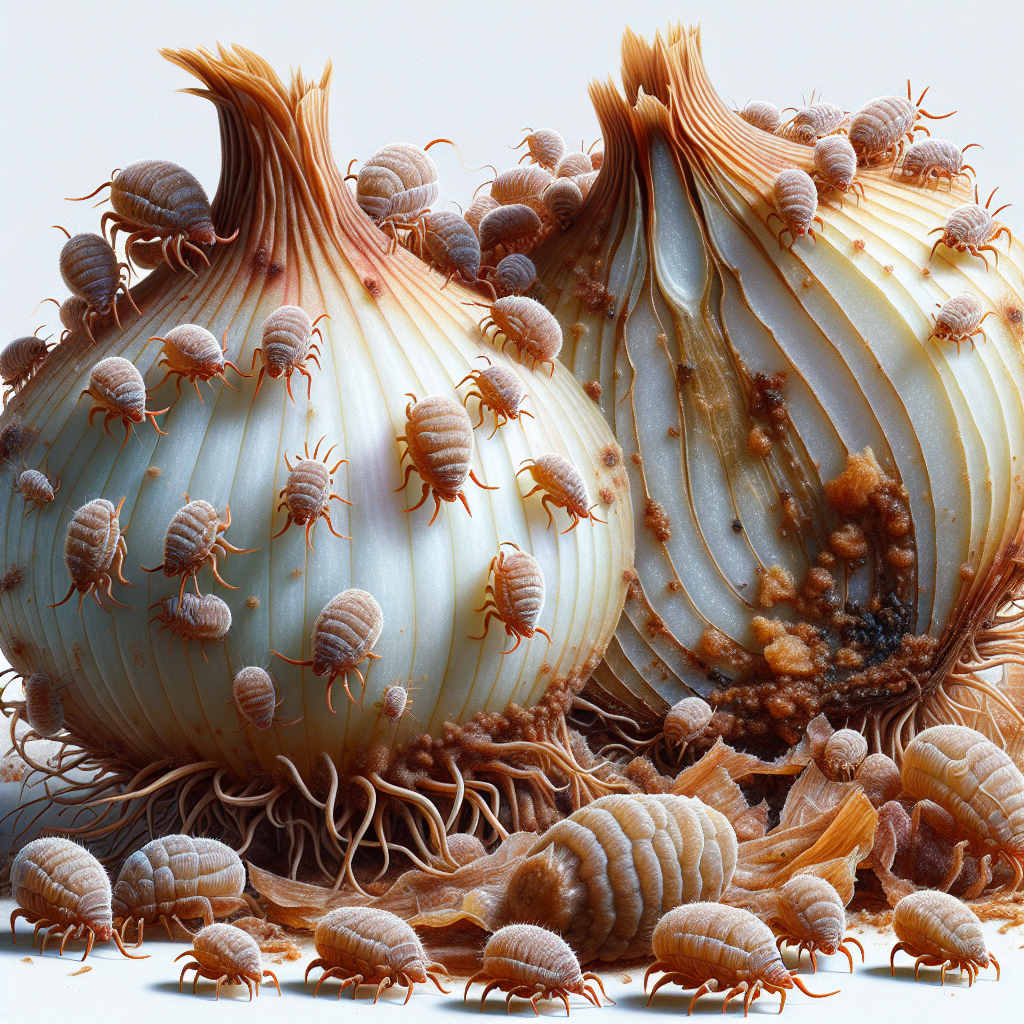
Introduction to bulb mites
Bulb mites are among the most destructive pests affecting stored bulbs, corms, rhizomes, and tubers in agriculture and horticulture. Primarily species like Rhizoglyphus echinopus (common bulb mite) and Steneotarsonemus laticeps (dry bulb mite), these tiny arachnids thrive in moist, decaying plant tissue, accelerating rot and rendering bulbs unsellable. They pose a significant threat to commercial growers of onions, garlic, tulips, lilies, and gladiolus, as well as home gardeners storing bulbs over winter.
These mites are barely visible to the naked eye, measuring 0.5-1 mm in length, with pear-shaped, translucent white bodies and slow, deliberate movement. Unlike spider mites, which attack live foliage, bulb mites target wounded or weakened underground storage organs, often in tandem with fungal pathogens like Fusarium or Pythium. Infestations can destroy 50-100% of stored stock if unchecked, leading to annual losses in the millions for bulb producers worldwide.
Understanding bulb mite biology is crucial for effective management. They reproduce rapidly in warm, humid storage conditions (15-25°C, 80-90% RH), with females laying up to 50 eggs over their 2-3 month lifespan. This guide equips growers with professional diagnostic tools, organic treatments, and prevention protocols to safeguard crops year-round. For small farms battling storage pests, check out this Spring Pest Patrol blog for broader strategies.
Identifying Symptoms & Damage
Diagnosing bulb mite infestations requires keen observation, as mites are microscopic without magnification. Key symptoms include brown, sunken lesions on bulb scales or basal plates, often accompanied by a foul, fermented odor from secondary bacterial or fungal rots. Affected bulbs feel soft and spongy when squeezed, with fine webbing or gritty dust (mite frass and cast skins) visible under bright light.
Cut open infested bulbs to reveal clusters of tiny, white mites crawling on decaying tissue. Healthy tissue contrasts sharply with the water-soaked, discolored rot at the base or neck. In severe cases, entire bulbs collapse into a mushy mass, indistinguishable from root rot without closer inspection.
Damage progression varies by host. In onions and garlic, mites enter through harvest wounds, causing 'basal rot' that spreads upward, reducing sprout viability by 70-90%. Ornamental bulbs like tulips show stunted growth or failure to flower, with 20-50% yield loss in fields. Differentiate from nematodes by the absence of galls and presence of mites under a 10x hand lens. Early symptoms mimic drought stress or overwatering, so confirm with a tissue sample: shake mites onto white paper and observe movement.
Field indicators include poor stand establishment from infested sets, with seedlings wilting despite adequate moisture. In storage, scout 10% of stock weekly, slicing suspicious bulbs. Threshold: 5 mites per bulb warrants action. Pair with pathogen tests, as mites vector Rhizoctonia and other fungi, compounding damage.
Lifecycle and Progression of bulb mites
Bulb mites undergo incomplete metamorphosis: egg, larva, nymph, and adult stages, completing a generation in 14-30 days under optimal conditions. Females lay 20-50 eggs singly or in clusters within bulb tissue cracks, hatching in 3-5 days into translucent larvae that feed voraciously on decaying matter. Larvae molt twice into nymphs, then adults, which live 1-3 months and disperse via wind, tools, or infested debris.
Progression accelerates in warm (20-30°C), humid (85%+ RH) environments, with parthenogenetic reproduction (females produce females without males) enabling explosive populations. Overwinter as all stages in soil or crop residues, resuming activity in spring. Peak infestations occur post-harvest during curing, when bulbs retain field moisture.
Lifecycle ties to host phenology: mites invade wounded bulbs at harvest, multiply during storage, and emerge to infect daughter bulbs or fields during planting. Multiple generations (5-10 per season) overlap, creating persistent reservoirs. Dry bulb mites (S. laticeps) prefer drier conditions, targeting outer scales, while R. echinopus thrives in wet rot. Understanding this cycle informs timed interventions, like hot-water treatments before symptoms peak.
Environmental Triggers & Risk Factors
Bulb mites flourish where moisture and organic decay converge. Primary triggers: high humidity (>80% RH) and temperatures 15-25°C in storage sheds, curing rooms, or fields post-rain. Mechanical damage from harvest, grading, or transplanting creates entry points, especially in clay soils that retain water.
Risk factors include poor curing (bulbs not dried to 8-10% moisture), overcrowding in bins, and contaminated soil or equipment. Warm winters allow overwintering survival, while monsoon flooding spreads mites via runoff. Susceptible varieties like soft-scaled onions or thin-skinned tulips amplify risks.
Associated pathogens exacerbate outbreaks: mites feed on Fusarium wilt lesions, creating feedback loops. Over-fertilization with nitrogen promotes succulent tissue, attracting mites. Global trade introduces exotic strains, as seen in shipments of infested Saffron Crocus bulbs.
Organic Control & Treatment Plans
Organic management integrates cultural, biological, and physical tactics, avoiding synthetic acaricides. Immediate curative steps: Isolate infested stock. Hot-water dip bulbs at 43-45°C for 1-2 hours (tolerant species like garlic) kills 95% of mites without residue; test small batches first. Solarization: spread bulbs in black plastic under sun (40°C+ for 2 weeks).
Biological controls: Introduce predatory mites like Hypoaspis miles or Stratiolaelaps scimitus (1-2 per cm² soil) for soil-dwelling stages; efficacy 70-90% in greenhouses. Beneficial nematodes (Steinernema feltiae) target larvae in moist media. Neem oil (0.5-1%) or insecticidal soaps smother adults on contact, applied weekly for 3 cycles.
Cultural treatments: Dust with diatomaceous earth (2-5% by weight) or calcined clay to desiccate mites. Fungicides like cinnamon oil suppress associated rots. For fields, rotate with non-hosts like grains for 2 years. Monitor with traps baited with rotting bulbs.
Integrated plan: 1) Pre-harvest: rogue damaged plants. 2) Post-harvest: cure at 30°C/60% RH for 2 weeks. 3) Storage: ventilate at 5-10°C/60% RH. 4) Biological release monthly. Expect 80-95% control with compliance.
Preventing bulb mites in the Future
Prevention hinges on sanitation and cultural practices. Harvest only healthy bulbs, avoiding wet fields; cure promptly in well-ventilated areas. Store at <10°C and 50-60% RH using slatted crates for airflow. Inspect and discard 1-2% suspect bulbs monthly.
Source certified, mite-free planting stock. Disinfest tools, bins with 10% bleach or heat. Soil solarization pre-planting kills overwintering stages. Companion planting with mite-repellent marigolds in bulb fields deters spread. Quarantine new shipments for 4 weeks.
Long-term: breed resistant varieties, maintain soil drainage with raised beds. Scout routinely with lens checks. Clean storage post-season with steam (80°C). These steps reduce incidence by 90%+.
Crops Most Affected by bulb mites
Bulb mites devastate Allium crops like onion, garlic, elephant garlic, and shallots, causing 30-100% storage losses. Ornamentals including tulips, narcissus, lilies, hyacinths, and Saffron Crocus suffer non-productive rots. Rhizomatous crops such as ginger, turmeric, irises, and gladiolus are highly susceptible during dormancy.
Nerine, amaryllis, and colchicums face total destruction in humid tropics. Potatoes and dahlias experience secondary impacts via rot vectoring. Global hotspots: Netherlands (flower bulbs), India (onions), US Pacific Northwest (garlic).