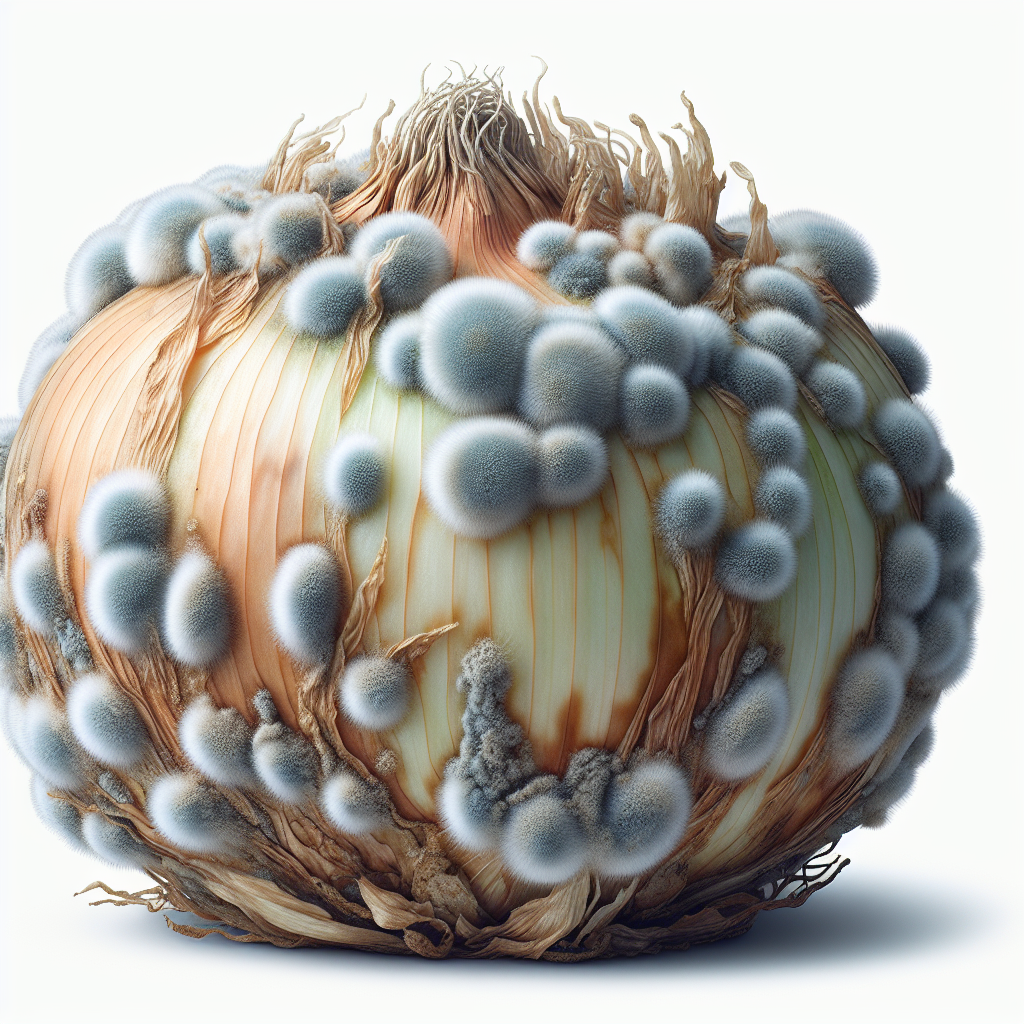
Introduction to Botrytis neck rot
Botrytis neck rot, caused by the fungus Botrytis allii, is one of the most economically damaging diseases affecting bulb crops worldwide, particularly onions and garlic. This pathogen targets the neck tissue where leaves meet the bulb, leading to rot that often manifests during storage, resulting in up to 50% yield losses in severe cases. Unlike field infections, which may appear minor, the disease progresses rapidly under post-harvest conditions of high humidity and cool temperatures (4-10°C or 40-50°F), producing characteristic gray, fuzzy mold that renders bulbs unmarketable.
Farmers recognize Botrytis neck rot as a stealthy threat because symptoms can remain latent until storage, evading early detection. The fungus overwinters in infected plant debris, soil, or infested bulbs, releasing millions of conidia (spores) that infect through wounds or natural openings. In commercial production, it poses challenges for organic growers due to its resilience against many synthetic fungicides, emphasizing the need for integrated prevention strategies. Understanding its biology is crucial for onion and garlic producers aiming to safeguard harvests. This guide provides diagnostic tools, lifecycle insights, and proven organic management to minimize losses.
Identifying Symptoms & Damage
Early identification of Botrytis neck rot is essential for timely intervention, though field symptoms often mimic other issues like Fusarium basal rot or downy mildew. Initial signs appear on foliage as small, water-soaked lesions on leaf tips or necks, progressing to white, cottony mycelium under humid conditions. As infection advances, leaves yellow, wilt, and collapse, with grayish-brown discoloration at the neck.
The hallmark diagnostic feature emerges post-harvest: soft, brown rot starting at the neck, extending into scales with gray mold sporulation on the surface. Affected bulbs feel spongy, emit a mild, musty odor, and may show sclerotia (black, resting structures) in advanced decay. Cross-sectioning reveals water-soaked tissues with fuzzy gray growth inside. Differentiate from bacterial soft rot (slimy, foul-smelling) or Fusarium (firm, pinkish rot). Damage extends beyond yield loss—rotting bulbs contaminate healthy ones, accelerating spread in storage. In fields, lodged plants with drooping necks signal outbreaks, often coinciding with Botrytis leaf blight.
Economic impact is profound: in storage, a single infected bulb can spoil dozens via spore dispersal. Scout routinely during curing, checking 10% of bulbs for neck softness. Use a hand lens to spot conidia clusters. Severe cases lead to total cull rates, underscoring vigilance for high-value crops like Elephant Ear Garlic.
Lifecycle and Progression of Botrytis neck rot
Botrytis allii follows a polycyclic lifecycle, with multiple infection cycles per season. It survives as sclerotia in soil or debris for 2-3 years, germinating under moist conditions to produce conidia on infected bulbs. Airborne spores (conidia) spread by wind, rain splash, or machinery, infecting senescing leaves or wounds during late-season humidity.
Primary infection occurs at flowering or bulb maturation when necks dry prematurely. Latent infections remain asymptomatic until curing or storage, where high humidity (>80% RH) triggers mycelial growth and sporulation. Optimal progression happens at 18-22°C (65-72°F) for infection, cooling to 5-10°C for rot development. Sclerotia form in decaying tissue, perpetuating the cycle.
Progression phases: 1) Spore germination (6-12 hours wetness); 2) Penetration (stomata/necks); 3) Colonization (2-7 days); 4) Sporulation (gray mold); 5) Sclerotia (survival). In onions, progression accelerates with mechanical injury during harvest. Learn more about general Botrytis gray mold dynamics in our detailed wiki. This lifecycle explains post-harvest epidemics, as field symptoms are subtle.
Environmental Triggers & Risk Factors
Botrytis neck rot flourishes in cool, moist environments mimicking storage conditions. Key triggers include prolonged leaf wetness (>12 hours) from dew, rain, or irrigation during neck maturation. Temperatures of 15-20°C (59-68°F) favor spore germination, while 4-10°C sustains rot. High humidity during curing (>85% RH) is a primary risk.
Risk factors: dense planting causing poor airflow; excessive nitrogen promoting lush foliage; overhead irrigation wetting necks; delayed harvest in wet weather; infested debris from prior crops. Susceptible varieties like short-day onions show higher incidence. Crop rotation gaps with non-hosts (e.g., grains) reduce soil inoculum. For more on weather impacts, check our blog on Why 80% of Small Farms Battle Weather Disasters - And How Hyper-Local AI Forecasts Can Save Your Harvest. Soil pH >7.0 and wounds from thrips or machinery exacerbate spread.
Organic Control & Treatment Plans
Organic management emphasizes prevention over cure, as no post-infection treatment fully stops progression. Start with sanitation: remove and destroy infected debris, avoiding composting. Cure bulbs promptly at 25-30°C (77-86°F) with good ventilation to dry necks thoroughly (2-3 weeks).
Apply OMRI-listed biofungicides like Serenade (Bacillus subtilis) or Regalia (Reynoutria extract) at 7-14 day intervals pre-harvest during high-risk periods. Trichoderma-based products (e.g., RootShield) suppress soil sclerotia. Companion planting with Thai basil deters spores via volatile compounds. Use potassium phosphite sprays to boost plant immunity.
Treatment plan: 1) Scout weekly; 2) Improve airflow (wider rows); 3) Fungicide rotation (3 applications max); 4) Post-harvest: Store at <70% RH, 0-5°C; 5) Cull infected bulbs immediately. Integrate with IPM, monitoring aphids that vector spores. Success rates exceed 80% with consistent application.
Preventing Botrytis neck rot in the Future
Long-term prevention hinges on cultural practices and resistance. Select resistant varieties like 'Redwing' onion or 'Music' hardneck garlic. Rotate with non-bulb crops (3-4 years), incorporating cover crops like clover to suppress sclerotia. Optimize fertility: balanced NPK avoids excessive foliage.
Enhance airflow via staking or wider spacing (6-8 inches). Time harvest for dry weather, topping onions 2-3 weeks pre-lift to toughen necks. Solarize soil pre-planting to kill sclerotia. Monitor via traps for spore levels. Future-proof with resistant hybrids and clean seed. Regular audits prevent recurrence, saving 20-30% losses annually.
Crops Most Affected by Botrytis neck rot
Primarily onions (Allium cepa) and garlic (Allium sativum), including varieties like Red Onion (Red Baron) and Elephant Garlic. Leeks, shallots, and chives show susceptibility. Less common on multipliers or elephant garlic. Global hotspots: temperate onion belts (USA, Europe, India). Differentiate from neck rot in ornamentals.