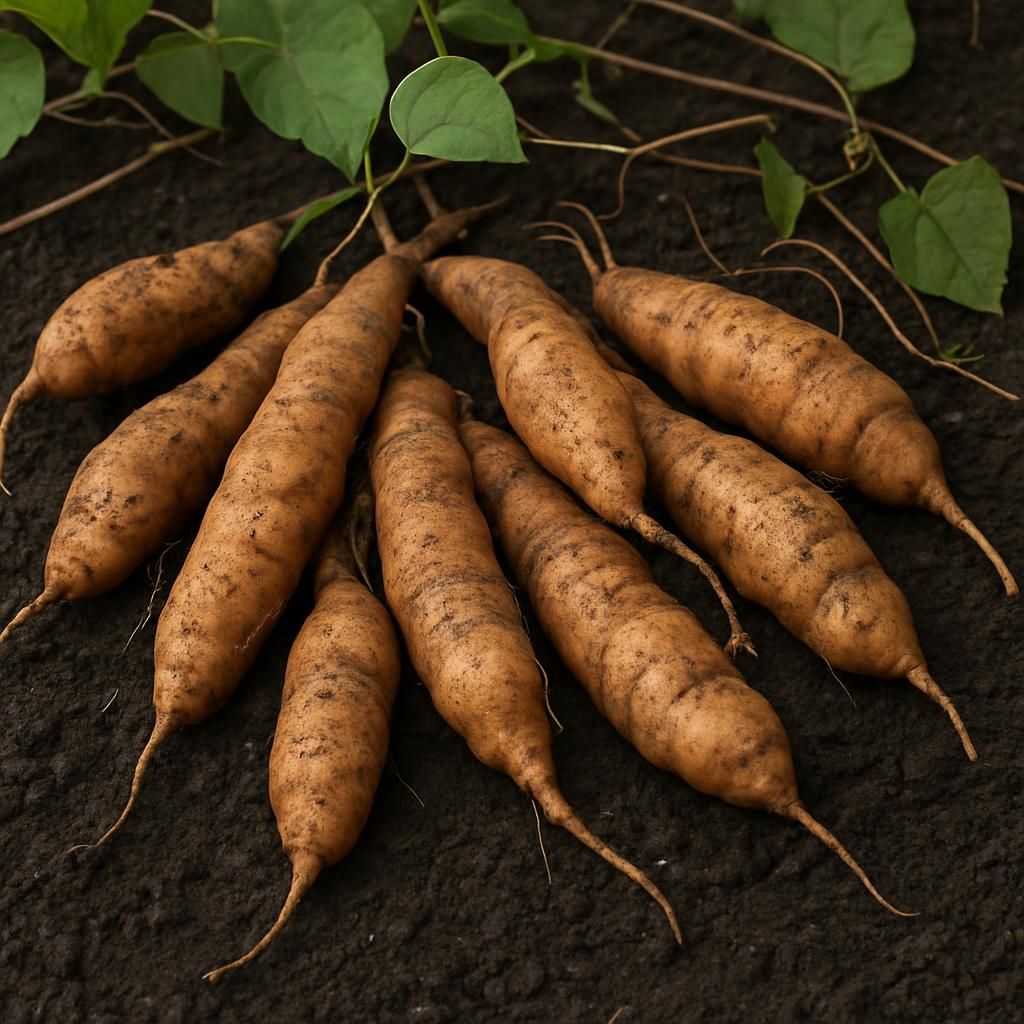
Introduction to Groundnut (Apios americana)
Groundnut (Apios americana) is a perennial nitrogen-fixing legume native to eastern North America that produces protein-rich, edible tubers. Historically cultivated and foraged by Indigenous peoples, it is now being rediscovered by modern growers seeking climate-resilient, low-input perennial crops. The plant combines the benefits of a legume with the storage characteristics of a root crop, offering both soil improvement and a nutritious harvest.
Unlike annual Peanuts, groundnut grows as a climbing vine that can reach 3–5 meters in length and produces clusters of fragrant maroon to brownish-purple flowers. Its tubers develop along underground stolons and can be harvested after the second or third growing season. The crop is valued for its high protein content, nutty flavor, and ability to thrive in marginal soils while fixing atmospheric nitrogen.
Botanical Profile of Groundnut (Apios americana)
Apios americana belongs to the Fabaceae family. It is a twining herbaceous perennial that dies back to the ground each winter and regrows from tubers or rhizomes in spring. The leaves are alternate and pinnately compound with 5–7 leaflets. Flowers appear in dense racemes from mid-summer through early autumn and are primarily pollinated by bees.
The edible tubers form in chains along slender stolons and vary in size from small marble-like nodules to elongated tubers 5–10 cm long. Tubers contain approximately 15–18% protein on a dry-weight basis, significantly higher than most root crops. The plant’s extensive root system and nitrogen-fixing nodules improve soil fertility for subsequent crops.
Soil, pH, and Climate Requirements for Groundnut (Apios americana)
Groundnut performs best in moist, well-drained loamy soils with moderate fertility. It tolerates a range of soil textures but struggles in heavy clay or extremely sandy conditions without amendment. The crop prefers full sun to partial shade and benefits from consistent moisture, especially during tuber development.
| Parameter | Ideal Range | Notes |
|---|---|---|
| Soil Type | Loam to sandy loam | Well-drained yet moisture-retentive |
| Soil pH | 5.5 – 7.0 | Slightly acidic to neutral |
| Temperature Range | 15–30 °C (growing season) | Frost-tolerant tubers; vines killed by frost |
| Annual Rainfall | 600–1200 mm | Supplemental irrigation recommended in dry periods |
| Light Requirement | Full sun to partial shade | Flowering and tuber set reduced in deep shade |
| USDA Hardiness Zones | 3–9 | Perennial in zones 4–8 with winter mulch |
Step-by-Step Planting & Propagation
Groundnut is most reliably propagated from tubers rather than seed. Select healthy, disease-free tubers in early spring when soil temperatures reach 10 °C. Plant tubers 5–8 cm deep and 30–45 cm apart in rows spaced 1–1.5 m apart. Vines require support such as trellises, fences, or companion shrubs.
For larger plantings, divide mature tuber clusters in fall or early spring. Each division should contain at least one growing bud. Direct seeding is possible but slower; scarify seeds and sow in a nursery bed, then transplant seedlings after one season. Because the plant is a legume, inoculating with compatible rhizobia can accelerate establishment.
Care & Maintenance regimes for Groundnut (Apios americana)
Consistent moisture and weed control are essential during the first two seasons while vines and root systems establish. Mulching helps retain soil moisture and suppress weeds. Once established, the crop requires minimal inputs but responds well to balanced organic fertilization.
| Task | Frequency | Details |
|---|---|---|
| Watering | Weekly during establishment; reduce after year 2 | Maintain even moisture; avoid waterlogging |
| Fertilizer | Early spring and mid-summer | Compost or well-aged manure; low-nitrogen formula after year 1 |
| Pruning | Late winter or early spring | Cut dead vines to ground; remove weak growth |
| Mulching | Annual in spring | 5–10 cm organic mulch layer |
| Weed Control | As needed | Hand-weeding or shallow cultivation first two seasons |
Pests, Diseases & Organic Management
Groundnut is relatively pest-resistant but can be affected by Aphids, Slugs, and Root-knot nematodes. Fungal issues such as Root rot and Powdery mildew may occur in poorly drained soils. Use floating row covers early in the season to exclude aphids and practice crop rotation to reduce nematode pressure.
Organic management includes neem oil sprays for aphids, beer traps or diatomaceous earth for slugs, and solarization or biofumigation for nematodes. Maintaining good air circulation and avoiding overhead irrigation reduces powdery mildew risk. Companion planting with Nasturtium or Marigold can further deter pests.
Harvesting, Curing & Optimal Storage
Tubers reach harvestable size after the second or third growing season. Harvest in late fall after the first hard frost when vines have died back. Carefully dig around plants to avoid damaging the tuber chains. Yields typically range from 0.5–1.5 kg per plant under good management.
Cure tubers for 7–10 days at 15–20 °C with moderate humidity. Store in perforated containers or mesh bags at 2–5 °C with 85–90% relative humidity. Properly cured tubers can last 4–6 months. Smaller tubers can be replanted immediately for the next season.
Companion Planting for Groundnut (Apios americana)
Groundnut pairs well with other nitrogen-loving or climbing crops. Compatible companions include Corn, Beans, and Sunflower, which provide vertical support and beneficial microclimates. Low-growing herbs such as Thyme and Rosemary help repel pests while occupying different root zones.
Avoid planting near Potato or Tomato because of shared nematode and disease risks. Interplanting with Clover or Hairy vetch can further boost soil nitrogen and suppress weeds between rows.