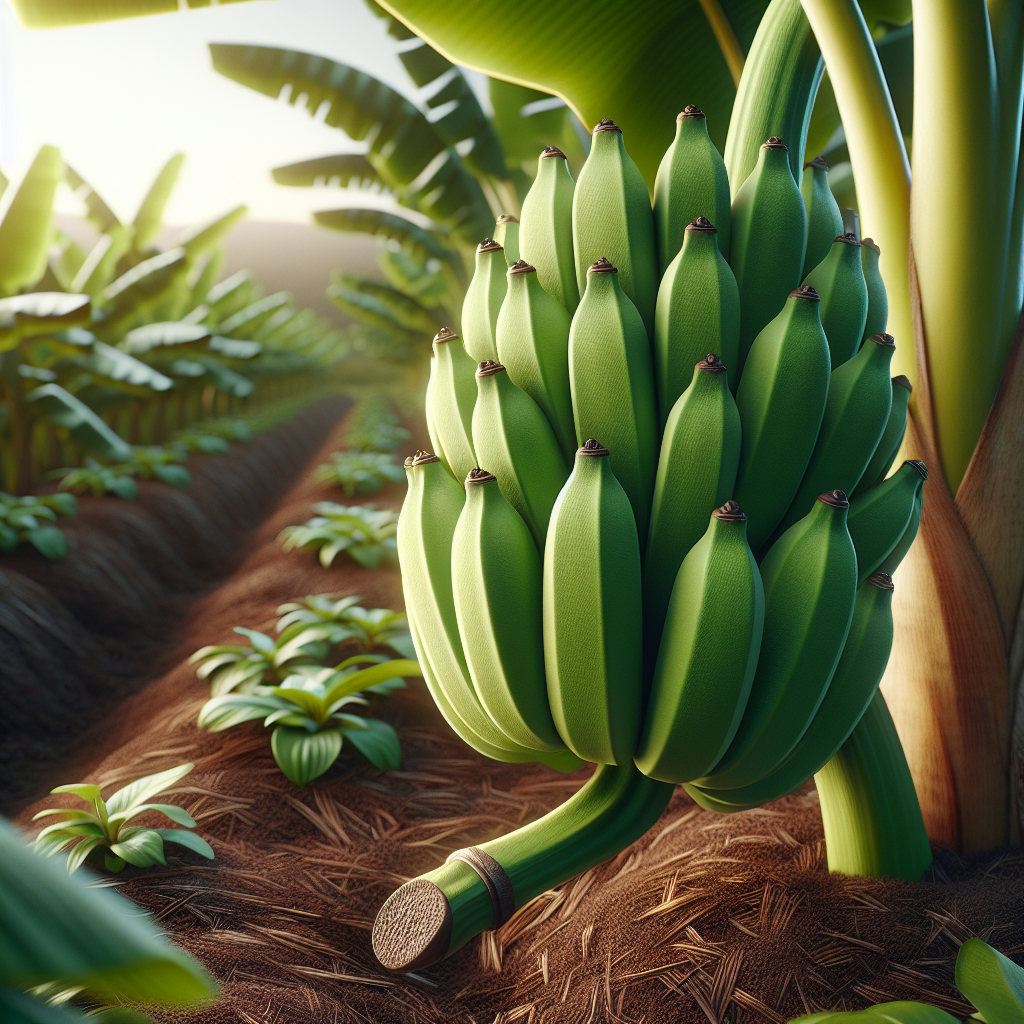
Introduction to Goldfinger Banana
Developed by the Honduran Foundation for Agricultural Research (FHIA), this cultivar is one of the most important modern banana hybrids for growers seeking a productive, resilient alternative to standard supermarket bananas. It was bred from complex Musa parentage with the specific aim of combining dessert quality with resistance to devastating banana diseases, especially Fusarium wilt and black Sigatoka. In practical terms, that means a plant that can produce attractive, flavorful fruit under conditions where more disease-prone cultivars may struggle.
Goldfinger is often described as an apple-banana type in flavor: sweet, aromatic, and slightly tangy when fully ripe, with firmer flesh than many Cavendish selections. The fruit is typically shorter and thicker than commercial export bananas, and the peel often develops a rich yellow color with a faint gold cast as it ripens. For growers, its biggest advantages are vigor, tolerance of disease pressure, and suitability for backyard, homestead, and diversified farm systems. For comparison with a more common supermarket type, see Dwarf Cavendish Banana.
From a management standpoint, Goldfinger should still be treated as a high-demand tropical crop. Disease resistance does not mean neglect tolerance. It requires fertile soil, constant moisture without stagnant water, heavy feeding, wind protection, and canopy management to reach its full potential. When these needs are met, it is capable of producing large bunches with good hand fill and reliable ratoon crops.
Botanical Profile of Goldfinger Banana
This cultivar belongs to the genus Musa and is commonly referred to by its breeding code FHIA-01. It is a hybrid dessert banana, not a true tree, but a giant perennial herb. What appears to be a trunk is actually a pseudostem formed by tightly wrapped leaf sheaths. The true stem is an underground corm, from which roots and suckers emerge.
Goldfinger is generally considered an AAAB-type hybrid in genomic background, which helps explain its combination of dessert quality and improved resilience. Plants are usually medium to tall, often reaching 10 to 14 feet (3 to 4.3 m) under good conditions, though local climate, nutrition, and water supply can shift this range. Leaves are broad, bright green, and easily torn by strong wind, which is normal in bananas and not necessarily a sign of poor health unless shredding is severe enough to reduce photosynthetic area.
The root system is fibrous and relatively shallow, with most active feeder roots concentrated in the top 12 to 24 inches (30 to 60 cm) of soil, spreading well beyond the pseudostem. That shallow rooting pattern explains why mulching, steady irrigation, and avoidance of cultivation injury are so important. Plants produce successive suckers from the corm; one of these becomes the follower that fruits after the mother plant completes its cycle.
Inflorescence emergence usually occurs once the plant has produced an adequate number of healthy leaves and accumulated enough reserves. The flower stalk emerges through the center of the pseudostem and bends downward as the bunch develops. Female flowers form the edible fruits in upper hands, while male flowers may continue lower on the rachis. Depending on climate, nutrition, and planting material size, the first crop may be harvested roughly 11 to 16 months after planting, with ratoon crops often faster.
A notable advantage of Goldfinger is its relative resistance to black Sigatoka and tolerance to some strains of Fusarium wilt. That has made it significant in breeding and sustainable banana production systems. However, resistance is never a guarantee against every pathogen, especially where drainage, sanitation, or planting stock quality are poor.
Soil, pH, and Climate Requirements for Goldfinger Banana
Goldfinger performs best in deep, organically rich, well-drained loam or sandy loam with high moisture-holding capacity and excellent aeration. Ideal soil pH is generally 5.5 to 7.0, with best nutrient availability often occurring around 6.0 to 6.5. It tolerates slightly more acidity than many orchard crops, but if pH drops below about 5.2, calcium, magnesium, and phosphorus availability can become limiting, while manganese and aluminum may become excessive in some soils.
Drainage is non-negotiable. Banana roots need continuous moisture, but they decline rapidly in anaerobic soil. If water stands around the root zone for more than 24 to 48 hours, root suffocation, corm rot, and toppling risk increase sharply. In heavy clay, raised beds or mounds 12 to 18 inches high are strongly recommended. In sandy soils, large additions of composted organic matter help buffer rapid drying and nutrient leaching.
Climate-wise, Goldfinger prefers humid tropical to warm subtropical conditions. Optimal growth occurs between about 78 and 90°F (26 to 32°C). Growth slows below 60°F (16°C), leaf production becomes sluggish, and bunch filling can stall in prolonged cool weather. Chilling injury may begin in the low 50s°F (around 10 to 12°C), and frost can severely damage or kill foliage and pseudostems. In marginal subtropical regions, choose the warmest microsite available: south-facing exposure, reflected heat from walls, and wind shelter can make a major difference.
Annual rainfall of 60 to 100 inches (1,500 to 2,500 mm), well distributed, is ideal, but irrigated production can succeed with less. What matters is consistency. The crop performs poorly under repeated dry-wet extremes. Long dry spells followed by heavy irrigation often cause leaf edge burn, slowed growth, and uneven fruit filling. Soil should remain evenly moist to a depth of 12 to 18 inches in the active root zone. A practical benchmark is to keep soil near field capacity without saturation: moist enough that a squeezed handful from root depth holds shape lightly, but not so wet that water drips out or the soil smears into a sticky mass.
Wind is a major limiting factor. Because Goldfinger can carry substantial bunch weight, exposed sites increase the risk of snapped pseudostems and shredded leaves. Windbreaks, staggered planting, and support props become increasingly important as flowering approaches. If you are building long-term fertility before planting, the principles in soil health strategies are especially valuable for bananas, which are among the heaviest feeders in small-scale fruit production.
Step-by-Step Planting & Propagation
Start with clean, vigorous planting material. The best options are tissue-cultured plants from reputable nurseries or sword suckers taken from healthy, disease-free mats. Sword suckers are preferred over water suckers because they have narrow juvenile leaves early on and a stronger corm connection, leading to more vigorous establishment. Avoid propagules from plants showing wilt, severe nematode damage, virus-like streaking, or corm rot.
- Choose the site. Select full sun, good airflow, and protection from prevailing winds. Avoid frost pockets, low spots that flood, and ground previously planted to diseased bananas unless thoroughly assessed.
- Prepare the soil. Clear perennial weeds, loosen the top 18 to 24 inches if compacted, and incorporate generous organic matter. A practical pre-plant amendment per hole or mound may include 20 to 40 lb (9 to 18 kg) of well-rotted compost plus balanced mineral amendments based on a soil test.
- Set spacing. For home and small farm plantings, 10 to 12 feet (3 to 3.7 m) between mats is a workable standard. Tighter spacing increases humidity and disease pressure; wider spacing improves access and bunch development.
- Dig and mound. Plant in a broad hole or raised mound rather than a narrow pit. The final root zone should shed excess water while still holding moisture.
- Trim and sanitize suckers if used. Remove damaged roots and pare any suspicious tissue from the corm until only clean, white tissue remains. In some systems, corms are briefly hot-water treated or dipped in approved biologicals to reduce pest carryover.
- Plant at proper depth. Set the corm so the top sits just at or slightly above surrounding soil level. Do not bury the pseudostem deeply; excessive burial invites rot.
- Water in thoroughly. Saturate the planting area once to settle soil around the corm, then shift to frequent light-to-moderate irrigation until active new growth begins.
- Mulch immediately. Apply 4 to 8 inches (10 to 20 cm) of coarse organic mulch, keeping it a few inches away from direct contact with the pseudostem.
Tissue-culture plants need extra hardening. They should be acclimated gradually to full sun and wind before field planting. Their early root systems are smaller and less resilient than sword suckers, so the first 6 to 8 weeks require especially careful moisture management.
Care & Maintenance regimes for Goldfinger Banana
Nutrient demand is high from establishment through bunch filling. Goldfinger responds particularly well to steady supplies of nitrogen and potassium, with adequate magnesium, calcium, and sulfur. Potassium is critical for fruit size, bunch weight, plant vigor, and stress tolerance. A deficiency typically shows as yellowing and scorching along older leaf margins, weak bunch fill, and reduced tolerance to drought and disease.
For small-scale production, fertilize lightly but often rather than applying large infrequent doses. Young plants can receive a balanced fertilizer every 4 to 6 weeks during warm active growth. Mature bearing plants generally need heavier feeding, especially once pseudostems approach flowering size. Organic programs often rely on compost, composted manure, feather meal, fish-based inputs, sulfate of potash, kelp, and magnesium sources such as kieserite or Epsom salt where soil tests justify them. Keep high-salt materials away from direct pseudostem contact.
Irrigation should aim for consistently moist, oxygenated soil. In hot weather, established plants may require the equivalent of 1.5 to 2.5 inches (38 to 64 mm) of water per week, sometimes more in sandy soils or windy sites. Drip or micro-sprinkler systems are ideal because they maintain even root-zone moisture while reducing runoff. Signs the plant is too dry include slowed leaf emergence, folded leaves during the morning, crisping leaf margins, narrow fruit fingers, and delayed flowering. Signs of overwatering include persistent soil sourness, yellow lower leaves without nutrient explanation, weak upright growth, corm softening, fungus gnat or mosquito prevalence, and a plant that rocks easily because roots have deteriorated.
Mulching is one of the highest-value practices in banana culture. A deep mulch layer moderates soil temperature, suppresses weeds, feeds soil biology, and reduces evaporation. Chopped banana leaves and spent pseudostems can be returned to the mat if disease pressure is low, creating a nutrient-cycling system. Keep the center open enough to inspect for rot and pests.
Desuckering is essential. Maintain one bearing mother plant, one strong follower, and one young sucker per mat in most systems. More than that creates competition, smaller bunches, and a congested humid canopy. Remove unwanted suckers by cutting them at ground level and destroying the growing point, repeating if regrowth occurs.
Leaf management should be conservative. Remove only dead, broken, or severely diseased leaves. Healthy green leaf area is directly tied to bunch fill. At flowering, a vigorous plant should retain as many functional leaves as possible; severe pruning reduces carbohydrate supply.
Propping becomes necessary when bunches develop. Use bamboo poles, forked wooden props, or padded supports under the bunch-bearing side to prevent snapping. In windy areas, tie supports securely but avoid girdling the pseudostem.
After harvest, cut down the spent mother pseudostem and chop it for mulch unless disease concerns suggest removal. This helps the follower take over rapidly. In cool regions, pseudostem height and the health of the follower entering winter will largely determine the next season's success.
Pests, Diseases & Organic Management
Goldfinger's reputation for disease resistance is deserved, but no banana is maintenance-free. The main pest complex still includes banana aphids, spider mites in dry conditions, mealybugs, scale insects, corm weevils, and plant-parasitic nematodes. banana aphids are particularly important because they can vector banana bunchy top virus in affected regions. Even if virus pressure is absent locally, aphid populations should be suppressed early.
Organic management begins with prevention: clean planting material, weed control around the mat, good airflow, regular removal of dead sheaths that shelter pests, and balanced fertility. Excess nitrogen with inadequate potassium often produces lush, pest-attractive growth. Beneficial insects, insecticidal soaps, horticultural oils, neem-based products, and strong water sprays can all help manage soft-bodied pests if applied thoroughly and at appropriate temperatures.
corm weevils cause hidden but serious injury. Adults lay eggs near the base, and larvae tunnel through corm tissue, weakening plants and predisposing them to toppling. Sanitation is key: use clean propagules, remove harvested residues promptly, and trap adults with cut pseudostem pieces that are checked and destroyed regularly.
Nematodes damage roots, reducing nutrient uptake and anchorage. Affected plants may look underfed even when fertility is adequate and may topple under bunch weight. Organic suppression includes clean planting stock, heavy mulching, crop sanitation, and adding biologically active organic matter. In badly infested ground, rotating away from bananas before replanting is often more effective than trying to rescue a declining mat.
Among diseases, black Sigatoka and yellow Sigatoka are major foliar threats in humid areas. Goldfinger has useful resistance, but prolonged leaf wetness, overcrowding, and neglected sanitation can still allow infection pressure to build. Symptoms include streaking and necrotic lesions that progressively reduce green leaf area. Remove the worst infected leaves, avoid overhead irrigation late in the day, maintain spacing, and keep nutrition strong.
Fusarium wilt remains one of the most feared banana diseases globally. Goldfinger shows tolerance to some important races, but poorly drained soils and infected planting material still create risk. Watch for one-sided yellowing, progressive wilting, vascular discoloration in cut pseudostems, and eventual collapse. Once a plant is infected, cure is not realistic. Immediate rogueing, strict tool sanitation, and avoidance of moving contaminated soil are critical.
bacterial soft rots and crown rots are usually associated with waterlogging or injuries. They present as foul-smelling, soft tissue at the corm or pseudostem base. Correct drainage immediately and remove severely affected plants. Clean cutting tools between mats.
Birds, squirrels, bats, and raccoons may also attack ripening bunches. Physical bunch covering with breathable sleeves or mesh can reduce damage while improving fruit finish.
Harvesting, Curing & Optimal Storage
Harvest timing depends on intended use and market distance. For home use, bunches can be left on the plant until fruits are full, rounded, and beginning to lose angularity. The floral ends dry, fingers plump noticeably, and peel color may lighten. For local sale, harvest when fruits are mature but still green-firm, before full ripening begins.
Goldfinger fruit tends to develop best flavor when allowed to ripen off the plant after full physiological maturity. Immature harvest leads to poor sweetness, chalky texture, and uneven ripening. A mature bunch generally has well-filled fingers on the middle hands, minimal sharp edges, and a robust, heavy feel.
Use a two-person harvest method for full bunches. One person supports the bunch while the other cuts the pseudostem partially to lower it gradually, then severs the bunch stalk cleanly. Avoid dropping or bruising fruit; bananas show handling damage later as blackened peel and soft spots.
After harvest, hang bunches or separate hands carefully. Wash only if necessary and only with clean water, then dry fully before storage. In humid tropical settings, do not stack fruit tightly while wet, as this encourages crown rot and peel spotting.
Bananas are not typically cured like onions or sweet potatoes, but a short conditioning period in shade with good airflow helps field heat dissipate and latex dry at the cut ends. Store mature-green fruit at about 56 to 60°F (13 to 16°C) if possible. Colder temperatures can cause chilling injury: dull peel color, poor ripening, smoky discoloration, and off-flavors. Fully ripe fruit stores best around room temperature and should be consumed quickly.
To ripen fruit evenly, keep hands at 68 to 75°F (20 to 24°C) with moderate humidity and away from direct sun. Ethylene from nearby ripe fruit can accelerate ripening. Once yellow, fruit quality is best within a few days, though Goldfinger often holds texture better than softer dessert bananas.
Companion Planting for Goldfinger Banana
The best companions are shallowly competitive, soil-protective, and ecologically useful species that support moisture retention, beneficial insects, and nutrient cycling without crowding the banana mat. Ground-level companions are especially valuable because banana roots occupy the upper soil layers and benefit from cooler, covered soil.
Clover is one of the most useful understory companions where rainfall or irrigation is adequate. It acts as a living mulch, reduces erosion, supports pollinators when allowed to flower, and contributes biologically fixed nitrogen to the system over time. Keep it trimmed around the immediate pseudostem base so it does not create excessive humidity right against the plant.
Ginger is another strong partner in tropical polycultures. It appreciates partial shade during the hottest part of the day, occupies a different visual layer than banana, and helps turn underused humid ground into productive space. Because both crops enjoy moisture and organic matter, they pair well under fertile management. Maintain enough spacing to allow air movement and easy inspection at the base of the mat.
Turmeric works similarly to ginger, performing well in filtered light and richly mulched soils. Its broad leaves help cover soil, suppress weeds, and diversify production from a single block. Harvest timing can be coordinated so the banana mat remains accessible.
Nasturtium is especially useful in garden-scale plantings. It can function as a soft trap crop for aphids, attracts beneficial insects, and creates a low-growing cover near the edge of the banana root zone. Use it where drainage is good and prune as needed so it does not smother young banana suckers.
Avoid aggressive companions that demand deep digging, heavy root disturbance, or intense light and nutrient competition directly at the mat center. Large annuals planted too close can reduce banana vigor more than they help. The most effective banana companion systems are layered, mulch-heavy, and intentionally managed rather than left to become crowded.