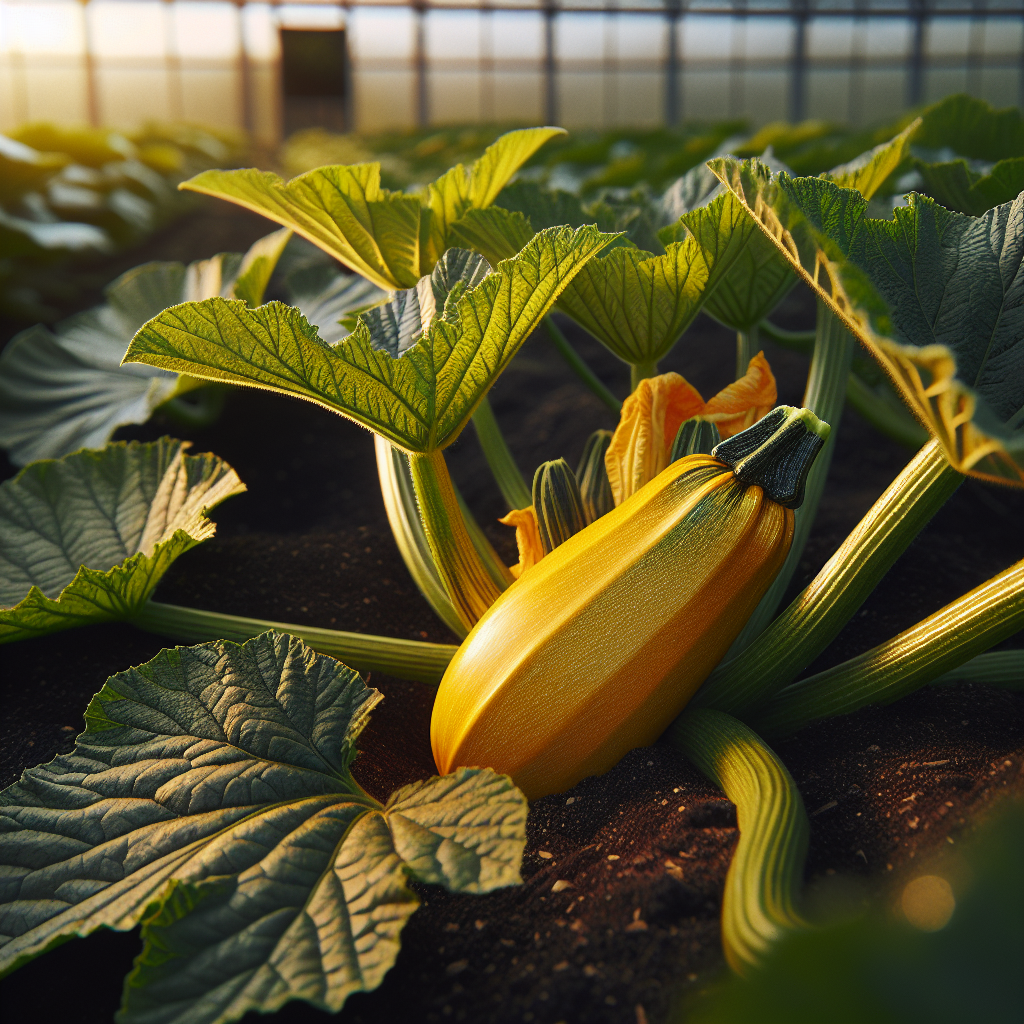
Introduction to Golden Zucchini
A yellow-fruited form of summer squash, this crop belongs to the same species as many other bush squashes and is grown for immature fruits harvested while the rind is still tender. Its color is not merely ornamental: the golden skin makes fruit easier to spot beneath the canopy, reducing oversized harvests and improving picking efficiency in both home gardens and market plots.
Golden zucchini is usually classified as a bush-type summer squash rather than a vining winter squash. Most cultivars mature quickly, often producing first harvests about 45 to 60 days after sowing under favorable temperatures. Fruits are best known for their smooth skin, straight to slightly tapered shape, creamy-white flesh, and delicate flavor that is often described as a little sweeter and less grassy than standard dark green zucchini.
Historically, zucchini itself is a relatively modern selection of squash, developed from older New World squashes after their movement into Europe. Italian breeding and selection strongly shaped the modern zucchini types now common worldwide. Golden-fruited selections emerged later as specialty market and garden varieties, valued for visual appeal, culinary versatility, and mixed-harvest sales alongside green forms. In professional production, they are particularly useful for color-diverse boxes and fresh-market displays.
For growers, the main advantage of this crop is speed. It establishes fast, flowers early, and can yield continuously if fruit is harvested frequently. The main challenge is equally typical of summer squash: once the plant starts producing, missed harvests lead to oversized fruit, reduced flowering, and lower overall quality. Success depends on warm soil, uninterrupted growth, pollinator activity, and disciplined picking.
If you want a broader species-level comparison with other summer squash forms, see our Squash guide. For broader fertility strategy, the principles in soil health tips are especially useful for heavy-feeding cucurbits.
Botanical Profile of Golden Zucchini
This crop is a cultivar group within Cucurbita pepo, a highly variable species that also includes pumpkins, some ornamental gourds, and multiple summer squash forms. It is a frost-tender annual with a predominantly bushy growth habit, although internode length can increase under excessive nitrogen, low light, or warm humid conditions.
Plants produce large, lobed leaves with coarse texture and hollow, prickly petioles. The stems and leaf surfaces often bear stiff trichomes that can irritate sensitive skin during harvest. Roots are relatively shallow compared with deep-rooted fruiting crops; most feeder roots occupy the top 20 to 30 cm of soil, which explains why even short dry spells can trigger blossom drop, misshapen fruit, or bitterness.
Like other squash, golden zucchini is monoecious: separate male and female flowers are produced on the same plant. Male flowers appear first on long slender pedicels and mainly provide pollen. Female flowers form closer to the crown and can be identified by the miniature ovary behind the petals. Fruit development requires pollen transfer, typically by bees. Poor pollination leads to fruit that begin enlarging, then yellow unevenly, shrivel at the blossom end, or abort entirely.
The fruit itself is botanically a pepo, a specialized berry with a fleshy interior and seeds developing in a soft placental cavity. For culinary use, it is harvested immature, before seeds harden and before the rind thickens. In golden types, skin color develops early and should be clear yellow to deep golden depending on cultivar. Pale fruit can indicate immaturity, low light, or cultivar variation, while dull, rough skin often indicates overmaturity.
Cultivar differences matter. Some golden zucchinis are selected for classic cylindrical shape; others are slightly club-shaped or have more open plants for easy harvest. Commercially attractive lines tend to combine bright uniform color, reduced striping, and resistance or tolerance to Powdery Mildew. Yield potential is high, but heat stress above optimal ranges can skew the sex ratio toward more male flowers temporarily, delaying heavy fruit set.
Soil, pH, and Climate Requirements for Golden Zucchini
This crop performs best in fertile, fast-draining, moisture-retentive loam with high biological activity. Ideal soil texture is a sandy loam to silty loam enriched with stable organic matter. Heavy clay can work if deeply amended and formed into raised beds, but chronically waterlogged soil sharply increases risk of Damping-off, crown stress, and root disease. Extremely sandy soil warms quickly and encourages early growth, yet it demands more frequent irrigation and closer nutrient monitoring because nitrogen and potassium can leach rapidly.
The preferred soil pH is 6.0 to 7.0, with an optimum around 6.3 to 6.8. Below pH 5.8, nutrient availability becomes less balanced and calcium, magnesium, and phosphorus uptake may be impaired. Above pH 7.2, micronutrients such as iron and manganese can become less available, leading to chlorosis on younger leaves. If the soil test shows acidity, apply agricultural lime well before planting. If the pH is too high, elemental sulfur or acid-forming fertility programs can help, but correction is slower and should be planned months ahead.
Golden zucchini is distinctly warm-season. Seeds germinate best when soil temperatures are 21 to 35°C, with the most reliable emergence near 25 to 30°C. Germination slows dramatically below 16°C, and seed may rot in cold, wet beds. Vegetative growth is strongest when daytime temperatures remain around 22 to 30°C and nights stay above 13°C. Light frost kills plants, and even chill stress above freezing can stall growth, causing pale foliage and delayed flowering.
Choose a site with full sun, ideally at least 8 hours of direct light daily. In cooler regions, the warmest sheltered bed produces the fastest early crop. In hotter inland climates, plants still require full sun, but reflective mulch, intense afternoon heat above 35°C, and desiccating winds can reduce pollinator activity and impair fruit set. Air movement matters: crowded, humid plantings encourage foliar disease, whereas moderate airflow helps leaves dry quickly after dew or irrigation.
Nutrient demand is moderate to high. A soil rich in compost but not overloaded with raw nitrogen is ideal. Excess nitrogen pushes lush leaves at the expense of flowers and can make the canopy more susceptible to Powdery Mildew and aphid buildup. As a target, many growers work in 2.5 to 5 cm of finished compost pre-plant, then supplement according to soil tests. Balanced fertility with good potassium availability supports fruit quality, stem strength, and water regulation.
Step-by-Step Planting & Propagation
Direct sowing is usually preferred because this crop grows rapidly and resents root disturbance. Sow only after all danger of frost has passed and the top 5 to 8 cm of soil has warmed to at least 18°C, preferably higher. In short-season climates, you can start seeds indoors 2 to 3 weeks before transplanting, but use large biodegradable pots or deep cells to avoid circling roots and transplant shock.
Prepare beds by loosening soil 20 to 30 cm deep and incorporating compost plus any pre-plant mineral amendments recommended by a soil test. Raised beds are advantageous where drainage is questionable or spring soil is slow to warm. Shape the bed to allow easy irrigation control and keep the crown area from sitting in pooled water.
For direct sowing, plant seeds 2 to 3 cm deep. Space plants 60 to 90 cm apart in rows 120 to 180 cm apart, depending on cultivar vigor and harvest method. Tighter spacing may work for intensive gardens, but wider spacing improves airflow and reduces foliar disease pressure. In small beds, one plant per 0.75 to 1 square meter is a practical minimum.
When transplanting, harden seedlings off for 5 to 7 days by gradually exposing them to outdoor sun and wind. Transplant when seedlings have 1 to 2 true leaves, before roots become pot-bound. Set them at the same depth they were growing in containers. Water in immediately with enough moisture to settle the root zone, but do not saturate the entire bed for days afterward.
Mulch once the soil is warm. Organic mulches such as straw can suppress weeds and reduce splash-borne disease, but keep mulch a few centimeters away from the crown to avoid stem rot. Plastic mulch is useful in commercial systems for warming soil early and conserving moisture, though irrigation must be managed carefully beneath it.
Succession sowing every 2 to 3 weeks extends harvest and reduces the problem of all plants peaking at once. This is especially valuable because older summer squash plants often decline from disease or borer pressure just as younger successions enter prime production.
Hand pollination is a valid propagation-support technique in low-pollinator settings. Transfer pollen from a freshly opened male flower to the stigma of a newly opened female flower early in the morning. This can substantially improve fruit set during cool, rainy, or excessively hot weather when bee activity is poor.
Care & Maintenance regimes for Golden Zucchini
Consistent soil moisture is one of the most important quality factors. Aim to keep the root zone evenly moist at roughly 60 to 80% of field capacity rather than cycling between drought and saturation. In practical terms, the top 2 to 3 cm of soil may dry slightly between irrigations, but the soil below that should remain cool and lightly damp, not dusty and not sticky. A simple hand test works well: squeeze soil from 10 cm depth. It should hold together loosely, then break apart with a tap. If it forms a wet ribbon or smells sour, it is too wet; if it will not cohere at all, it is too dry.
Most plantings need about 2.5 to 4 cm of water per week, but actual demand rises sharply during fruiting and in hot, windy conditions. Drip irrigation is strongly preferred. It keeps foliage dry, reduces mildew pressure, and supplies water steadily to shallow roots. In sandy soil during peak summer, daily or every-other-day irrigation may be necessary in short durations. In heavier loam, deeper irrigation 2 or 3 times weekly may suffice.
Signs of underwatering include midday wilting that persists into evening, dull gray-green leaves, slow fruit expansion, blossom drop, and fruit with constricted necks or bitter flavor. Signs of overwatering include limp but not dry foliage, yellowing lower leaves, edema-like blistering, soft stem bases, algae or fungus gnat activity near the crown, and reduced vigor despite adequate fertility.
Feed the crop in phases. Pre-plant fertility should provide baseline phosphorus and potassium. Once plants begin running into active vegetative growth, side-dress lightly with nitrogen if leaf color is pale or growth is slow. A second side-dress when first fruits set often improves sustained yield. Avoid repeated heavy nitrogen applications; they can delay female flowering and produce excessive canopy. Compost tea or fish-based liquid feeds may be used carefully, but they should supplement, not replace, a soil-based fertility plan.
Weed control is most important early. Because roots are shallow, cultivate very lightly and avoid hoeing deeply near the crown. Mulch, stale seedbeds, and hand weeding are safer than aggressive cultivation. Once the canopy closes, weed pressure usually drops.
Remove senescent or heavily diseased leaves during the season, but do not over-prune. The plant needs substantial leaf area to support continuous fruiting. If pruning is necessary, cut leaves cleanly at the petiole base and harvest during dry weather to reduce disease spread.
Pollination management is essential. Female flowers often open for a single morning. Encourage bee activity by avoiding insecticide sprays during bloom and maintaining flowering companion species nearby. Poorly pollinated fruit tend to be bulbous at one end, undersized, or aborted. If repeated abortion occurs despite adequate moisture, check for a lack of pollinators before increasing fertilizer.
Pests, Diseases & Organic Management
The most destructive insect pest in many regions is the Squash Vine Borer, whose larvae tunnel in stems, causing sudden wilt even in moist soil. Golden zucchini, like many bush Cucurbita pepo types, can be highly susceptible. Watch for frass at the crown and small holes in stems. Organic management includes row covers placed immediately after planting and removed at flowering for pollination, or hand pollination while covers remain in place. Some growers wrap the lower stem with foil or fabric collars to deter egg laying. Successive sowings also help outpace losses.
Squash Bugs are another major pest. Both nymphs and adults suck sap, causing stippling, yellowing, and eventual leaf collapse. They also vector disease organisms. Scout undersides of leaves for bronze egg clusters and crush them early. Remove plant debris where adults hide. Hand collection in the cool morning is effective in small plantings.
Cucumber Beetles feed on leaves and flowers and can spread Bacterial Wilt. Seedlings are especially vulnerable. Floating row cover provides strong early protection. Yellow sticky traps can help monitor populations but should not be relied on alone. Good sanitation and crop rotation reduce carryover pressure. Because Bacterial Wilt can rapidly destroy plants, removing infected vines promptly may protect the rest of the block. Related cucurbits such as Cucumber can share similar pest pressure, so avoid clustering susceptible crops too tightly season after season.
Aphids may build on tender growth, especially under high nitrogen fertility. They distort leaves and excrete honeydew that encourages sooty mold. Strong water sprays, insecticidal soap, and support for beneficial insects usually keep them below damaging thresholds.
Among diseases, Powdery Mildew is the most common late-season foliar problem. It begins as white powdery patches, typically on older leaves, and gradually reduces photosynthetic capacity. Prevention is better than cure: full sun, wide spacing, drip irrigation, balanced fertility, and removal of badly infected leaves all help. Organic sprays containing potassium bicarbonate, sulfur, or certain biologicals can suppress spread when applied early and repeatedly according to label.
Downy Mildew is less common in some regions but more destructive when present, causing angular yellow lesions and gray-purple sporulation beneath leaves. It spreads rapidly in cool, humid conditions. Improve airflow and remove infected foliage quickly.
Root Rots and Damping-off occur mainly in cold or saturated soils. The solution is cultural: warm soil, good drainage, clean seed, and restraint with irrigation. Blossom end issues are usually pollination- or moisture-related rather than the classic calcium deficiency seen in some other crops.
Crop rotation is foundational. Avoid planting this crop or close cucurbit relatives in the same bed more than once every 2 to 3 years where disease or borer pressure is high. Clean up vines immediately after final harvest so pests do not mature and overwinter in residue.
Harvesting, Curing & Optimal Storage
Harvest begins when fruits are still immature and glossy, generally 15 to 20 cm long for standard cylindrical types, though baby fruit can be cut smaller for premium markets. At this stage, the skin is tender enough to mark with a fingernail and seeds are soft, small, and barely developed. Waiting too long reduces eating quality and suppresses further production because the plant shifts energy toward seed maturation.
Pick every 1 to 2 days during peak season. In warm weather, fruit can move from ideal size to oversized in less than 48 hours. Use a knife or pruners rather than twisting aggressively, which can tear stems or damage the crown. Handle fruits gently; although the skin is firmer than it looks, abrasions shorten shelf life and invite decay.
Field heat should be removed promptly after harvest. Keep harvested fruit shaded and out of direct sun. Washing is acceptable if necessary, but fruit must be dried thoroughly before packing. Unlike winter squash, this crop is not cured in the traditional sense. There is no need for warm hardening; in fact, prolonged warmth after harvest speeds dehydration and quality loss.
Ideal storage conditions are about 7 to 10°C with relative humidity around 90 to 95%. Below about 5°C, chilling injury may appear as pitting, translucent flesh, water-soaked spots, and rapid breakdown after removal from storage. At room temperature, quality falls quickly, often within a few days. Under ideal cool storage, most fruit hold marketable quality for 1 to 2 weeks, though best flavor and texture are within the first several days.
Do not store with ethylene-sensitive greens in warm conditions, and avoid stacking fruit too deeply in bins because pressure bruising leads to soft spots. Oversized fruits can still be used for stuffing, bread, or seed saving, but they are no longer prime market zucchini. If saving seed from open-pollinated lines, allow fruits to mature fully on the plant until the rind hardens and color deepens, then cure and process seeds separately from food-use harvests.
Companion Planting for Golden Zucchini
The most useful companions are those that either improve pollinator traffic, help suppress pest pressure, or occupy different root and canopy zones without creating dense shade. Nasturtium is valuable as a trap and distraction plant for Aphids and as a nectar source around the bed edge. Radish can be used as a quick intercrop early in the season before the squash canopy expands. Thyme works well along borders, where its aromatic growth can attract beneficial insects while not competing heavily with the squash root zone.
Some growers also pair summer squash with low-growing legumes or flowering insectary strips, but spacing is critical. Companion plants should never obstruct airflow around the squash crown. Avoid tall shading companions on the south side in temperate northern hemisphere gardens, and avoid crowding with other cucurbits if cucumber beetle or mildew pressure is already high.
The classic ecological goals are straightforward: keep pollinators present during flowering, maintain living diversity near the bed, and reduce bare soil without trapping humidity around the plant base. In practice, that means edge companions and nearby strips are better than dense underplanting. Golden zucchini rewards an open, well-managed layout far more than a crowded polyculture.
For commercial or highly productive garden beds, the best companion strategy is often functional rather than decorative: flowering border species, a few fast root crops before canopy closure, and strict sanitation after harvest. The crop itself is vigorous enough that good spacing, moisture control, and pollination usually matter more than elaborate companion schemes.