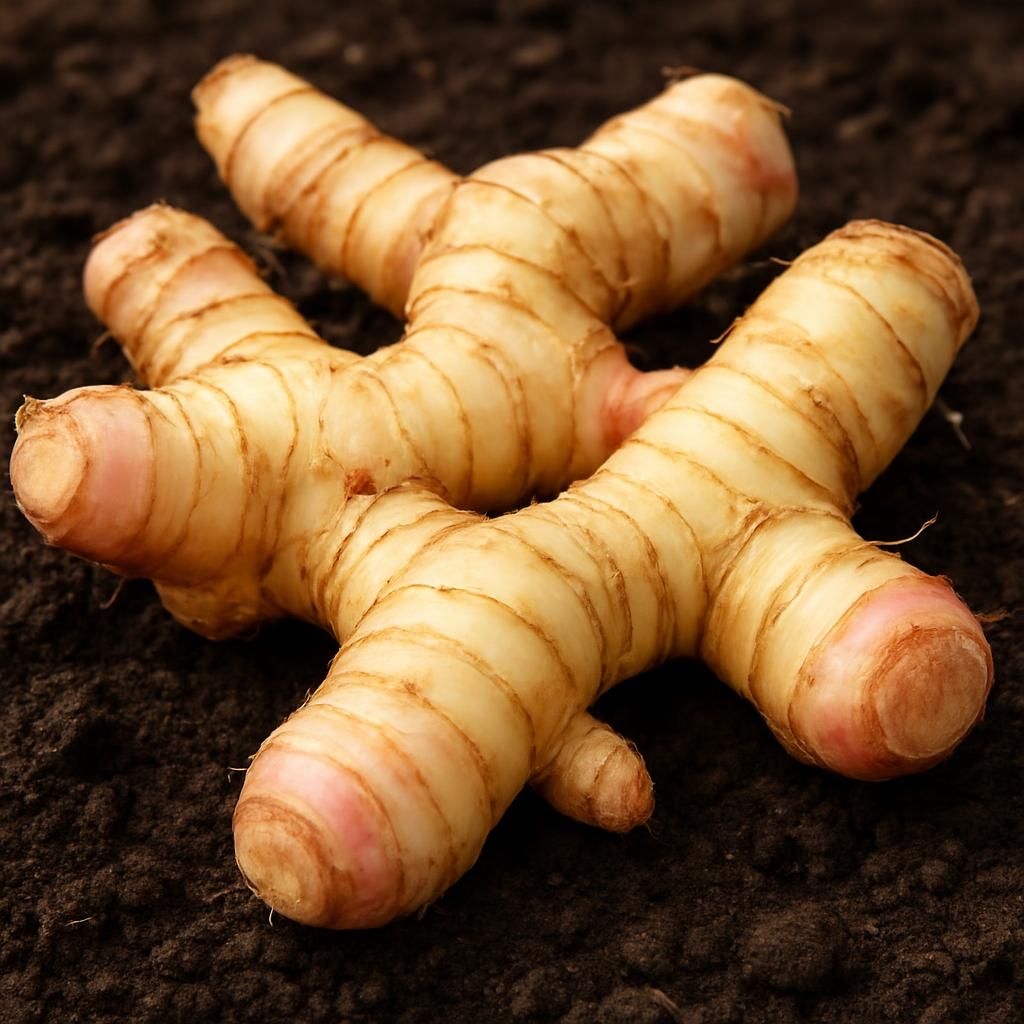
Introduction to Galangal (Lesser)
Lesser galangal (Alpinia officinarum) is a perennial herbaceous plant belonging to the Zingiberaceae family, closely related to Ginger and Turmeric. Native to southern China and parts of Southeast Asia, it has been cultivated for centuries for its flavorful rhizomes that deliver a sharp, spicy, and slightly medicinal taste. The plant produces upright pseudostems reaching 1–1.5 meters in height with narrow lanceolate leaves and terminal inflorescences bearing white or pale pink flowers. Its rhizomes are thinner and more fibrous than greater galangal, making them highly valued in Thai, Indonesian, and Chinese cooking as well as in herbal remedies for digestive and respiratory ailments.
Commercial and home growers appreciate lesser galangal for its relatively compact growth habit and potential as a high-value specialty crop. With increasing demand for authentic Asian ingredients in global markets, many farmers are exploring its cultivation as a profitable diversification option alongside Thai Basil or Cardamom. Success depends on replicating its native tropical understory conditions while implementing rigorous organic practices to maintain soil health and minimize pest pressure.
Botanical Profile of Galangal (Lesser)
Lesser galangal is a rhizomatous perennial that spreads via underground horizontal stems. The plant develops pseudostems composed of overlapping leaf sheaths that emerge from the rhizome buds. Each pseudostem bears 8–12 alternate, sessile leaves that are dark green above and lighter beneath, typically 20–35 cm long. The inflorescence arises terminally on a short scape and consists of a dense spike of tubular white or pinkish flowers subtended by papery bracts.
The rhizomes are the primary economic part: they are cylindrical, 1–2 cm in diameter, with distinct nodes and a pale yellow to reddish-brown exterior. Internally the flesh is cream to pale pink with a fibrous texture and strong aromatic compounds including galangin, kaempferide, and essential oils. Unlike Ginger, the rhizomes remain relatively slender even at maturity, which influences harvest timing and processing methods.
Soil, pH, and Climate Requirements for Galangal (Lesser)
Lesser galangal thrives in fertile, well-structured soils that retain moisture without waterlogging. The plant performs best in loamy or sandy loam soils rich in organic matter. Heavy clay soils should be amended with compost and raised beds to improve drainage. A slightly acidic to neutral pH supports optimal nutrient uptake and rhizome development.
| Parameter | Ideal Range | Notes |
|---|---|---|
| Soil Type | Sandy loam to loam | High organic matter content preferred |
| Soil pH | 5.5 – 6.8 | Avoid alkaline conditions |
| Temperature Range | 22–32 °C day / 18–24 °C night | Frost sensitive below 10 °C |
| Relative Humidity | 70–90 % | Mist or shade cloth helpful in dry periods |
| Annual Rainfall | 1500–2500 mm | Even distribution; supplemental irrigation required in dry seasons |
| Light Requirement | Partial shade (30–50 %) | Full sun acceptable with mulch |
| Elevation | 0–800 m | Higher elevations slow growth |
Adequate warmth is critical; temperatures consistently below 18 °C slow rhizome expansion and increase disease susceptibility. In marginal climates, protective structures or microclimate modification with windbreaks and mulch are recommended.
Step-by-Step Planting & Propagation
- Select healthy, disease-free rhizome sections with at least two viable buds (eyes). Soak in a diluted seaweed solution for 30 minutes to stimulate sprouting.
- Prepare raised beds or containers at least 30 cm deep with a 1:1:1 mix of garden soil, well-rotted compost, and coarse sand or perlite.
- Plant rhizome pieces horizontally 5–8 cm deep and 25–30 cm apart in rows spaced 60–75 cm apart. Firm soil gently and water thoroughly.
- Maintain consistent moisture (field capacity) until shoots emerge in 10–21 days. Apply a 5 cm layer of organic mulch to conserve moisture and suppress weeds.
- In cooler regions, start rhizomes in a greenhouse or polytunnel at 25–28 °C and transplant after the last frost when soil temperature exceeds 20 °C.
Care & Maintenance regimes for Galangal (Lesser)
Regular monitoring of moisture, nutrition, and canopy management ensures vigorous growth and high-quality rhizomes. Mulching with straw, wood chips, or coconut husk maintains soil moisture and moderates temperature fluctuations.
| Task | Schedule | Details |
|---|---|---|
| Watering | Every 2–3 days in active growth | Keep soil evenly moist; reduce slightly during cooler months |
| Fertilizer | Every 4 weeks (Mar–Oct) | Apply balanced organic NPK 5-5-5 or well-rotted manure tea; side-dress with compost at 3-month intervals |
| Pruning | As needed | Remove yellow or damaged leaves; cut spent flowering stems at base to redirect energy to rhizomes |
Avoid over-fertilization, which can lead to lush foliage at the expense of rhizome quality. Foliar applications of diluted fish emulsion or compost tea every 6–8 weeks provide micronutrients and boost plant resilience.
Pests, Diseases & Organic Management
Lesser galangal is susceptible to several common tropical pests and soil-borne pathogens. Aphids and Spider mites may colonize leaf undersides during hot, dry spells, causing stippling and reduced photosynthesis. Root-knot nematodes can distort rhizomes if soil health is poor.
Organic control begins with preventive cultural practices: maintain wide spacing for airflow, rotate with non-host crops such as Rice or legumes, and incorporate neem cake or marigold residues into the soil. For active infestations, release predatory mites or apply insecticidal soap and neem oil sprays at dusk. Soil solarization or biofumigation with mustard cover crops helps suppress nematode populations before planting.
Fungal issues such as Rhizoctonia and Pythium can cause rhizome rot in waterlogged conditions. Improve drainage, avoid overhead irrigation late in the day, and drench soil with beneficial Trichoderma or Bacillus subtilis preparations at planting and during heavy rains.
Harvesting, Curing & Optimal Storage
Rhizomes reach marketable size 8–10 months after planting when foliage begins to yellow and dry. Carefully lift plants with a garden fork, shake off soil, and separate rhizomes from the parent clump. Select prime sections for replanting and cure the remainder by air-drying in shade for 2–3 days to reduce surface moisture.
Store fresh rhizomes in perforated plastic bags at 10–13 °C with 85–90 % humidity for up to three weeks. For longer storage, slice and dry at 40 °C until brittle, then vacuum-seal or store in airtight containers away from light. Powdered galangal retains flavor for 6–12 months when kept cool and dry.
Companion Planting for Galangal (Lesser)
Lesser galangal benefits from strategic companions that improve microclimate, deter pests, or enhance soil biology. Plant Thai Basil or Coriander nearby to attract beneficial insects and mask galangal’s aroma from pests. Leguminous cover crops such as Clover or Pigeon pea fix nitrogen and provide living mulch between rows.
Avoid planting near solanaceous crops that share nematode hosts. Interplanting with Marigold creates a root-exudate barrier that suppresses nematodes while adding vibrant color and pollinator support. In perennial systems, understory planting with Lemongrass or Turmeric can create a layered canopy that moderates temperature and humidity for all species.
For more detailed seasonal planning and soil-health strategies that complement galangal cultivation, see The Hidden Power of Mulching: 8 Organic Strategies to Transform Small Farm Soil.