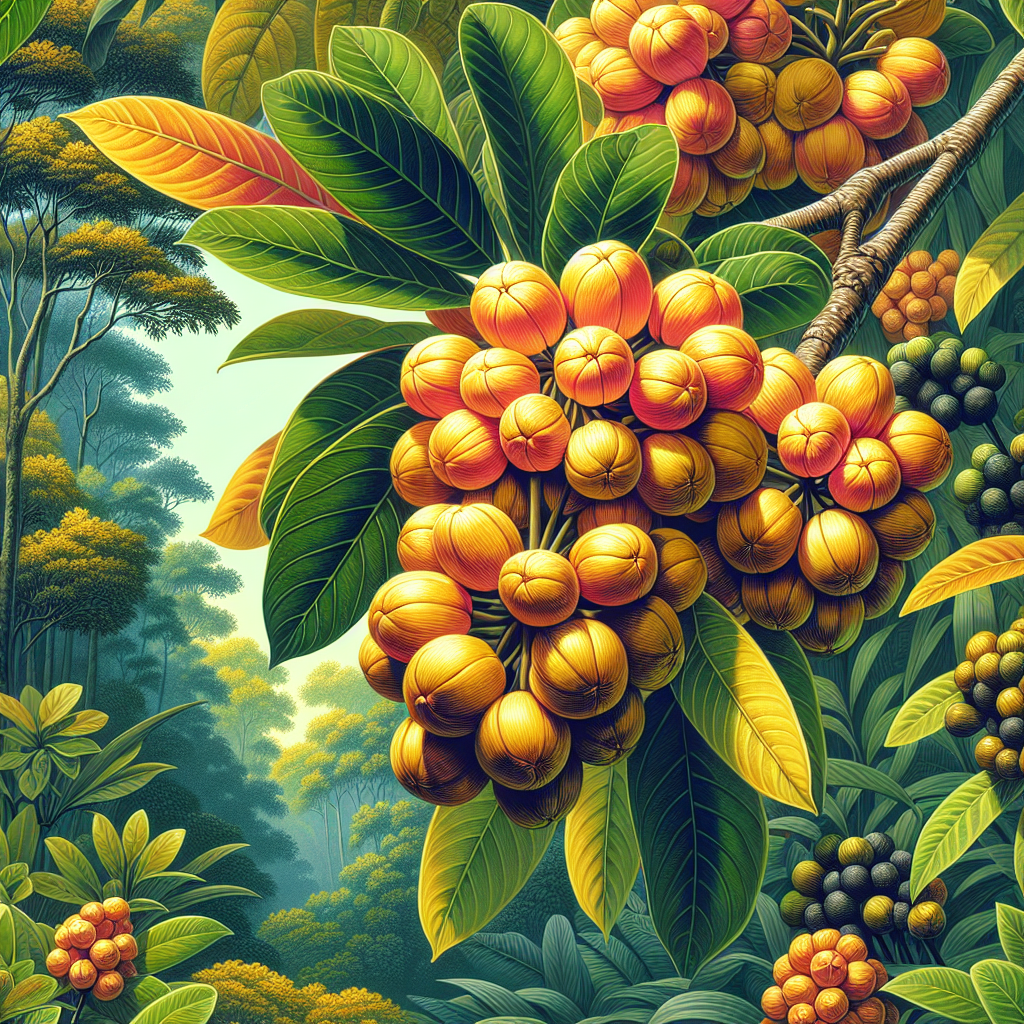
Introduction to Entawak (Artocarpus anisophyllus)
Entawak, scientifically known as Artocarpus anisophyllus, is a majestic tropical tree native to the rainforests of Borneo, particularly thriving in Malaysia, Indonesia, and Brunei. Belonging to the Moraceae family—closely related to jackfruit (Mango (crop)) and breadfruit—this underutilized species offers immense potential for small-scale farmers in humid tropical regions. The tree produces clusters of small, yellowish-orange fruits with a unique anise-like aroma, sweet-tart flavor, and edible seeds rich in protein and oils. Fruits are typically 2-4 cm in diameter, borne on short stalks, and can yield up to 50-100 kg per mature tree annually.
Why grow Entawak? Its resilience to poor soils, drought tolerance once established, and multiple uses make it a smart choice. Young leaves and shoots serve as vegetables, bark yields fiber, and the wood is durable for construction. In agroforestry systems, it provides shade, windbreaks, and income from fruits sold fresh or processed into jams, juices, or snacks. With rising demand for exotic tropical fruits, Entawak can fetch premium prices in local and export markets. This guide equips you with professional techniques for successful cultivation, drawing from ethnobotanical knowledge and modern agricultural practices. For more on tropical fruit diversification, check this Fall Companion Planting Guide: Boost Yields and Soil Health for Small Farms and Gardens.
Botanical Profile of Entawak (Artocarpus anisophyllus)
Artocarpus anisophyllus is an evergreen tree growing 15-30 meters tall with a straight bole and spreading canopy up to 20 meters wide. The leaves are dimorphic: juvenile leaves are large (up to 40 cm long), lobed, and anisophyllous (unequal-sided), while mature leaves are smaller (10-20 cm), entire, leathery, and glossy green. New growth flushes coppery-red, adding ornamental appeal.
Flowers are monoecious: male spikes 5-10 cm long, female heads globular. Pollination occurs via wind and insects, with fruit development taking 3-4 months. Fruits are syncarps—multiple fused ovaries forming a fleshy, fibrous mass surrounding 1-2 cm seeds. Ripe fruits exude latex and have a pineapple-anise scent, with creamy-white pulp tasting like a mix of jackfruit and mango. Seeds are boiled or roasted for a chestnut-like nut.
The tree's deep taproot system enables drought resistance, while buttresses provide stability in wet soils. It flowers year-round in equatorial climates but peaks during dry seasons. Genetic diversity is high in wild populations, with cultivars selected for larger fruits or compact growth. As a pioneer species, Entawak colonizes forest gaps, making it ideal for reforestation and permaculture. Related to Durian (crop), it shares latex production but lacks the intense odor.
Soil, pH, and Climate Requirements for Entawak (Artocarpus anisophyllus)
Entawak thrives in a wide range of soils but prefers deep, well-drained loams with high organic matter. Sandy clay loams or volcanic soils yield best results, mimicking its native ultrabasic (serpentine) habitats. Avoid heavy clays prone to waterlogging, as roots are susceptible to root rot. Soil depth should exceed 1.5 meters for taproot development. Incorporate 20-30% compost or green manure at planting to boost fertility.
Optimal pH is 5.5-7.0, slightly acidic to neutral. Test soil and amend with lime if below 5.0 or sulfur if above 7.5. Entawak tolerates aluminum-rich, low-fertility soils better than many fruit trees, with micronutrient needs met via leaf litter recycling.
Climatically, it demands USDA zones 10b-12, with temperatures 22-35°C (72-95°F) and no frost. Annual rainfall of 2000-4000 mm is ideal, evenly distributed, though it endures 3-4 month dry spells once mature. High humidity (70-90%) promotes growth; full sun (6-8 hours daily) essential for fruiting. Wind protection advised for seedlings. Elevations up to 1000m suit it, with proven adaptability in coastal and inland tropics. For heatwave strategies, see Why Summer Heatwaves Are Silently Killing Small Farm Yields - And 7 Organic Strategies to Fight Back—wait, no, use available blogs. Actually, integrate properly.
Step-by-Step Planting & Propagation
Propagation Methods
- Seeds: Fresh seeds germinate 70-90% in 10-20 days. Extract from ripe fruit, wash off pulp, sow 1-2 cm deep in 50% sand:50% compost mix at 25-30°C. Shade germinants.
- Air-layering: Best for clonal propagation. Select 2-3 year-old branches, girdle, apply rooting hormone, wrap in moist sphagnum moss and plastic. Roots form in 2-3 months.
- Cuttings: Semi-hardwood cuttings (15 cm) with IBA hormone root 40-60% under mist.
- Grafting: Cleft or veneer graft onto rootstock for dwarfing.
Planting Steps
- Site Prep: Clear weeds, dig 60x60x60 cm pits, fill with topsoil + 10 kg compost + 200g rock phosphate + 100g wood ash.
- Timing: Plant at rainy season start.
- Spacing: 10-12m apart (80-100 trees/ha) for full canopy; 6-8m for agroforestry.
- Planting: Set at soil line, firm soil, mulch 10 cm thick with leaves. Stake if windy.
- Initial Care: Water weekly first year; fertilize NPK 15-15-15 monthly.
Transplant 1-2 year seedlings when 1m tall. Expect fruiting in 4-7 years from seed, 2-4 from vegetative.
Care & Maintenance regimes for Entawak (Artocarpus anisophyllus)
Irrigation: Deep water young trees weekly (50-100L); mature trees rainfall-dependent. Drip systems save 30% water.
Fertilization: Annual: 1-2 kg N, 1 kg P, 1.5 kg K per tree, split applications. Foliar micronutrients (Zn, B, Mn) quarterly. Mulch suppresses weeds, retains moisture.
Pruning: Train to single leader, remove deadwood annually post-harvest. Tip-prune for bushiness.
Weeding: Manual or cover crops like Clover (crop) first 3 years.
Growth Stages: Vegetative (0-3 yrs): focus nitrogen. Flowering (3-5 yrs): phosphorus. Fruiting (5+ yrs): potassium + organics.
Monitor for nutrient deficiencies: yellow leaves = N; small fruits = K.
Pests, Diseases & Organic Management
Pests:
- Aphids (pest): Neem oil sprays.
- Fruit flies (pest): Bait traps, sanitation.
- Mealybugs (pest): Introduce ladybugs.
- Shoot borers: Remove infested tips.
Diseases:
- Phytophthora (disease): Improve drainage, copper fungicide.
- Powdery mildew (disease): Sulfur sprays, airflow.
- Anthracnose (disease): Prune, baking soda solution.
Organic IPM: Companion plants like Marigold (crop) repel nematodes. Beneficial insects via flower borders. For advanced tactics, explore Why 90% of Small Farms Fail at Pest Management - And 8 Organic Fixes That Actually Work. Monitor weekly, intervene early.
Harvesting, Curing & Optimal Storage
Harvest when fruits yellow, aromatic, slightly soft—120-150 days post-anthesis. Pick clusters with shears, avoiding latex sap. Yield peaks 10-20 years.
Post-Harvest: Sort, wash gently. Refrigerate fruits at 10-13°C, 85-90% RH for 2-3 weeks. Seeds: Boil 20 min, dry, store cool/dark 6 months.
Process: Juice (yields 60%), dry slices, seed flour. Market fresh or value-added. Cure latex wounds with ash paste.
Companion Planting for Entawak (Artocarpus anisophyllus)
Entawak excels in polycultures. Understory: Ginger (crop), Turmeric (crop), legumes for N-fixation. Shade-tolerant: Pineapple (crop), coffee. Nitrogen-fixers like Pigeon pea (crop) boost soil. Repellents: Thai Basil (crop) vs. aphids. Avoid water-hungry crops. Intercrop rows with short-term annuals years 1-3. Benefits: 20-30% yield increase, biodiversity. Learn more in Why Companion Planting Feels Like Guesswork for Small Farms - And How AI Makes It Foolproof.