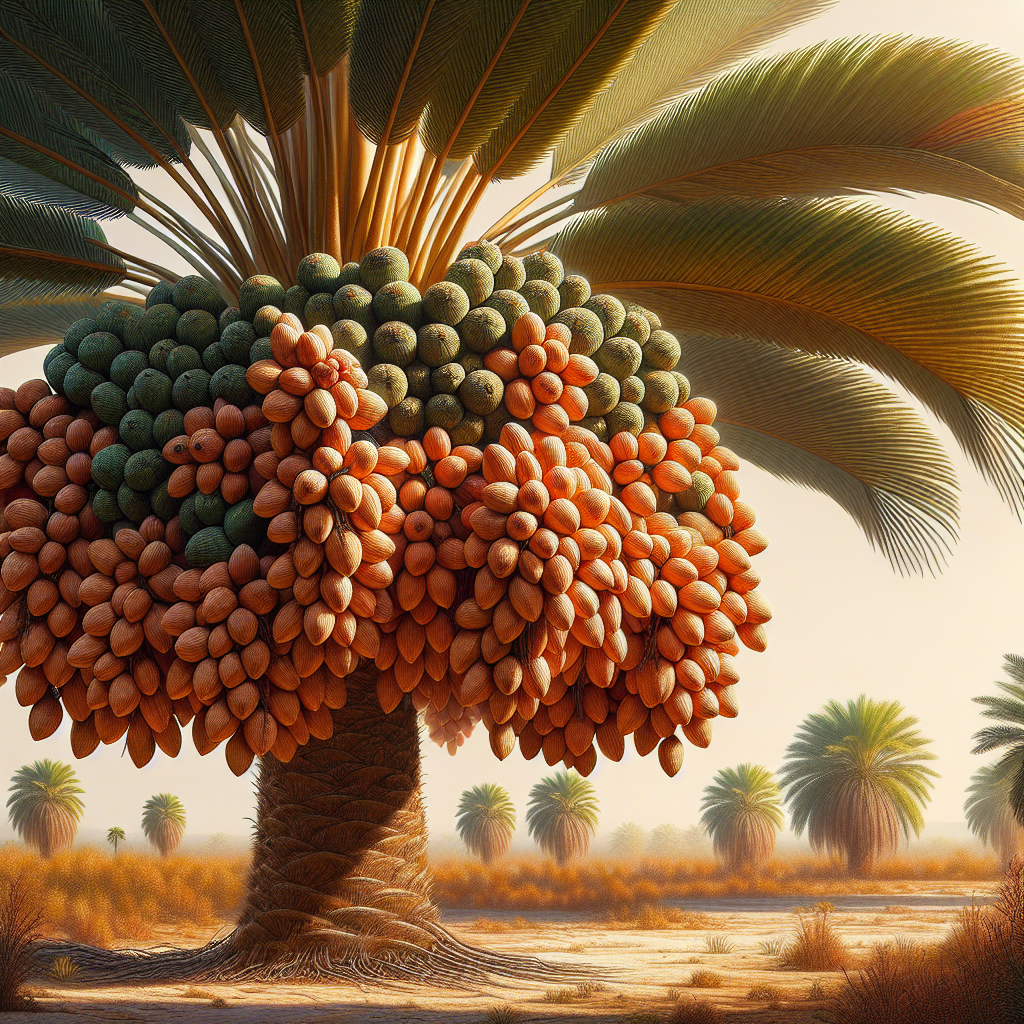
Introduction to Doum Palm (Hyphaene thebaica)
The Doum Palm, scientifically known as Hyphaene thebaica, stands as one of Africa's most iconic and resilient palms, thriving in the harshest desert environments from the Nile Valley to the Sahel region. Often called the gingerbread palm or dum palm, it produces large, orange-brown fruits rich in vitamins, sugars, and antioxidants, traditionally ground into flour or eaten fresh. This slow-growing dioecious palm—requiring both male and female trees for fruit production—can reach 15-20 meters tall with a distinctive forked trunk, making it a long-term investment for agroforestry systems.
Beyond its fruit, the Doum Palm offers multiple economic benefits: leaves for weaving mats and baskets, wood for construction, and sap for beverages. In modern sustainable farming, it's prized for drought tolerance, windbreaks, and soil stabilization in arid zones. With climate change intensifying dry conditions worldwide, cultivating Doum Palm presents opportunities for resilient farming in USDA zones 9-11 or equivalent hot, low-rainfall areas (200-800mm annually). This guide provides professional-grade advice for propagation, care, and harvest, ensuring high yields of this nutrient-dense crop. Expect first fruits in 7-10 years, with trees productive for over 100 years.
Botanical Profile of Doum Palm (Hyphaene thebaica)
Hyphaene thebaica belongs to the Arecaceae family and Hyphaenaceae subfamily, unique for its dichotomous branching—each trunk splits into two, creating a candelabra-like canopy. Mature trees feature rigid, fan-shaped leaves up to 2m long, with fibrous petioles armed with spines. Male and female flowers grow on separate trees: males in dense inflorescences producing pollen, females yielding heavy clusters of 5-8 cm oval fruits with thick, fibrous husks encasing sweet, date-like flesh around a hard seed.
Roots are extensive and shallow, adapted for tapping deep groundwater, while the palm tolerates salinity and alkalinity. Fruits mature in 6-8 months, with each tree potentially bearing 200-400 kg annually once mature. Nutritionally, Doum fruit boasts high fiber (15-20%), vitamin C, and iron, rivaling date palm varieties but with superior drought resistance. Growth is slow: 30-50 cm/year initially, accelerating in optimal conditions. This palm's ethnobotanical significance spans millennia, used by ancient Egyptians for food and crafts.
Soil, pH, and Climate Requirements for Doum Palm (Hyphaene thebaica)
Doum Palm excels in marginal soils unsuitable for most crops, preferring deep, sandy loams or alluvial silts with excellent drainage to prevent root rot. It thrives in pH 7.0-8.5 (slightly alkaline to saline), tolerating up to 10 dS/m soil salinity—ideal for saline coastal or irrigated desert farms. Avoid heavy clays; amend with 30-50% sand or gypsum if needed for aeration.
Climatically, it demands hot, arid conditions: daytime temps 30-45°C, minima above 10°C, and low humidity. Annual rainfall of 100-600mm suffices, supplemented by flood or drip irrigation during establishment (first 3-5 years). Full sun (8+ hours) is essential; wind protection aids young palms. In subtropical zones like southern California or Australian outback, it mirrors native habitats. Soil preparation: test for nematodes and root-knot nematodes; incorporate 10-20 kg well-rotted manure per pit for micronutrients. For more on building resilient soils in heatwaves, see Why Summer Heatwaves Are Silently Killing Small Farm Yields - And 7 Organic Strategies to Fight Back. Mulch with gravel to conserve moisture and suppress weeds.
Step-by-Step Planting & Propagation
Propagation is primarily by seed, as Doum Palm resists cuttings. Fresh seeds germinate best (60-80% rate); dry storage halves viability.
- Seed Collection & Prep: Harvest ripe fruits (orange-brown, firm), remove husks, soak seeds 48 hours in water (change daily), then scarify by nicking endocarp.
- Germination: Sow in 20cm pots with 1:1 sand:loam at 30-35°C. Cover lightly; germinate in 2-8 weeks. Use bottom heat if below 25°C.
- Seedling Care: Transplant to larger pots at 30cm height (6-12 months). Harden off gradually.
- Site Selection: Space 8-12m apart in full sun, dug 1x1x1m pits. Plant in rainy season or with irrigation.
- Planting: Place at soil line, stake if windy. Ensure 1:1 male:female ratio for pollination. Irrigate deeply weekly first year (50-100L/tree).
Grafting rare but possible onto rootstock for faster fruiting. Offshoots from forked trunks viable at 2-3 years. Survive transplant shock with shade cloth 50% for 3 months. Read more on winter sowing techniques adaptable here.
Care & Maintenance regimes for Doum Palm (Hyphaene thebaica)
Water sparingly post-establishment: 1-2 deep irrigations/month in dry seasons, mimicking flash floods. Fertilize annually with palm formula (N-P-K 8-2-12 + Mg, micronutrients) at 1-2kg/tree, split applications. Prune dead fronds only; avoid topping to prevent disease entry.
Weed control critical first 3 years—mulch or shallow hoe. Monitor for nutrient deficiencies: yellowing indicates iron/manganese lack in high pH; foliar spray chelates. Thin fruit clusters if overloaded for size. In agroforestry, integrate with nitrogen-fixers. Mature trees self-maintain, living 200+ years. For pest-resilient timing, check Why Timing Kills Small Farm Profits - And How AI Task Scheduling Saves Your Harvests—principles apply universally.
Pests, Diseases & Organic Management
Common pests: Red palm weevil (drill trunk—inject neem oil, trap pheromones); rhinoceros beetle (remove larvae, entomopathogenic nematodes); scale insects (horticultural oil sprays). Diseases include bud rot (Phytophthora palmivora)—improve drainage, copper fungicide; leaf spots (anthracnose)—remove debris, potassium phosphite.
Organic IPM: Introduce predatory beetles, birds; companion with neem trees. Scout weekly; avoid overhead watering. Termites: solarize soil, beneficial fungi. For broader strategies, explore Why 90% of Small Farms Fail at Pest Management - And 8 Organic Fixes That Actually Work. Resistant varieties scarce; hygiene key.
Harvesting, Curing & Optimal Storage
Harvest when fruits orange-brown, 6-8 months post-pollination. Use poles or ladders for clusters (20-50kg/tree). Cut with secateurs; handle gently to avoid bruising.
Curing: Air-dry in shade 3-7 days to 15% moisture, enhancing flavor. Fruits store 6-12 months at 10-15°C, 60-70% RH. Grind dry flesh for flour (shelf-stable 2 years). Fresh: refrigerate 4°C up to 1 month. Process into juice, jam, or powder for markets. Yields peak at 300kg/tree; post-harvest losses minimized by ethylene-free storage.
Companion Planting for Doum Palm (Hyphaene thebaica)
Pair with drought-tolerant crops for agroforestry: nitrogen-fixers like pigeon pea understory for soil enrichment; sorghum interrows for wind protection and groundcover. Shallow-rooted herbs (thyme, marigold) deter nematodes, attract pollinators. Avoid water-hungry like corn. Benefits: shade reduces evaporation, legumes fix N (20-50kg/ha). Space companions 2-3m from trunk. Learn more in Fall Companion Planting Guide: Boost Yields and Soil Health for Small Farms and Gardens. Enhances biodiversity, suppresses weeds.