Introduction to Date Palm
Date Palm refers to a complex of insect pests that target Phoenix dactylifera, the true date palm cultivated for its edible fruit. These pests include the red palm weevil (Rhynchophorus ferrugineus), the dubas bug (Ommatissus lybicus), and the lesser date moth (Batrachedra amydraula), which collectively cause significant damage to leaves, trunks, and fruit bunches. The pest complex is most prevalent in arid and semi-arid regions of the Middle East, North Africa, and parts of Asia where date palms are a staple crop. Early detection and integrated management are critical because infestations can reduce yields by up to 80% and kill mature trees within one to two seasons if left untreated.
Professional growers recognize that Date Palm infestations often coincide with other stressors such as drought or nutrient imbalance. Effective control requires understanding the full lifecycle, recognizing damage patterns, and applying targeted organic interventions at the correct growth stages. This guide provides definitive diagnostic criteria and management protocols based on current agricultural research.
Identifying Symptoms & Damage
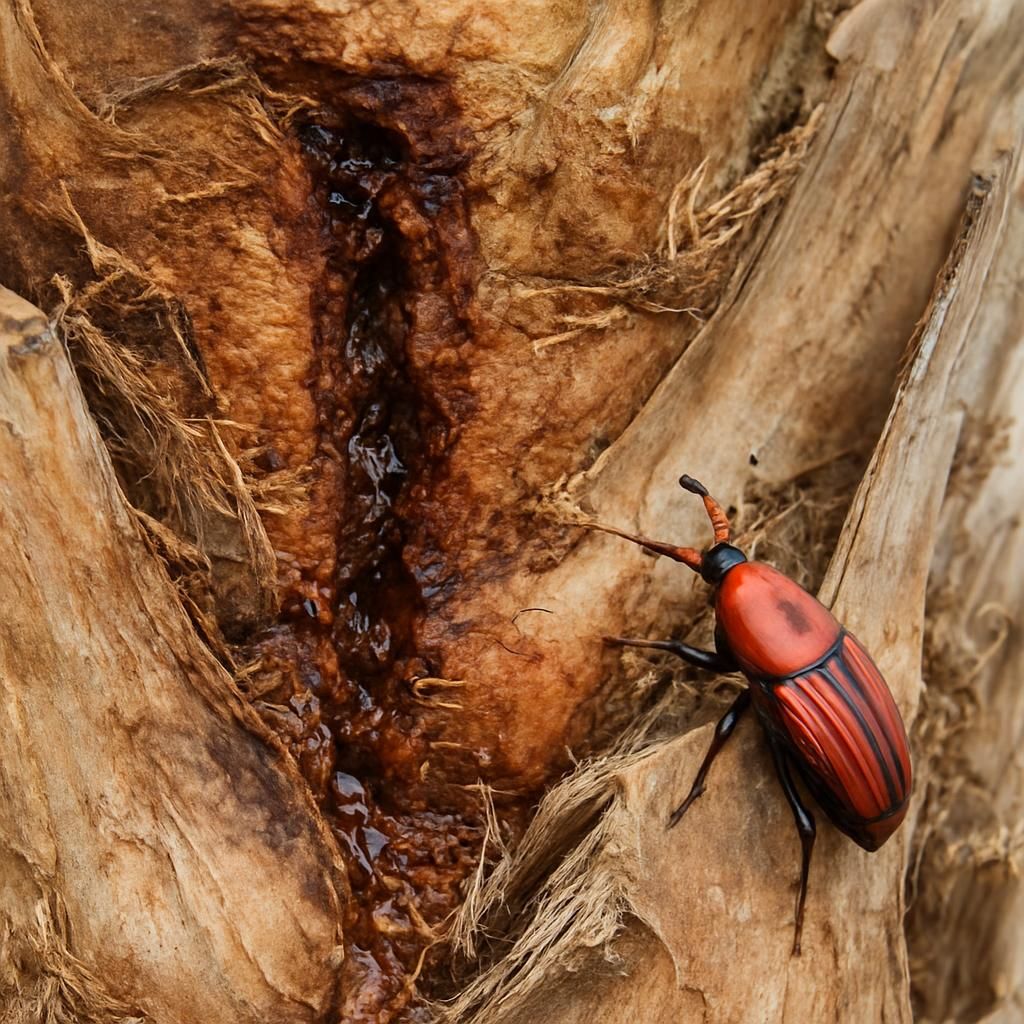
The earliest visible symptoms of Date Palm infestation appear on the fronds. Red palm weevil larvae create tunnels inside the trunk and leaf bases, causing wilting of the central spear leaf and oozing of brown, fermented sap. Dubas bug nymphs and adults produce copious honeydew that leads to black sooty mold covering the lower surfaces of leaflets, giving the canopy a scorched appearance. Lesser date moth larvae bore into green fruits, causing premature fruit drop and internal galleries filled with frass.
Advanced damage includes complete defoliation, trunk cavities visible as external holes, and collapse of the crown. Economic damage thresholds are reached when more than 10% of leaflets show honeydew or when three or more larvae are detected per trunk section. Regular scouting with binoculars and pheromone traps is recommended during spring and early summer.
Lifecycle and Progression of Date Palm
| Stage | Duration | Key Characteristics | Management Window |
|---|---|---|---|
| Egg | 3-10 days | Laid in leaf axils or fruit bunches; white to cream colored | Sanitation and removal of infested material |
| Larva | 30-90 days | Creamy-white, legless grubs feeding inside trunk or fruit | Trunk injection or soil drench with entomopathogenic nematodes |
| Pupa | 10-20 days | Formed inside cocoons in leaf bases or soil | Destruction of pupal cases during pruning |
| Adult | 30-90 days | Reddish-brown weevils or small moths; strong fliers | Pheromone traps and mass trapping programs |
The complete generation time ranges from 60 to 180 days depending on temperature, allowing two to four generations per year in hot climates.
Environmental Triggers & Risk Factors
High temperatures above 30 °C combined with relative humidity below 40% accelerate red palm weevil development and increase flight activity. Over-irrigation or poor drainage creates moist trunk conditions favorable for larval establishment. Dense planting with less than 8 m spacing between palms reduces air circulation and favors dubas bug populations. Nutrient deficiencies, particularly potassium and magnesium, weaken tree defenses and prolong susceptibility windows. Monoculture orchards without intercropping increase pest carry-over between seasons.
| Factor | Optimal Range for Pest | Risk Level |
|---|---|---|
| Temperature | 25-40 °C | High |
| Relative Humidity | <50% | High |
| Soil pH | 7.5-8.5 | Moderate |
| Planting Density | >120 palms/ha | High |
| Irrigation Frequency | Daily drip | Moderate |
Organic Control & Treatment Plans
Integrated organic management combines cultural, mechanical, and biological tactics. Sanitation through removal of infested fronds and fruits reduces breeding sites. Pheromone traps deployed at 1 trap per 2 hectares capture adult weevils and moths. Application of entomopathogenic nematodes (Steinernema carpocapsae) at 2 million per palm in irrigation water targets larvae inside the trunk. Neem oil sprays (0.5% azadirachtin) applied every 14 days during spring suppress dubas bug populations. Bacillus thuringiensis formulations are effective against lesser date moth larvae when applied at first fruit set.
| Treatment Option | Active Ingredient | Application Frequency | Rate per Palm | Notes |
|---|---|---|---|---|
| Pheromone Traps | Red palm weevil lure | Replace every 45 days | 1 trap/2 ha | Monitor weekly catches |
| Nematode Drench | Steinernema carpocapsae | Once at larval stage | 2 million IJ | Apply in 20 L water |
| Neem Oil Spray | Azadirachtin 0.5% | Every 14 days | 5 L/ha | Add sticker-spreader |
| Bt Spray | Bacillus thuringiensis | At fruit set | 2 L/ha | Target early instars |
| Trunk Sanitation | Manual removal | After harvest | N/A | Destroy all infested material |
Preventing Date Palm in the Future
Long-term prevention relies on resistant cultivars such as Medjool and proper orchard hygiene. Maintain 10 m spacing between rows to improve airflow and reduce humidity. Implement a strict quarantine protocol for imported offshoots, treating all planting material with hot water (50 °C for 2 hours) before establishment. Rotate intercrops with Clover or Sesame to break pest cycles. Monitor with pheromone traps year-round and maintain potassium levels above 2.5% in leaf tissue analysis. Remove and destroy all fallen fruits and pruned fronds within 48 hours to eliminate breeding sites.
Crops Most Affected by Date Palm
Primary host is the date palm itself, but secondary damage occurs on nearby Coconut and Banana plantations when adult weevils disperse. Date Palm pests can also attack ornamental palms including Canary Island Date Palm and Washingtonia species in landscape settings. In mixed orchards, Pomegranate and Fig trees planted adjacent to date groves experience occasional fruit damage from migrating moths.