Introduction to cranberry
Cranberries (Vaccinium macrocarpon) are a vital crop grown primarily in acidic bogs across North America, Europe, and parts of Asia. While celebrated for their tart flavor in juices, sauces, and supplements, cranberries face numerous pest challenges that can devastate yields. The term 'cranberry pest' often refers to key insects like the cranberry fruitworm (Acrobasis vaccinii), cranberry weevil (Anthonomus signatus), and cutworms, which target fruits, runners, and uprights. These pests exploit the unique flooded bog system, leading to economic losses exceeding millions annually in major production regions like Massachusetts, Wisconsin, and New Jersey.
Understanding cranberry pests is crucial for sustainable management. Unlike row crops, cranberries thrive in perpetually wet, sandy soils with pH 4.0-5.5, creating ideal conditions for certain insects. This guide delivers professional-grade diagnostics and organic strategies, optimized for small to commercial growers. Early intervention prevents up to 80% yield loss, emphasizing scouting, cultural controls, and biological agents over synthetics. For berry crops, integrating pest management with blueberry techniques can enhance resilience, as both share similar acidic preferences.
Growers must recognize that cranberry pests often mimic disease symptoms, like root rot, complicating identification. This comprehensive resource covers symptoms, lifecycles, triggers, treatments, prevention, and affected crops, empowering precise action. With climate shifts increasing pest pressures, proactive strategies are non-negotiable for profitability.
Identifying Symptoms & Damage
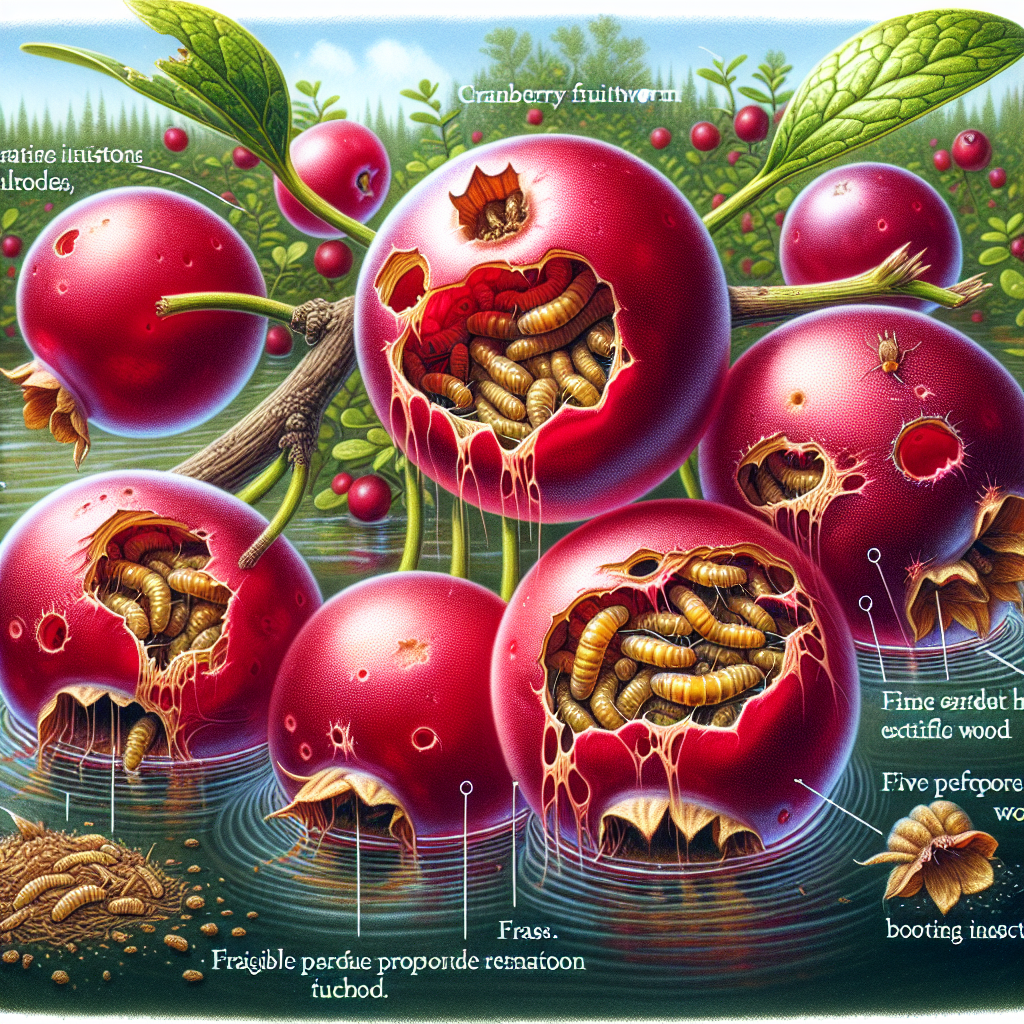
Accurate diagnosis begins with symptom recognition. Cranberry fruitworm larvae bore into developing berries, causing them to ripen prematurely with exit holes and frass (insect waste). Affected fruits drop early, appearing shriveled or 'shot-bored,' reducing marketable yield by 20-50%. Scout by splitting berries: white larvae up to 1/2 inch confirm infestation.
Cranberry weevil adults feed on buds and lay eggs in buds, leading to 'deadheads'—blighted uprights without flowers. Larvae tunnel into runners, causing wilting and blackened tips. Damage appears as notched leaves and stunted growth. Cutworms sever young uprights at soil level overnight, leaving clean cuts; check bogs at dawn for severed stems.
Secondary signs include honeydew from aphids, attracting ants, and sooty mold. Vines show yellowing or bronzing from mite feeding, with fine webbing. Differentiate from diseases: powdery mildew causes white coatings, while pest damage reveals chew marks or holes. Use a 10x hand lens for larvae confirmation. Regular flooding reveals drowned pests but misses early infestations.
Quantitative scouting: Sample 25 uprights per acre weekly from bud break. Thresholds: 2 weevils/25 sweeps or 5% fruitworm-infested berries trigger action. Document with photos for trends. Misdiagnosis risks unnecessary treatments, so cross-reference with extension services.
Lifecycle and Progression of cranberry
Cranberry pests follow predictable cycles tied to bog management. Cranberry fruitworm overwinters as full-grown larvae in silken cocoons under bark or debris. Adults emerge May-June, coinciding with bloom, laying eggs on foliage. Larvae hatch, web leaves, then enter berries 7-10 days post-petal fall, feeding 3-4 weeks before exiting to pupate. One generation/year; peak damage mid-July.
Cranberry weevil has one generation: Adults overwinter in leaf litter, migrating to bogs April-May. They feed, mate, and oviposit in buds. Larvae develop 2-3 weeks, pupate in soil, adults emerge June-July. Cutworms (multiple species) pupate in soil spring, moths lay eggs on foliage; larvae nocturnal, feeding June-August.
Progression aligns with phenology: Pre-bloom (weevils), bloom (fruitworm eggs), fruit set (larval boring), harvest (adult weevils). Flooding disrupts cycles—bees for pollination, winter floods drown larvae. Monitor with pheromone traps: 5-10 fruitworm moths/week signals risk. Understanding timing enables precise interventions, reducing broad applications.
Environmental Triggers & Risk Factors
Wet, acidic bogs favor pests. High humidity post-flooding boosts fruitworm survival; temperatures 70-85°F accelerate development. Poor drainage harbors cutworm pupae; excessive nitrogen promotes tender growth attracting weevils. Adjacent strawberry fields serve as reservoirs, as shared pests migrate.
Climate change extends growing seasons, adding generations. Weed hosts like goldenrod (not listed, but analogous) shelter weevils. Overwintering sites: Upland debris, unburned thatch. Risk multiplies with delayed sanding, which buries pupae. Assess via risk index: Score humidity >80%, N>50lbs/acre, weeds>10% as high-risk.
For more on predictive tools, check this insightful post on Why 80% of Small Farms Battle Weather Disasters - And How Hyper-Local AI Forecasts Can Save Your Harvest. Soil pH drift above 5.5 stresses vines, indirectly favoring mites.
Organic Control & Treatment Plans
Organic IPM prioritizes cultural, biological, then targeted organics. Cultural: Sand bogs 1-2 inches annually post-harvest to bury pupae. Winter flood 4-6 weeks kills 90% overwintering stages. Burn alternate years to destroy debris. Rotate floods: Summer 'bees' disrupt fruitworm.
Biological: Encourage predators like birds, spiders. Release Trichogramma wasps for fruitworm eggs (1M/acre). Bt kurstaki targets larvae; apply evenings to berries, 7-day PHI. Neem oil smothers weevils; insecticidal soaps for aphids.
Mechanical: Sweep nets for weevils pre-bloom (95% control). Hand-pick cutworms post-flood. Pheromone traps monitor/disrupt mating.
Treatment Plans:
- Early season (bud swell): Scout weevils; beat sheets, kaolin clay barrier.
- Bloom/fruit set: Bt + spinosad OMRI for fruitworm.
- Mid-season: Hort oil for mites, pyrethrins for cutworms. Monitor efficacy: Re-scout 7 days post-treatment. Avoid flowering to protect pollinators. Combine with aphids controls for synergy.
Preventing cranberry in the Future
Prevention builds resilient systems. Scout weekly, use degree-day models (base 50°F) for timing. Maintain thatch <1 inch, sand religiously. Plant resistant uprights like 'Stevens.' Border traps reduce influx from wild areas. Companion marigold repels weevils.
Clean equipment prevents spread. Monitor weather for triggers. Long-term: Biofumigants like mustard cover crops suppress soil pests. Annual audits track progress. Educate crews on thresholds. Sustainable bogs yield 20% more with prevention.
Crops Most Affected by cranberry
Cranberries dominate, but pests spillover: Blueberry (fruitworm), strawberry (weevils, cutworms), raspberry (cutworms). Vaccinium relatives like lingonberry hit hard. Nearby potato shares cutworms; corn harbors fruitworm moths. Isolate bogs 1/4 mile. Multi-crop risks amplify with squash bugs analogs.