Introduction to Corm-boring insects
Corm-boring insects represent a significant threat to bulbous and tuberous crops worldwide, particularly in tropical and subtropical agriculture. These pests primarily consist of larvae from weevils (Coleoptera: Curculionidae) and certain beetles that target the nutrient-rich corms—underground storage organs essential for plant growth and reproduction. Key culprits include the banana weevil (Cosmopolites sordidus), taro weevil (Odoiporus longicollis), and gladiolus thrips or moth larvae in some regions. Unlike surface feeders, corm-borers operate invisibly underground, making them insidious pests that can devastate entire fields before symptoms appear above ground.
Farmers growing banana, taro, ginger, turmeric, and ornamental bulbs like gladiolus are most vulnerable. Yield losses can exceed 50% in unmanaged infestations, with secondary infections from root rots exacerbating damage. This guide provides professional-grade diagnostics, lifecycle insights, organic management strategies, and prevention tactics optimized for small-scale and commercial growers. Understanding these pests empowers proactive intervention, safeguarding crop productivity and sustainability. In regions like Southeast Asia, Africa, and the Pacific Islands, corm-borers contribute to food security challenges, underscoring the need for integrated pest management (IPM).
Identifying Symptoms & Damage
Diagnosing corm-boring insects requires keen observation of both above- and below-ground signs. Initial symptoms often mimic water stress: affected plants exhibit yellowing lower leaves, stunted growth, and premature wilting, even under adequate irrigation. As larvae tunnel deeper, the plant's vascular system is disrupted, leading to collapse of the entire pseudostem in bananas or foliage wilt in taro.
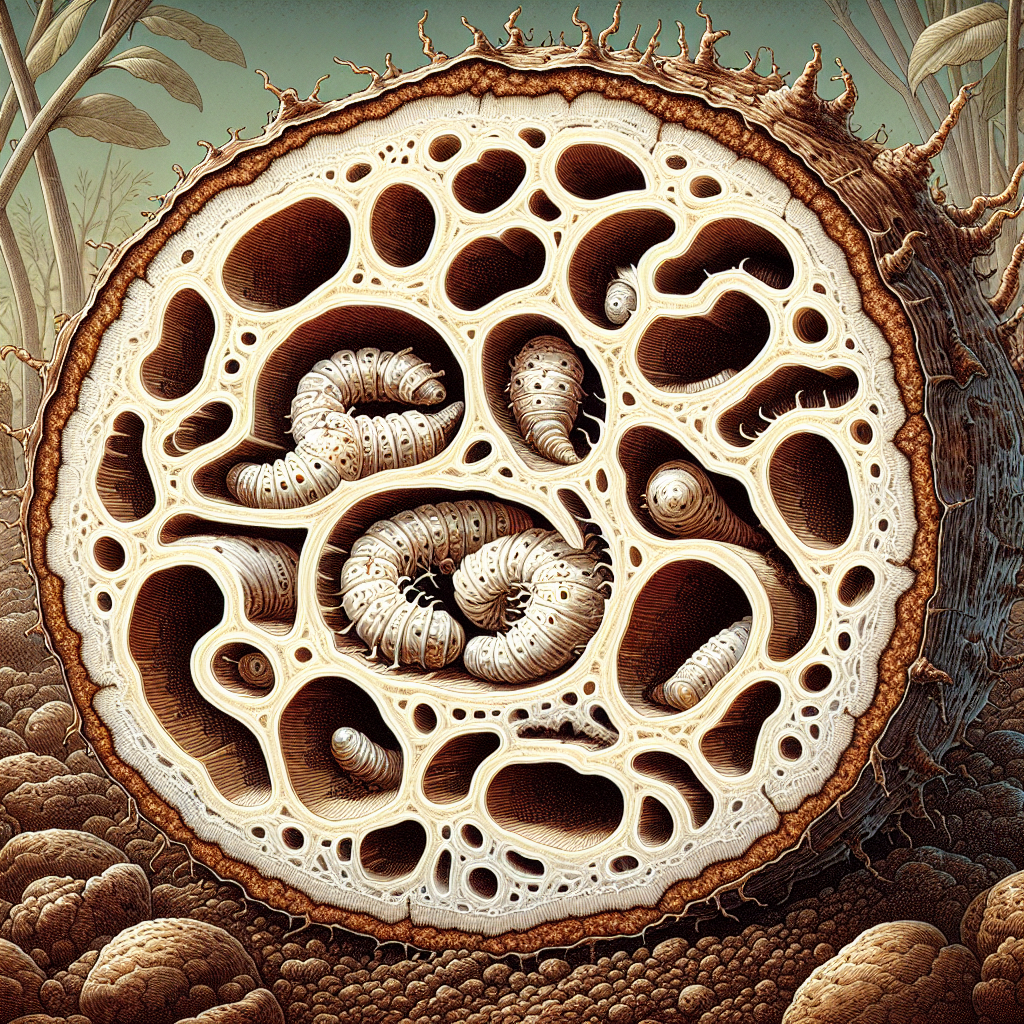
Inspect corms during division or harvest for hallmark damage: small entry/exit holes (1-3 mm diameter) surrounded by frass (sawdust-like insect excrement). Tunnels within the corm are irregular, filled with reddish-brown frass and live larvae. Severely infested corms become soft, rotten, and emit a foul odor, often invaded by fungi like Fusarium or bacteria. Cross-sectioning reveals meandering galleries packed with larvae up to 2 cm long, creamy white with brown heads.
Differentiate from similar issues: root-knot nematodes cause galls without tunnels, while cutworms sever stems at soil level. Use a knife to probe corms; borers leave distinct cavities. Early scouting in high-risk zones—plant bases during rainy seasons—boosts detection rates by 80%. Monitor for adult weevils at night: shiny black beetles 1-2 cm long with elongated snouts, feeding on leaf sheaths.
Lifecycle and Progression of Corm-boring insects
Corm-borers undergo complete metamorphosis: egg, larva, pupa, adult. Females lay 100-200 eggs singly or in clusters near corm bases, preferring moist, shaded soil. Eggs hatch in 5-10 days into tiny larvae that bore directly into corms, feeding on parenchyma for 3-6 months. Larvae pass through 6-8 instars, growing to 2-3 cm, then pupate in earthen cells within tunnels.
Adults emerge after 2-4 weeks, nocturnal and flightless in many species, dispersing slowly but living 6-18 months. Multiple generations (2-4) occur annually in tropics, syncing with plant growth flushes. Peak damage aligns with larval stages during wet seasons. Progression: eggs (translucent, 1mm) → young larvae (surface scratches) → mature larvae (deep tunnels) → pupae (inactive) → adults (surface feeding). Lifecycle duration: 4-9 months, temperature-dependent (optimal 25-30°C).
Environmental Triggers & Risk Factors
Warm, humid conditions (25-32°C, >70% RH) accelerate breeding, with rainfall softening soil for egg-laying. Poor drainage and compacted soils trap moisture, favoring larval survival. Monoculture of susceptible crops like taro or banana amplifies outbreaks via high host density. Volunteer plants and crop debris harbor overwintering adults.
Risk spikes post-flooding or excessive irrigation, as larvae thrive in waterlogged corms. Nutrient imbalances—high nitrogen—produce lush growth attractive to ovipositing females. Proximity to wild hosts or infested fields spreads pests. Climate change extends active seasons, increasing generations in temperate zones. Soil pH >6.5 reduces natural enemies like predatory beetles.
Organic Control & Treatment Plans
Organic management emphasizes IPM: cultural, biological, and minimal botanical interventions. Step 1: Sanitation. Remove and destroy infested corms (burn or solarize); clean tools to prevent spread. Step 2: Biological Controls. Apply beneficial nematodes (Steinernema carpocapsae) at 10^6/m² during egg hatch; they parasitize 70-90% larvae. Introduce predatory ants or ground beetles.
Step 3: Botanicals. Drench soil with neem oil (5ml/L) or garlic-chili extract weekly for 4 weeks; azadirachtin disrupts larval molting. Step 4: Traps. Use pseudostem traps (cut banana stems) baited with pheromone lures to capture adults; check/replace biweekly. Treatment Timeline: Scout weekly; apply nematodes at first wilt signs; follow with neem. Rotate with non-hosts like legumes. For heavy infestations, rogue 20% plants to curb spread. Monitor efficacy via corm dissections.
Check out Spring Pest Patrol: Organic AI Strategies to Shield Your Crops from Common Invaders for tech-enhanced scouting tips.
Preventing Corm-boring insects in the Future
Prevention outperforms cure. Select certified, pest-free planting material; hot-water treat corms (48°C/20min for bananas). Practice 2-3 year crop rotation with marigold or mustard to disrupt lifecycles. Mulch with neem cake (2kg/m²) to deter oviposition. Maintain soil health via compost, enhancing microbial antagonists.
Use resistant varieties: Cavendish bananas show tolerance. Flood fields briefly (24h) pre-planting to drown eggs. Erect physical barriers like fine mesh at bases. Scout borders monthly; trap crops (e.g., sudangrass) divert adults. Long-term: interplant with repellents like thyme. Annual soil solarization (clear plastic, 6 weeks summer) kills 95% pupae.
Crops Most Affected by Corm-boring insects
Corm-borers target starch-rich underground organs: bananas (Cosmopolites sordidus causes 30-100% loss), taro (Elephant Ear Taro), yam, ginger, turmeric, gladiolus, and saffron crocus. In Asia-Pacific, taro weevils ravage Colocasia esculenta. Ornamentals like cannas and caladiums suffer cosmetic damage. Emerging threats to cassava in Africa. Avoid confusion with stem-borers in sugarcane.