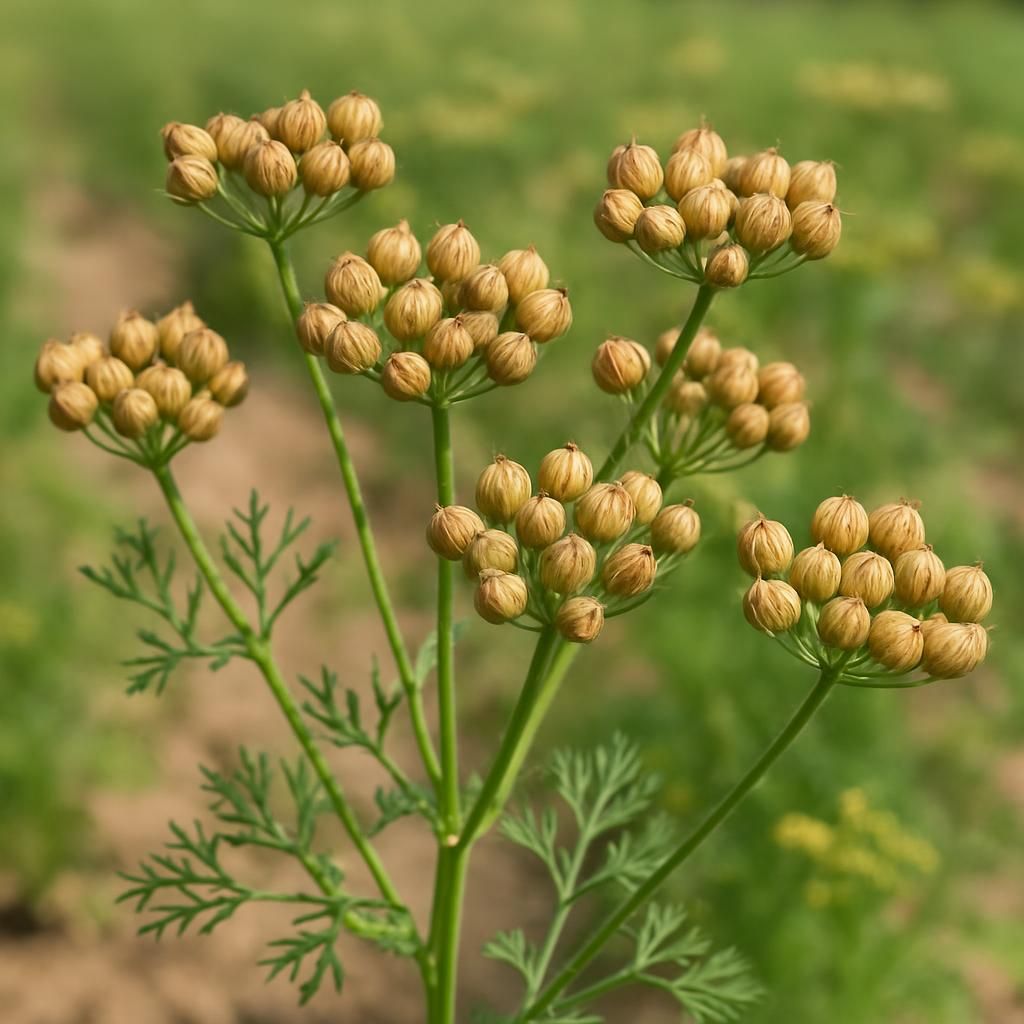
Introduction to Coriander Seed (Santo)
Coriander Seed (Santo) is a specialized cultivar of Coriandrum sativum selected for its slow-bolting habit and exceptional seed yield. While many coriander varieties quickly transition to flowering under heat stress, Santo maintains vegetative growth longer, allowing growers to harvest larger quantities of high-quality seed. This trait makes it particularly valuable in regions with variable spring temperatures or for successive plantings throughout the season.
Commercial producers favor Santo for its uniform maturity and robust stems that support heavy seed heads without lodging. Home gardeners appreciate the variety's dual-purpose nature: young leaves can be harvested for fresh cilantro while the plant matures to produce flavorful coriander seed. The variety's resistance to premature flowering under moderate heat extends the harvest window by 10–14 days compared with standard types.
Successful cultivation of Coriander Seed (Santo) requires attention to soil fertility, consistent moisture during establishment, and timely harvest before shattering occurs. This guide provides detailed, evidence-based recommendations drawn from university extension trials and commercial herb production data.
Botanical Profile of Coriander Seed (Santo)
Coriander Seed (Santo) belongs to the Apiaceae family and exhibits the typical morphology of annual coriander. Plants reach 50–70 cm in height with finely divided, aromatic foliage. The variety produces small white to pale pink flowers arranged in compound umbels. Each umbel can contain 20–40 flowers that develop into schizocarp fruits commonly referred to as coriander seed.
The seeds are spherical to slightly ovate, measuring 3–5 mm in diameter, with a light brown color and distinctive ridges. Santo seeds typically contain 0.4–0.8% essential oil, predominantly linalool, giving the dried seed its characteristic citrus-spice aroma. The cultivar's genetic selection for delayed bolting results in a higher proportion of photosynthate directed toward seed fill rather than reproductive structures.
Germination occurs within 7–14 days at soil temperatures of 15–20 °C. Seedlings develop a slender taproot that supports rapid vegetative growth. Under optimal conditions, plants reach flowering stage in 45–55 days and seed maturity in 90–110 days from sowing.
Soil, pH, and Climate Requirements for Coriander Seed (Santo)
Coriander Seed (Santo) performs best in well-drained, fertile loams with good water-holding capacity. Heavy clay soils should be amended with organic matter to improve drainage and prevent waterlogging, which can lead to root rot. The variety tolerates a broad pH range but yields optimally between 6.2 and 7.0.
Temperature management is critical. Santo germinates reliably between 10–25 °C and grows vigorously at daytime temperatures of 18–24 °C. Sustained temperatures above 28 °C accelerate bolting even in this slow-bolting cultivar, reducing seed yield. Night temperatures below 10 °C during early growth can stunt seedlings.
| Parameter | Ideal Range | Notes |
|---|---|---|
| Soil Type | Loam to sandy loam | Well-drained; avoid compacted clays |
| Soil pH | 6.2 – 7.0 | Optimal nutrient uptake |
| Organic Matter | 3–5% | Improves moisture retention and fertility |
| Day Temperature | 18–24 °C | Maximizes vegetative growth |
| Night Temperature | 10–15 °C | Prevents stress-induced bolting |
| Annual Rainfall | 400–600 mm (supplemental irrigation) | Even moisture critical during flowering |
| Frost Tolerance | Light frost (-2 °C) | Seedlings tolerate brief frost; mature plants sensitive |
Step-by-Step Planting & Propagation
Direct sowing is the preferred method for Coriander Seed (Santo) because the crop develops a taproot that does not transplant well. Prepare seedbeds by incorporating 2–3 cm of well-rotted compost and raking to a fine tilth. Sow seeds 1 cm deep in rows spaced 30–40 cm apart, with in-row spacing of 5–8 cm. For high-density seed production, broadcast at 12–15 kg/ha and lightly rake in.
Germination is enhanced by pre-soaking seeds in water for 12–24 hours or by using a light straw mulch to maintain surface moisture. Thin seedlings to final spacing once they reach 5 cm height. Successive sowings every 3 weeks from early spring through midsummer extend the harvest period.
In regions with short growing seasons, start seeds indoors in biodegradable pots 3–4 weeks before the last frost. Transplant carefully when seedlings have 2–3 true leaves, disturbing roots as little as possible. Protect young plants with row covers if night temperatures drop below 5 °C.
Care & Maintenance regimes for Coriander Seed (Santo)
Consistent moisture is essential from sowing until seed set. Water deeply once or twice weekly to maintain soil moisture at 60–70% field capacity. Reduce irrigation frequency once seeds begin to mature to encourage even ripening and prevent disease.
Fertilizer applications should focus on phosphorus and potassium to support flowering and seed development. A base dressing of 40–50 kg N/ha, 60–80 kg P2O5/ha, and 40–60 kg K2O/ha is typical. Side-dress with 20–30 kg N/ha at the 4–6 leaf stage if leaf color indicates deficiency. Avoid excess nitrogen after flowering to prevent lush vegetative growth at the expense of seed yield.
Weed control is critical during the first 30 days. Use shallow cultivation or mulching with clean straw. Hand-weeding around the base prevents root damage. Once canopy closes, competition from weeds declines significantly.
| Growth Stage | Watering Schedule | Fertilizer Application | Pruning/Maintenance |
|---|---|---|---|
| Establishment (0–3 wks) | Light daily misting or 5 mm/day | Pre-plant: 40-50-60 NPK | Thin to 5–8 cm spacing |
| Vegetative (3–6 wks) | 15–20 mm/week | Side-dress 20–30 kg N if needed | Remove weeds; monitor for bolting |
| Flowering (6–9 wks) | 20–25 mm/week | No additional N; maintain P and K | Avoid disturbing plants |
| Seed Fill (9–12 wks) | Reduce to 10–15 mm/week | None | Monitor for lodging; stake if needed |
| Pre-Harvest (12+ wks) | Withhold 7–10 days before harvest | None | Cut seed heads when 60–70% brown |
Pests, Diseases & Organic Management
Coriander Seed (Santo) is relatively resistant to major diseases but can be affected by Powdery mildew and Alternaria leaf spot under humid conditions. Cultural practices such as wide row spacing, morning irrigation, and removal of crop debris reduce disease pressure.
Aphids and Spider mites occasionally colonize plants during hot, dry periods. Releases of lady beetles and lacewings provide effective biological control. Neem oil or insecticidal soap applications at the first sign of infestation prevent population build-up without harming beneficial insects.
Root-knot nematodes can reduce yields in sandy soils previously planted with susceptible hosts. Rotate with Tomato or Onion and incorporate marigold or mustard cover crops to suppress nematode populations. Soil solarization for 4–6 weeks prior to planting offers additional control in high-pressure areas.
Harvesting, Curing & Optimal Storage
Harvest timing is critical to maximize seed yield and quality. Cut seed heads when 60–70% of seeds have turned light brown and the umbels begin to dry. Early morning harvest minimizes shattering losses. Use a sickle or mechanical swather and allow cut material to dry in windrows for 3–5 days.
Thresh by hand or with a combine fitted with a coriander header. Clean seed by screening and winnowing to remove chaff and light material. Target moisture content of 10–12% for safe storage.
Store cleaned seed in breathable sacks or sealed containers at 10–15 °C and <60% relative humidity. Properly stored Santo seed retains viability for 2–3 years. For culinary use, keep seed in airtight glass jars away from light and heat to preserve essential oils.
Companion Planting for Coriander Seed (Santo)
Coriander Seed (Santo) pairs well with Cucumber and Lettuce, where its aromatic foliage can deter Cucumber beetles and aphids. Interplanting with Carrot improves pollination and may reduce carrot fly damage.
Avoid planting near Fennel or Dill, which can cross-pollinate and reduce seed purity. Marigold planted at field edges attracts beneficial insects and provides additional pest suppression.
For maximum benefit, follow coriander with nitrogen-fixing legumes such as Peas or Chickpeas in rotation. This sequence improves soil nitrogen levels for subsequent crops while breaking disease cycles.
Link to relevant wiki: Coriander
Link to relevant blog: Spring Companion Planting: 8 Organic Pairings to Maximize Small Farm Yields