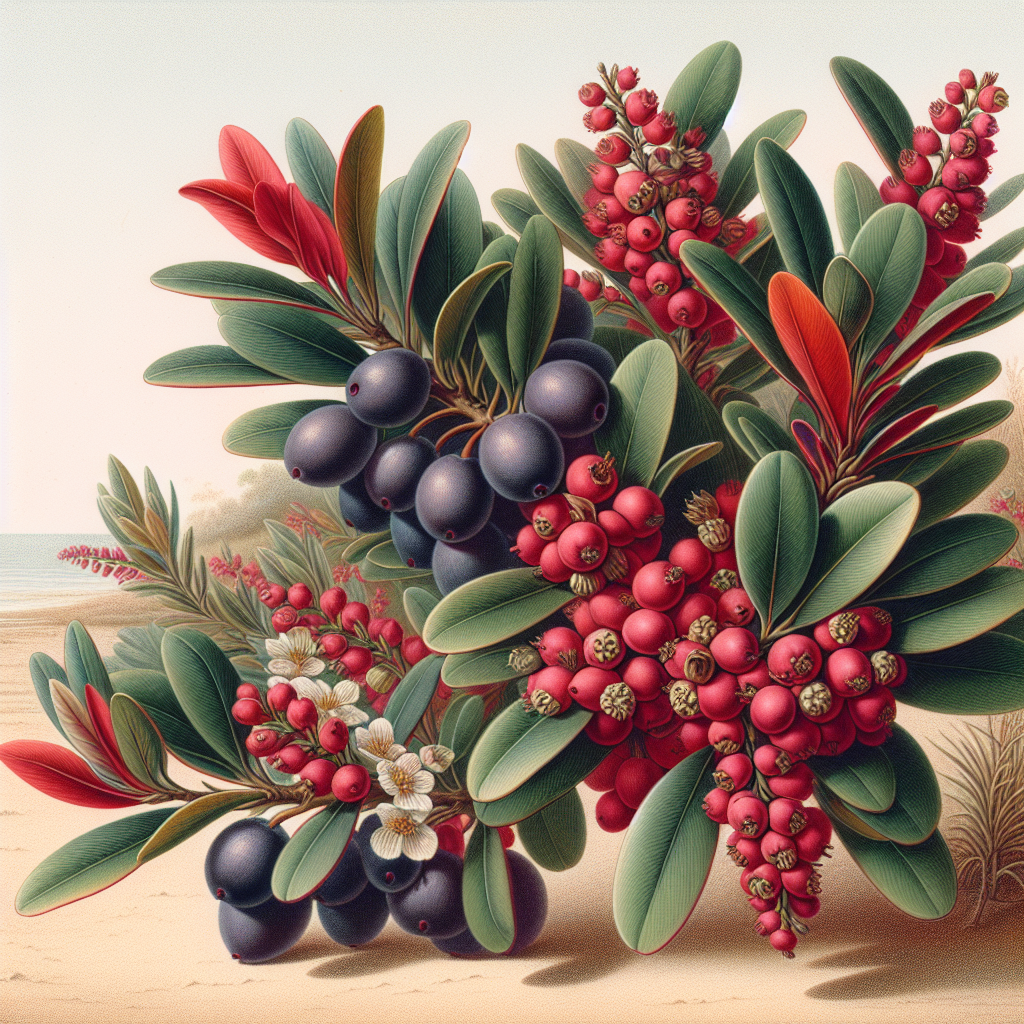
Introduction to Cocoplum (Red Tip)
Cocoplum (Red Tip), known scientifically as Chrysobalanus icaco 'Red Tip', is a captivating evergreen shrub native to coastal regions of Florida, the Caribbean, and Central/South America. Renowned for its vibrant red-tipped new foliage that matures to glossy dark green, this cultivar stands out in tropical and subtropical gardens. Beyond its aesthetic charm, Cocoplum produces small, edible fruits resembling plums—sweet, tangy drupes that ripen to purple-black and are enjoyed fresh, in jams, or by birds and wildlife.
This plant excels as a hedge, screen, topiary, or groundcover, reaching 6-12 feet in height and width with minimal pruning. Its salt tolerance makes it perfect for seaside properties, while its dense growth deters intruders effectively. Growers appreciate its adaptability to various soils and low water needs once established, making it a staple in sustainable landscaping. For small farms or orchards, Red Tip Cocoplum offers dual benefits: ornamental value and a harvestable crop similar to guava in versatility. With proper care, it yields abundantly in USDA zones 10-11, providing year-round interest and productivity.
Botanical Profile of Cocoplum (Red Tip)
Cocoplum belongs to the Chrysobalanaceae family, with Chrysobalanus icaco as the species and 'Red Tip' as a selected cultivar distinguished by its colorful juvenile leaves. This evergreen shrub or small tree features opposite, leathery leaves (2-4 inches long) that emerge fiery red, transitioning to lustrous green. Stems are stout, often reddish, supporting a bushy habit.
Flowers are small (0.5 inches), white to pale yellow, fragrant, and appear in clusters year-round in warm climates, peaking in spring-summer. Pollination occurs via bees and other insects, leading to drupes that are 1-2 inches in diameter. Fruits have a tough outer skin, sweet juicy flesh, and a large seed with almond-like kernel (toxic if raw but edible when roasted).
Root systems are fibrous and shallow-spreading, aiding erosion control on dunes. Growth rate is moderate (1-2 feet/year), with plants living 20-50+ years. Compared to standard Cocoplum, Red Tip offers superior color contrast, enhancing visual appeal in mixed plantings like with mango trees. Why Companion Planting Feels Like Guesswork for Small Farms - And How AI Makes It Foolproof. Nutrient-rich fruits provide vitamins A and C, making them valuable for home production.
Soil, pH, and Climate Requirements for Cocoplum (Red Tip)
Cocoplum (Red Tip) thrives in well-drained, sandy or loamy soils, mimicking its native coastal habitats. It tolerates poor, rocky, or clay soils but performs best with organic matter amendments for fertility. Avoid heavy waterlogging to prevent root rot. Ideal pH is 6.0-7.5 (slightly acidic to neutral); test soil and amend with lime if below 6.0 or sulfur if above 8.0.
Climate-wise, it's suited to USDA zones 10-11 (minimum 20-30°F tolerance), loving full sun (6+ hours/day) for optimal growth and fruiting, though partial shade (4-6 hours) works in hotter areas. High humidity and salt spray enhance vigor, ideal for beachfront farms. Annual rainfall of 40-60 inches suffices; supplement with 1 inch/week during establishment. Extreme heat (>100°F) or cold snaps demand protection. Mulch with pine bark or coconut coir to retain moisture and suppress weeds. For small farms, integrate into Soil Health Mastery: 5 Proven Strategies for Small Farms to Build Fertile Ground Without Breaking the Bank practices.
Step-by-Step Planting & Propagation
Propagation: Easiest via semi-hardwood cuttings (4-6 inches) in summer. Dip in rooting hormone, plant in perlite-sand mix under mist, rooting in 4-8 weeks at 75-85°F. Seeds require scarification and stratification but are less reliable due to variability. Air-layering works for larger specimens.
Site Selection: Choose full sun, well-drained spot with wind protection. Space 6-10 feet apart for hedges.
Planting Steps:
- Dig hole 2x wider than root ball, same depth.
- Mix native soil with 30% compost.
- Plant in spring/fall, water deeply.
- Mulch 3 inches, avoiding trunk.
- Stake if needed for wind.
Transplants establish quickly with consistent moisture. For small farms, propagate en masse for windbreaks near avocado groves.
Care & Maintenance regimes for Cocoplum (Red Tip)
Water weekly during first year (1-2 inches), then drought-tolerant. Fertilize 3x/year (spring/summer/fall) with 8-3-9 palm formula or balanced slow-release (1-2 lbs/plant). Prune post-fruiting to shape, removing dead wood; shear for hedges 2-3x/year.
Monitor for nutrient deficiencies: yellow leaves indicate iron/manganese lack—apply chelated micronutrients. Thin dense centers for air flow. In containers, use 20-25 gallon pots with excellent drainage. Scale back in winter. Integrate into crop rotations with legumes like clover for nitrogen fixation. Regular care yields 10-20 lbs fruit/plant annually after 3-5 years.
Pests, Diseases & Organic Management
Common pests: Scale insects, mealybugs, aphids. Manage with neem oil, insecticidal soap, or horticultural oil sprays (weekly until clear). Beneficial insects like ladybugs control aphids naturally.
Diseases: Anthracnose (brown leaf spots), powdery mildew in humid conditions—improve air circulation, apply copper fungicide. Phytophthora root rot from poor drainage; use raised beds. Organic IPM: Introduce predatory mites for spider mites, hand-pick caterpillars. Avoid overhead watering. Why 90% of Small Farms Fail at Pest Management - And 8 Organic Fixes That Actually Work. Healthy plants resist most issues.
Harvesting, Curing & Optimal Storage
Harvest ripe fruits (purple-black, soft) by hand from late summer-fall, yielding multiple crops. Twist gently to avoid damaging spurs. Fruits store 1-2 weeks refrigerated (32-40°F, 90% humidity). For jams/pies, process immediately. Dry seeds for roasting. Yields peak at 5+ years; birds compete, so net if needed. Sell fresh or value-added at markets.
Companion Planting for Cocoplum (Red Tip)
Pair with salt-tolerant natives: sea grape (unlisted, avoid), thyme for pest repulsion, marigold against nematodes. Avoid water-hungry plants. Underplant with nasturtium for groundcover and aphid trap. Benefits from yarrow for pollinators. Enhances pineapple plantings by providing shade/windbreak. Fall Companion Planting Guide: Boost Yields and Soil Health for Small Farms and Gardens.