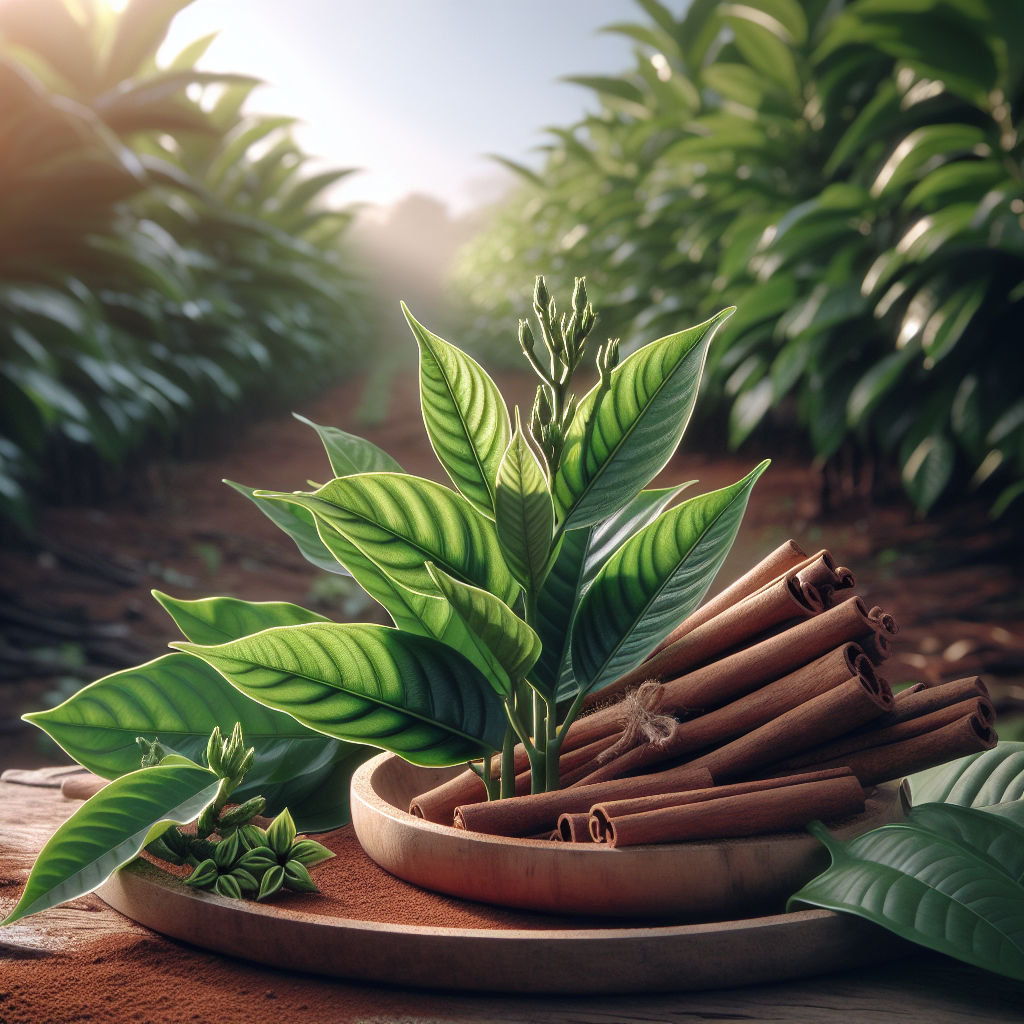
Introduction to Cinnamon
An evergreen member of the Lauraceae, cinnamon has shaped trade routes, medicine, cuisine, and colonial agriculture for centuries. The crop most growers seek for premium bark is true or Ceylon cinnamon, Cinnamomum verum, native to Sri Lanka and long cultivated across humid tropical regions. Other species, especially Cinnamomum cassia, C. burmannii, and C. loureiroi, also enter the global spice market under the cinnamon name, but they differ in flavor profile, bark thickness, quill structure, and chemical composition. For serious growers, that distinction matters because market price, curing method, harvest timing, and even pruning style may differ.
Commercial cinnamon is not harvested like timber. It is managed as a coppiced spice shrub or small tree, repeatedly cut back to stimulate straight, vigorous shoots with smooth bark. The valuable product is the thin inner bark, removed from young stems, processed into quills or chips, and dried carefully to preserve volatile oils such as cinnamaldehyde and eugenol. This makes cinnamon agronomically unique: success depends as much on canopy training and bark handling as on basic fertility.
Cinnamon performs best in warm, frost-free, humid environments with evenly distributed rainfall, filtered to full tropical sunlight, and consistently well-drained soils rich in organic matter. It is not a crop for dry continental climates without irrigation and humidity support, nor for heavy, stagnant clay that keeps roots waterlogged. Where conditions are favorable, however, cinnamon can become a long-lived perennial spice plantation with annual or near-annual bark harvests after establishment.
Botanical Profile of Cinnamon
True cinnamon belongs to the family Lauraceae, the same aromatic family that includes bay laurel, camphor, and avocado; growers interested in tropical tree crop management may also compare structure and site planning with Avocado. In its unpruned state, Cinnamomum verum can reach 10-15 meters or more, but under cultivation it is usually maintained much smaller through repeated coppicing. The plant bears opposite to sub-opposite, leathery, glossy leaves with three prominent longitudinal veins, a useful field identification trait. Young flushes often emerge reddish or bronze before maturing to green.
The bark is the defining commercial trait. On young shoots it is thin, smooth, and relatively easy to peel. The outer bark and corky tissue are scraped away, leaving the delicate inner bark that curls inward as it dries. Premium true cinnamon forms many thin layers rolled together into cigar-like quills. By contrast, cassia types typically have thicker, harder bark and a stronger, more pungent flavor.
Flowers are small, pale yellow to greenish-white, borne in panicles, and not especially ornamental. Fruit is a small drupe, dark purple to black when ripe. Seed viability drops quickly after harvest, so fresh seed is essential for propagation. The root system is relatively shallow and fibrous in the upper soil profile, which explains the crop’s sensitivity to both drought stress and poor drainage.
Chemically, cinnamon bark quality is judged by volatile oil content, bark thickness, color, aroma, and absence of mold or mechanical damage. True cinnamon usually contains lower coumarin than cassia species, making it particularly attractive for health-conscious markets. Leaves can also be distilled for essential oil, though bark remains the premium product. In smallholder systems, growers may derive secondary income from leaf oil, prunings, and nursery stock.
Soil, pH, and Climate Requirements for Cinnamon
Cinnamon is fundamentally a humid tropical crop. The ideal temperature range is about 20-30°C, with best growth usually between 25-28°C. Growth slows under cool conditions and significant injury occurs below about 10-12°C; frost can kill young plants outright. Relative humidity of 70% or higher supports vigorous flushes, tender bark formation, and reduced drought stress. Annual rainfall of roughly 1,500-2,500 mm is ideal, especially when well distributed. A short drier period can help scheduling of harvest and curing, but prolonged drought reduces shoot production and bark peelability.
The best soils are deep, friable, well-drained sandy loams to loams rich in organic matter. Cinnamon tolerates lateritic tropical soils if drainage is excellent and organic matter is replenished regularly. Avoid heavy clay with perched water tables, saline soils, and compacted subsoils. Root stress from poor aeration often shows up as dull leaf color, reduced flushing, dieback of young shoots, and greater susceptibility to root diseases.
Optimal soil pH is slightly acidic, generally 5.0-6.5, with 5.5-6.2 especially favorable. Below pH 5.0, aluminum toxicity and nutrient lock-up may reduce establishment. Above pH 7.0, micronutrient deficiencies, especially iron and manganese, become more likely, expressed as interveinal chlorosis on young leaves. Before planting, conduct a full soil analysis including pH, organic matter, cation balance, available phosphorus, and potassium. If pH is too low, apply agricultural lime several months before planting and incorporate it into the top 20-30 cm. If the soil is marginally alkaline, rely on compost, mulches, elemental sulfur where appropriate, and acid-forming nutrient sources.
Cinnamon requires moisture, but not saturation. A useful field benchmark is to maintain the root zone evenly moist to roughly 60-80% of field capacity during active growth. In practical terms, soil at 10-15 cm depth should feel cool and slightly moist when squeezed, forming a weak ball that crumbles with pressure, not a sticky mass that smears. Overwatered cinnamon often shows yellowing lower leaves, slowed growth, blackened feeder roots, and a sour smell in the planting hole. Underwatered plants curl leaves slightly along the midrib, lose luster, and produce short, hardened shoots with poor bark quality.
Wind protection is important. Strong desiccating winds reduce humidity, tear leaves, and cause uneven shoot growth. Shelterbelts or mixed agroforestry designs work well if they do not cast excessive dense shade. Young cinnamon benefits from light shade during establishment, especially in hotter lowland sites, but mature managed stools typically produce the best bark shoots under bright filtered light to moderate full sun.
Step-by-Step Planting & Propagation
Propagation can be done by seed, cuttings, air layering, or division of rooted suckers, but commercial plantations are most commonly started from fresh seed or selected vegetative material. If varietal uniformity and bark quality are priorities, vegetative propagation from elite mother plants is preferable.
Select planting material carefully. Choose mother plants known for thin bark, strong aroma, straight shoot production, disease tolerance, and good coppicing response. Avoid seed from neglected, mixed-species plantings where identity is uncertain.
Use fresh seed only. Cinnamon seed loses viability rapidly, often within weeks. Collect fully ripe dark fruits, depulp them, wash gently, and sow immediately. Seeds are usually sown in shaded nursery beds or polybags containing a well-drained medium such as loam, sand, and compost. Germination often occurs within 15-30 days under warm humid conditions.
Raise nursery plants properly. Provide 40-50% shade, uniform moisture, and protection from pounding rain. Seedlings are ready for field planting when they are about 20-30 cm tall with a sturdy stem and healthy root ball, often at 4-6 months. Harden them gradually by reducing shade and watering frequency for 2-3 weeks before transplanting.
Prepare the field. Clear aggressive perennial weeds, mark contour lines on slopes, and install drainage channels where needed. Dig planting pits about 45 x 45 x 45 cm, larger in poor soils. Refill with topsoil mixed with well-rotted compost or farmyard manure. Fresh manure should never contact roots directly.
Time planting with rains. The best planting period is early rainy season or post-monsoon in regions with reliable residual soil moisture. This reduces transplant shock and lowers irrigation demand.
Use proper spacing. Spacing varies with management intensity. For bark production under coppice systems, 1.2 x 1.2 m to 2 x 2 m is common. Closer spacing increases early canopy closure and suppresses weeds, but requires stronger fertility and pruning management. Wider spacing improves access and airflow.
Transplant carefully. Plant at the same depth as in the nursery bag. Do not bury the collar. Water in immediately to settle soil around the roots. Add mulch 5-8 cm thick, keeping it 5 cm away from the stem to avoid collar rot.
Initial training. During the first 1-2 years, encourage a strong base. Once established, plants are cut back low to stimulate multiple shoots. A stool with several straight, vigorous stems is preferred for future bark harvest.
Vegetative propagation by semi-hardwood cuttings is possible but benefits from mist, bottom heat, and rooting hormones. Air layering can preserve elite types, though it is slower and more labor-intensive. For broader propagation insights on improving root-zone structure and organic matter before establishment, see soil health tips.
Care & Maintenance regimes for Cinnamon
Cinnamon care revolves around moisture regulation, nutrient balance, weed suppression, and disciplined coppice management. In the first year, irrigation should maintain even moisture in the top 20-30 cm of soil. Light frequent watering on sandy soils may be necessary, while loams benefit from deeper, less frequent irrigation. As a practical guide, young field-planted cinnamon often needs watering when the top 3-5 cm begin to dry but before leaves lose turgor. Mature plants are more resilient but still perform best when drought stress is minimized during shoot initiation.
Mulching is highly beneficial. Apply leaf mold, composted bark, straw, coconut husk fiber, or other clean organic mulch in a ring extending beyond the drip line. This moderates soil temperature, suppresses weeds, improves microbial activity, and gradually increases organic matter. In tropical spice systems, annual mulch renewal is often one of the most cost-effective practices for stabilizing yields.
Fertilization should be based on soil and leaf analysis, but cinnamon generally responds to split applications of nitrogen, phosphorus, and potassium alongside organic amendments. For young plants, moderate nitrogen encourages vegetative growth, yet overapplication can produce excessively soft tissue and diluted aroma. Potassium is especially important for plant vigor, shoot quality, and stress tolerance. A common practical approach is to apply compost or well-rotted manure annually before rains and supplement with balanced mineral fertilizer in 2-3 split doses during active growth. Micronutrients, especially zinc and boron, may be needed in intensely cultivated tropical soils.
Pruning and coppicing are central to bark production. After establishment, stools are cut back low, often 10-15 cm above ground, to induce a flush of straight shoots. From these, retain the healthiest, well-spaced stems and remove weak, crowded, crossing, or diseased shoots. Harvest typically targets shoots around 1.5-3 cm in diameter, depending on local standards and species. If shoots become too old and woody, bark thickens and quality declines. If cut too young, yield is poor and quill formation is weak.
Weed control is essential during the first 2-3 years. Keep a weed-free circle around each plant, but avoid deep hoeing that damages shallow roots. Hand weeding, shallow scraping, sheet mulching, and living groundcovers outside the immediate root zone work better than aggressive cultivation.
Shade management varies by site. In very hot lowland zones, 20-30% light shade during establishment reduces scorch. In cloudier or wetter regions, excessive shade can increase fungal pressure and produce lanky growth. Aim for a bright, airy canopy that dries reasonably quickly after rain.
Pests, Diseases & Organic Management
Cinnamon is relatively hardy when grown in a suitable climate, but stress sharply increases pest and disease pressure. The most common problems include leaf spot fungi, dieback, seedling blights, root rot under poor drainage, and occasional insect pests such as scale insects, leaf miners, caterpillars, and borers.
Leaf spot often appears as brown or dark lesions with yellow halos, especially during prolonged humid weather and dense canopy conditions. Management begins with sanitation: remove badly infected leaves, improve spacing, reduce overhead irrigation, and prune for airflow. Applications of copper-based organic fungicides may help in severe cases, though they should be used judiciously to avoid soil accumulation.
Root and collar rots are the most serious threats in waterlogged soils. Symptoms include sudden wilt despite moist soil, yellowing foliage, bark darkening near the base, and root discoloration. Prevention is far superior to treatment: plant only in well-drained sites, use raised beds or mounds in marginal soils, avoid mulch touching the stem, and never overirrigate. Biological drenches based on Trichoderma spp. can be useful in preventive integrated programs.
scale insects and mealybugs can colonize tender stems and leaf undersides, sucking sap and producing honeydew that encourages sooty mold. Small infestations can be pruned out or washed off. Horticultural oils and insecticidal soaps are effective when coverage is thorough, especially on immature stages. Ant control is important because ants often protect these pests.
caterpillars and leaf feeders occasionally defoliate young flushes. Regular scouting is essential. Hand-picking works in small plantings; Bacillus thuringiensis products are suitable in organic systems when targeted at early larval stages.
Stem borers are more likely in neglected or weakened plants. Maintain plant vigor, remove infested shoots promptly, and destroy them away from the field. Clean coppice cuts and good sanitation reduce entry points.
Integrated organic management should prioritize resistant planting material, drainage, balanced nutrition, diverse habitat, and frequent monitoring. Overly lush, nitrogen-heavy growth tends to attract sap-sucking pests and can worsen soft tissue diseases. Conversely, drought-stressed plants produce inferior bark and are slower to recover from attack.
Harvesting, Curing & Optimal Storage
Cinnamon is usually first ready for meaningful bark harvest about 2-3 years after planting under good management, though commercial maturity may take longer depending on climate and vigor. Harvesting is best timed when shoots are mature enough to yield bark efficiently but still young and smooth. In many regions this corresponds to periods of active sap flow after rains, when bark peels more readily.
Select straight, healthy shoots of suitable diameter and cut them near the base. Remove leaves and side twigs, then scrape away the outer corky layer carefully without gouging the valuable inner bark. Longitudinal slits are made, and the bark is loosened and peeled in strips. These strips are then nested into compound quills and dried slowly in shade or well-ventilated filtered light. Direct harsh sun can drive off volatile oils and cause cracking or discoloration.
A short sweating or conditioning period is sometimes used before final drying, depending on local tradition and product standard. During drying, quills curl and develop the characteristic tan to light brown color of true cinnamon. Ideal curing conditions are warm, airy, and clean, with low enough humidity to prevent mold but not so hot that aroma compounds are lost. Final moisture should be low enough for safe storage, generally around 10-12% or below.
Leaves may also be harvested for essential oil distillation, but heavy leaf stripping should not compromise bark production. If both bark and leaf oil are part of the system, coordinate pruning so the primary bark crop remains the priority.
Store finished quills or chips in airtight, food-grade containers away from light, heat, and moisture. Whole quills retain aroma far longer than ground cinnamon. Optimal storage conditions are cool, dry, and dark, ideally below 20°C with relative humidity under 60%. In humid tropical climates, desiccant-assisted sealed packaging or climate-controlled rooms may be necessary for export-grade spice. Any sign of mustiness, condensation, insect frass, or fading aroma indicates poor storage management.
Companion Planting for Cinnamon
In diversified tropical systems, cinnamon performs well with carefully selected companion species that preserve humidity, improve soil cover, and reduce weed pressure without excessive root competition. The best companions are shallow to moderately rooted, manageable species that do not create dense permanent shade or aggressive nutrient drawdown.
Useful support plants include legumes used as low groundcovers or alley species to improve nitrogen cycling and suppress weeds. In young plantations, short-duration shade and mulch crops can help stabilize microclimate. Aromatic intercrops may also fit well if spacing and harvest access remain practical; growers in spice gardens often integrate species such as Cardamom, though only in site conditions where layered shade and moisture can be balanced carefully.
Avoid companions with invasive root systems, heavy canopy spread, or high water demand immediately adjacent to cinnamon stools. Large bananas, for example, can be useful as temporary nurse plants in some tropical systems but must be managed so they do not create chronic shade and humidity pockets around the base that favor fungal disease. Likewise, sprawling vines should be kept away from stools because they interfere with coppicing and harvest.
A strong companion strategy for cinnamon includes three layers: a mulch-producing ground layer, occasional nitrogen-fixing support species, and perimeter windbreaks. Keep the immediate 30-50 cm around each stool relatively open, mulched, and easy to inspect. This simple buffer greatly improves sanitation, harvest efficiency, and early detection of pests or collar disease. In commercial bark systems, companion planting should always serve the main objective: producing straight, healthy, peelable shoots with high essential oil quality.